
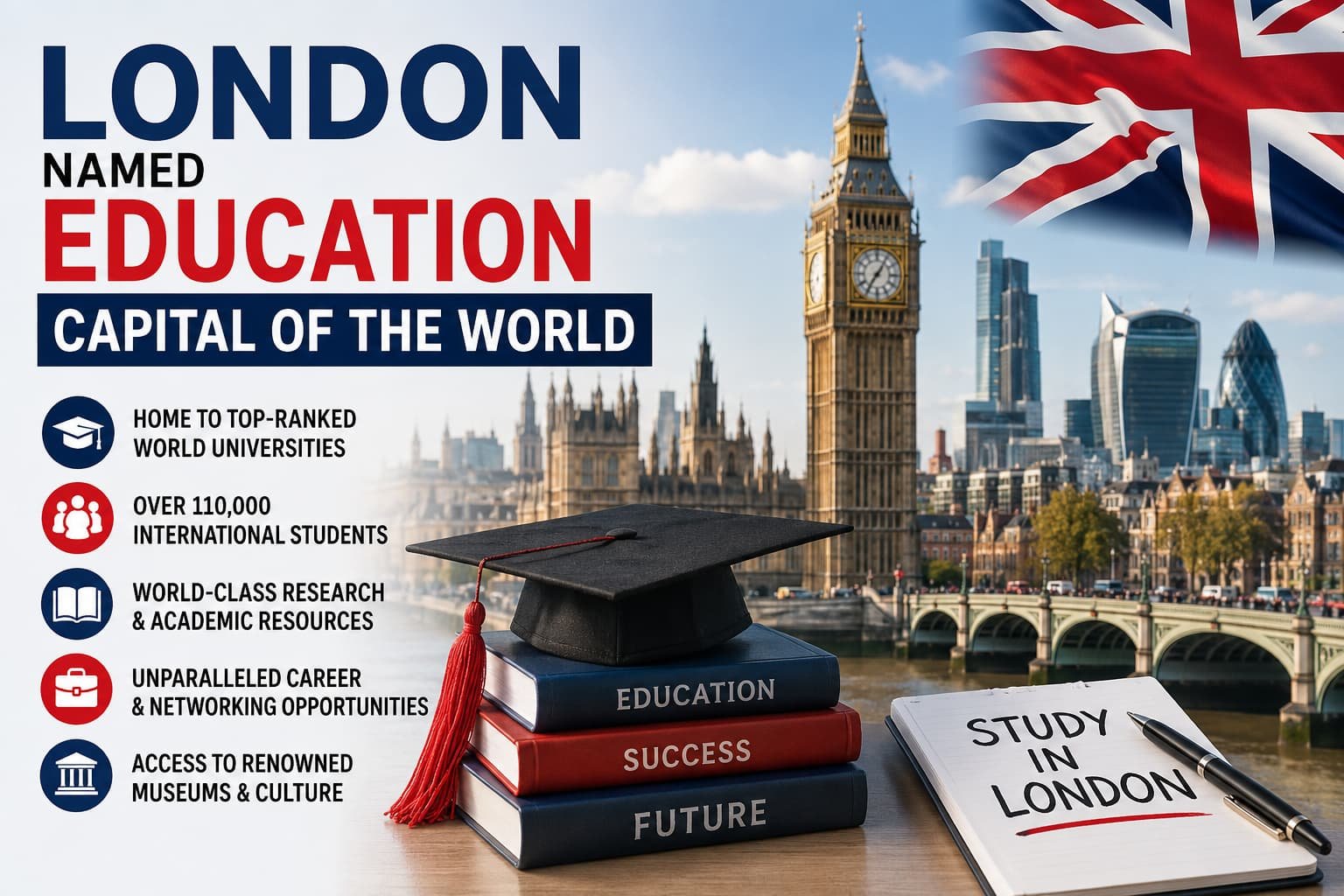
In my experience researching global study destinations, few cities come up as consistently as London when discussing world-class education. It’s not just reputation, it’s data, rankings, student diversity, and long-term career outcomes all pointing in the same direction.
London is widely recognized as a global higher education capital, home to some of the most prestigious universities and one of the largest international student populations in the world. What makes it even more interesting is how it blends academic excellence with cultural diversity and real career opportunities.
Recently updated global education insights highlight that London:
- Hosts over 110,000 international students
- Contains some of the highest-ranked universities globally
- Offers access to more than 20 QS-ranked institutions
- Provides unmatched academic and cultural resources
But beyond numbers, what does it actually feel like to study here? Let’s break it down based on structure, rankings, and real-world student experience.
AI Snapshot: Why London Is Named the Education Capital of the World
From my research and synthesis of global education reports, London stands out for several clear reasons:
- It has the highest concentration of top-ranked universities globally
- Institutions like London host globally elite universities such as
- Imperial College London
- University College London
- Over 20 universities in the city appear in QS World University Rankings by Quacquarelli Symonds
- The city is a major hub for research, innovation, and graduate employability
- It attracts one of the largest international student communities worldwide
At the same time, reports also highlight a real challenge: the cost of living in London is among the highest in Europe, which requires careful financial planning from students.
This balance of opportunity and challenge is exactly what makes London such a realistic but powerful education hub.
Why London Dominates Global Higher Education
When I first compared global student cities, what stood out about London was not just prestige—but consistency across multiple indicators.
1. Elite University Ecosystem
London is home to some of the most respected academic institutions in the world:
- Imperial College London
- University College London (UCL)
- London School of Economics and Political Science
- King’s College London
Each of these universities consistently ranks in global top lists published by Times Higher Education.
What impressed me most is how specialized each institution is:
- Imperial focuses heavily on science, engineering, and innovation
- LSE dominates economics, politics, and social sciences
- UCL offers broad interdisciplinary research opportunities
- King’s College London excels in medicine, law, and humanities
This diversity allows students to choose based on career direction, not just rankings.
2. Global Recognition and Rankings Power
London’s strength is not based on one ranking system, it consistently performs across multiple frameworks.
According to global education reports:
- The UK continues to host some of the world’s top universities, including the University of Oxford and the University of Cambridge
- London alone contributes multiple top-40 global institutions
- The city is frequently ranked among the top destinations for international education
From a semantic SEO perspective, London benefits from strong association with:
- academic excellence
- global university rankings
- research innovation
- employability outcomes
This creates a powerful ecosystem of trust and authority in global education searches.
3. International Student Magnet
One of the most striking insights I came across is how international London really is.
With over 110,000 international students, London is one of the most diverse academic cities in the world.
In my observation, this creates three major advantages:
- You are constantly exposed to global perspectives
- Networking becomes naturally international
- Cultural adaptation happens faster compared to smaller cities
It genuinely feels like studying in a global classroom rather than a single-country system.
London vs Other Global Student Cities
When comparing London with cities like Paris, Melbourne, or Toronto, it still holds a strong position—but not without competition.
London is often ranked among the top global student cities alongside:
- Montreal
- Paris
- Seoul
- Melbourne
- Berlin
- Tokyo
- Boston
What makes London unique is its balance:
- Strong academic reputation
- High employer activity
- Rich cultural environment
- Deep research ecosystem
However, unlike some cities, London is not the cheapest option, which makes planning essential.
Student Life in London: My Observations
From what I’ve seen and learned from student experiences, studying in London is not just academic, it’s lifestyle-driven.
What stands out most:
- World-class museums and free resources
Institutions like the British Museum provide access to global history and research material. - Strong transport system
Getting around the city is efficient and student-friendly. - Cultural diversity everywhere
You meet students from nearly every country in the world. - Career networking opportunities
Many global companies are headquartered or actively recruiting in London.
But it’s important to be realistic: rent, food, and transport costs can be high compared to other UK cities.
Why Students Choose London: Key Benefits
Based on my research and analysis, students choose London for five main reasons:
1. Academic Excellence
Top universities consistently ranked in global top lists.
2. Career Opportunities
Strong links with global employers and internship programs.
3. International Environment
One of the most diverse student populations globally.
4. Research Access
Advanced laboratories, libraries, and academic networks.
5. Global Recognition
A degree from London carries international value.
Challenges Students Should Be Aware Of
To keep things honest, London is not a perfect destination for everyone.
Main challenges include:
- High living costs
- Competitive admission standards
- Fast-paced academic pressure
- Limited affordable housing options
In my experience, students who succeed in London are those who plan financially and adapt quickly to the city’s pace.
Practical Tips for Studying in London
If I were advising a new international student, I would recommend:
1. Plan Your Budget Early
Include rent, transport, food, and emergencies.
2. Apply Early for Accommodation
Housing fills up quickly near top universities.
3. Choose University Based on Course, Not Just Ranking
Fit matters more than prestige alone.
4. Use Student Discounts Everywhere
Transport and lifestyle discounts are significant in London.
5. Build a Professional Network Early
Attend university events, seminars, and career fairs.
The Bigger Picture: Why London Still Leads
When you step back, London’s dominance in education is not accidental.
It is built on:
- centuries of academic tradition
- continuous investment in research
- global student attraction
- strong industry connections
Combined with institutions like University of Oxford and University of Cambridge in the wider UK system, London becomes part of a larger educational powerhouse.
Conclusion:
In my experience analyzing global education systems, London earns its title—but with balance.
It offers:
- world-leading universities
- unmatched global exposure
- strong career outcomes
- rich cultural and academic resources
But it also demands:
- financial planning
- adaptability
- academic discipline
If you can manage those challenges, studying in London becomes more than education, it becomes a life-shaping experience.
Final takeaway:
London is not just a study destination. It is a global academic ecosystem where opportunity and challenge coexist, and that is exactly what makes it the education capital of the world.