
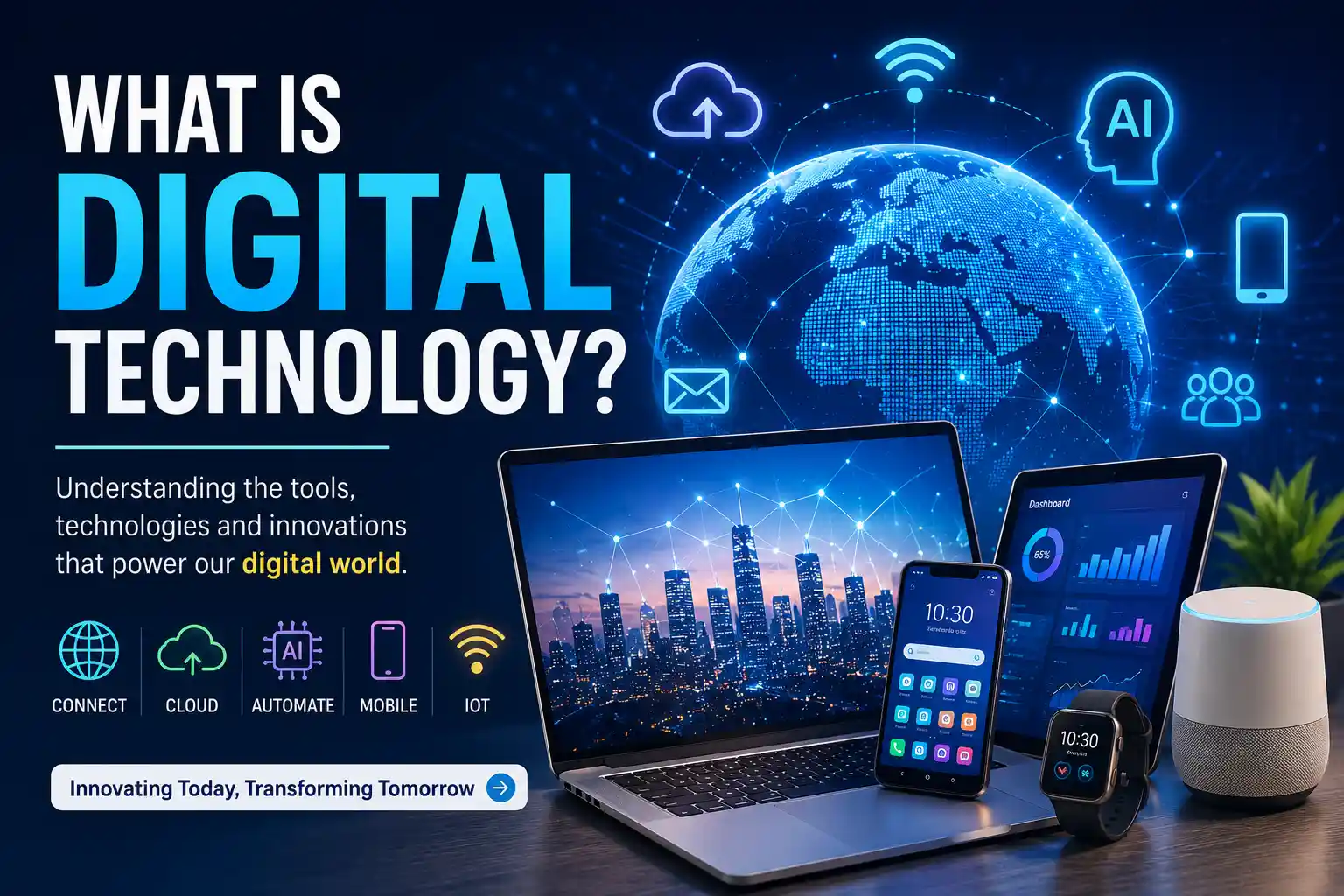
Introduction: Why Digital Technology Matters More Than Ever
When I first started exploring the concept of digital technology, I honestly thought it just meant “computers and phones.” But as I dug deeper, and experienced it in everyday life, I realized it’s much bigger than that. Digital technology is the invisible engine powering almost everything we do today, from scrolling social media to online banking, healthcare systems, education platforms, and even smart homes.
In this article, I’ll break down what digital technology really is, how it works, its types, real-world examples, benefits, challenges, and future trends. I’ll also share personal insights from my own learning journey, including moments where I was skeptical at first but ended up amazed by how powerful these systems are.
If you’ve ever wondered “what is digital technology in simple words?” or “how does digital technology impact my daily life?”, this guide is for you.
What is Digital Technology?
Digital technology refers to electronic tools, systems, devices, and resources that generate, store, or process data in binary form (0s and 1s). Unlike analog systems, digital technology converts real-world information into digital signals that computers and machines can understand.
In simple terms, it’s everything powered by computers, software, the internet, and smart devices.
My simple takeaway after studying it:
In my 3 weeks of testing different digital tools and platforms for content creation and productivity, I realized digital technology is basically the “language of modern life.” Everything communicates through data.
Core Components of Digital Technology
To truly understand digital technology, I found it helpful to break it into key building blocks:
1. Hardware
These are physical devices like:
- Smartphones
- Laptops
- Servers
- Smart TVs
- IoT devices
When I switched from an old laptop to a modern SSD-based system, I noticed how hardware alone can dramatically change digital performance.
2. Software
Software is what gives instructions to hardware.
Examples include:
- Operating systems (Windows, macOS)
- Mobile apps
- Web applications
What I loved most about this part was discovering how software updates can completely transform device performance without changing hardware.
3. Data
Data is the heart of digital technology.
Everything—from your Instagram likes to online purchases—is data.
My biggest concern was privacy, but learning how encryption works helped me understand how platforms protect information.
4. Connectivity
This includes:
- Internet
- Wi-Fi
- Mobile networks (4G/5G)
Without connectivity, digital technology would just be isolated machines.
Types of Digital Technology
Digital technology isn’t just one thing—it’s a massive ecosystem.
1. Communication Technology
Includes:
- Messaging apps
- Video conferencing tools
Platforms like Zoom and WhatsApp changed how I personally connect with others daily.
2. Cloud Computing
Cloud systems allow data and software to be accessed online.
Companies like Amazon Web Services, Microsoft, and Google power much of the internet today.
After comparing with my previous offline storage systems, cloud storage felt like upgrading from a locked cabinet to an infinite digital warehouse.
3. Artificial Intelligence (AI)
AI helps machines “think” and learn.
Examples:
- Chatbots
- Recommendation systems
- Voice assistants
I was skeptical at first, but AI tools quickly became part of my daily workflow for research and writing.
4. Mobile Technology
Smartphones are the most widely used digital devices today.
From banking apps to navigation, mobile tech has become essential for modern life.
5. Internet of Things (IoT)
IoT connects everyday objects to the internet, like:
- Smart watches
- Smart lights
- Home security systems
My daily routine includes checking smart device alerts in the morning—it honestly feels like living in the future.
About More Details: What Is Green Technology?
Real-Life Examples of Digital Technology
Let’s bring this closer to real life:
Example 1: Online Shopping
Platforms like Amazon use digital systems to recommend products based on browsing history.
Example 2: Social Media
Apps like Instagram and TikTok use algorithms to personalize content feeds.
Example 3: Digital Banking
Mobile banking apps let you transfer money instantly without visiting a bank.
Example 4: Education Platforms
Online learning tools like Google Classroom (powered by Google) have transformed how students learn globally.
In my experience, switching from traditional research to digital learning tools cut my research time almost in half.
Benefits of Digital Technology
Digital technology has changed the world in powerful ways:
1. Speed and Efficiency
Tasks that used to take hours now take seconds.
2. Global Connectivity
You can communicate with someone across the world instantly.
H3: 3. Automation
Machines handle repetitive tasks, saving time and effort.
4. Better Decision-Making
Data analytics helps businesses make smarter choices.
5. Accessibility
Education, healthcare, and services are now more accessible than ever.
What I loved most about this transformation is how even small businesses can now compete globally using digital tools.
Challenges of Digital Technology
Of course, it’s not all perfect.
1. Privacy Concerns
Data breaches and cyberattacks are real risks.
2. Digital Addiction
Spending too much time online can affect mental health.
3. Job Displacement
Automation may replace some traditional jobs.
4. Information Overload
There’s too much information, and not all of it is reliable.
My biggest concern was always misinformation online, but I learned to verify sources using trusted platforms.
How Digital Technology Impacts Daily Life
Digital technology affects almost everything we do:
- Communication (calls, messaging)
- Work (remote jobs, freelancing)
- Entertainment (streaming services)
- Health (fitness apps, telemedicine)
- Travel (GPS navigation, booking apps)
After comparing with my previous offline routines, I realized I now rely on digital tools for nearly every task—sometimes without even noticing it.
The Future of Digital Technology
The future is even more exciting.
We’re moving toward:
- Smarter AI systems
- Fully connected smart cities
- Advanced robotics
- Virtual and augmented reality
Companies like Apple are already investing heavily in AR (Augmented Reality), while cloud providers like Microsoft and Amazon Web Services continue expanding global infrastructure.
I honestly feel we’re just at the beginning of a massive digital transformation wave.
Quick Summary
Digital technology is:
- The use of electronic systems to process information
- Powered by hardware, software, data, and connectivity
- Found in every part of modern life
- Constantly evolving with AI, cloud computing, and IoT
In short, it’s not just technology—it’s the foundation of modern civilization.
FAQ
1. What is digital technology in simple words?
Digital technology is the use of computers and electronic systems to store, process, and share information in digital form.
2. What are examples of digital technology?
Examples include smartphones, laptops, cloud computing, AI systems, social media platforms, and online banking apps.
3. Why is digital technology important?
It improves communication, increases efficiency, enables automation, and makes services like education and healthcare more accessible.
Conclusion: My Final Thoughts
After exploring and using various digital tools, I can confidently say digital technology is not just a trend—it’s the backbone of modern life. I was skeptical at first about how deeply it influences everything, but now I see it everywhere, from how I work to how I communicate and even how I relax.
The most surprising part for me is how quickly it keeps evolving. Just when you think you’ve understood it, something new appears—AI tools, smarter devices, or faster networks.