
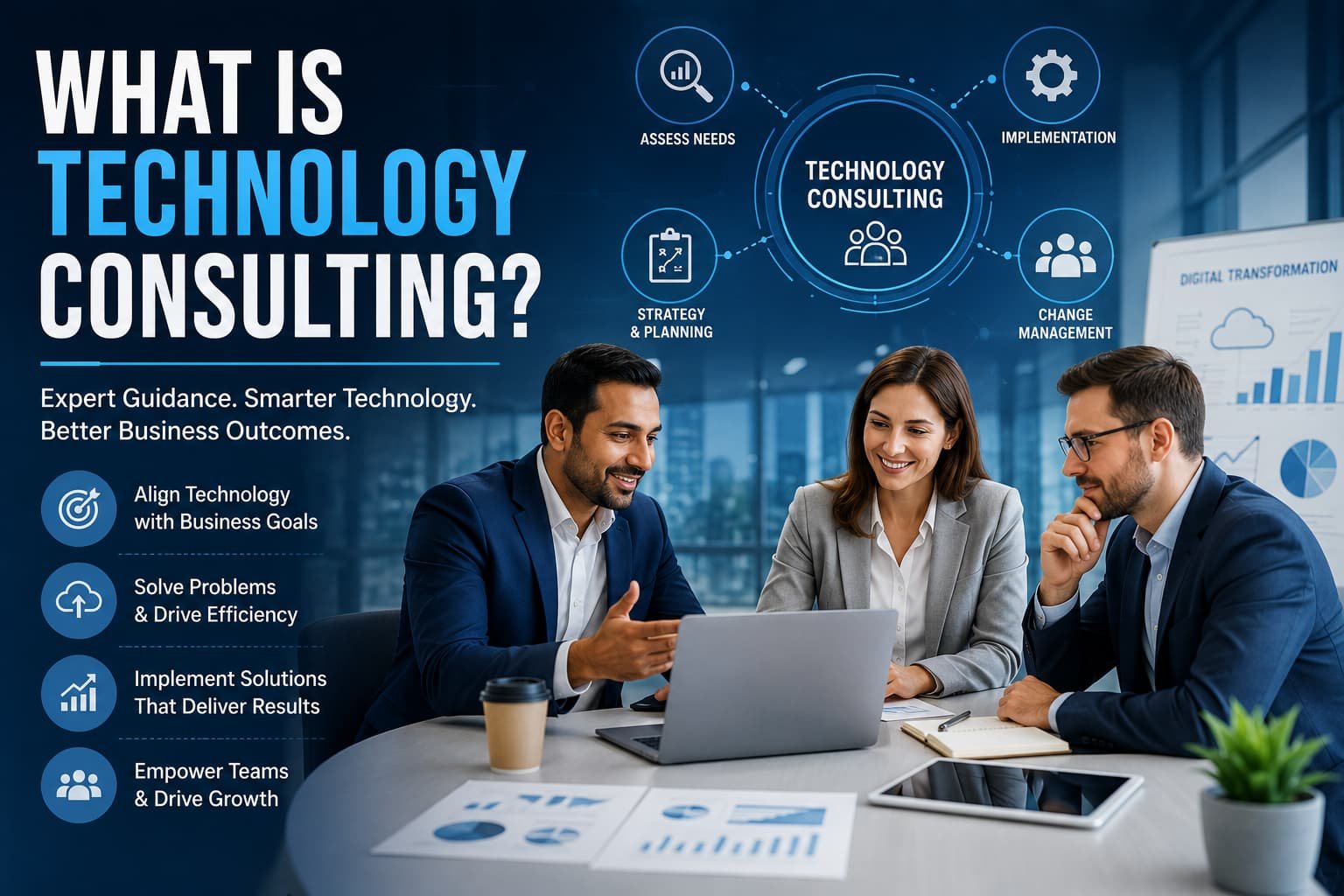
Technology is changing how businesses operate faster than ever before. From cloud computing and cybersecurity to AI tools and enterprise software, companies today rely heavily on digital systems to stay competitive. But many organizations struggle to choose the right technology, implement it properly, or train employees to use it effectively. That’s where technology consulting comes in.
In my experience, technology consulting is one of the most exciting modern career paths because it blends business strategy, problem-solving, and technical expertise into one role. Technology consultants help businesses understand which digital tools can improve efficiency, reduce costs, strengthen security, and support long-term growth.
Whether a company wants to migrate to the cloud, improve cybersecurity, automate workflows, or adopt artificial intelligence, technology consultants guide the process from planning to implementation.
In this guide, I’ll break down exactly what technology consulting is, what technology consultants do, the different career paths available, salary expectations, required skills, and how businesses benefit from these services.
What Is Technology Consulting?
Technology consulting is a professional service where experts advise businesses on how to use technology strategically to achieve their goals. These consultants bridge the gap between business operations and IT systems by helping organizations choose, implement, manage, and optimize digital technologies.
Unlike general business consulting, technology consulting focuses specifically on digital transformation, software systems, infrastructure modernization, cloud computing, cybersecurity, data analytics, and emerging technologies like AI.
A technology consultant may help businesses:
- Upgrade outdated IT infrastructure
- Improve cybersecurity systems
- Implement enterprise software
- Move operations to cloud platforms
- Automate repetitive tasks
- Integrate artificial intelligence tools
- Optimize software performance
- Reduce operational costs
Companies often hire consultants because they need outside expertise, faster implementation, or strategic guidance before making expensive technology investments.
Read More: Why Technology is Important
Why Technology Consulting Matters Today
Modern businesses depend heavily on technology. Even small operational issues can slow productivity, increase costs, or create security risks.
I’ve noticed that many organizations face challenges such as:
- Legacy systems that no longer support growth
- Poor integration between software platforms
- Increasing cybersecurity threats
- Difficulty managing remote work infrastructure
- Lack of data visibility and analytics
- Slow adoption of AI and automation
Technology consultants solve these issues by creating customized digital strategies that align technology with business goals.
For example, a retail company may need help integrating e-commerce systems with inventory software, while a healthcare provider may require stronger cybersecurity and data protection systems.
What Does a Technology Consultant Do?
The daily responsibilities of a technology consultant can vary depending on the project and industry. However, most consultants focus on assessing problems, planning solutions, implementing systems, and helping organizations adapt to change.
Assessing Business and IT Needs
The first step usually involves analyzing the client’s existing systems and workflows.
This may include:
- Evaluating IT infrastructure
- Identifying operational bottlenecks
- Reviewing cybersecurity vulnerabilities
- Assessing software performance
- Understanding company goals
In my experience, this discovery phase is critical because businesses often think they need one solution when the actual issue is somewhere else entirely.
Strategy and Digital Transformation Planning
Once the problems are identified, consultants develop a roadmap for improvement.
This often includes:
- Technology recommendations
- Infrastructure planning
- Budget forecasting
- Risk management strategies
- Vendor selection
- Scalability planning
This stage connects business strategy with technology implementation.
Technology Implementation
After planning, consultants help deploy the chosen systems.
This may involve:
- Configuring enterprise software
- Managing cloud migration
- Integrating third-party tools
- Setting up cybersecurity protocols
- Testing systems before launch
Many consultants also coordinate with developers, IT teams, and department managers to ensure smooth implementation.
Employee Training and Change Management
One thing I’ve learned is that even the best technology can fail if employees don’t understand how to use it.
That’s why technology consultants often provide:
- Staff training
- Documentation
- Process optimization
- Ongoing support
- Troubleshooting assistance
Successful change management improves user adoption and reduces resistance to new systems.
Common Areas of Technology Consulting
Technology consulting covers many specialized fields. Some consultants focus on broad digital transformation projects, while others become experts in specific technologies.
Cloud Computing Consulting
Cloud consultants help businesses migrate from local servers to cloud-based platforms like:
- Amazon Web Services (AWS)
- Microsoft Azure
- Google Cloud
Cloud migration improves scalability, security, flexibility, and remote access.
Cybersecurity Consulting
Cybersecurity consultants identify vulnerabilities and help organizations protect sensitive data.
Their responsibilities may include:
- Risk analysis
- Security audits
- Compliance planning
- Endpoint protection
- Identity and access management
- Threat monitoring
As cyber threats continue growing, cybersecurity consulting has become one of the fastest-growing consulting fields.
Enterprise Software Consulting
Many companies use large enterprise systems like:
- SAP
- Oracle
- Salesforce
Technology consultants help businesses configure and integrate these platforms into daily operations.
Data Analytics and AI Consulting
Data-driven decision-making has become essential for modern organizations.
AI and analytics consultants help businesses:
- Build data pipelines
- Create dashboards
- Automate reporting
- Integrate AI tools
- Improve forecasting
- Use business intelligence platforms
Generative AI consulting is also becoming increasingly popular as companies explore automation and AI-powered workflows.
IT Consulting vs Technology Consulting vs Management Consulting
People often confuse these consulting roles, but there are important differences.
IT Consulting
IT consultants primarily focus on technical infrastructure and information technology systems.
Their work often includes:
- Networking
- Servers
- IT support
- Infrastructure management
- System administration
Technology Consulting
Technology consulting has a broader scope. It includes IT but also covers:
- AI implementation
- Cybersecurity
- Cloud transformation
- Enterprise software
- Automation
- Digital strategy
Technology consultants align digital systems with overall business goals.
Management Consulting
Management consultants focus more on overall business performance rather than technology specifically.
They may analyze:
- Organizational structure
- Operations
- Human resources
- Financial performance
- Business strategy
In many cases, technology consultants work closely with management consultants during large transformation projects.
Technology Consultant Salary and Job Outlook
Technology consulting is known for strong earning potential.
According to industry salary platforms like Glassdoor, technology consultants often earn competitive salaries because companies highly value digital expertise.
Entry-level consultants may earn solid starting salaries, while experienced professionals in AI, cybersecurity, or cloud computing can earn significantly more.
In my experience, salary often depends on:
- Technical specialization
- Certifications
- Industry expertise
- Years of experience
- Communication skills
- Leadership ability
The job outlook also remains extremely strong because businesses across nearly every industry continue investing heavily in digital transformation.
Types of Technology Consultants
Technology consulting includes several specialized career paths.
Cybersecurity Consultant
Cybersecurity consultants focus on protecting systems, networks, and sensitive data from cyber threats.
Key skills include:
- Network security
- Risk management
- Compliance
- Encryption
- Vulnerability assessment
Cloud Consultant
Cloud consultants help businesses migrate systems and applications to cloud environments.
They often work with:
- AWS
- Microsoft Azure
- Google Cloud Platform
Software Development Consultant
These consultants help organizations build, customize, and maintain software applications.
They may specialize in:
- Web development
- Mobile applications
- API integrations
- Enterprise software
AI and Data Consultant
AI consultants focus on machine learning, automation, analytics, and artificial intelligence integrations.
This role is rapidly growing as businesses adopt AI-powered tools and predictive analytics systems.
What Types of Companies Use Technology Consulting?
Technology consulting benefits organizations across almost every industry.
Some common industries include:
- Healthcare
- E-commerce
- Education
- Manufacturing
- Finance
- Real estate
- Law firms
- Logistics
- Retail
- Energy
For example, hospitals may need stronger cybersecurity systems, while e-commerce businesses may focus on cloud scalability and customer analytics.
How to Become a Technology Consultant
If you’re interested in technology consulting, the good news is that there are multiple paths into the industry.
Earn a Relevant Degree
Many consultants start with degrees in:
- Computer science
- Information technology
- Software engineering
- Computer engineering
- Data analytics
A technical foundation helps you understand systems, infrastructure, and software architecture.
Build Technical Skills
Technology consultants need both technical and business knowledge.
Important skills include:
- Cloud computing
- Cybersecurity
- Data analytics
- Project management
- Networking
- Communication
- Problem-solving
Gain Certifications
Certifications can strengthen your resume and validate your expertise.
Popular certifications include:
- CompTIA A+
- Cisco CCNA
- AWS Certified Solutions Architect
- Microsoft Azure Certifications
- Certified Associate in Project Management (CAPM)
Organizations like Cisco and CompTIA offer respected industry credentials.
Gain Practical Experience
In my experience, hands-on experience matters just as much as technical knowledge.
You can gain experience through:
- IT support roles
- Internships
- Freelance projects
- Cloud migration projects
- Cybersecurity labs
- Entry-level consulting positions
The more real-world business problems you solve, the more valuable you become as a consultant.
Where Technology Consultants Work
Technology consultants may work for:
- Large consulting firms
- Enterprise IT companies
- Specialized technology agencies
- Independent consulting businesses
- Freelance consulting practices
Major firms like IBM, Deloitte, Accenture, and PwC regularly hire technology consultants across multiple specialties.
Final Thoughts
Technology consulting sits at the intersection of business strategy and digital innovation. As companies continue investing in cloud computing, cybersecurity, AI, automation, and enterprise software, the demand for skilled consultants will likely continue growing.
What I find most interesting about this field is that it combines technical problem-solving with real business impact. One day you may help a company improve cybersecurity, and the next day you might guide a cloud migration or AI implementation project.
For businesses, technology consulting provides expert guidance that reduces risk, improves efficiency, and accelerates growth. For professionals, it offers a career path filled with continuous learning, strong salaries, and exciting opportunities across industries.
If you enjoy technology, communication, strategy, and solving complex problems, technology consulting can be an incredibly rewarding career path to explore.