
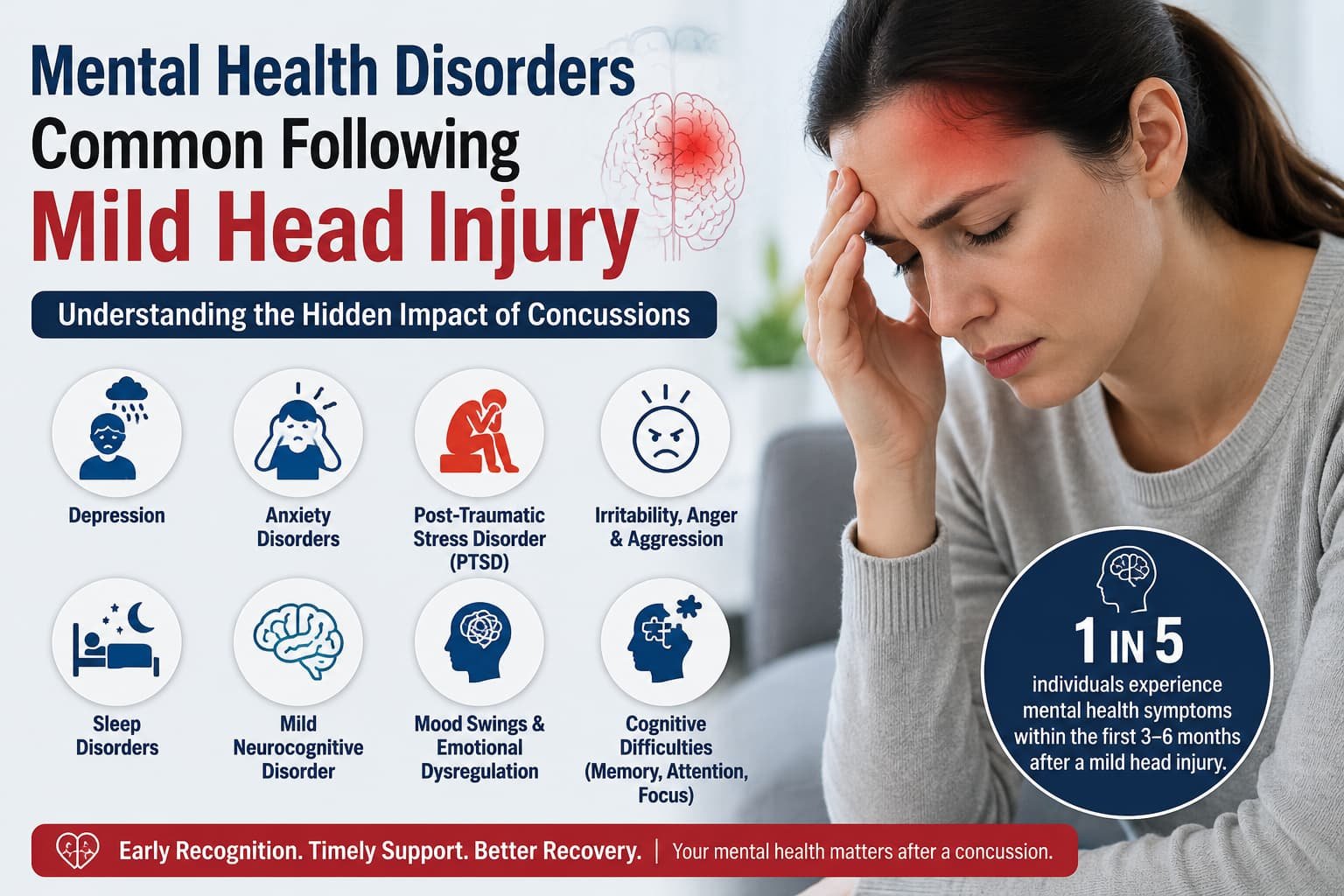
A mild head injury may not always look serious from the outside. In many cases, people walk away from a concussion thinking they are “fine” after a few days of rest. But in my experience researching brain injury recovery and following recent medical findings, the emotional and psychological effects of a mild traumatic brain injury can sometimes last much longer than the physical symptoms.
New findings from researchers supported by National Institutes of Health and National Institute of Neurological Disorders and Stroke show that nearly 1 in 5 people experience mental health symptoms within months after a mild traumatic brain injury (mTBI). These symptoms often include depression, anxiety, irritability, sleep disturbances, and Post-Traumatic Stress Disorder.
What makes this issue particularly concerning is that many patients never receive proper mental health follow-up after a concussion. The physical injury heals, but emotional and cognitive symptoms quietly continue in the background.
Over the past few years, doctors and researchers have started paying much closer attention to the connection between concussions and long-term psychological health. And honestly, the evidence is becoming impossible to ignore.
Why Mild Head Injuries Affect Mental Health More Than People Realize
For years, mild traumatic brain injuries were often described as “minor” injuries. But modern research tells a different story.
A concussion can disrupt brain function in ways that affect:
- Emotional regulation
- Sleep cycles
- Stress response
- Memory and concentration
- Mood stability
- Anxiety control
In simple terms, even a mild injury can temporarily change how the brain processes emotions and stress.
Researchers involved in the TRACK-TBI initiative found that symptoms frequently peak within the first three to six months after injury, not immediately afterward. That delay often catches patients and families off guard.
In my experience reading patient recovery stories and medical reports, this delayed reaction is one of the biggest reasons mild head injuries are underestimated.
Someone may physically recover enough to return to work or school, yet suddenly begin struggling with:
- Mood swings
- Irritability
- Panic attacks
- Persistent sadness
- Social withdrawal
- Trouble focusing
At first, many people do not connect these symptoms to the original head injury.
The Most Common Mental Health Disorders After Mild Head Injury
Major Depressive Disorder (MDD)
One of the most frequently reported conditions after mild traumatic brain injury is Major Depressive Disorder.
People often describe feeling emotionally “flat” after a concussion. Others report losing motivation, interest, or energy weeks after the injury.
Common symptoms include:
- Persistent sadness
- Fatigue
- Low motivation
- Feelings of hopelessness
- Changes in appetite
- Difficulty enjoying normal activities
Studies supported by National Institutes of Health show that depression risk increases significantly after concussion compared to people without head injury.
In some cases, symptoms become severe enough to interfere with work, relationships, or daily functioning.
Anxiety Disorders After Concussion
Another major issue following mTBI is anxiety.
This may appear as:
- Constant worry
- Panic attacks
- Racing thoughts
- Fear of another injury
- Social anxiety
- Physical tension
Many patients also develop heightened sensitivity to stress after injury.
I have noticed that people recovering from concussion often become frustrated because they “don’t feel like themselves anymore.” That uncertainty can fuel anxiety even more.
In some cases, patients develop Generalized Anxiety Disorder, where worry becomes persistent and difficult to control.
PTSD Following Mild Traumatic Brain Injury
One of the strongest findings from recent concussion studies is the link between mild head injury and PTSD.
This is especially common when the injury results from:
- Car accidents
- Physical assault
- Sports trauma
- Falls
- Military incidents
Researchers including Murray B. Stein found that traumatic circumstances surrounding the injury often contribute directly to post-traumatic stress symptoms.
People with PTSD after concussion may experience:
- Flashbacks
- Nightmares
- Hypervigilance
- Emotional numbness
- Avoidance behaviors
- Sudden fear responses
Interestingly, the emotional trauma connected to the accident itself can sometimes affect recovery just as much as the physical injury.
Irritability, Anger, and Emotional Dysregulation
One symptom that families often notice first is irritability.
Even mild damage to areas involved in emotional control can lead to:
- Short temper
- Anger outbursts
- Emotional sensitivity
- Frustration intolerance
- Sudden mood changes
In many cases, patients feel guilty because they cannot control their emotional reactions the way they used to.
This emotional dysregulation is more common than most people realize after concussion.
From what I have seen in patient interviews and recovery experiences, families sometimes mistake these changes for personality problems instead of neurological symptoms.
That misunderstanding can create tension at home and slow recovery further.
Sleep Problems and Cognitive Difficulties
Sleep disturbances are another major issue after mild head injury.
Common complaints include:
- Chronic insomnia
- Fragmented sleep
- Fatigue during the day
- Vivid dreams
- Difficulty staying asleep
Poor sleep then worsens anxiety, depression, memory problems, and concentration difficulties.
Researchers also describe something called Mild Neurocognitive Disorder.
This may involve:
- Forgetfulness
- Brain fog
- Slower thinking
- Difficulty multitasking
- Reduced attention span
For students and professionals, these symptoms can become extremely frustrating because they interfere with productivity and confidence.
Who Is Most at Risk After a Concussion?
Not everyone develops long-term mental health problems after a mild traumatic brain injury.
However, researchers have identified several important risk factors.
These include:
- Previous mental health conditions
- Lack of social support
- High stress levels
- Litigation or financial stress after injury
- History of anxiety or depression
- Violent or traumatic injury circumstances
- Poor sleep during recovery
In the TRACK-TBI studies led by researchers including Geoff Manley, patients with prior psychological difficulties were more likely to experience persistent symptoms.
That is why doctors increasingly recommend emotional screening after concussion, not just neurological evaluation.
Why Follow-Up Care Matters So Much
One of the biggest problems in concussion recovery is the lack of long-term follow-up care.
Many patients leave the emergency department after imaging scans appear normal. They are told to rest for a few days and monitor symptoms.
But emotional symptoms often develop later.
In my experience reviewing modern concussion research, this delayed progression is one of the most overlooked aspects of mild traumatic brain injury.
Doctors now emphasize the importance of monitoring patients for several months after injury.
This may include:
- Mental health screening
- Cognitive evaluations
- Sleep assessments
- Therapy referrals
- Neurological follow-up
- Stress management support
Early intervention can significantly improve long-term outcomes.
Practical Recovery Tips After Mild Head Injury
Recovery is not only about physical healing. Mental and emotional recovery matter equally.
Here are some practical steps that experts commonly recommend:
1. Do Not Ignore Emotional Symptoms
Many people try to “push through” anxiety or depression after concussion.
That usually delays recovery.
If mood changes continue for weeks, seek professional support.
2. Prioritize Sleep
Sleep is critical for brain healing.
Helpful habits include:
- Consistent bedtime schedules
- Reducing screen exposure at night
- Limiting caffeine
- Creating a calm sleep environment
3. Return to Activities Gradually
Trying to resume full work or school responsibilities too quickly may worsen symptoms.
Gradual pacing is often more effective.
4. Seek Cognitive and Psychological Support
Therapists, neurologists, and rehabilitation specialists can help patients manage symptoms effectively.
Support groups may also reduce feelings of isolation.
5. Track Symptoms Over Time
Keeping a symptom journal helps identify patterns and triggers.
This can improve communication with healthcare providers.
What Researchers Are Still Trying to Understand
Although scientists now better understand the connection between concussion and mental health, many questions remain unanswered.
Researchers continue studying:
- Biological mechanisms linking brain injury to depression
- Long-term cognitive effects
- Brain inflammation after mTBI
- PTSD recovery patterns
- Predictive biomarkers
- Personalized treatment approaches
Organizations such as National Institutes of Health and National Institute of Neurological Disorders and Stroke continue funding large-scale research initiatives to improve diagnosis and treatment strategies.
The growing focus on concussion-related mental health is already changing how doctors approach recovery care.
Final Thoughts
Mild head injuries are often called “mild,” but the emotional and psychological consequences can be very real.
Depression, anxiety, PTSD, irritability, sleep problems, and cognitive difficulties affect a significant number of people months after a concussion. In many cases, these symptoms are invisible to others, which makes recovery even more challenging.
The encouraging news is that awareness is improving.
Researchers, neurologists, and mental health specialists now recognize that concussion recovery should involve both physical and emotional care. Early screening, proper follow-up, strong support systems, and professional treatment can make a major difference in long-term recovery.
In my experience, the most important lesson is simple: never dismiss ongoing emotional or cognitive symptoms after a head injury. The brain needs time, support, and proper care to heal fully.
And sometimes, recognizing the hidden side of concussion recovery is the first real step toward getting better.