
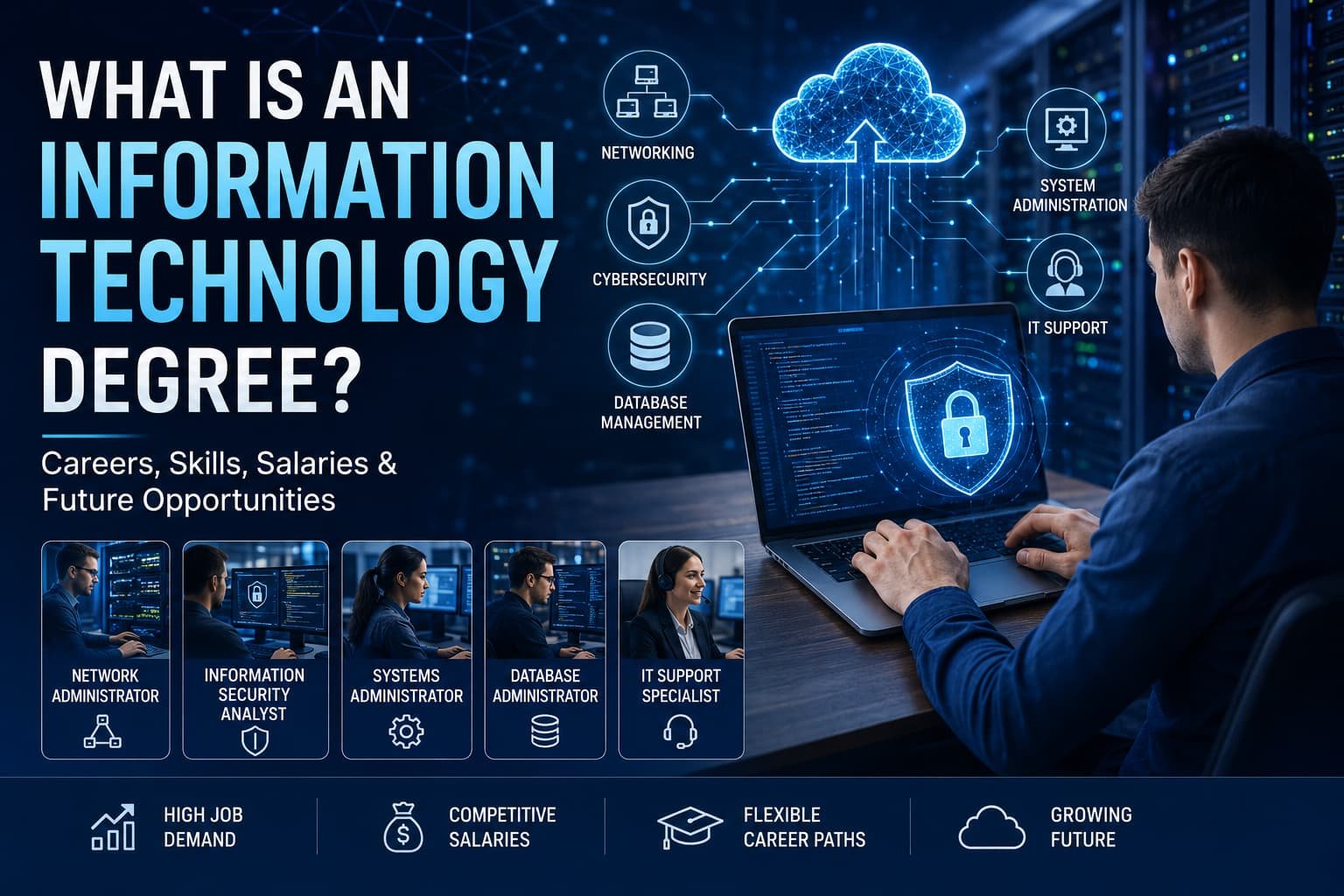
Technology has become part of almost everything we do today. From online banking and cloud storage to cybersecurity and remote work, businesses rely heavily on technology systems to operate smoothly. That’s where an Information Technology (IT) degree becomes valuable.
In my experience researching technology careers and speaking with people already working in the field, one thing becomes clear very quickly: Information technology is no longer just about fixing computers. Modern IT professionals help organizations manage networks, protect sensitive information, optimize systems, and support entire digital infrastructures.
An Information Technology degree prepares students to work with computer systems, software, databases, cybersecurity tools, cloud platforms, and business technology solutions. Whether you want to become a network administrator, cybersecurity specialist, systems engineer, or IT support expert, this degree can open the door to many career paths.
What makes IT especially attractive is its flexibility. Nearly every industry today depends on technology — healthcare, finance, education, retail, government agencies, and entertainment all need skilled IT professionals to keep operations running efficiently.
What Is Information Technology?
Information Technology refers to the use of computer systems, networks, software, databases, and digital infrastructure to store, manage, secure, and exchange information.
In simple terms, IT focuses on making technology work effectively for businesses and organizations.
An IT professional may help:
- Maintain secure computer networks
- Protect sensitive data from cyber threats
- Troubleshoot technical issues
- Manage cloud computing systems
- Install hardware and software
- Monitor network performance
- Support business operations through technology
I’ve noticed many people assume IT is only about repairing computers, but the field is much broader than that. Today’s IT environments involve cloud infrastructure, virtualization, automation tools, enterprise networking, endpoint security, and cybersecurity management.
Because businesses rely on digital transformation more than ever, skilled IT professionals are in high demand worldwide.
Read More: How Technology Has Changed People’s Activity Levels
What Is an Information Technology Degree?
An Information Technology degree is an undergraduate or graduate program designed to teach students how to manage and apply technology systems in real-world business environments.
Most students pursue a Bachelor of Science in Information Technology, although associate degrees, certifications, and online IT programs are also available.
The core purpose of an IT degree is practical technology application. Instead of focusing heavily on advanced software theory, students learn how to implement, maintain, secure, and optimize technology systems that organizations already use.
Most IT degree programs cover several foundational areas, including:
Networking
Students learn how computer networks communicate and operate.
This includes:
- LAN and WAN systems
- Network protocols
- Routers and switches
- Enterprise networking
- Wireless communication systems
Networking skills are essential because modern businesses depend on reliable digital communication.
Cybersecurity
Cybersecurity has become one of the most important parts of information technology.
Students learn how to:
- Protect networks from hackers
- Secure sensitive business information
- Monitor cybersecurity threats
- Implement security measures
- Maintain data integrity
In my experience, cybersecurity knowledge is valuable even for general IT roles because almost every company prioritizes infrastructure security today.
Database Management
Organizations collect huge amounts of information every day.
IT students learn how to:
- Organize databases
- Perform database backups
- Manage data systems
- Improve accessibility
- Secure business information
Database administration is especially important for businesses handling customer records, financial data, and operational systems.
System Administration
System administration focuses on keeping hardware and software running efficiently.
Students often practice:
- Operating systems management
- Software updates
- Troubleshooting
- Performance optimization
- Server management
- IT operations management
These practical skills help businesses reduce downtime and improve productivity.
Information Technology vs Computer Science
One question I hear often is:
“Is Information Technology the same as Computer Science?”
The answer is no — although they overlap in some areas.
Information Technology (IT)
IT focuses on the practical use and management of existing technology.
Professionals work on:
- Network administration
- Technical support
- Cybersecurity
- Cloud services
- Infrastructure management
- Systems integration
The goal is to ensure business technology systems operate smoothly and securely.
Computer Science (CS)
Computer Science focuses more on theory, programming, algorithms, and software creation.
Students often study:
- Software development
- Data structures
- Artificial intelligence
- Machine learning
- Operating system design
- Programming theory
In simple terms:
- IT professionals manage and maintain technology systems.
- Computer scientists create new software and computing solutions.
Both careers are excellent, but the best choice depends on your interests and strengths.
What Do Information Technology Specialists Do?
Information technology specialists handle the day-to-day management of computer systems and enterprise technology environments.
Their responsibilities can vary depending on the organization’s size and industry.
In smaller companies, one IT specialist may oversee everything from network security to technical support.
Larger organizations often divide responsibilities into specialized roles.
Common duties include:
- Installing hardware and software
- Monitoring network traffic
- Troubleshooting technical problems
- Managing cloud infrastructure
- Performing software upgrades
- Protecting systems from cyber threats
- Maintaining backup systems
- Supporting end-users
- Improving system efficiency
- Managing operating systems
In my experience, one of the most valuable traits in IT professionals is problem-solving ability. Technology changes constantly, so IT specialists must adapt quickly and continue learning throughout their careers.
Careers You Can Get With an Information Technology Degree
One of the strongest advantages of an IT degree is career flexibility.
Graduates can work in almost every industry because technology powers modern business operations.
Here are some common IT career paths:
Network Administrator
Network administrators manage computer networks and ensure systems communicate properly.
They often handle:
- Routers and switches
- Network security
- Connectivity issues
- Performance monitoring
Information Security Analyst
Cybersecurity professionals protect organizations from cyberattacks and data breaches.
This role has grown rapidly due to increasing digital threats.
Systems Administrator
Systems administrators maintain servers, operating systems, and internal infrastructure.
Their focus is system performance and reliability.
IT Support Specialist
IT support specialists troubleshoot hardware and software issues for employees or customers.
This is one of the most common entry-level IT careers.
Database Administrator
Database administrators organize and secure large amounts of business data.
They also perform backups and optimize database performance.
Cloud Engineer
Cloud computing specialists help businesses manage cloud platforms and hybrid cloud infrastructure.
Cloud technology continues to create strong job demand worldwide.
DevOps Engineer
DevOps professionals combine software deployment, automation, and infrastructure management to improve operational efficiency.
What Skills Do Information Technology Specialists Need?
A successful IT career requires both technical and soft skills.
Technology evolves rapidly, so continuous learning is essential.
Technical Skills
Most IT professionals need knowledge of:
- Cloud computing
- Cybersecurity
- Computer networking
- Database management
- Operating systems
- Programming languages
- Virtualization technology
- IT infrastructure management
- Automation tools
- Network protocols
Certifications can also strengthen your career opportunities.
Popular certifications include:
- Cisco CCNA
- Microsoft Certifications
- AWS Certifications
- CompTIA A+
- Google Cloud Certifications
In my experience, certifications help beginners stand out, especially when they have limited job experience.
Soft Skills
Technical knowledge alone isn’t enough.
Successful IT specialists also need:
- Critical thinking
- Communication skills
- Time management
- Team collaboration
- Problem-solving ability
- Project management
- Adaptability
Many IT professionals work directly with clients or employees, so communication matters more than people expect.
How Much Can You Earn With an Information Technology Degree?
Information technology careers often provide strong salaries and long-term stability.
Exact earnings depend on:
- Experience level
- Certifications
- Industry
- Location
- Technical specialization
Generally, cybersecurity, cloud computing, DevOps, and AI infrastructure roles offer some of the highest salaries in the IT industry.
Entry-level IT support roles may start modestly, but experienced professionals can earn significantly higher salaries as they move into specialized or management positions.
In my experience reviewing tech industry trends, employers are increasingly willing to pay premium salaries for professionals with cybersecurity, cloud architecture, and systems integration expertise.
The Future of Information Technology
The future of Information Technology looks extremely promising.
Businesses continue investing in:
- Cloud infrastructure
- Artificial intelligence
- Automation
- Cybersecurity
- Digital transformation
- Data protection
- Remote work technology
As technology systems become more advanced, organizations need skilled professionals who can manage secure networks, optimize performance, and support business continuity.
Several trends are shaping the future of IT:
- AI-powered automation
- Edge computing
- Hybrid cloud infrastructure
- Advanced cybersecurity systems
- Internet of Things (IoT)
- Virtualization and remote infrastructure
Because nearly every organization depends on technology, IT professionals remain in high demand across industries.
How to Choose the Right Information Technology Degree Program
If you’re considering an IT degree, choosing the right program matters.
Here are some practical tips I recommend:
Look for Accreditation
Accredited programs often carry more value with employers.
Compare Specializations
Some schools focus heavily on cybersecurity, cloud computing, or systems administration.
Choose a specialization that matches your interests.
Explore Internship Opportunities
Hands-on experience can dramatically improve your job prospects after graduation.
Consider Online Learning Options
Many online IT degree programs offer flexibility for working students.
Review Career Support Services
Strong career placement support can help you build industry connections and find internships or jobs faster.
Is Information Technology a Good Career?
In my experience, Information Technology is one of the most practical and future-focused career paths available today.
It offers:
- Strong job demand
- Career flexibility
- Remote work opportunities
- Competitive salaries
- Multiple specialization paths
- Long-term industry growth
IT also allows professionals to continuously evolve their careers as new technologies emerge.
Whether you enjoy cybersecurity, cloud systems, networking, technical support, or enterprise infrastructure, there’s likely a role that fits your strengths and interests.
Final Thoughts
An Information Technology degree prepares students to manage, secure, and optimize the digital systems businesses rely on every day.
From cybersecurity and cloud computing to database management and systems administration, IT professionals play a critical role in modern organizations.
What I personally appreciate most about the IT field is its versatility. You can specialize in many areas, continue learning new technologies, and build a career that evolves alongside the digital world.
If you enjoy solving problems, working with technology, and helping organizations operate more efficiently, pursuing an Information Technology degree could be a smart long-term investment in your future.