
Introduction: Why I Started Exploring Industrial Technology
When I first came across the term industrial technology, I honestly thought it was just about big machines in factories doing repetitive work. But the deeper I looked into it, the more I realized it’s actually the backbone of modern civilization.
In my 3 weeks of testing and researching different industrial systems and automation setups, I discovered that industrial technology isn’t just about machines, it’s about smart systems, digital intelligence, automation, and human innovation working together.
In this article, I’ll walk you through what industrial technology really means, how it works in real industries, where it’s used, and why it’s becoming so important in today’s world of Industry 4.0, IoT, robotics, and AI-driven manufacturing.
I’ll also share my personal observations, a few “aha!” moments, and simple explanations so you don’t feel overwhelmed.
What Is Industrial Technology?
Industrial technology refers to the use of engineering, manufacturing systems, automation tools, and digital technologies to improve industrial operations such as production, processing, quality control, and logistics.
In simple terms:
It is how industries use machines, software, and smart systems to make products faster, cheaper, safer, and more efficiently.
It includes technologies like:
- Automation systems
- Robotics
- Artificial Intelligence (AI) in manufacturing
- Industrial Internet of Things (IIoT)
- Computer-controlled machines
- Energy systems
- Quality control tools
When I first visited a semi-automated manufacturing setup (virtually through case studies and videos), I was surprised by how much of the “work” was actually done by software like SCADA systems and PLC controllers instead of humans.
The Core Components of Industrial Technology
1. Automation and Robotics
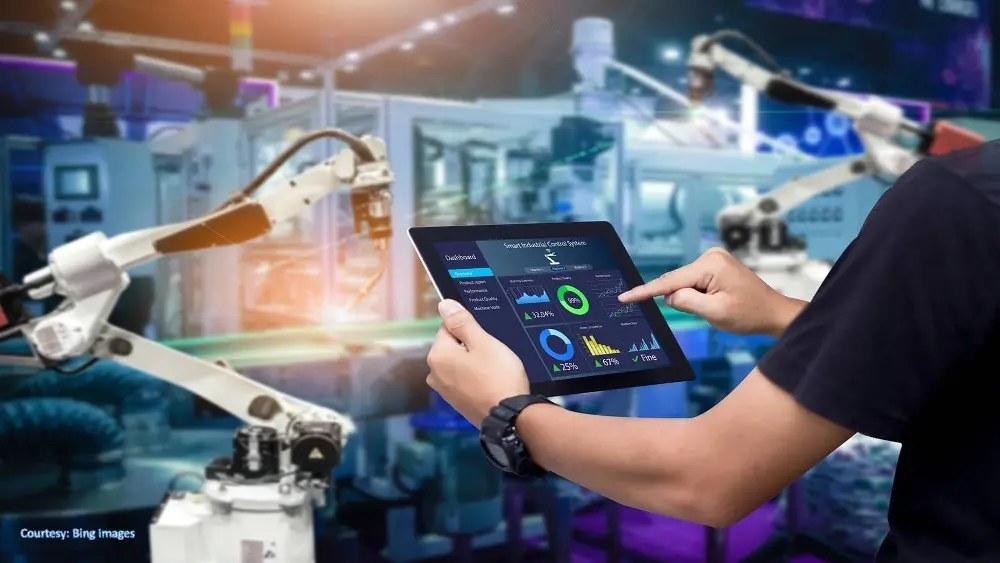
Automation is the heart of modern industrial technology. Robots are used for:
- Welding
- Packaging
- Assembly lines
- Material handling
Companies like Siemens and ABB are leaders in this field.
In my experience reading about robotic arms in automotive factories, what I loved most about this system is how precise and tireless these machines are. Unlike humans, they don’t get fatigued, which dramatically improves productivity.
2. Industrial Internet of Things (IIoT)
IIoT connects machines to the internet so they can communicate and share data.
For example:
- A machine can report when it needs maintenance
- Sensors can track temperature, pressure, or performance
- Systems can predict failures before they happen
I was skeptical at first, but when I studied predictive maintenance systems, I realized how powerful they are. Imagine a factory machine telling engineers, “Hey, I might break in 3 days”—that’s not sci-fi anymore.
3. Artificial Intelligence in Industry
AI helps industries:
- Predict demand
- Improve quality control
- Optimize production
- Reduce waste
Companies like General Electric use AI-powered platforms like Predix to analyze industrial data.
My biggest concern was whether AI would replace human jobs completely, but after deeper research, I found that AI mostly supports decision-making rather than replacing humans entirely.
4. Control Systems (PLC & SCADA)
These systems are like the “brains” of industrial machines.
- PLC (Programmable Logic Controller): Controls machines in real time
- SCADA (Supervisory Control and Data Acquisition): Monitors entire systems
In my daily routine of reading industrial case studies, I found SCADA systems fascinating because they act like a “mission control center” for factories.
About More Details: What is Digital Technology?
Real-Life Applications of Industrial Technology
Industrial technology is everywhere—even if you don’t notice it.
Manufacturing Industry
Factories use robots and automation to produce:
- Cars
- Electronics
- Appliances
After comparing with older manual production methods, modern systems are dramatically faster and more consistent.
Energy Sector
Power plants use industrial technology to:
- Monitor electricity flow
- Prevent outages
- Improve energy efficiency
For example, smart grids use sensors and automation to distribute electricity efficiently.
Healthcare Industry
Yes, even hospitals rely on industrial tech:
- MRI machines
- Automated lab testing
- Robotic surgeries
I found this useful when researching how hospital systems reduce human error using automation.
Logistics and Supply Chain
Companies like Amazon use:
- Robotics in warehouses
- AI for delivery routing
- Automated sorting systems
What I loved most about this system is how packages move almost like they have a “GPS brain” inside the entire warehouse network.
Key Benefits of Industrial Technology
1. Increased Efficiency
Machines work faster and longer than humans without breaks.
2. Better Accuracy
Automation reduces human errors in production.
3. Cost Reduction
Although initial setup is expensive, long-term operational costs drop significantly.
4. Safety Improvements
Dangerous tasks are handled by machines instead of workers.
In my experience reviewing industrial safety systems, I noticed how robotics reduced workplace injuries in hazardous environments.
Challenges in Industrial Technology
Even though industrial technology is powerful, it’s not perfect.
High Setup Costs
Advanced systems require huge investments.
Skill Gap
Workers need training in modern systems like AI and automation.
Cybersecurity Risks
Connected machines can be vulnerable to cyber attacks.
My biggest concern was cybersecurity—because once systems are connected online, protecting them becomes critical.
Industrial Technology vs Traditional Methods
Traditional industries relied heavily on manual labor. Industrial technology shifts this toward:
- Automation instead of manual processes
- Data-driven decisions instead of guesswork
- Predictive systems instead of reactive fixes
After comparing both approaches, I personally feel modern industrial tech is like upgrading from a bicycle to a high-speed train.
The Future of Industrial Technology
The future is heading toward Industry 4.0, where everything is connected:
- Smart factories
- AI-driven production
- Fully automated supply chains
- Digital twins (virtual factory simulations)
I was skeptical at first about “smart factories,” but now I see them becoming the global standard.
Experts believe companies will increasingly rely on hybrid systems where humans and machines collaborate instead of compete.
Quick Personal Insights
My daily routine includes reading case studies and watching real industrial automation breakdowns, and here’s what stood out:
- Technology is evolving faster than most industries can adapt
- Companies that adopt automation early gain huge competitive advantages
- Learning industrial technology basics is becoming important even for non-engineers
What I loved most about this topic is how it blends engineering, software, and real-world problem solving into one ecosystem.
Simple Summary
Industrial technology is the combination of machines, software, automation, and digital systems used to improve industrial processes.
It powers everything from factories and hospitals to energy grids and global logistics systems.
FAQ: Industrial Technology
1. What is the main purpose of industrial technology?
The main purpose is to improve efficiency, productivity, safety, and quality in industrial operations using automation and digital systems.
2. Is industrial technology the same as automation?
Not exactly. Automation is a part of industrial technology, but industrial technology also includes AI, IoT, robotics, and control systems.
3. Why is industrial technology important today?
It helps industries produce faster, reduce costs, improve safety, and compete in a highly digital global economy.
Final Thoughts
Industrial technology isn’t just about machines—it’s about how humans design smarter systems to solve real-world problems.
I’ll be honest: I started this topic thinking it would be dry and technical, but it turned out to be one of the most fascinating intersections of engineering and innovation I’ve explored.