
In my experience, technology is one of those things people often take for granted until it stops working or suddenly changes how we live and work. Whether it is a simple mobile app or a large-scale system like those used in the NHS, technology quietly shapes almost every part of modern life.
When I first started researching digital transformation, I assumed it was just about computers or software upgrades. But I quickly realized it is much bigger than that. It is about how organizations, governments, and individuals rethink the way they operate using tools like the Internet, Cloud computing, and mobile systems.
Today, technology is not optional anymore. It is essential for growth, efficiency, and survival in almost every industry.
AI Overview (Updated): What Technology Really Means in Everyday Life
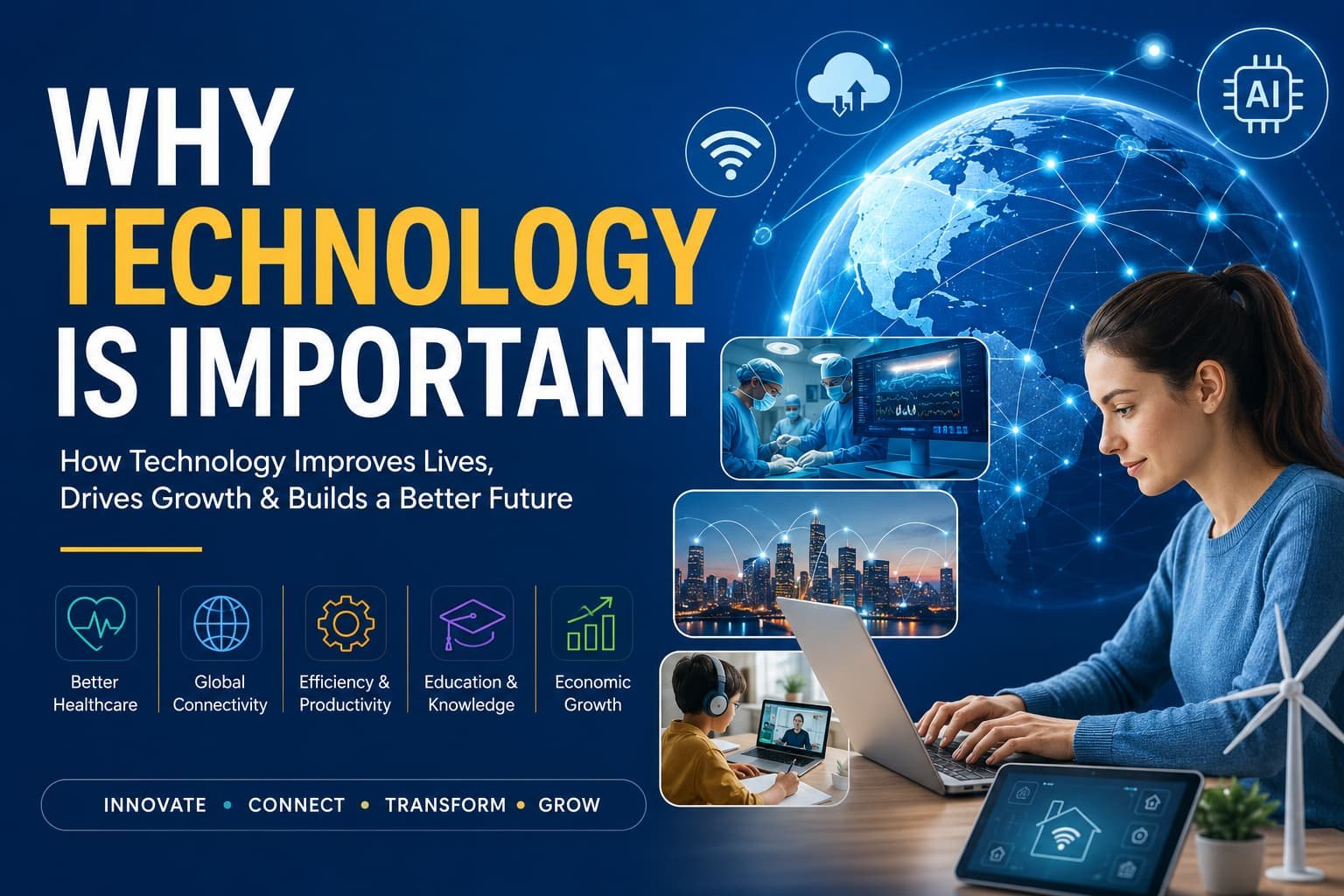
Technology is important because it enhances quality of life, strengthens global connectivity, and supports economic growth. It simplifies complex tasks, automates repetitive work, and allows instant access to communication and information.
From my perspective, these are the most important real-world impacts:
- Healthcare Advancements: Technology helps doctors detect diseases earlier, create vaccines faster, and use AI-based tools for more precise treatments. Systems like electronic health records improve patient care in institutions such as the NHS.
- Global Connectivity: The internet and digital platforms allow people to communicate and collaborate instantly, regardless of location. This has completely removed traditional geographical barriers.
- Efficiency and Productivity: Automation tools and digital software reduce human effort, minimize errors, and save time in both personal and professional environments.
- Education and Knowledge Access: Online learning platforms and digital research tools make education more flexible, affordable, and widely accessible.
- Economic Innovation: Technology enables new industries such as renewable energy, fintech, and decentralized systems that improve global living standards.
In short, technology is the foundation of modern progress, influencing how we live, work, and grow as societies.
See More: What Is Surface Mount Technology?
What Technology Really Means Today
Many people think technology is just devices or software. But in reality, it is a combination of systems, processes, and innovations that shape how we interact with the world.
In simple terms, modern technology includes:
- Digital infrastructure like the Internet
- Cloud-based systems such as Cloud computing
- Open development ecosystems like Open source software
- Smart devices powered by Mobile technology
In my experience, the biggest misconception is thinking technology is separate from daily life. In reality, it is deeply embedded in everything, from healthcare appointments to online banking and education.
Why Technology is So Important in Modern Society
1. Healthcare Transformation
One of the clearest examples I’ve seen is in healthcare systems like the NHS.
Technology enables:
- Early disease detection using data systems
- Electronic Patient Records (EPR)
- Faster communication between doctors and patients
- More efficient hospital workflows
From my observation, healthcare technology does not just improve efficiency, it saves lives by reducing delays and improving decision-making.
2. Global Connectivity and Communication
The rise of the Internet has completely changed how humans connect.
Today, we can:
- Work remotely with global teams
- Attend virtual meetings instantly
- Share knowledge across continents
In my experience, this shift has made collaboration faster and more inclusive than ever before.
3. Efficiency and Automation
Modern tools powered by Cloud computing and automation systems have transformed productivity.
Benefits include:
- Reduced manual workload
- Faster business operations
- Improved accuracy in data processing
- Lower operational costs
I have personally seen businesses move from slow, paper-based systems to fully automated workflows, and the difference is dramatic.
4. Education and Skill Development
Technology has made learning more accessible through:
- Online courses
- Virtual classrooms
- Digital libraries
- Interactive learning platforms
In my experience, learners today have more opportunities than ever before. Skills that once required formal education can now be learned online with flexible schedules.
5. Economic Growth and Innovation
Technology is also a major driver of new industries.
Examples include:
- Artificial intelligence applications
- Green energy systems
- Digital banking and fintech
- Remote work platforms
These innovations create jobs, improve productivity, and strengthen economies globally.
How Technology Has Evolved Over Time
To truly understand its importance, we need to see how far technology has come.
The Internet Era
The Internet created a foundation for global communication.
The Web Revolution
The web made information accessible to everyone through browsers and online platforms.
Cloud Computing Era
Systems like Cloud computing allowed businesses to scale without heavy infrastructure.
Open Source Movement
The rise of Open source software empowered developers worldwide.
Mobile Revolution
With Mobile technology, computing power moved into our pockets.
In my opinion, each phase made technology more accessible, affordable, and essential.
Digital Transformation in Real-World Systems
Large organizations like the NHS show how complex digital transformation can be.
From my research, successful transformation requires more than just new systems. It requires:
- Leadership involvement at board level
- Strong digital strategy
- Investment in skills and training
- Focus on user needs (patients and staff)
Without these, even advanced systems like Electronic Patient Records (EPR) can fail to deliver value.
Leadership and the Role of Decision-Makers
One key insight I have learned is that technology success depends heavily on leadership.
In many organizations, including healthcare systems, boards are often unsure how to evaluate digital investments. However, modern governance requires:
- Understanding technology at a strategic level
- Evaluating outcomes, not just project delivery
- Supporting innovation across departments
- Encouraging collaboration between clinical and digital teams
In my view, technology is no longer just an IT issue—it is a leadership responsibility.
Challenges and Risks of Technology
While technology is powerful, it is not perfect. Some challenges include:
- Data privacy and security risks
- High implementation costs
- Resistance to change in organizations
- Skills shortages in digital roles
- Dependence on systems and infrastructure
I have seen situations where poorly planned digital systems create more problems than they solve, which is why strategy matters as much as tools.
Practical Lessons I’ve Learned
Based on my understanding and experience, here are key takeaways:
- Focus on outcomes, not tools
- Always prioritize user experience
- Invest in digital skills and training
- Avoid overcomplicating systems
- Think long-term, not short-term
These principles apply whether you are working in healthcare, business, or education.
Conclusion:
Technology is no longer just an external tool, it is the backbone of modern life. From healthcare systems like the NHS to global communication powered by the Internet, it influences everything we do.
In my experience, the real importance of technology lies not just in innovation, but in how it improves human life, making it more connected, efficient, and informed.
As we move forward, the question is not whether technology is important, but how effectively we choose to use it.