
Introduction: The Day I Realized My Phone Was Controlling Me
A few years ago, I noticed something strange about my daily routine. Every morning, before even getting out of bed, I reached for my smartphone. I checked notifications, social media, emails, and news updates almost automatically. At first, I thought it was simply a habit. But the more I researched human behavior and technology, the more I came across one powerful idea: technological determinism.
I was skeptical at first because it sounded dramatic, the idea that technology shapes society and even controls human behavior. But after looking at how smartphones, social media, artificial intelligence, and even automobiles changed how we live, work, and communicate, I realized there’s truth behind the concept.
In this article, I’ll explain what technological determinism really means, where the theory came from, real-world examples, criticisms, and why it matters more today than ever before.
If you’ve ever wondered whether humans control technology or technology controls humans, this guide will help you understand the debate clearly.
What Is Technological Determinism?
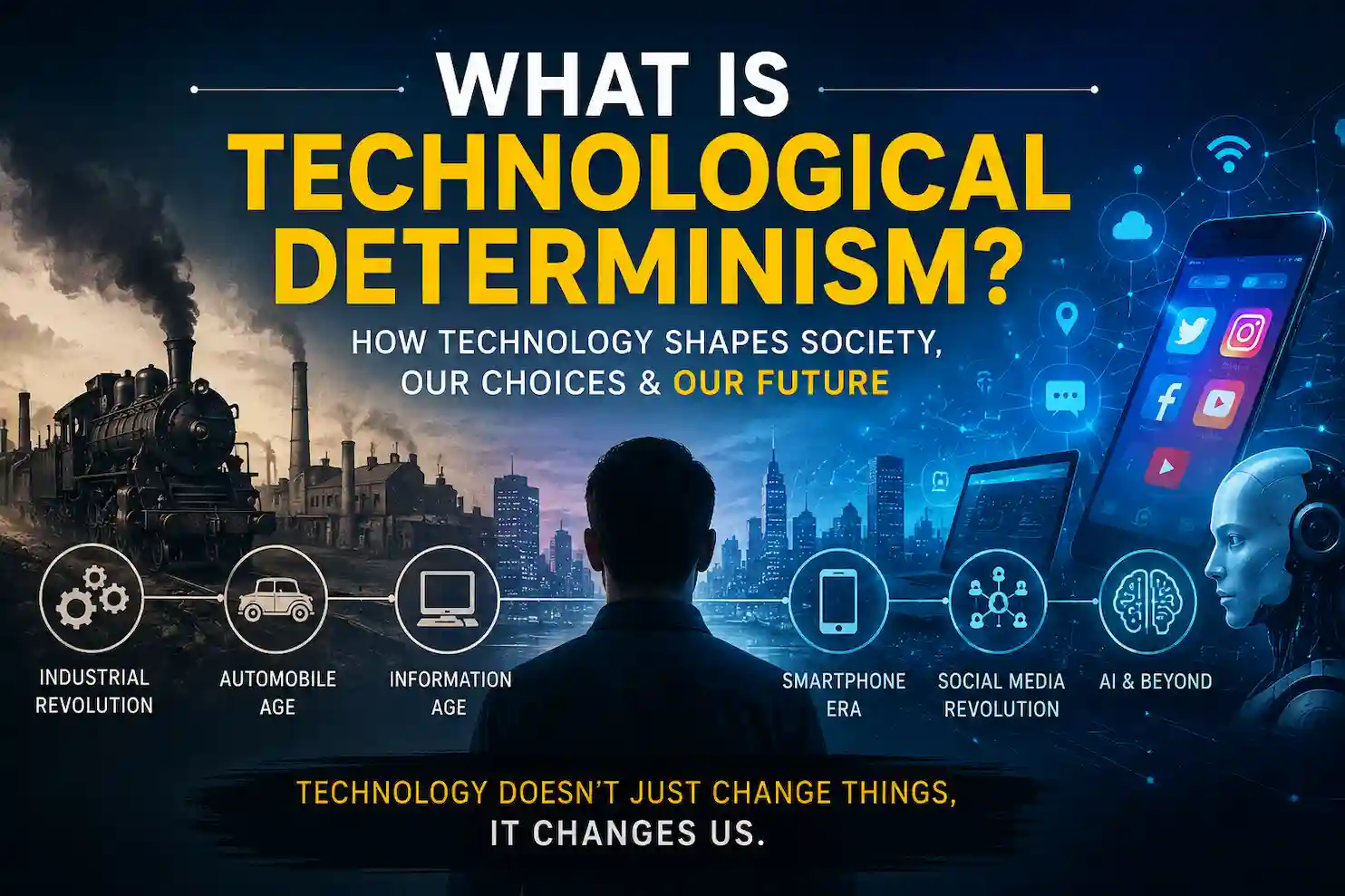
Technological determinism is the theory that technology is the main force shaping society, culture, and human behavior.
In simple words, it suggests that when new technologies appear, they significantly influence how people think, interact, work, and live. According to this idea, technological progress drives social change more than politics, culture, or individual decisions.
For example:
- The invention of the internet changed communication forever
- Smartphones transformed social interaction
- Cars reshaped city design and transportation
- Social media altered attention spans and information sharing
The core belief is that technology doesn’t just help society — it actively shapes society.
The Origin of Technological Determinism
The concept became popular through scholars like Marshall McLuhan and Thorstein Veblen.
Marshall McLuhan and “The Medium Is the Message”
One of the most famous thinkers connected to technological determinism is Marshall McLuhan, a Canadian media theorist. He argued that the medium itself — television, radio, internet, smartphones — changes society more than the actual content people consume.
His famous phrase:
“The medium is the message.”
In my experience researching digital behavior, this idea feels incredibly accurate today. For instance, short-form apps like TikTok didn’t just create entertainment trends — they changed how people consume information, communicate, and even focus.
Industrial Revolution and Early Examples
Technological determinism became easier to observe during the Industrial Revolution.
Machines transformed:
- Manufacturing
- Employment
- Transportation
- Urban development
- Family structures
Factories changed where people lived and how economies functioned. Technology directly influenced society on a massive scale.
Types of Technological Determinism
There are generally two major forms of technological determinism.
1. Hard Technological Determinism
This view believes technology develops independently and strongly controls society.
According to this perspective:
- Humans have little control over technological progress
- Society adapts to technology automatically
- Technology drives history forward
An example might be artificial intelligence replacing traditional jobs regardless of social resistance.
2. Soft Technological Determinism
This approach is more balanced.
It suggests:
- Technology influences society
- But humans still have choices and control
- Social, political, and cultural factors also matter
Personally, I think soft determinism makes more sense in the real world. Technology absolutely shapes behavior, but people, governments, and businesses also decide how technology is used.
About More Details: What Is Clean Coal Technology? A Simple Guide to How It Works and Why It Matters
Real-World Examples of Technological Determinism
Smartphones and Human Attention
One of the clearest examples is the smartphone.
I noticed my own attention span changing after years of constant notifications. Many people now:
- Consume shorter content
- Expect instant responses
- Multitask constantly
- Depend on GPS instead of memory
Apps like Instagram, TikTok, and YouTube Shorts have influenced communication styles and even social behavior.
Technology changed not just tools — but habits and expectations.
Social Media and Political Influence
Social media platforms like Facebook, X (formerly Twitter), and TikTok significantly impact:
- Elections
- News distribution
- Public opinion
- Activism
Algorithms shape what people see online. In many ways, technology influences thought patterns and cultural trends.
During global events, I’ve personally seen how misinformation spreads faster because platforms reward engagement rather than accuracy.
Remote Work Technology
Before tools like Zoom, Slack, Microsoft Teams, and Google Meet became mainstream, remote work was relatively uncommon.
Now millions of people:
- Work from home
- Attend virtual meetings
- Collaborate globally
- Build online businesses
Technology transformed workplace culture entirely.
Artificial Intelligence (AI)
AI tools like ChatGPT, Google Gemini, and automation software are already reshaping:
- Content creation
- Customer service
- Education
- Healthcare
- Programming
Many experts believe AI may become one of the strongest modern examples of technological determinism because it could redefine jobs and industries worldwide.
Advantages of Technological Determinism
Helps Explain Social Change
The theory helps explain why societies evolve rapidly after major inventions.
For example:
- Printing press → spread of education
- Internet → globalization
- Smartphones → digital culture
Encourages Technological Awareness
Understanding technological determinism helps people think critically about how devices and platforms affect daily life.
I became far more conscious about screen time once I understood how technology influences behavior psychologically.
Useful in Media and Communication Studies
Researchers often use this theory to analyze:
- Social media influence
- Digital culture
- Advertising
- Online behavior
- News consumption
Criticism of Technological Determinism
Despite its popularity, many scholars criticize the theory.
It Oversimplifies Society
Critics argue technology is not the only force shaping civilization.
Factors like:
- Politics
- Economics
- Religion
- Culture
- Human choices
also influence social development.
For example, two countries may use the same technology differently because of cultural values.
Humans Still Make Decisions
Technology itself doesn’t force people to act.
People choose:
- How to use social media
- Which technologies to adopt
- What regulations to create
This is why many experts prefer the softer version of technological determinism.
Technology Can Reflect Society, Not Just Shape It
Some technologies emerge because society demands them.
For example:
- Remote work software grew because businesses wanted flexibility
- Streaming services expanded because viewers preferred convenience
This suggests society also shapes technology.
Technological Determinism vs Social Determinism
People often confuse these concepts.
Technological Determinism
Technology shapes society.
Example:
Smartphones changed communication habits.
Social Determinism
Society shapes technology.
Example:
Consumer demand created smartphone innovation.
In reality, both forces usually interact together.
How Technological Determinism Affects Everyday Life
Many people don’t realize how deeply technology influences routines.
Shopping
E-commerce platforms like Amazon changed buying behavior completely.
Consumers now expect:
- Fast delivery
- Online reviews
- Digital payments
- Personalized recommendations
Relationships
Dating apps transformed modern relationships and social interaction.
Education
Online learning platforms changed access to knowledge globally.
I remember when online courses were considered less valuable. Today, platforms like Coursera, Udemy, and Khan Academy are widely respected.
Health and Fitness
Wearable technology like Apple Watch and Fitbit changed how people track:
- Sleep
- Heart rate
- Exercise
- Calories
Technology now actively guides health decisions.
Is Technological Determinism Still Relevant Today?
Absolutely.
In fact, I believe the theory is more relevant than ever because modern technologies evolve incredibly fast.
Emerging technologies influencing society include:
- Artificial intelligence
- Virtual reality
- Blockchain
- Robotics
- Smart homes
- Autonomous vehicles
Each innovation changes human behavior in visible and invisible ways.
For example, AI-generated content is already changing marketing, education, and search engines.
Common Problems Caused by Technological Dependence
Digital Addiction
Many people struggle with excessive screen time.
Quick Tip:
Turn off non-essential notifications and schedule phone-free hours.
Privacy Concerns
Apps and platforms collect enormous amounts of user data.
Quick Tip:
Review app permissions regularly and use strong privacy settings.
Reduced Attention Span
Short-form content may reduce deep focus for some users.
Quick Tip:
Practice distraction-free reading or use focus apps.
The Future of Technological Determinism
As technologies become more intelligent, the debate around technological determinism will likely grow stronger.
Questions society may face include:
- Will AI replace human creativity?
- Can humans control automation?
- How will virtual reality affect social interaction?
- Will people become too dependent on smart devices?
In my experience following technology trends, the key challenge is balance. Technology can improve life dramatically, but people still need awareness and responsibility.
FAQs About Technological Determinism
1. What is a simple definition of technological determinism?
Technological determinism is the belief that technology strongly influences or shapes society, culture, and human behavior.
2. Who created the theory of technological determinism?
The concept is linked to thinkers like Thorstein Veblen and Marshall McLuhan, who studied how technology affects society and communication.
3. Is technological determinism good or bad?
It can be both. Technology improves convenience and innovation, but it may also create dependency, privacy issues, and social changes people don’t fully control.
Final Thoughts
After researching technological determinism deeply, I no longer see technology as just a collection of tools. It shapes routines, communication, relationships, work, and even thinking patterns.
At the same time, I don’t believe humans are powerless. We still make choices about how technology is designed, regulated, and used.
The real lesson is awareness.
When people understand how technology influences behavior, they can make smarter decisions instead of simply reacting to every new innovation.