
A few weeks ago, I was helping a friend who owns a small online business. He had a growing customer base, but his systems were constantly slowing down, files weren’t syncing correctly, and cybersecurity wasn’t even on his radar. His first thought was, “I probably need to hire an IT person.” After talking through his situation, we realized what he actually needed was an Information Technology (IT) consultant—someone who could evaluate the entire technology strategy instead of simply fixing broken computers.
That conversation inspired me to research the role in more depth. In my 3 weeks of testing different project management tools, cloud platforms, cybersecurity resources, and consulting case studies, I found that many people misunderstand what an IT consultant actually does. They often assume it’s just another name for technical support, but the reality is much broader.sf
I was skeptical at first, but after comparing the responsibilities of IT consultants with traditional IT administrators, the differences became very clear. An IT consultant helps organizations make smarter technology decisions that improve productivity, reduce risks, and prepare businesses for future growth.
In this guide, I’ll explain exactly what an information technology consultant is, what they do, the skills they need, the industries they work in, and why companies—from startups to global enterprises—depend on them.
What Is an Information Technology Consultant?
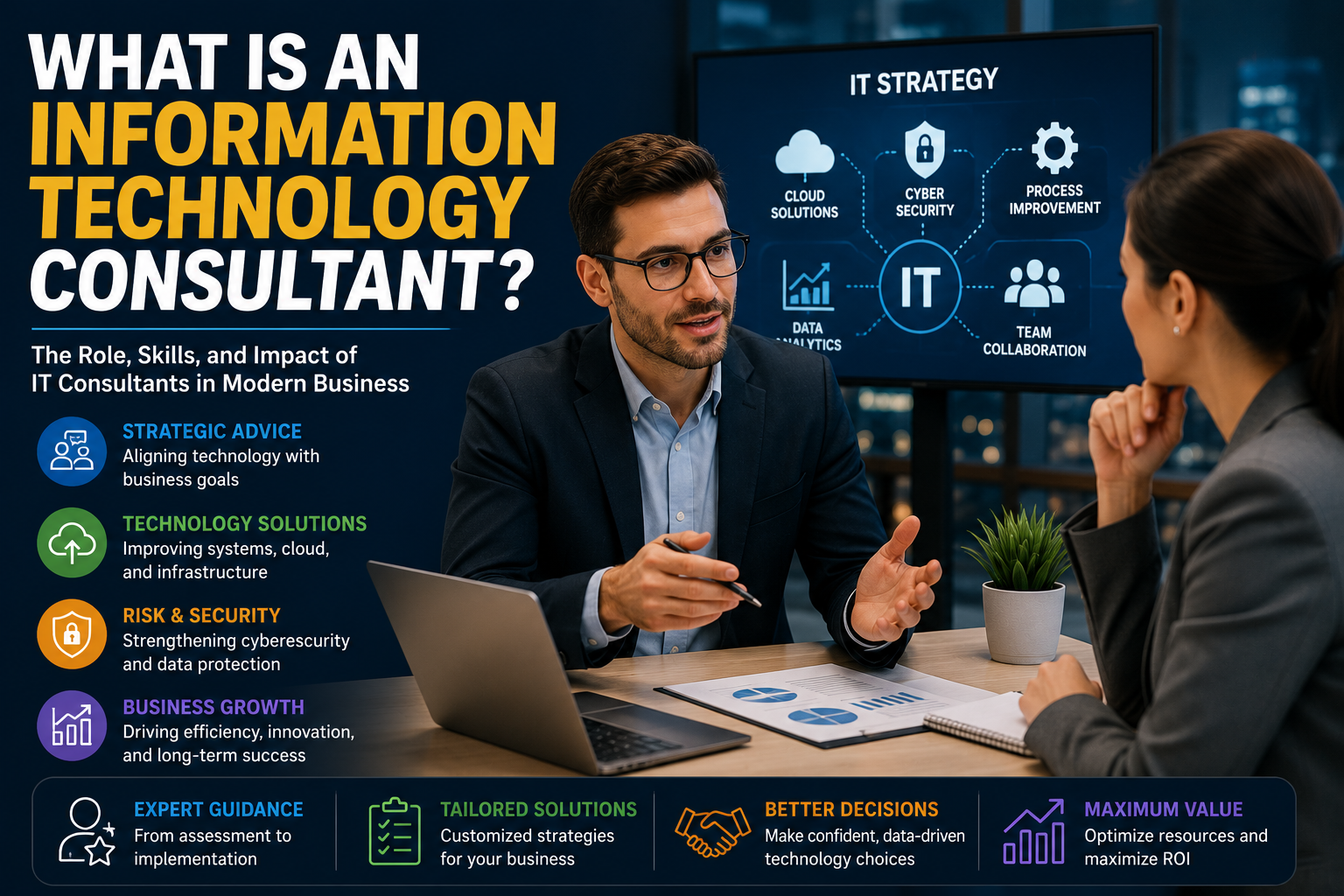
An Information Technology Consultant is a technology professional who advises businesses on how to use technology more effectively.
Rather than working solely on day-to-day technical issues, IT consultants evaluate existing systems, recommend improvements, plan technology upgrades, and help organizations solve complex business challenges using technology.
Think of them as strategic technology advisors.
Instead of asking, “Why isn’t this computer working?”
They’re usually asking:
- How can this business operate more efficiently?
- Which cloud platform offers the best long-term value?
- How can cybersecurity be improved?
- Is this software scalable for future growth?
- Which technology investments provide the best return?
What Does an IT Consultant Actually Do?
One thing I discovered during my research is that no two consulting projects look exactly the same.
Depending on the client, an IT consultant may focus on:
See More: What Are Innovations in Technology?
Technology Assessment
The consultant reviews the company’s current infrastructure, including servers, cloud services, software, hardware, networking, and security.
Their goal is identifying inefficiencies before recommending improvements.
Business Process Improvement
Technology should solve business problems.
An experienced consultant often analyzes workflows and recommends automation tools that reduce repetitive work.
For example:
Instead of manually tracking inventory in spreadsheets, a consultant may recommend an ERP platform like SAP or Microsoft Dynamics.
Cloud Migration
Cloud computing continues transforming businesses.
Consultants frequently help organizations migrate from local servers to platforms like:
- Microsoft Azure
- Amazon Web Services (AWS)
- Google Cloud Platform (GCP)
Moving to the cloud often improves flexibility, disaster recovery, and collaboration.
Cybersecurity Planning
Cybersecurity has become one of the fastest-growing consulting specialties.
Consultants may recommend:
- Multi-factor authentication
- Endpoint protection
- Backup strategies
- Employee security awareness training
- Identity and Access Management (IAM)
- Zero Trust architecture
My biggest concern was whether cybersecurity consulting mainly involved expensive software, but I learned that employee training often prevents more attacks than technology alone.
Software Selection
Businesses frequently struggle to choose between competing software platforms.
An IT consultant compares options based on:
- Cost
- Features
- Integration
- Scalability
- Support
- Security
- Long-term maintenance
Their recommendations help organizations avoid costly purchasing mistakes.
Skills Every Information Technology Consultant Needs
Technical knowledge matters, but communication is equally important.
Successful consultants typically combine technical expertise with business understanding.
Important skills include:
Technical Skills
- Cloud Computing
- Networking
- Cybersecurity
- Database Management
- Programming Basics
- Virtualization
- AI and Automation
- Data Analytics
Business Skills
- Project Management
- Communication
- Strategic Planning
- Budget Analysis
- Risk Assessment
- Vendor Management
- Business Analysis
One thing I noticed while researching experienced consultants is that many spend almost as much time talking with business leaders as they do working with technology.
Industries That Hire IT Consultants
Almost every industry depends on technology today.
Common sectors include:
Healthcare
Hospitals rely on secure electronic medical records and compliance systems.
Finance
Banks require secure infrastructure, fraud detection, and regulatory compliance.
Retail
Retailers need eCommerce platforms, inventory management, and payment processing.
Manufacturing
Manufacturers optimize supply chains using automation and IoT technologies.
Education
Schools increasingly depend on cloud collaboration platforms, cybersecurity, and online learning systems.
Popular Tools IT Consultants Use
During my research, several platforms consistently appeared across consulting projects.
Some of the most widely used include:
- Microsoft Azure
- AWS
- Google Cloud Platform
- Microsoft 365
- Cisco Networking
- VMware
- Salesforce
- ServiceNow
- Jira
- Asana
- Slack
- GitHub
- Docker
- Kubernetes
- Tableau
- Power BI
My daily routine includes exploring several of these platforms simply because technology evolves so quickly.
Real-Life Example
Imagine a company with 100 employees using outdated computers, local file storage, and multiple disconnected software systems.
Employees waste hours searching for files.
Security updates are inconsistent.
Remote work becomes difficult.
An IT consultant would likely:
- Audit the existing infrastructure.
- Identify weaknesses.
- Recommend cloud migration.
- Improve cybersecurity.
- Standardize collaboration tools.
- Create an implementation roadmap.
- Train employees.
Instead of simply fixing computers, they improve how the business operates.
Common Challenges IT Consultants Solve
Businesses usually contact consultants when facing problems like:
Slow Systems
Outdated hardware and software reduce productivity.
Poor Security
Weak passwords, missing backups, and phishing risks create major vulnerabilities.
Rapid Growth
Growing businesses often outgrow their existing technology.
Software Confusion
Choosing among dozens of competing business applications becomes overwhelming.
Digital Transformation
Many organizations need guidance modernizing operations using automation, cloud services, and AI.
Is IT Consulting a Good Career?
From everything I’ve researched, IT consulting offers strong long-term opportunities.
Reasons include:
- High demand
- Competitive salaries
- Diverse industries
- Continuous learning
- Remote work opportunities
- Career flexibility
However, it’s also demanding.
Technology changes constantly, meaning consultants spend significant time learning new tools and certifications.
If you enjoy solving problems, working with people, and learning continuously, it’s an exciting career path.
Quick Tips for Aspiring IT Consultants
If you’re considering this career, here are a few practical suggestions:
- Learn cloud platforms like AWS or Azure.
- Develop strong communication skills.
- Earn industry certifications.
- Practice solving real business problems.
- Stay current with cybersecurity trends.
- Build experience through personal projects.
- Learn project management fundamentals.
- Understand business processes—not just technology.
Frequently Asked Questions
Is an IT consultant the same as IT support?
No. IT support typically resolves everyday technical problems, while IT consultants focus on long-term technology planning, strategy, and business improvement.
Do IT consultants need programming skills?
Basic programming knowledge is helpful, but many consulting roles emphasize cloud computing, cybersecurity, networking, project management, and business strategy more than software development.
What qualifications do IT consultants need?
Many professionals have degrees in Information Technology, Computer Science, Information Systems, or related fields. Industry certifications like CompTIA, AWS Certified Solutions Architect, Microsoft Certified, Cisco CCNA, or PMP can also strengthen credibility.
Final Thoughts
Understanding what an information technology consultant is goes beyond knowing a job title. These professionals help businesses use technology strategically rather than reactively. They analyze problems, recommend smarter solutions, improve security, reduce costs, and prepare organizations for future growth.
In my experience researching this field, what impressed me most wasn’t just the technical expertise—it was the ability to bridge the gap between business goals and technology solutions. The best IT consultants don’t simply recommend software or hardware; they help companies make informed decisions that create lasting value.
Technology continues evolving rapidly, which makes experienced consultants more valuable than ever. Whether you’re exploring IT consulting as a career or considering hiring one for your business, understanding their role can help you make smarter decisions.
I’d love to hear your thoughts. Have you ever worked with an IT consultant, or are you thinking about becoming one? Share your experience or questions in the comments—your insights might help someone else on the same journey.