
A few years ago, I worked with a small business owner who managed everything manually. Customer records were stored in notebooks, inventory was tracked on paper, and invoices were created one by one. It worked—for a while.
As the business grew, however, so did the problems. Orders got misplaced, customer follow-ups were missed, and simple tasks started taking hours instead of minutes.
That’s when technology entered the picture.
After implementing a few digital tools, the business transformed almost overnight. Tasks became faster, customer service improved, and employees had more time to focus on meaningful work instead of repetitive administrative duties.
That experience taught me an important lesson: technology isn’t just for large corporations. It’s one of the most powerful tools any business can use to improve efficiency, increase profits, and stay competitive.
So, what is technology in a business, and why is it so important?
In this guide, I’ll explain what business technology means, how it works, the different types businesses use, and practical ways organizations can benefit from it.
What Is Technology in a Business?
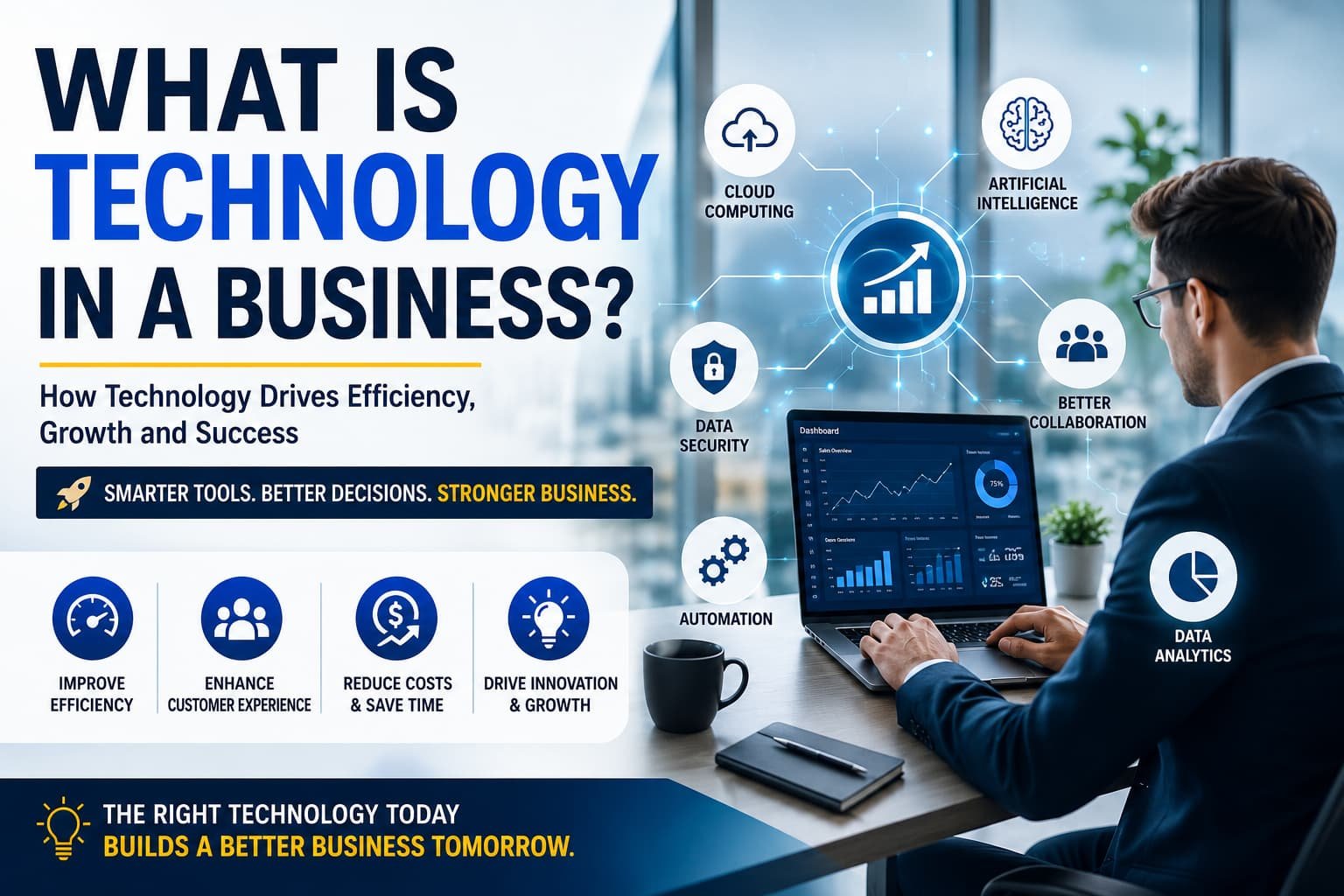
Business technology refers to the tools, systems, software, and devices that organizations use to perform operations, solve problems, improve productivity, and achieve business goals.
Simply put, technology helps businesses work smarter.
These technologies can range from basic tools like email and accounting software to advanced solutions such as artificial intelligence (AI), cloud computing, automation systems, and data analytics platforms.
Technology is now involved in nearly every part of a business, including:
- Communication
- Marketing
- Customer service
- Sales
- Accounting
- Human resources
- Inventory management
- Security
- Data analysis
Whether it’s a local startup or a global enterprise, technology plays a critical role in daily operations.
See More: What Is Information Technology Governance?
Why Technology Is Important in Business
Technology has become the backbone of modern business operations.
Without it, many companies would struggle to compete in today’s fast-moving marketplace.
Improved Efficiency
One of the biggest benefits of business technology is efficiency.
Tasks that once took hours can now be completed in minutes.
Examples include:
- Automated payroll processing
- Online invoicing
- Inventory tracking
- Customer communication
In my experience, businesses often underestimate how much time is lost to repetitive manual work until they automate it.
Better Communication
Communication tools allow teams to collaborate regardless of location.
Popular business communication platforms include:
- Microsoft Teams
- Slack
- Zoom
These tools help employees:
- Share information quickly
- Conduct virtual meetings
- Collaborate on projects
- Improve teamwork
Enhanced Customer Experience
Technology helps businesses provide faster and more personalized customer service.
Examples include:
- Live chat systems
- Customer relationship management (CRM) software
- AI-powered chatbots
- Self-service portals
Customers expect convenience, and technology helps businesses meet those expectations.
Types of Technology Used in Business
Business technology comes in many forms.
Let’s explore the most common categories.
Information Technology (IT)
Information technology includes the hardware and software used to manage information.
Examples include:
- Computers
- Servers
- Networks
- Databases
- Operating systems
IT systems help businesses store, process, and secure valuable data.
Cloud Computing
Cloud technology allows businesses to access software and data through the internet instead of relying solely on local servers.
Popular cloud platforms include:
- Amazon Web Services
- Google Cloud
- Microsoft Azure
Benefits include:
- Scalability
- Cost savings
- Remote accessibility
- Improved collaboration
Customer Relationship Management (CRM) Systems
CRM software helps businesses manage customer interactions.
Popular CRM platforms include:
- Salesforce
- HubSpot CRM
CRM systems allow businesses to:
- Track leads
- Manage customer data
- Improve sales processes
- Strengthen customer relationships
Artificial Intelligence and Automation
Artificial intelligence is becoming increasingly important in business.
AI can help automate:
- Customer support
- Data analysis
- Content recommendations
- Fraud detection
- Marketing campaigns
I was skeptical at first about how useful AI would be for everyday business operations. But after seeing businesses automate routine tasks and save countless hours, its value became obvious.
How Technology Improves Business Productivity
Productivity is one of the primary reasons organizations invest in technology.
Automating Repetitive Tasks
Many routine activities can be automated, such as:
- Sending emails
- Generating reports
- Processing invoices
- Scheduling appointments
This reduces errors and frees employees to focus on higher-value work.
Faster Decision-Making
Modern analytics tools provide real-time insights.
Business leaders can quickly evaluate:
- Sales performance
- Customer behavior
- Market trends
- Financial health
Better information leads to better decisions.
Supporting Remote Work
Remote and hybrid work models rely heavily on technology.
Cloud-based tools allow employees to:
- Access files from anywhere
- Collaborate in real time
- Attend virtual meetings
- Manage projects efficiently
Without technology, remote work would be far more difficult.
Real-World Examples of Technology in Business
Technology is everywhere in the business world.
Retail Businesses
Retailers use technology for:
- Online stores
- Digital payments
- Inventory tracking
- Customer loyalty programs
Healthcare Organizations
Healthcare providers rely on technology for:
- Electronic medical records
- Telemedicine
- Diagnostic equipment
- Patient scheduling systems
Financial Institutions
Banks use technology for:
- Mobile banking
- Fraud detection
- Online payments
- Data security
Manufacturing Companies
Manufacturers use technology to:
- Monitor production
- Improve quality control
- Automate machinery
- Manage supply chains
Regardless of industry, technology helps organizations operate more effectively.
Common Challenges Businesses Face with Technology
Although technology offers many benefits, implementation isn’t always easy.
Employee Resistance
Some employees may hesitate to adopt new systems.
Solution
Provide:
- Proper training
- Ongoing support
- Clear explanations of benefits
Cybersecurity Risks
As businesses become more digital, cyber threats increase.
Common risks include:
- Data breaches
- Ransomware attacks
- Phishing scams
Solution
Invest in:
- Security software
- Employee training
- Multi-factor authentication
- Regular system updates
Technology Costs
New systems often require investment.
Solution
Focus on long-term return on investment rather than initial costs.
Many businesses recover technology expenses through increased efficiency and productivity.
How to Implement Technology in Your Business
If you’re considering upgrading your business technology, follow these steps.
Step 1: Identify Business Challenges
Ask yourself:
- What tasks consume the most time?
- Where do errors occur?
- What processes frustrate employees or customers?
Step 2: Research Solutions
Compare different tools and platforms.
Look for solutions that:
- Fit your budget
- Meet your needs
- Scale with growth
Step 3: Train Employees
Technology is only effective when people know how to use it.
Invest in proper onboarding and training.
Step 4: Monitor Results
Measure improvements using metrics such as:
- Productivity
- Customer satisfaction
- Revenue growth
- Cost savings
Continuous evaluation helps maximize results.
Future Trends in Business Technology
Technology continues evolving rapidly.
Some major trends shaping the future include:
Artificial Intelligence
AI will continue improving automation and decision-making.
Cybersecurity Advancements
As threats grow, businesses will invest more heavily in digital protection.
Internet of Things (IoT)
Connected devices will improve operational visibility and efficiency.
Data Analytics
Businesses will increasingly rely on data-driven strategies.
Organizations that adapt to these trends will likely gain a competitive advantage.
Quick Takeaways
If you only remember a few things from this article, remember these:
- Technology helps businesses improve efficiency and productivity.
- It supports communication, customer service, and decision-making.
- Every industry can benefit from business technology.
- Successful implementation requires planning and employee training.
- Technology is an investment that often delivers long-term value.
Frequently Asked Questions
What is technology in a business?
Technology in a business refers to the tools, systems, software, and equipment used to improve operations, increase efficiency, and achieve organizational goals.
Why is technology important for businesses?
Technology helps businesses save time, reduce costs, improve customer service, increase productivity, and remain competitive in the marketplace.
What are examples of business technology?
Examples include cloud computing platforms, CRM software, accounting systems, communication tools, artificial intelligence applications, and cybersecurity solutions.
How does technology improve productivity?
Technology automates repetitive tasks, improves communication, streamlines workflows, and provides data that supports faster decision-making.
Conclusion
Technology has become an essential part of modern business success. From improving communication and customer service to increasing efficiency and supporting innovation, the right technology can transform how an organization operates.
In my experience, businesses that embrace technology strategically tend to adapt faster, serve customers better, and position themselves for long-term growth. The key is not adopting every new tool available but choosing solutions that solve real business problems.
As technology continues evolving, businesses that stay curious, adaptable, and willing to learn will be best equipped to thrive in an increasingly digital world.
How is technology impacting your business today? Take a moment to evaluate your current tools—you may discover opportunities to work smarter, grow faster, and create a better experience for both employees and customers.