
Technology has always fascinated me, but I remember one moment that completely changed how I viewed innovation. A few years ago, I watched a farmer use a drone to inspect crops that once required hours of walking through fields. Within minutes, the drone identified areas needing water and fertilizer. I was skeptical at first—could technology really make that much difference? After researching and seeing similar examples across different industries, I realized innovation isn’t just about flashy gadgets. It’s about solving real-world problems in smarter, faster, and more efficient ways.
Today, technological innovation affects nearly every part of our lives. From artificial intelligence recommending your favorite movie to wearable devices monitoring your heart rate, innovation is quietly working behind the scenes. Businesses are becoming more productive, healthcare is becoming more accurate, and education is becoming more accessible thanks to continuous technological advancements.
In this guide, I’ll explain what innovations in technology are, why they matter, the different types of innovations changing our world, and what the future might look like. Whether you’re a student, entrepreneur, or simply curious about technology, this article will help you understand the topic in a practical and easy-to-follow way.
What Are Innovations in Technology?
Technology innovation refers to the process of creating, improving, or applying new ideas, products, systems, or methods that solve problems or make existing processes more effective.
In simple words, innovation is not just inventing something new—it also means improving something that already exists.
For example:
- Smartphones replaced many standalone devices like cameras, GPS units, calculators, and MP3 players.
- Cloud computing allows businesses to access data securely from anywhere.
- Artificial intelligence helps companies automate repetitive tasks and improve customer service.
In my experience, many people confuse invention with innovation. An invention is creating something entirely new, while innovation is making it useful, practical, and valuable for everyday life.
Why Technological Innovation Matters
Technology innovation has become one of the biggest drivers of economic growth and social progress.
Here are some major reasons why innovation is important:
- Improves productivity and efficiency
- Reduces costs for businesses
- Creates new job opportunities
- Solves complex global challenges
- Improves healthcare and education
- Enhances communication worldwide
- Supports sustainable development
Think about online banking. Years ago, visiting a bank branch was unavoidable. Today, most transactions take only a few taps on your smartphone. That simple improvement has saved millions of people countless hours.
Major Types of Technology Innovations
Understanding different types of innovation makes it easier to see how technology evolves.
Artificial Intelligence (AI)
Artificial Intelligence is transforming industries faster than almost any other technology.
AI powers:
- Virtual assistants
- Chatbots
- Medical diagnosis
- Fraud detection
- Personalized recommendations
- Autonomous vehicles
I was genuinely surprised the first time I used an AI writing assistant. It wasn’t perfect, but it dramatically reduced the time needed for brainstorming and editing.
Today, AI helps businesses automate repetitive tasks while allowing employees to focus on more creative work.
Internet of Things (IoT)
The Internet of Things connects physical devices to the internet so they can communicate with each other.
Examples include:
- Smart homes
- Smart thermostats
- Connected security cameras
- Smartwatches
- Industrial sensors
These devices collect data in real time, helping users make better decisions and improve efficiency.
Read More: How Popular Culture Influenced Our Technology
Cloud Computing
Cloud computing has completely changed how businesses manage data.
Instead of storing files on one computer, cloud services allow access from anywhere with an internet connection.
Benefits include:
- Lower infrastructure costs
- Better collaboration
- Remote work support
- Automatic backups
- Improved security
Small businesses especially benefit because they no longer need expensive servers to operate efficiently.
Robotics and Automation
Automation isn’t replacing every job as some headlines suggest.
Instead, it’s taking over repetitive, dangerous, or time-consuming tasks.
Examples include:
- Manufacturing robots
- Warehouse automation
- Surgical robots
- Agricultural machinery
- Delivery robots
This allows workers to focus on higher-value responsibilities.
Blockchain Technology
Although blockchain became famous because of cryptocurrencies, its uses extend far beyond digital money.
It helps improve:
- Supply chain transparency
- Digital identity
- Secure transactions
- Medical record management
- Smart contracts
Many industries are exploring blockchain because it increases trust while reducing fraud.
Renewable Energy Technologies
Technology innovation also supports environmental sustainability.
Recent innovations include:
- Advanced solar panels
- Wind turbines
- Electric vehicles
- Battery storage
- Smart power grids
As energy demand grows, these innovations help reduce carbon emissions while improving efficiency.
Real-World Examples of Technology Innovation
Innovation becomes easier to understand when we look at everyday examples.
Healthcare
Modern healthcare now uses:
- AI-assisted diagnostics
- Robotic surgeries
- Telemedicine
- Wearable health monitors
- Electronic health records
Doctors can diagnose diseases earlier while patients receive more personalized care.
Education
Digital learning platforms have transformed classrooms.
Students now benefit from:
- Interactive online courses
- Virtual classrooms
- AI tutors
- Educational apps
- Cloud collaboration
I’ve personally taken several online courses that would have been impossible to attend in person due to location and scheduling constraints.
Retail
Shopping has changed dramatically.
Retailers use:
- Personalized recommendations
- Mobile payments
- Inventory automation
- Self-checkout systems
- Augmented reality product previews
The shopping experience has become faster and more convenient for customers.
Transportation
Transportation continues evolving through innovations like:
- Electric vehicles
- Ride-sharing apps
- Navigation systems
- Autonomous driving research
- Smart traffic management
Even GPS navigation has become so reliable that many people can barely remember using printed maps.
Challenges of Technological Innovation
While innovation creates tremendous opportunities, it also introduces challenges.
Some common concerns include:
Cybersecurity Risks
More connected devices mean greater cybersecurity threats.
Organizations must invest in stronger security systems to protect sensitive information.
Privacy Concerns
Many digital services collect user data.
Companies must balance personalization with responsible data protection.
Workforce Changes
Automation changes job requirements.
Workers increasingly need digital skills, adaptability, and continuous learning to remain competitive.
Digital Divide
Not everyone has equal access to modern technology.
Closing this gap remains an important challenge for governments and businesses worldwide.
How Businesses Drive Technology Innovation
Successful companies continuously invest in research and development.
Common innovation strategies include:
- Investing in AI tools
- Encouraging employee creativity
- Partnering with startups
- Using customer feedback
- Experimenting with new business models
One lesson I’ve learned while researching successful companies is that innovation rarely happens overnight. It usually results from hundreds of small improvements rather than one groundbreaking idea.
Practical Tips to Stay Updated With Technology Innovations
Technology evolves rapidly, but staying informed doesn’t have to be overwhelming.
Here are a few habits I personally recommend:
- Read trusted technology news regularly.
- Follow industry experts and researchers.
- Take online courses to build new skills.
- Experiment with new software and apps.
- Attend webinars and technology events.
- Join online communities that discuss emerging technologies.
Even spending fifteen minutes each day learning something new can make a noticeable difference over time.
The Future of Technology Innovation
The next decade will likely bring even more remarkable innovations.
Some emerging technologies include:
- Generative AI
- Quantum computing
- Extended reality (XR)
- Brain-computer interfaces
- Advanced biotechnology
- Space technology
- Smart cities
While it’s impossible to predict every breakthrough, one thing seems certain: technology will continue reshaping how we live, work, and communicate.
Personally, I find this exciting rather than intimidating. Every major technological shift creates new opportunities for people willing to learn and adapt.
Quick Takeaways
If you’re short on time, here are the key points:
- Technology innovation means creating or improving solutions that solve real problems.
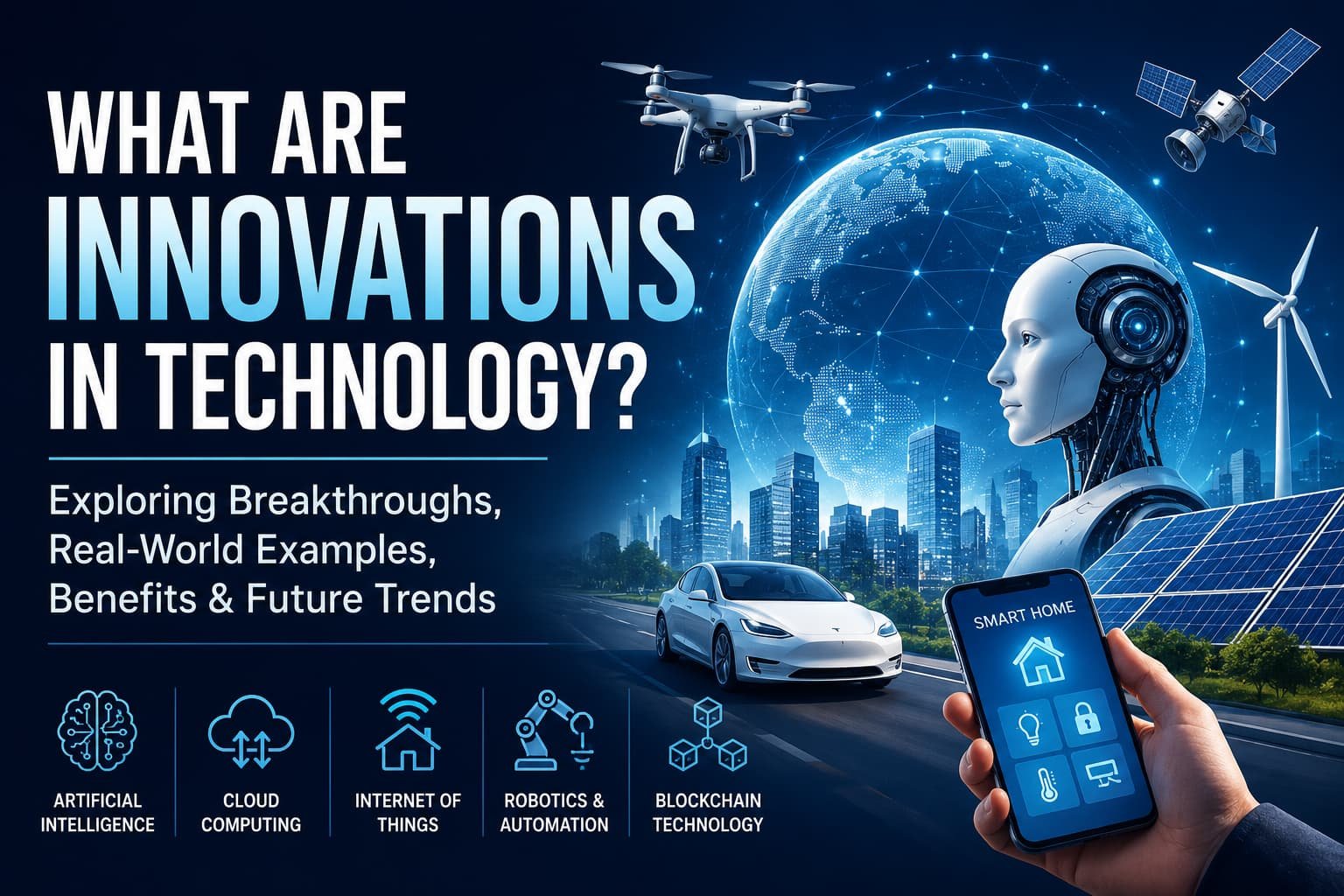
- AI, cloud computing, IoT, robotics, blockchain, and renewable energy are leading today’s innovations.
- Businesses use innovation to improve efficiency, reduce costs, and enhance customer experiences.
- Challenges such as cybersecurity, privacy, and workforce adaptation require careful attention.
- Continuous learning is the best way to stay prepared for future technological changes.
Frequently Asked Questions
What are innovations in technology?
Technology innovations are new or improved products, systems, processes, or services that solve problems, increase efficiency, or create value for individuals and organizations.
Why is technological innovation important?
Innovation drives economic growth, improves productivity, enhances healthcare and education, creates new business opportunities, and helps solve global challenges.
What are some examples of technological innovations?
Examples include artificial intelligence, cloud computing, robotics, blockchain, smart devices, renewable energy technologies, autonomous vehicles, and wearable health devices.
How does technology innovation affect everyday life?
Technology innovation improves communication, transportation, shopping, healthcare, education, banking, entertainment, and workplace productivity, making daily activities faster and more convenient.
Can small businesses benefit from technology innovation?
Absolutely. Small businesses can use cloud computing, automation software, AI-powered customer support, digital marketing tools, and online collaboration platforms to compete more effectively while reducing costs.
Conclusion
Technology innovation isn’t just about futuristic robots or groundbreaking inventions—it is about making life better through smarter solutions. From artificial intelligence and cloud computing to renewable energy and connected devices, innovation continues to reshape every industry and every aspect of our daily lives.
After exploring countless examples and watching these technologies become part of everyday routines, I’ve come to appreciate that innovation is less about chasing trends and more about solving meaningful problems. Of course, every advancement comes with challenges like cybersecurity, privacy concerns, and the need to learn new skills. But the opportunities often outweigh the obstacles when technology is used responsibly.
As technology continues to evolve, staying curious and open to learning will be one of the most valuable skills anyone can develop. Which technological innovation has impressed you the most? Share your thoughts and experiences in the comments—I’d love to hear your perspective and learn from your experiences too.