
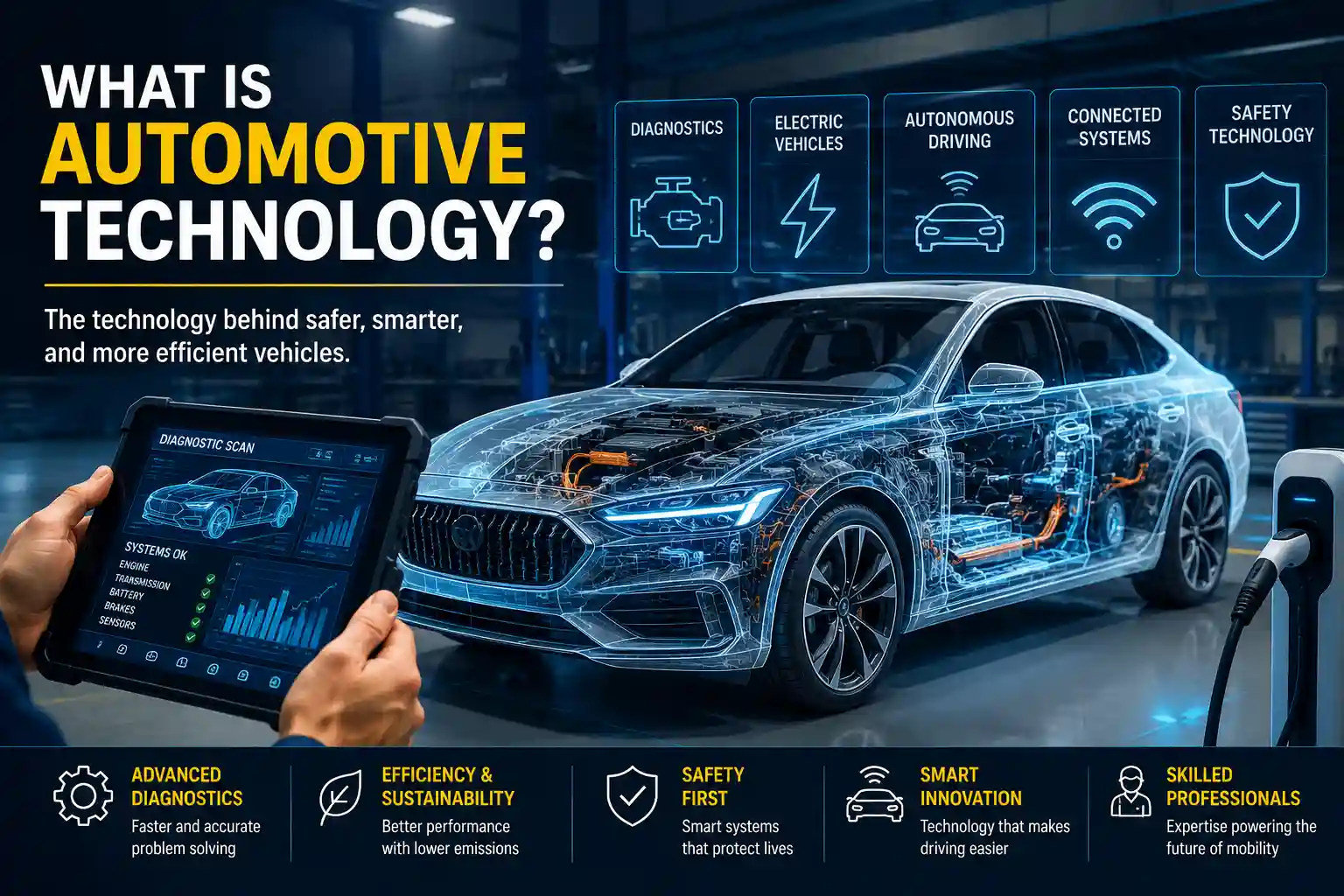
Cars today are no longer just machines with engines and wheels. In my experience, modern vehicles feel more like computers on wheels. From touchscreen infotainment systems to automatic emergency braking and electric powertrains, automotive technology has completely changed how we drive, maintain, and understand vehicles.
Automotive technology refers to the use of engineering, electronics, software, and mechanical systems in the design, manufacturing, maintenance, and improvement of vehicles. It combines traditional automotive mechanics with modern digital innovation to make vehicles safer, smarter, more efficient, and more comfortable.
Whether you drive a fuel-powered car, a hybrid, or an electric vehicle (EV), automotive technology plays a major role in how your vehicle performs every day.
Overview
Automotive technology is the real-world use of engineering, electronics, and software to create, improve, and maintain vehicles. It includes traditional vehicle systems like engines, transmissions, brakes, and suspension, while also covering advanced innovations such as electric vehicles, self-driving features, and computerized diagnostics.
Modern automotive technology focuses on several important areas:
- Diagnosing and repairing vehicle systems using digital tools and scanners
- Managing how mechanical, electrical, and software systems work together
- Developing advanced technologies like EVs, artificial intelligence, and connected vehicles
- Maintaining safety and performance through proper servicing of brakes, steering, alignments, and suspension systems
Today’s automotive industry depends heavily on both mechanical engineering and computer science. This combination helps manufacturers and technicians build vehicles that are safer, more fuel-efficient, and smarter than ever before.
Why Automotive Technology Matters Today
The automotive industry has evolved rapidly over the last decade. Years ago, mechanics mostly worked with physical parts. Today, technicians often connect diagnostic computers to vehicles before touching a wrench.
This shift matters because vehicles are becoming:
- More fuel-efficient
- Safer for drivers and passengers
- Environmentally friendly
- More connected through software and internet features
- Easier to diagnose and maintain
For example, many modern cars can detect engine problems automatically and alert the driver before a serious breakdown happens. Some vehicles even update their software remotely, similar to smartphones.
In my experience researching modern vehicles, I’ve noticed that understanding automotive technology helps drivers make smarter decisions about maintenance, repairs, and future car purchases.
Main Components of Automotive Technology
Automotive technology covers many systems working together inside a vehicle. Here are the most important areas.
1. Engine and Powertrain Technology
The engine and powertrain are the heart of any vehicle. These systems generate and transfer power to move the car.
Traditional automotive technology includes:
- Internal combustion engines
- Fuel injection systems
- Transmissions
- Exhaust systems
Modern improvements now include:
- Turbocharged engines
- Hybrid systems
- Electric motors
- Battery management systems
Electric vehicles have especially transformed this area. Instead of relying fully on gasoline, EVs use electric motors powered by rechargeable batteries.
2. Vehicle Electronics
Modern vehicles contain dozens of electronic control units (ECUs). These mini-computers manage different systems in the car.
Examples include:
- Power steering controls
- Airbag systems
- Climate control
- Navigation systems
- Parking sensors
- Adaptive headlights
Without electronics, many modern safety and comfort features would not exist.
3. Diagnostic Technology
One of the biggest advancements in automotive technology is computerized diagnostics.
Technicians now use specialized scanners to:
- Read engine trouble codes
- Detect electrical faults
- Analyze sensor performance
- Monitor fuel efficiency
- Identify software-related problems
In my experience, this technology saves time and reduces guesswork during repairs.
For example, if your “check engine” light turns on, a diagnostic scanner can quickly identify the issue instead of manually inspecting every part.
4. Safety Technology
Vehicle safety has improved dramatically thanks to modern automotive systems.
Popular safety technologies include:
- Anti-lock braking systems (ABS)
- Electronic stability control
- Blind-spot monitoring
- Lane departure warnings
- Automatic emergency braking
- Backup cameras
Some advanced vehicles can even detect pedestrians and help prevent collisions automatically.
5. Autonomous and Smart Driving Features
Self-driving technology is one of the fastest-growing areas in automotive innovation.
Although fully autonomous cars are still developing, many vehicles already include semi-autonomous features like:
- Adaptive cruise control
- Self-parking systems
- Traffic sign recognition
- Driver attention monitoring
Artificial intelligence and sensors help vehicles make driving decisions in real time.
Read More About: What Is Engineering Technology?
How Automotive Technology Works Together
What makes modern vehicles impressive is how different systems communicate with each other.
For example:
- Sensors collect information
- Computers analyze data
- Software makes decisions
- Mechanical systems respond instantly
If a car detects slippery road conditions, it can automatically adjust braking and traction control to improve stability.
This system integration is what makes modern vehicles smarter and safer than older models.
The Role of Software in Modern Cars
Software has become one of the most important parts of automotive technology.
Today’s vehicles use software to control:
- Fuel efficiency
- Navigation systems
- Battery performance
- Safety features
- Entertainment systems
Some manufacturers now release software updates remotely without requiring a dealership visit.
In many ways, cars are becoming digital devices with advanced transportation capabilities.
Electric Vehicles and the Future of Automotive Technology
Electric vehicles are reshaping the entire automotive industry.
Unlike traditional gasoline-powered cars, EVs rely heavily on:
- Battery technology
- Electric motors
- Charging systems
- Energy management software
Benefits of EV technology include:
- Lower fuel costs
- Reduced emissions
- Quiet driving experience
- Fewer moving parts
As battery technology improves, EVs are becoming more practical and affordable for everyday drivers
Skills Needed in Automotive Technology
Automotive technology careers now require more than mechanical knowledge alone.
Modern technicians often need skills in:
- Computer diagnostics
- Electrical systems
- Software troubleshooting
- Hybrid and EV systems
- Sensor calibration
This field combines hands-on mechanical work with advanced technical knowledge.
In my experience, this makes automotive technology an exciting career path for people who enjoy both engineering and technology.
Career Opportunities in Automotive Technology
The demand for skilled automotive professionals continues to grow.
Popular career options include:
Automotive Technician
Repairs and maintains vehicle systems.
Diagnostic Specialist
Focuses on computerized troubleshooting and electronic systems.
EV Technician
Works specifically with electric vehicles and battery systems.
Automotive Engineer
Designs and improves vehicle systems and technologies.
Service Advisor
Helps customers understand repairs and maintenance needs.
With the rise of EVs and smart vehicles, many new job opportunities are appearing in the industry.
Read More About: What Is Science Laboratory Technology? (Complete 2025 Guide)
Common Challenges in Automotive Technology
Despite its benefits, automotive technology also creates challenges.
Some common issues include:
- Expensive repair equipment
- Complex software systems
- High training requirements
- Rapidly changing technology
For vehicle owners, repairs can sometimes cost more because advanced systems require specialized tools and expertise.
However, the long-term benefits often outweigh the challenges because modern vehicles are generally safer and more efficient.
How Automotive Technology Benefits Drivers
Modern automotive systems improve everyday driving in several ways.
Better Safety
Advanced driver-assistance systems reduce accident risks.
Improved Fuel Efficiency
Modern engines and hybrid systems use less fuel.
Easier Maintenance
Diagnostic tools identify issues quickly.
Greater Comfort
Technology improves entertainment, navigation, and driving convenience.
Lower Environmental Impact
Electric and hybrid vehicles reduce emissions.
These improvements make driving more reliable and enjoyable for most people.
Tips for Understanding Modern Vehicle Technology
If you want to learn more about automotive technology, here are a few practical tips:
- Read your vehicle owner’s manual carefully
- Learn the meaning of dashboard warning lights
- Use diagnostic apps or scanners for basic understanding
- Stay informed about EV and hybrid developments
- Follow trusted automotive news and educational sources
Even basic knowledge can help you avoid unnecessary repair costs and make smarter vehicle decisions.
The Future of Automotive Technology
The future of automotive technology looks incredibly advanced.
Experts are currently developing:
- Fully autonomous vehicles
- Smarter AI driving systems
- Faster EV charging technology
- Connected smart-car ecosystems
- Sustainable transportation solutions
In the coming years, vehicles will likely become even more automated, efficient, and environmentally friendly.
Cars may soon communicate with traffic systems, other vehicles, and smart cities to improve road safety and reduce congestion.
Conclusion
Automotive technology is much more than fixing engines or changing tires. It is a rapidly evolving field that combines mechanics, electronics, software, and innovation to improve how vehicles are designed, operated, and maintained.
From electric vehicles and AI-powered safety systems to computerized diagnostics and smart connectivity, automotive technology is shaping the future of transportation.
In my experience researching this industry, one thing is clear: understanding automotive technology is becoming increasingly important for both drivers and professionals. As vehicles continue to evolve, staying informed will help people make better decisions, save money, and adapt to the future of mobility.
Whether you are curious about modern cars, considering a career in the field, or simply trying to understand how today’s vehicles work, automotive technology is a topic worth exploring.
FAQs
What is the meaning of automotive technology?
Automotive technology is the use of engineering, electronics, software, and mechanical systems to design, build, maintain, and repair vehicles. It includes everything from engines and brakes to electric vehicles, diagnostics, and smart driving features.
What are examples of automotive?
Examples of automotive technology include:
- Cars and trucks
- Hybrid and electric vehicles (EVs)
- Anti-lock braking systems (ABS)
- Automatic transmissions
- Backup cameras
- Engine diagnostic scanners
- Autonomous driving features
- GPS and infotainment systems
These technologies help improve vehicle safety, comfort, and performance.
Is automotive technology the same as a mechanic?
Not exactly. A mechanic mainly focuses on repairing and maintaining vehicles, while automotive technology is a broader field that also includes electronics, software, diagnostics, EV systems, and advanced vehicle engineering. Modern automotive technicians often use computers and digital tools alongside traditional mechanical skills.
What is the highest paid automotive technician?
The highest-paid automotive technicians are usually master technicians, EV specialists, or high-performance vehicle experts. Technicians working for luxury or performance brands like Tesla, BMW, or Mercedes-Benz can earn very high salaries, especially with certifications and experience.
What is CT salary?
“CT salary” can mean different things depending on the context. In automotive careers, it may refer to a certified technician’s salary. On average, certified automotive technicians can earn moderate to high incomes depending on their skills, certifications, and location. EV and diagnostic specialists often earn more than general mechanics.
Who is the highest paid automotive engineer?
Top automotive engineers working in electric vehicles, autonomous driving, motorsports, or executive engineering roles are among the highest paid in the industry. Engineers at companies like Ferrari, Porsche, and Tesla can earn very high salaries, especially in leadership and research positions.