
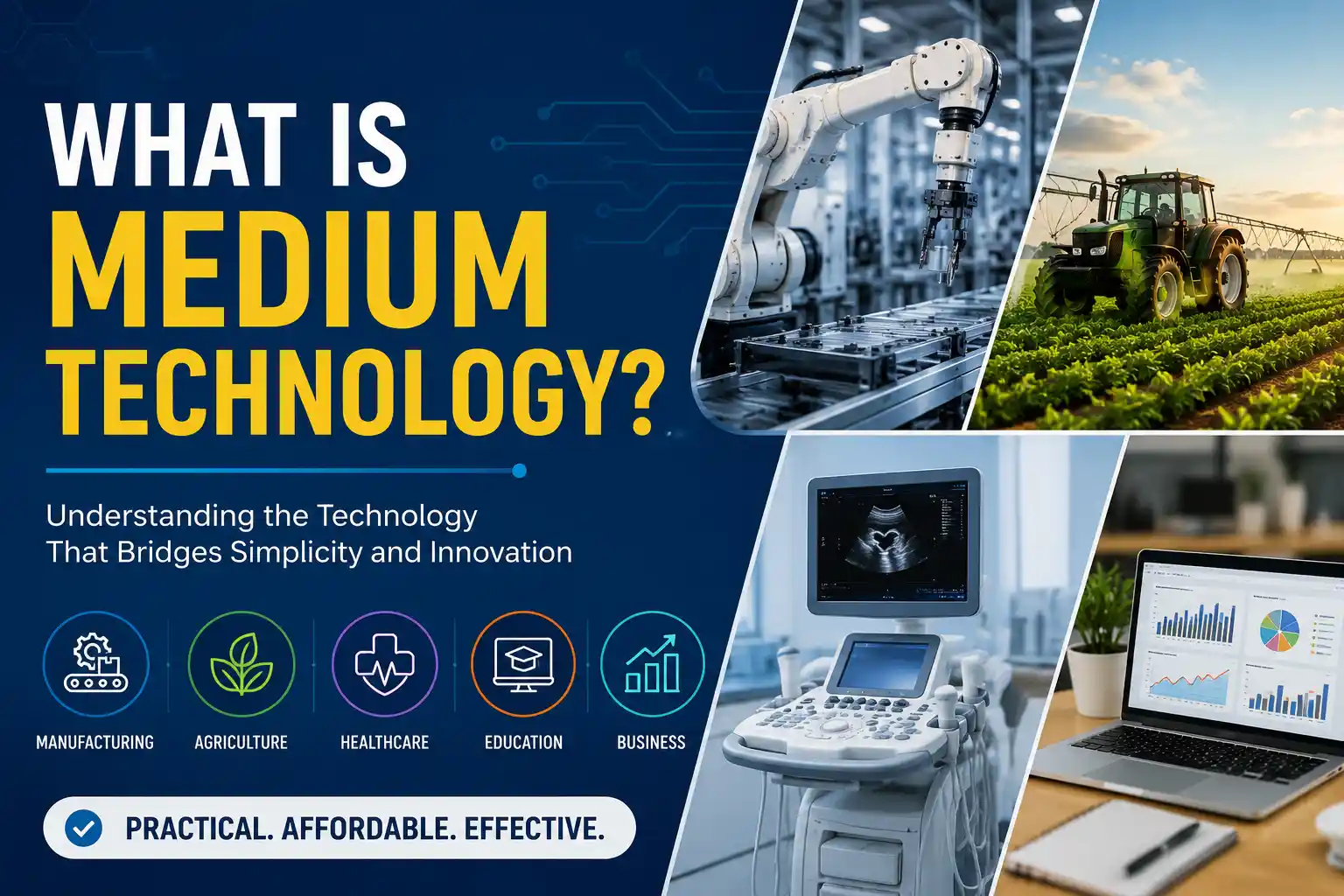
Technology surrounds us every day, from the smartphone in our pocket to the machines that manufacture products around the world. But not all technology is created equal. Some technologies are simple and require minimal technical knowledge, while others are highly advanced and depend on cutting-edge research. Somewhere in between lies an important category known as medium technology.
When I first came across the term “medium technology,” I assumed it simply meant average or ordinary technology. However, after researching the topic and examining real-world examples, I realized it plays a crucial role in modern industries, education, healthcare, agriculture, and manufacturing.
In this guide, I’ll explain what medium technology is, how it differs from low and high technology, where it’s used, and why it remains one of the most practical and cost-effective technological categories today.
What Is Medium Technology?
Medium technology refers to tools, systems, machines, and processes that are more advanced than basic technologies but less complex than cutting-edge or highly sophisticated technologies.
In simple terms, medium technology combines efficiency, affordability, and functionality without requiring the extensive expertise, infrastructure, or investment often associated with high technology.
These technologies are designed to solve practical problems while remaining accessible to businesses, organizations, and communities that may not have access to the latest innovations.
Key Characteristics of Medium Technology
Medium technology typically includes:
- Moderate technical complexity
- Affordable implementation costs
- Practical applications
- Easier maintenance compared to advanced systems
- Improved productivity and efficiency
- Broad accessibility
Think of medium technology as the “middle ground” between manual tools and highly automated artificial intelligence systems.
Understanding the Technology Spectrum
To better understand medium technology, it helps to compare it with other technology categories.
Low Technology
Low technology includes simple tools and systems that require little technical expertise.
Examples include:
- Hand tools
- Basic irrigation systems
- Mechanical farming equipment
- Traditional manufacturing methods
These technologies are inexpensive but may offer limited efficiency.
Medium Technology
Medium technology improves productivity while remaining relatively affordable and manageable.
Examples include:
- Computerized manufacturing equipment
- Modern agricultural machinery
- Commercial HVAC systems
- Medical diagnostic equipment
- Automated packaging systems
High Technology
High technology involves cutting-edge innovation and often requires specialized knowledge.
Examples include:
- Artificial Intelligence (AI)
- Robotics
- Quantum computing
- Biotechnology
- Autonomous vehicles
High-tech solutions can be powerful but are usually more expensive and complex.
Why Medium Technology Matters
One thing I found particularly interesting is how medium technology often delivers the best balance between performance and affordability.
Many organizations don’t need the newest AI-powered systems. Instead, they need reliable solutions that improve productivity without overwhelming budgets.
Medium technology matters because it:
- Reduces operational costs
- Increases efficiency
- Improves product quality
- Supports economic development
- Creates employment opportunities
- Makes innovation accessible
In many developing economies, medium technology serves as a stepping stone toward more advanced technological adoption.
About More Details: What Is Skyactiv Technology? A Complete Guide to Mazda’s Innovative Engineering
Common Examples of Medium Technology
Let’s look at some real-world examples.
Manufacturing Equipment
Many factories rely on medium-level technology every day.
Examples include:
- CNC machines
- Conveyor systems
- Automated assembly lines
- Packaging machinery
These systems improve productivity while remaining manageable for trained workers.
Real-Life Example
A small manufacturing company may not afford advanced robotic production systems. However, it can invest in semi-automated machinery that significantly increases output while keeping costs under control.
Agricultural Technology
Agriculture has benefited enormously from medium technology.
Examples include:
- Tractors
- Seed drills
- Irrigation controllers
- Harvesting equipment
- Soil monitoring devices
Farmers use these technologies to increase crop yields and reduce labor requirements.
I was surprised to discover how many farms worldwide rely on medium technology rather than expensive AI-powered agriculture systems.
Healthcare Equipment
Healthcare provides some of the best examples of medium technology.
Examples include:
- Ultrasound machines
- Digital X-ray systems
- Patient monitoring devices
- Laboratory testing equipment
These tools improve diagnosis and patient care while remaining practical for many hospitals and clinics.
Educational Technology
Schools and universities frequently use medium technology solutions.
Examples include:
- Interactive whiteboards
- Learning management systems
- Computer laboratories
- Projectors
- Educational software
These technologies enhance learning without requiring highly advanced infrastructure.
Medium Technology in Everyday Life
Many people use medium technology daily without realizing it.
Examples include:
- Washing machines
- Microwave ovens
- Air conditioners
- Smart thermostats
- Commercial coffee machines
- Home security systems
These products offer automation and convenience while remaining affordable and user-friendly.
Advantages of Medium Technology
Cost-Effective Implementation
One major advantage is affordability.
Businesses can often adopt medium technology without taking on massive financial risks.
Compared to advanced AI systems or industrial robotics, medium technology generally requires lower upfront investment.
Easier Training Requirements
Workers can typically learn medium technology systems faster than highly specialized technologies.
This reduces training costs and helps organizations implement solutions more efficiently.
Greater Reliability
Medium technology often emphasizes proven systems rather than experimental innovations.
As a result, organizations frequently experience fewer technical issues and lower maintenance costs.
Accessibility
Medium technology is available to a broader range of users.
Small businesses, schools, healthcare facilities, and local governments can often implement these solutions successfully.
Limitations of Medium Technology
While medium technology offers many advantages, it isn’t perfect.
Limited Automation
Some processes still require human involvement.
This can reduce efficiency compared to fully automated systems.
Lower Innovation Potential
Organizations seeking competitive advantages through cutting-edge innovation may eventually need higher-level technologies.
Scalability Challenges
As businesses grow, they may outgrow certain medium technology solutions and need more advanced alternatives.
How Businesses Use Medium Technology
Businesses often choose medium technology because it provides measurable improvements without excessive complexity.
Common applications include:
Production Management
Manufacturers use semi-automated systems to increase production efficiency.
Inventory Control
Businesses track inventory using barcode scanners and management software.
Customer Service
Call center software and CRM systems help companies improve customer experiences.
Logistics
Transportation companies use GPS tracking and route optimization tools.
These systems are practical, affordable, and effective.
Medium Technology and Economic Development
Many economists consider medium technology essential for economic growth.
Countries often progress through technological stages:
- Low technology
- Medium technology
- High technology
Medium technology helps industries become more productive, competitive, and sustainable.
It also creates jobs requiring technical skills, encouraging workforce development.
The Future of Medium Technology
As innovation continues, the line between medium and high technology may become less clear.
Many technologies that were once considered high-tech eventually become medium technology as costs decrease and adoption increases.
For example:
- Personal computers
- Internet connectivity
- Smartphones
- Cloud software
These technologies were once revolutionary but are now widely accessible.
In my experience researching technology trends, this cycle repeats constantly. Today’s cutting-edge innovation often becomes tomorrow’s standard business tool.
Common Misconceptions About Medium Technology
“Medium Technology Is Outdated”
This is false.
Many medium technology solutions remain modern, effective, and highly relevant.
“Only Small Businesses Use It”
Large corporations also rely heavily on medium technology because it often provides excellent returns on investment.
“It’s Less Important Than High Technology”
Not necessarily.
In many industries, medium technology delivers the greatest practical value because it balances performance and affordability.
Quick Tips for Understanding Medium Technology
- Focus on practical applications rather than hype.
- Consider cost versus benefit.
- Evaluate maintenance requirements.
- Look at training needs.
- Assess scalability for future growth.
A simple rule I use is this:
If a technology significantly improves productivity without requiring highly specialized expertise or massive investment, it likely falls into the medium technology category.
Frequently Asked Questions
What is an example of medium technology?
Examples include CNC machines, ultrasound equipment, irrigation systems, educational software, and automated packaging machines.
How does medium technology differ from high technology?
Medium technology focuses on practical, affordable solutions, while high technology typically involves advanced innovations such as artificial intelligence, robotics, and quantum computing.
Why is medium technology important?
Medium technology improves productivity, supports economic growth, reduces costs, and makes technological advancement accessible to more businesses and communities.
Final Thoughts Technology
Medium technology may not receive as much attention as artificial intelligence, robotics, or other emerging innovations, but it remains one of the most valuable categories of technology in the modern world.
After researching countless examples across manufacturing, healthcare, agriculture, and education, I’ve found that medium technology often delivers the best balance of affordability, reliability, and effectiveness.
For businesses, organizations, and individuals looking to improve efficiency without investing in highly complex systems, medium technology provides practical solutions that work in the real world.
What are your thoughts on medium technology? Have you used any examples of medium technology in your workplace, business, or daily life? Share your experiences and insights in the comments, I’d love to hear your perspective.