
Introduction: Understanding Hybrid Technology in Simple Terms
When I first came across the term hybrid technology, I honestly thought it was only about cars. But as I started researching deeper, I realized it’s much bigger than that. Hybrid technology is basically about combining two or more different systems or power sources to create something more efficient, powerful, and environmentally friendly.
In simple words, hybrid technology means using the strengths of different technologies together to improve performance and reduce waste. Most commonly, it is used in vehicles, but it also appears in energy systems like solar-wind combinations and even industrial machines.
In my experience, once you understand how hybrids work, you start seeing them everywhere—from the car you drive to the electricity that powers your home.
Overview: What Is Hybrid Technology?
Hybrid technology refers to systems that combine multiple power sources or technologies to improve efficiency, performance, and sustainability.
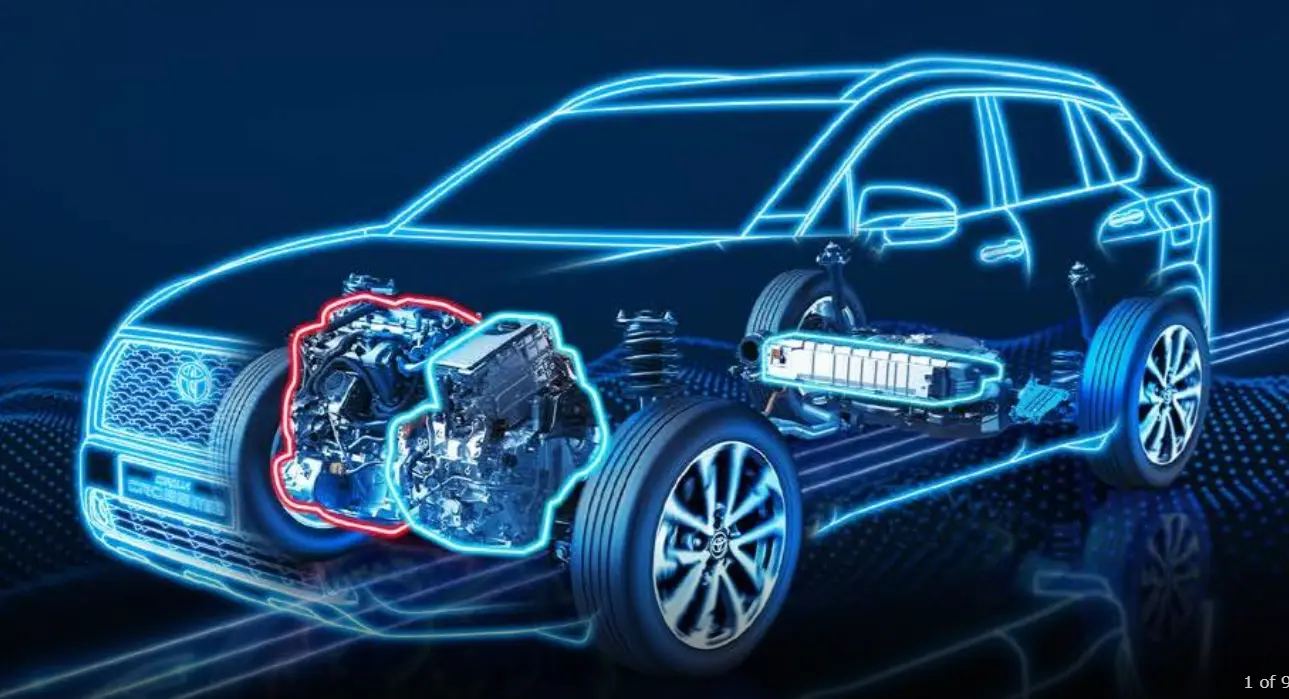
The most common example is in hybrid vehicles, where a gasoline engine works together with an electric motor and battery system. These systems are designed to reduce fuel usage, lower emissions, and improve energy efficiency.
Key idea behind hybrid systems:
Instead of relying on just one power source, hybrid technology intelligently switches between or combines different energy sources depending on the situation.
For example:
- At low speeds, the car may use only electricity
- At higher speeds, it switches to gasoline
- During braking, energy is recovered and stored back in the battery
This smart energy management is what makes hybrid technology so efficient.
How Hybrid Technology Works (Simple Breakdown)
When I studied hybrid systems, I found that the working principle is actually very logical. It’s all about balancing power and efficiency.
1. Dual Power Sources
Hybrid systems typically use:
- An internal combustion engine (ICE) (usually gasoline or diesel)
- An electric motor powered by a battery
These two systems can work:
- Together for strong performance
- Separately for better efficiency
2. Regenerative Braking System
One of the most impressive features is regenerative braking.
Here’s how it works in real life:
- When you press the brakes, energy is normally lost as heat
- In hybrid systems, that energy is captured instead
- The electric motor acts like a generator
- The energy is stored back in the battery
This means the vehicle charges itself while driving—something I personally find very clever and practical.
3. Smart Energy Switching
Hybrid vehicles have a computer system that decides:
- When to use electric power
- When to use the gasoline engine
- When to combine both
This automatic switching ensures:
- Maximum fuel efficiency
- Smooth driving experience
- Lower emissions
Types of Hybrid Technology (Vehicles & Beyond)
Hybrid technology is not one single system. It comes in different forms depending on how the energy sources are used.
1. Full Hybrids
Full hybrids are the most advanced common type.
- Can run on electric power alone for short distances
- Can switch to gasoline when needed
- Offer better fuel savings in city driving
In my observation, these are ideal for people who drive in traffic-heavy cities.
2. Mild Hybrids
Mild hybrids are simpler systems.
- The electric motor assists the engine
- Cannot run on electric power alone
- Improves fuel efficiency slightly
These are often used in budget-friendly hybrid vehicles.
3. Plug-in Hybrids (PHEVs)
Plug-in hybrids are more powerful and flexible.
- Have larger batteries
- Can be charged using an external power source
- Can drive longer distances on electric power only
From my research, these are a great option if you want electric driving without fully switching to an electric car.
4. Range-Extended Electric Vehicles (REEVs)
These are mostly electric vehicles.
- The electric motor drives the car
- A gasoline engine works as a backup generator
- Extends driving range when battery runs low
I find this type very useful for long-distance travel without worrying about charging stations.
Read More About: What Is Computer Simulation Technology? Definition, Types …
Hybrid Technology Beyond Vehicles
One thing that surprised me during my research is that hybrid technology is not limited to cars.
It is also used in energy and industrial systems, such as:
- Wind + solar power systems
- Fuel cell + gas turbine systems
- Smart grid energy solutions
These combinations help improve energy reliability and reduce dependence on a single energy source.
Benefits of Hybrid Technology
From both my reading and real-world observation, hybrid technology offers several strong advantages.
1. Better Fuel Efficiency
Hybrid systems use less fuel because:
- Electric power reduces engine load
- Energy is recovered during braking
- Engine runs only when necessary
This is especially helpful in stop-and-go traffic.
2. Lower Environmental Impact
One of the biggest benefits is reduced pollution:
- Lower carbon emissions
- Less fuel consumption
- Cleaner driving experience
In my opinion, this is one of the main reasons hybrid technology is becoming more popular worldwide.
3. No Need for Constant Charging (in most hybrids)
Unlike fully electric cars:
- Standard hybrids charge themselves
- No need to plug in frequently
This reduces what many people call “range anxiety.”
4. Smooth Driving Experience
Hybrid vehicles often feel smoother because:
- Electric motors provide instant torque
- Acceleration is more responsive
- Engine noise is reduced at low speeds
I personally find hybrid driving more relaxed in city conditions.
Real-World Example of Hybrid Use
To make it simple, imagine driving in a city:
- At traffic lights: the car switches to electric mode
- While accelerating: engine + motor work together
- While braking: energy is recovered
- On highways: gasoline engine takes control
This constant adjustment is what makes hybrids so efficient in real life.
Challenges of Hybrid Technology
Even though hybrid systems are impressive, they are not perfect.
Some limitations include:
- Higher initial cost compared to regular vehicles
- More complex mechanical systems
- Battery replacement cost over time
However, in my experience, the long-term fuel savings often balance these costs.
Future of Hybrid Technology
Hybrid technology is evolving quickly. I believe the future will bring:
- More efficient batteries
- Better energy recovery systems
- Wider use in public transport and heavy vehicles
- Smarter AI-based energy management systems
We are moving toward a world where hybrid systems may become the standard rather than the exception.
Conclusion: Why Hybrid Technology Matters
After researching and understanding hybrid technology, I can confidently say it is one of the most practical innovations in modern engineering.
It combines the best of both worlds, traditional fuel engines and modern electric systems—to create something more efficient, cleaner, and smarter.
If I had to summarize it simply, hybrid technology is about working smarter, not harder, when it comes to energy use.
As the world continues to focus on sustainability, hybrid systems will play an even bigger role in shaping transportation and energy solutions.
Final Takeaway
Hybrid technology is not just a trend, it’s a step toward a more efficient and environmentally responsible future.
FAQS
1. What do you mean by hybrid technology?
Hybrid technology means combining two or more power sources—usually a petrol engine and an electric motor—to improve fuel efficiency, performance, and reduce emissions. The system automatically switches between or uses both power sources depending on driving needs.
2. Which car is better, EV or hybrid?
It depends on your needs:
- EV (Electric Vehicle): Best for zero emissions and lower running cost, but needs charging infrastructure.
- Hybrid: Better for long trips and areas with limited charging stations because it uses fuel + electric power.
In simple terms, EVs are cleaner, but hybrids are more flexible.
3. What is an example of a hybrid technology?
A common example is a hybrid car, such as a Toyota Prius, which uses both a petrol engine and an electric motor. Other examples include solar-wind energy systems that combine two renewable sources for better energy output.
4. What is a hybrid and how does it work?
A hybrid is a system that uses both an engine and an electric motor. It works by:
- Using electric power at low speeds
- Switching to petrol at higher speeds
- Recovering energy during braking to recharge the battery
This smart switching improves efficiency and reduces fuel use.
5. What is the main disadvantage of a hybrid car?
The main disadvantages are:
- Higher initial purchase cost
- Complex technology that can be expensive to repair
- Battery replacement cost over time
However, fuel savings often balance these costs in the long run.
6. Can a hybrid car run without petrol?
Yes, but only for short distances (in full hybrids or plug-in hybrids).
- At low speeds or short trips, it can run on electric power only
- For longer drives or higher speeds, petrol is still required