
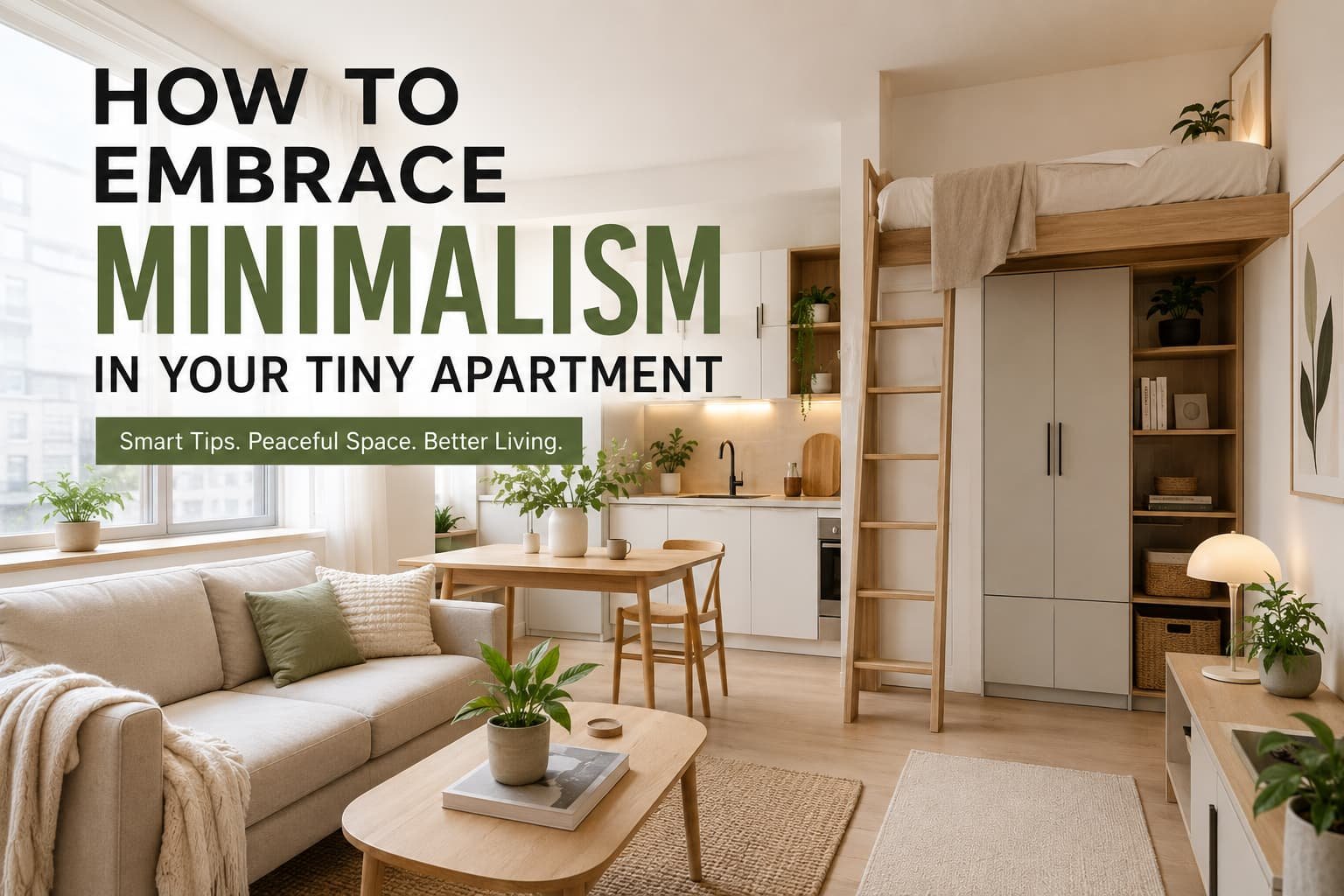
To embrace minimalism in a tiny apartment, you don’t need to throw away everything you own or live in an empty, cold space. Instead, it’s about maximizing function while eliminating visual noise so your home feels open, intentional, and peaceful.
In my experience researching and observing small-space living (especially studio apartments and compact city layouts), the biggest shift is not physical—it’s mental. Living small forces you to move from accumulation to curation. You stop asking, “What else can I fit in here?” and start asking, “Do I actually need this in my space?”
This mindset is the foundation of minimalist living. It proves that a home does not need massive square footage to feel like a sanctuary.
Modern interior design experts from platforms like HGTV, designers featured in Homepolish, and studios such as Marie Flanigan Interiors consistently emphasize the same idea: clarity in space creates clarity in mind.
Understanding Minimalism in Tiny Apartments
Minimalism is often misunderstood as “owning nothing.” In reality, it is about owning only what supports your daily life and emotional comfort.
In small apartments, especially studios or compact 1-bed layouts, minimalism becomes a survival strategy. You’re not just decorating—you’re designing flow, comfort, and mental space.
Core principles include:
- Reducing unnecessary visual clutter
- Prioritizing multifunctional items
- Using light, texture, and layout strategically
- Designing for movement, not storage overload
Read More: How to Organize a Small Home & Maximize Your Space
Streamline Your Belongings (The Foundation of Minimalism)
Before thinking about furniture or decor, I always start with belongings. This step makes the biggest difference because no design trick can fix excess clutter.
Here are systems I personally find most effective:
1. The 90/90 Rule
If you haven’t used something in the last 90 days and won’t use it in the next 90 days, it’s likely unnecessary.
2. One-In, One-Out Rule
Every time a new item enters your home, another must leave. This prevents slow accumulation.
3. The 20/20 Rule
If something can be replaced for under $20 in less than 20 minutes, you probably don’t need to store it “just in case.”
4. Capsule Living Mindset
Inspired by capsule wardrobes, reduce possessions to items that are:
- Versatile
- Frequently used
- Easy to maintain
- Emotionally meaningful
5. Daily Reset Habit
A 5-minute daily purge of packaging, flyers, or unused items prevents clutter from building silently.
This approach aligns with modern minimal living psychology promoted by designers working in Muji, known for simplicity-driven product design.
Select High-Utility Furniture (Where Design Meets Function)
Once belongings are under control, furniture becomes the backbone of your space.
In small apartments, I’ve learned that furniture should never be “just decorative.” It must earn its place.
1. Dual-Purpose Furniture
Choose pieces that serve more than one function:
- Storage ottomans
- Sofa beds
- Beds with drawers
- Fold-out desks
2. Proper Scale Matters
A common mistake is buying many small pieces. Instead:
- Use fewer but more intentional furniture items
- Avoid visual fragmentation
- Let each piece anchor the room
3. Foldable & Flexible Items
Foldable tables, wall-mounted desks, and collapsible storage help you adapt space throughout the day.
4. Elevated Furniture (Leggy Design)
Furniture with visible legs creates:
- Airflow beneath objects
- A lighter visual footprint
- The illusion of more floor space
Brands like IKEA popularized this modular, space-efficient approach for urban living.
Optimize Visual Space (Designing for the Eye, Not Just the Room)
Minimalism is not just physical—it is visual psychology.
1. Think Vertically
Walls are your most underused asset:
- Floating shelves
- Tall storage units
- Wall hooks instead of floor racks
This draws the eye upward, making ceilings feel higher.
2. Use a Light Color Palette
Soft tones like white, beige, and light grey reflect natural light. This creates openness even in tight layouts.
3. Gallery Wall Strategy
Instead of many small pieces:
- Choose one large focal artwork
- Or a curated, evenly spaced set
Too many visuals create mental “noise.”
4. Hidden Storage Systems
Store everyday items in:
- Matching baskets
- Closed cabinets
- Built-in storage walls
Uniformity reduces visual stress.
5. Keep Surfaces Clear
Kitchen counters and tables should remain as empty as possible. This instantly reduces mental overload and improves perceived cleanliness.
Lighting and Texture: The Secret Minimalist Layer
Lighting is one of the most overlooked elements in tiny apartments.
From my observation of interiors featured in Marie Flanigan Interiors, lighting is treated as architecture—not decoration.
Key Lighting Principles
- Use layered lighting (ambient + task + accent)
- Prefer wall-mounted fixtures to save surface space
- Maximize natural light with sheer curtains
- Avoid bulky lamps when possible
Texture Over Decoration
Instead of adding more objects:
- Use linen, cotton, wool textures
- Add subtle layering in bedding and rugs
- Mix natural materials like wood and stone
This creates depth without clutter.
Room-by-Room Minimalist Strategy
Living Area
- Keep seating minimal but comfortable
- Use one statement table or sofa
- Avoid overcrowding walls
Bedroom
- Simplify bedding (neutral tones, fewer pillows)
- Use under-bed storage
- Replace nightstands with floating shelves if needed
Kitchen
- Keep counters completely clear
- Store appliances inside cabinets
- Limit visible utensils
Entryway
- One hook system
- One shoe storage solution
- No loose items left out
Common Mistakes to Avoid
Even with the best intentions, I’ve seen people struggle with minimalism due to a few recurring mistakes:
- Buying “minimalist” decor without removing clutter
- Overusing white without texture balance
- Keeping duplicate items “just in case”
- Ignoring vertical space
- Mixing too many design styles
Minimalism is not about emptiness—it’s about intention.
A Real-World Insight (What Actually Changes Everything)
The biggest transformation I’ve noticed is not furniture-related—it’s behavioral.
Once you start living minimally:
- Cleaning becomes faster
- Decision fatigue decreases
- Your home feels larger without expanding it
- You become more selective about what enters your space
This is why designers in urban living studies often highlight compact layouts like studio apartments as ideal training grounds for mindful living.
Conclusion:
To embrace minimalism in a tiny apartment is to redesign how you interact with space—not just how you decorate it.
When you combine decluttering systems, functional furniture, and intentional visual design, even the smallest apartment can feel calm, open, and deeply personal.
You don’t need more space—you need more clarity in the space you already have.
Start small. Remove one unnecessary item today. Then another tomorrow. Over time, your apartment stops feeling crowded and starts feeling like a place that actually supports your life.
That is the real essence of minimalism.