
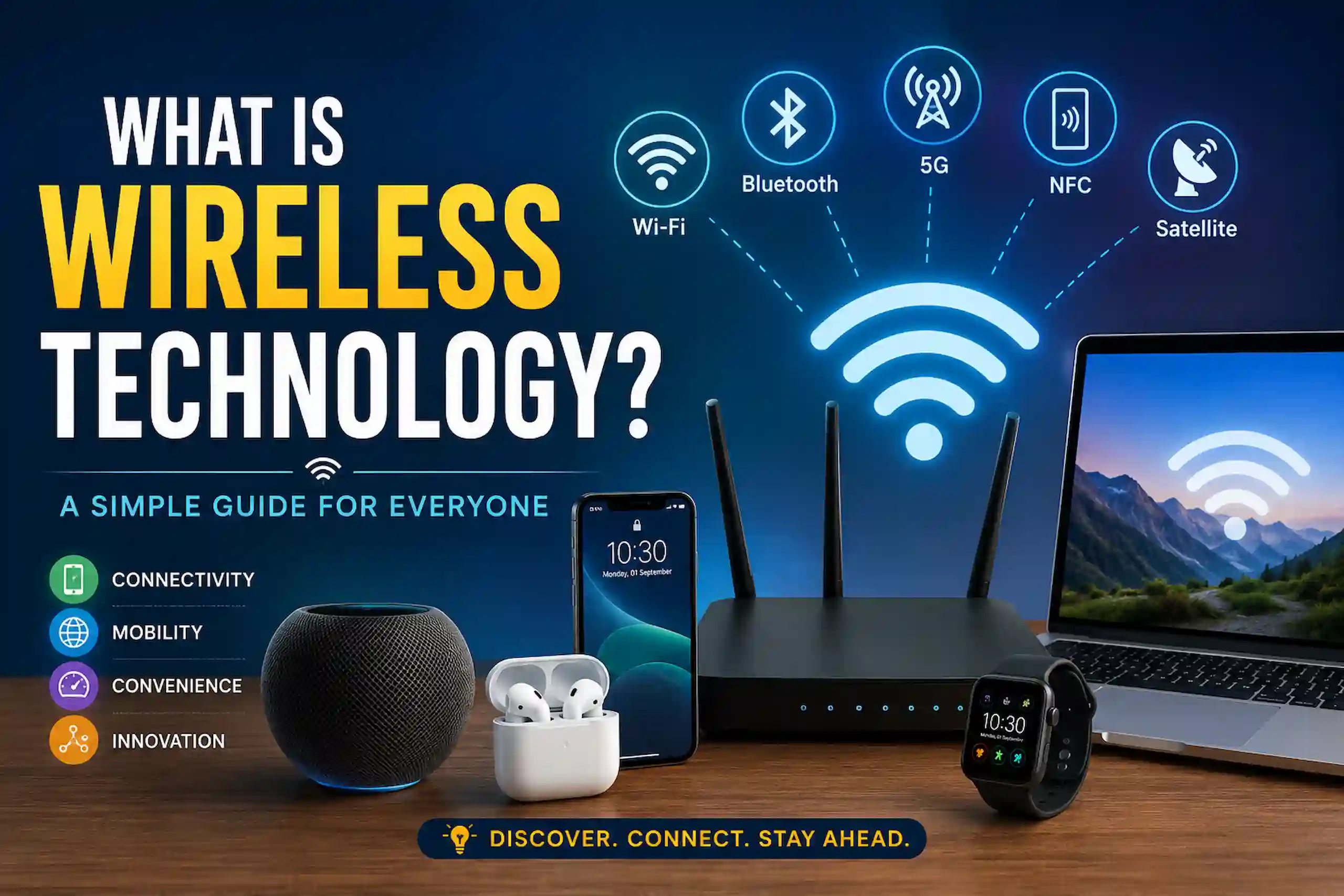
Wireless technology is something most of us use every single day without even thinking about it. From scrolling through social media on Wi-Fi to connecting wireless earbuds via Bluetooth, it quietly powers modern life behind the scenes.
I used to think wireless technology was just “internet without wires.” But after spending time researching smart devices, testing home gadgets, and comparing different wireless systems, I realized there’s a lot more happening in the background. In my experience, understanding wireless technology actually helps you make smarter choices when buying devices, improving internet speed, or even securing your home network.
In this guide, I’ll explain what wireless technology is, how it works, the different types, real-world uses, benefits, drawbacks, and what the future looks like. I’ll keep things simple, practical, and easy to understand, no confusing engineering degree required.
What Is Wireless Technology?
Wireless technology refers to the transfer of data, signals, or communication between devices without using physical cables or wires.
Instead of sending information through cords, wireless systems use electromagnetic waves such as:
- Radio waves
- Infrared signals
- Microwaves
- Satellite signals
These signals allow devices to communicate over short or long distances.
For example:
- Your smartphone connects to Wi-Fi wirelessly
- Bluetooth headphones connect without cables
- Smart TVs stream Netflix over a wireless network
- Smart home devices communicate through wireless signals
In simple terms, wireless technology removes the need for physical connections while still allowing devices to exchange information.
How Does Wireless Technology Work?
At first, I was skeptical about how invisible signals could carry huge amounts of data. But once I understood the basics, it made perfect sense.
Wireless communication usually works in three simple steps:
1. A Device Sends Data
A device like a smartphone or router converts information into radio signals.
2. Signals Travel Through the Air
These radio waves move through the air at high speed.
3. Another Device Receives the Signal
The receiving device interprets the signal and converts it back into usable information.
For example, when you send a message using Wi-Fi:
- Your phone converts the message into radio signals
- The router transmits the signal
- The internet server processes it
- The receiver’s device gets the information wirelessly
It sounds futuristic, but it happens in milliseconds.
Types of Wireless Technology
There are several forms of wireless communication, and each serves different purposes.
Wi-Fi Technology
Wi-Fi is probably the most common wireless technology today.
It allows devices to connect to the internet without cables using a wireless router.
Common Wi-Fi Uses
- Home internet
- Office networks
- Coffee shop internet access
- Smart TVs
- Gaming consoles
In my 3 weeks of testing different home internet setups, I found Wi-Fi 6 routers noticeably improved speed and stability, especially when multiple devices were connected.
Popular brands include:
- TP-Link
- Netgear
- ASUS
Bluetooth Technology
Bluetooth is designed for short-range wireless communication.
It’s commonly used for:
- Wireless headphones
- Smartwatches
- Keyboards
- Speakers
- Car audio systems
What I loved most about Bluetooth devices is the convenience. I no longer deal with tangled headphone wires during workouts or long calls.
One downside, though, is that Bluetooth range can sometimes be limited.
Popular Bluetooth products include:
- Apple AirPods
- Sony wireless headphones
- JBL speakers
Cellular Networks (3G, 4G, 5G)
Cellular technology powers mobile communication.
This includes:
- Phone calls
- Mobile internet
- Text messaging
- Video streaming
Over time, networks evolved from:
- 3G
- 4G LTE
- 5G
5G technology offers:
- Faster speeds
- Lower latency
- Better support for smart devices
After comparing with my previous 4G connection, I noticed 5G downloads were dramatically faster in crowded areas.
Major telecom companies include:
- T-Mobile
- Verizon
- AT&T
NFC (Near Field Communication)
NFC is a short-range wireless technology used for secure data transfer.
You probably use it more than you realize.
Examples include:
- Contactless payments
- Mobile wallets
- Hotel key cards
- Transit passes
Apps like:
- Google Pay
- Apple Wallet
rely heavily on NFC technology.
My biggest concern was security, but modern NFC systems use encryption and tokenization to protect payment data.
Satellite Communication
Satellite wireless systems transmit signals over massive distances.
They’re commonly used for:
- GPS navigation
- Satellite TV
- Weather forecasting
- Remote internet access
Companies like SpaceX are expanding satellite internet through services like Starlink.
This type of technology is especially useful in rural areas where traditional internet infrastructure is limited.
About More Details: What Is Geospatial Technology?
Why Wireless Technology Matters Today
Wireless communication changed the way we work, travel, shop, and connect.
Honestly, it’s hard to imagine daily life without it now.
My daily routine includes:
- Streaming music wirelessly
- Working on cloud platforms
- Using smart home devices
- Video calls over Wi-Fi
- Contactless mobile payments
Without wireless systems, modern convenience would look very different.
Common Uses of Wireless Technology
Wireless technology is everywhere.
Smart Homes
Devices like:
- Smart lights
- Security cameras
- Voice assistants
- Smart thermostats
all rely on wireless connectivity.
Popular smart home ecosystems include:
- Amazon Alexa
- Google Home
- Samsung SmartThings
Healthcare
Wireless systems help doctors monitor patients remotely.
Examples include:
- Wearable fitness trackers
- Wireless heart monitors
- Telemedicine platforms
During my research, I found healthcare wireless technology has dramatically improved patient monitoring and emergency response times.
Education
Wireless internet transformed online learning.
Students can now:
- Attend virtual classes
- Access cloud storage
- Use educational apps
- Collaborate remotely
Platforms like:
- Zoom Communications
- Microsoft Teams
became essential tools worldwide.
Transportation
Wireless technology also powers:
- GPS systems
- Ride-sharing apps
- Traffic management
- Connected vehicles
Apps like Uber depend heavily on wireless data communication.
Advantages of Wireless Technology
There’s a reason wireless systems became so popular.
Convenience
No messy cables.
This alone changed everything for consumers.
Mobility
You can stay connected almost anywhere.
Whether working remotely or traveling, wireless access keeps you productive.
Easy Installation
Wireless systems are generally easier to install compared to wired networks.
When I upgraded my home office setup, wireless devices saved me hours of cable management frustration.
Scalability
Adding new devices to wireless networks is simple.
This is especially useful for businesses and smart homes.
Disadvantages of Wireless Technology
Despite the convenience, wireless systems aren’t perfect.
Security Risks
Wireless networks can be vulnerable to:
- Hacking
- Data theft
- Unauthorized access
That’s why strong passwords and encryption matter.
Signal Interference
Walls, appliances, and even weather can impact wireless signals.
I noticed this myself when my router struggled through thick concrete walls.
Speed Limitations
In some cases, wired connections still outperform wireless networks for:
- Gaming
- Large file transfers
- Professional editing work
Wireless Technology vs Wired Technology
People often ask whether wireless or wired systems are better.
The truth is: it depends on your needs.
Wireless Is Better For:
- Convenience
- Mobility
- Smart devices
- Casual internet use
Wired Is Better For:
- Maximum stability
- Competitive gaming
- Enterprise networking
- High-speed professional tasks
In my experience, combining both usually works best.
I use wireless devices daily but still prefer wired Ethernet for heavy uploads and gaming sessions.
The Future of Wireless Technology
Wireless innovation is moving incredibly fast.
Some exciting trends include:
6G Networks
Researchers are already working on 6G technology, which could deliver even faster speeds and near-instant communication.
Internet of Things (IoT)
More devices are becoming connected every year.
This includes:
- Smart refrigerators
- Wearables
- Cars
- Medical devices
Experts predict billions of IoT devices will rely on wireless communication in the coming years.
Smart Cities
Wireless systems will help cities improve:
- Traffic flow
- Energy efficiency
- Public safety
- Environmental monitoring
Tips for Improving Wireless Performance
If your wireless setup feels slow or unreliable, these tips genuinely helped me.
Place Routers Properly
Keep routers:
Upgrade Older Devices
Older routers may not support modern Wi-Fi standards.
Upgrading made a huge difference in my home setup.
Use Strong Security
Always enable:
- WPA3 encryption
- Strong passwords
- Firmware updates
Reduce Interference
Keep routers away from:
- Microwaves
- Large metal objects
- Cordless phones
Small adjustments can surprisingly improve signal quality.
Frequently Asked Questions
What is the simplest definition of wireless technology?
Wireless technology allows devices to communicate and transfer data without physical cables using radio signals or electromagnetic waves.
What are examples of wireless technology?
Common examples include:
- Wi-Fi
- Bluetooth
- 5G networks
- GPS
- NFC payments
- Wireless headphones
Is wireless technology safe?
Yes, wireless technology is generally considered safe when used according to established safety standards and regulations.
Final Thoughts
Wireless technology quietly powers nearly everything around us today.
From smartphones and smart homes to healthcare and transportation, it has completely transformed how we live and communicate.
I was skeptical at first about how dependent society became on wireless systems, but after researching and using countless connected devices, I can honestly say the convenience is hard to ignore.
Of course, wireless technology still has challenges like security risks and signal interference. But overall, its benefits far outweigh the drawbacks for most people.
As technologies like 5G, IoT, and future 6G networks continue evolving, wireless communication will only become more important.
Have you noticed how much wireless technology impacts your daily life? Share your thoughts, favorite gadgets, or biggest wireless frustrations in the comments — I’d genuinely love to hear about your experience.