
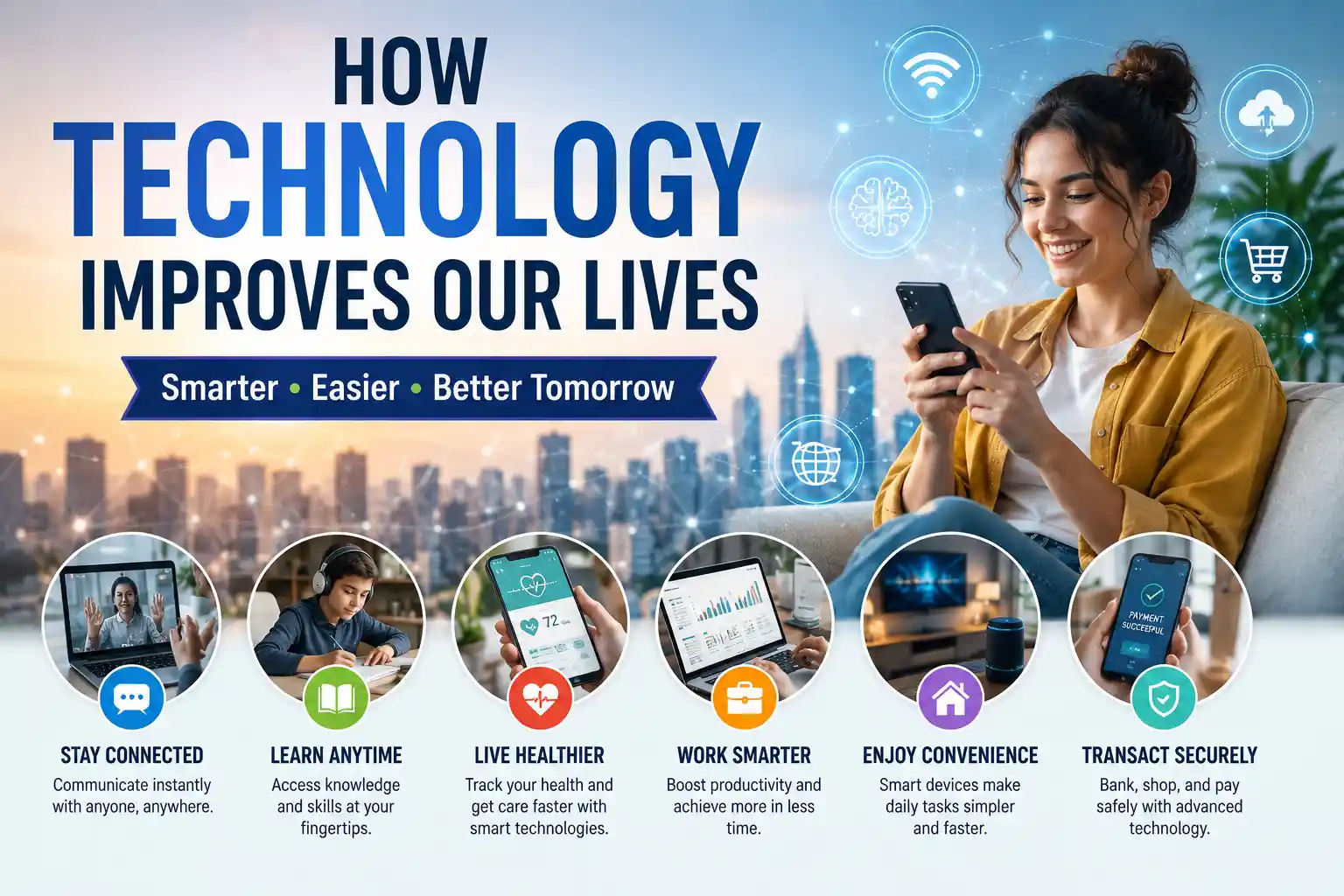
Introduction: The Moment I Realized Technology Was Quietly Changing Everything
A few years ago, I remember sitting in a crowded airport during a delayed flight, frustrated because I had an important meeting the next morning. Normally, that situation would have ruined my entire schedule. But instead of panicking, I opened my laptop, joined a Zoom call, shared documents through Google Drive, and completed the meeting before boarding my flight.
That was the moment I truly understood how much technology improves our lives.
At first, I used to think technology was mostly about entertainment or fancy gadgets. But after seeing how it helps with communication, healthcare, education, work, shopping, and even mental well-being, my perspective completely changed.
In my experience, modern technology isn’t just about convenience anymore, it’s deeply connected to how we live, learn, earn money, and stay connected to people we care about.
In this article, I’ll break down exactly how technology improves our lives, including real-world examples, benefits, common challenges, and practical ways we can use technology smarter in daily life.
What Does Technology Really Mean in Everyday Life?
Technology refers to tools, systems, and innovations designed to solve problems or make tasks easier. Today, technology includes:
- Smartphones
- Artificial intelligence (AI)
- Smart home devices
- Online banking
- Healthcare apps
- Cloud computing
- Social media platforms
- Educational tools
- Wearable fitness trackers
What makes technology powerful is not just the invention itself, but how it improves efficiency, saves time, and connects people globally.
How Technology Improves Communication
Staying Connected Anytime, Anywhere
One of the biggest ways technology improves our lives is through communication.
I still remember when international calls were expensive and slow. Today, apps like WhatsApp, Telegram, and Zoom allow us to connect instantly with family, coworkers, or clients anywhere in the world.
In my experience, remote communication tools became especially valuable during the pandemic. Businesses continued operating, students attended classes online, and families stayed emotionally connected despite physical distance.
Popular Communication Technologies
- Zoom for video meetings
- Slack for team collaboration
- Microsoft Teams for workplaces
- WhatsApp for instant messaging
- Gmail for professional communication
These tools reduce barriers and make collaboration faster than ever before.
Technology Makes Education More Accessible
Learning Without Limits
One area where I’ve personally seen massive improvement is education.
Years ago, learning a new skill often meant attending physical classes or buying expensive books. Today, anyone with internet access can learn almost anything online.
Platforms like:
- Coursera
- Udemy
- Khan Academy
- YouTube
- Duolingo
have transformed education globally.
I was skeptical at first about online learning, but after completing several professional courses online myself, I realized how effective digital education can be.
Benefits of Educational Technology
Flexible Learning
Students can learn anytime and anywhere.
Lower Costs
Many online resources are free or affordable.
Personalized Experiences
AI-powered apps adjust lessons based on learning speed and performance.
Access to Global Knowledge
People can study from top universities without relocating.
Technology has truly democratized education.
About More Details: What Is Business Technology? A Complete Beginner-Friendly Guide
How Technology Improves Healthcare
Faster Diagnosis and Better Treatment
Healthcare technology may be one of the most life-changing advancements in modern society.
I recently used a smartwatch to track my sleep and heart rate, and it helped me notice unhealthy habits I otherwise would have ignored.
Modern healthcare technology includes:
- Telemedicine
- Wearable fitness devices
- AI-assisted diagnostics
- Electronic health records
- Robotic surgeries
Real-Life Example: Telehealth
Apps like Teladoc and Doctor on Demand allow patients to consult doctors remotely. This became incredibly useful for people living in rural areas or those unable to travel.
According to multiple healthcare studies, telemedicine has significantly improved healthcare accessibility and reduced waiting times.
Technology Saves Lives
Hospitals now use AI tools to:
- Detect diseases earlier
- Analyze medical scans faster
- Improve treatment accuracy
- Predict patient risks
In my opinion, this is one of the clearest examples of technology improving human life directly.
Technology Makes Work More Efficient
The Rise of Remote Work
I’ve personally experienced how productivity tools can save hours every week.
Before cloud-based tools existed, collaborating on documents was frustrating. Now platforms like:
- Google Workspace
- Notion
- Trello
- Asana
- Dropbox
allow teams to work together instantly.
Automation Reduces Repetitive Tasks
Businesses now use automation for:
- Customer support chatbots
- Email marketing
- Data analysis
- Inventory management
- Scheduling
This allows employees to focus on creative and strategic work instead of repetitive manual tasks.
Example: AI in the Workplace
AI tools like ChatGPT and Grammarly help writers, marketers, and professionals work faster and improve content quality.
I use productivity apps daily, and honestly, they’ve helped me organize tasks far better than traditional paper methods ever did.
Smart Technology Improves Daily Convenience
Small Innovations That Save Time
Sometimes, the biggest improvements come from small conveniences.
Think about:
- GPS navigation
- Food delivery apps
- Online banking
- Smart home assistants
- Contactless payments
A few years ago, even simple tasks like paying bills or transferring money required physical visits. Today, apps like PayPal, Revolut, and Apple Pay make transactions almost instant.
Smart Homes and Automation
Devices like:
- Amazon Alexa
- Google Nest
- Ring Doorbell
- Robot vacuum cleaners
help automate household tasks.
At first, I thought smart home gadgets were unnecessary luxuries. But after using a robot vacuum during a busy work period, I completely changed my mind.
Technology often removes tiny frustrations we barely notice until they disappear.
Technology Improves Entertainment and Creativity
Unlimited Access to Content
Streaming platforms like:
- Netflix
- Spotify
- YouTube
- Disney+
have transformed entertainment.
People can now watch, listen, create, and share content globally within seconds.
Creative Opportunities
Technology also empowers creators.
Today, anyone can:
- Start a YouTube channel
- Launch a podcast
- Build an online business
- Design graphics
- Sell digital products
I’ve personally seen how digital tools allow small creators to compete with larger companies.
Technology has opened opportunities that simply didn’t exist 20 years ago.
The Role of Artificial Intelligence in Modern Life
AI Is Becoming Part of Everyday Living
Artificial intelligence is one of the fastest-growing technologies today.
AI improves:
- Search engines
- Voice assistants
- Customer service
- Recommendations
- Fraud detection
- Language translation
Tools like ChatGPT, Google Gemini, and Microsoft Copilot help users complete tasks faster and more efficiently.
Benefits of AI
Saves Time
AI automates repetitive work.
Improves Accuracy
AI systems reduce human errors in many industries.
Personalized Experiences
Streaming apps and shopping platforms recommend content based on behavior.
While AI still raises concerns about privacy and jobs, its practical benefits are already visible in everyday life.
Common Problems Technology Creates — And How to Solve Them
Technology improves life, but it also creates challenges.
Problem 1: Screen Addiction
Many people spend too much time online.
Solution:
- Set screen-time limits
- Take regular digital breaks
- Avoid devices before sleep
Problem 2: Privacy Concerns
Apps collect user data constantly.
Solution:
- Use strong passwords
- Enable two-factor authentication
- Review privacy settings regularly
Problem 3: Information Overload
Too much information can increase stress.
Solution:
- Follow trusted sources
- Limit unnecessary notifications
- Use productivity apps wisely
In my experience, balance is the key to using technology in a healthy way.
How Technology Improves Society Overall
Technology contributes to:
- Economic growth
- Scientific discoveries
- Environmental monitoring
- Disaster response
- Transportation safety
For example:
- Electric vehicles reduce pollution
- Renewable energy technology improves sustainability
- Smart traffic systems reduce accidents
Technology is not perfect, but when used responsibly, it creates enormous benefits for society.
Quick Tips for Using Technology Smarter
Practical Ways to Benefit from Technology
Use Productivity Tools
Apps like Notion or Trello help manage tasks better.
Learn New Skills Online
Take free online courses regularly.
Protect Your Privacy
Use password managers and secure browsing habits.
Balance Online and Offline Life
Technology should support life — not replace it.
FAQs About How Technology Improves Our Lives
1. How does technology improve daily life?
Technology improves daily life by making communication, work, education, healthcare, and entertainment faster, easier, and more accessible.
2. What are the biggest benefits of technology?
The biggest benefits include convenience, better communication, access to information, improved healthcare, increased productivity, and global connectivity.
3. Can technology negatively affect our lives?
Yes. Excessive screen time, privacy concerns, and digital addiction can create problems. However, responsible technology use can minimize these issues.
Conclusion: Technology Works Best When We Use It Intentionally
When I look back at how life worked even 15 years ago, it’s incredible how much has changed.
Today, technology helps us:
- Work remotely
- Learn instantly
- Access healthcare faster
- Stay connected globally
- Save time in everyday tasks
In my experience, the real power of technology isn’t about owning the latest gadgets. It’s about using tools that genuinely improve quality of life.
Of course, technology isn’t perfect. But when used wisely and responsibly, it can make life more productive, connected, informed, and even healthier.