
In a world where smartphones are more powerful than the computers that helped land humans on the moon, technology has become part of almost everything we do. From ordering food online to attending virtual classes and managing businesses with artificial intelligence, technology influences our daily lives in ways we often don’t even notice.
A few years ago, I helped a younger family member build a simple website using a beginner-friendly coding platform. What started as a weekend project quickly turned into a lesson about problem-solving, creativity, and digital skills. That’s when I truly realized technology education isn’t just about learning computers—it’s about learning how to think, create, and adapt in a digital world.
If you’ve ever wondered, “What is technology education?” or why schools, universities, and employers place so much emphasis on it, this guide will explain everything you need to know.
What Is Technology Education?
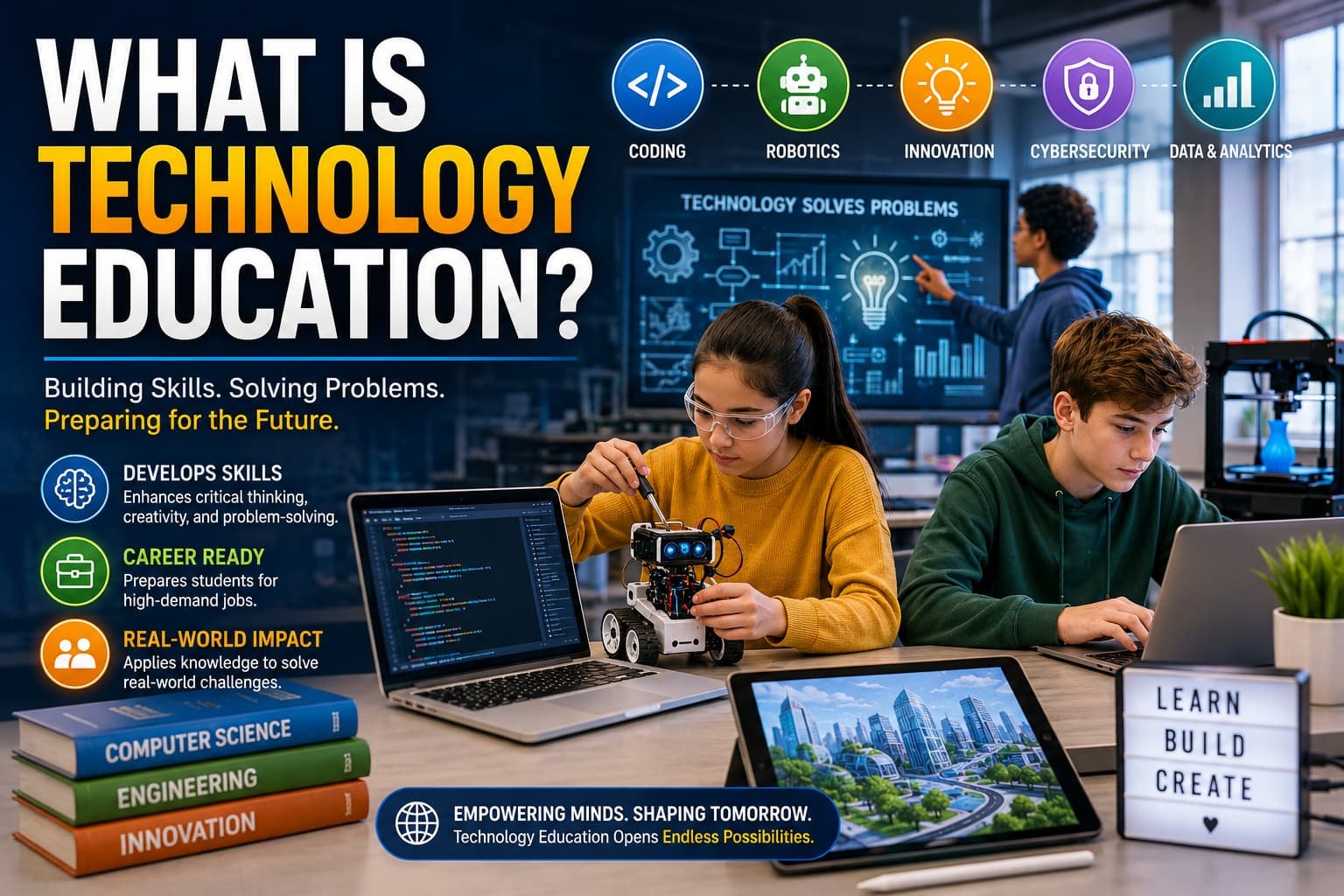
Technology education is the study and practical application of technology, engineering concepts, digital tools, and technical skills to solve real-world problems.
Unlike traditional computer classes that may focus only on software usage, technology education teaches students how technology works, how it’s created, and how it can be used effectively.
Technology education often includes:
- Computer programming
- Robotics
- Engineering design
- Digital literacy
- Artificial intelligence
- Cybersecurity
- Electronics
- Web development
- Data analysis
- 3D printing
The goal is not simply to teach students how to use technology but to help them understand, evaluate, and create technological solutions.
Read More: How to Start a Technology Company in 2026
The Evolution of Technology Education
Technology education has changed dramatically over the years.
Decades ago, many schools offered industrial arts classes that focused on woodworking, metalworking, and mechanical skills.
Today’s technology education programs have evolved to include:
Digital Technologies
Students learn:
- Coding
- Website creation
- Software development
- Cloud computing
- Mobile app development
Engineering Concepts
Many programs introduce:
- Design thinking
- Prototyping
- Product development
- Mechanical systems
Emerging Technologies
Modern technology education increasingly covers:
- Artificial Intelligence (AI)
- Machine Learning
- Virtual Reality (VR)
- Augmented Reality (AR)
- Internet of Things (IoT)
As technology continues advancing, educational programs evolve alongside it.
Why Is Technology Education Important?
Technology education is no longer optional for many careers.
In my experience researching workforce trends, one pattern appears repeatedly: employers increasingly value digital and technical skills, regardless of industry.
Even careers that traditionally had little connection to technology now depend on digital tools.
Consider these professions:
- Healthcare professionals use electronic medical records.
- Teachers use online learning platforms.
- Marketing specialists analyze digital data.
- Small business owners manage cloud-based software.
- Construction managers use digital design tools.
Technology education prepares students for these realities.
It Develops Problem-Solving Skills
One of the most valuable benefits of technology education is problem-solving.
When students build a robot or debug a coding project, they learn how to:
- Identify issues
- Analyze possible solutions
- Test ideas
- Improve outcomes
These skills extend far beyond technology careers.
It Encourages Creativity
Many people mistakenly assume technology education is only for highly technical individuals.
The truth is quite the opposite.
Building a website, designing a mobile app, or creating a digital game requires significant creativity.
Some of the most successful technology professionals combine technical expertise with creative thinking.
It Supports Future Career Opportunities
Technology-related jobs continue growing worldwide.
Popular technology careers include:
- Software Developer
- Cybersecurity Analyst
- Data Scientist
- AI Engineer
- Cloud Architect
- UX Designer
- Web Developer
Even non-technical careers increasingly require digital literacy.
Key Components of Technology Education
Technology education is broad and multidisciplinary.
Let’s explore its most important areas.
Digital Literacy
Digital literacy forms the foundation of technology education.
Students learn how to:
- Use digital devices safely
- Evaluate online information
- Protect personal data
- Communicate effectively online
In today’s information-heavy environment, digital literacy is as important as traditional literacy.
Coding and Programming
Programming teaches students how software is created.
Popular languages include:
- Python
- JavaScript
- Java
- C++
- Scratch (for beginners)
When I first experimented with coding, I expected it to be intimidating. Surprisingly, it felt more like solving puzzles than doing advanced mathematics.
That’s one reason coding has become so popular in schools.
Robotics and Automation
Robotics combines:
- Engineering
- Programming
- Electronics
- Design
Students learn how machines operate and how automation solves practical challenges.
Educational robotics platforms often include:
- LEGO Education
- Arduino
- Raspberry Pi
- VEX Robotics
Engineering Design
Engineering education teaches students to create solutions for real-world problems.
The design process often includes:
- Identifying a problem
- Brainstorming solutions
- Creating prototypes
- Testing designs
- Improving results
This structured approach helps develop critical thinking skills.
Technology Education in Schools
Many schools now integrate technology education throughout the curriculum.
Elementary School
Young students may learn:
- Basic coding concepts
- Digital citizenship
- Educational robotics
- Technology awareness
Middle School
Students often explore:
- Programming fundamentals
- Design projects
- Computer applications
- Multimedia creation
High School
Technology education becomes more specialized:
- Web development
- Engineering courses
- Cybersecurity
- Computer science
- Digital media production
Many schools also offer STEM programs.
What Is STEM and How Does It Relate?
STEM stands for:
- Science
- Technology
- Engineering
- Mathematics
Technology education serves as a major pillar of STEM learning.
The purpose is to prepare students for careers in innovation-driven industries.
Technology Education Beyond the Classroom
Technology learning doesn’t stop at school.
Today, learners have countless opportunities to build skills independently.
Online Learning Platforms
Popular educational platforms include:
- Coursera
- Udemy
- edX
- Khan Academy
- Codecademy
These platforms allow learners to study at their own pace.
Industry Certifications
Many professionals pursue certifications from organizations such as:
- Microsoft
- Amazon Web Services (AWS)
- Cisco
- CompTIA
Certifications can strengthen resumes and validate technical skills.
Hands-On Projects
One lesson I’ve learned is that technology skills improve fastest through practice.
Examples include:
- Building websites
- Creating apps
- Automating tasks
- Designing games
- Managing databases
Real-world projects often teach more than theory alone.
Common Challenges in Technology Education
Despite its benefits, technology education faces several obstacles.
Access to Technology
Not all students have equal access to:
- Computers
- High-speed internet
- Educational software
Bridging this digital divide remains an important goal.
Rapid Technological Change
Technology evolves quickly.
What students learn today may need updating within a few years.
This makes continuous learning essential.
Fear of Technical Subjects
Many beginners worry they aren’t “tech people.”
I hear this concern frequently.
The reality is that most technology skills can be learned gradually through practice and persistence.
Nobody writes perfect code on day one—not even professional developers.
How to Get Started with Technology Education
If you’re interested in learning technology skills, here’s a simple roadmap.
Step 1: Build Digital Literacy
Start by learning:
- Online safety
- Productivity tools
- Digital communication
Step 2: Explore Basic Coding
Beginner-friendly options include:
- Scratch
- Python
- HTML and CSS
Step 3: Choose a Specialization
Possible paths include:
- Web development
- Data analytics
- Cybersecurity
- Artificial intelligence
- Cloud computing
Step 4: Practice Through Projects
Create something useful.
Projects accelerate learning dramatically.
Step 5: Continue Learning
Technology never stands still.
The best learners stay curious and keep updating their skills.
Quick Tips for Success in Technology Education
- Focus on practical projects.
- Learn by doing, not just reading.
- Don’t fear mistakes.
- Join technology communities.
- Follow industry trends.
- Develop problem-solving habits.
- Stay curious about emerging technologies.
Remember: every expert was once a beginner.
Frequently Asked Questions
What is the main purpose of technology education?
The primary purpose is to help students understand, use, evaluate, and create technology while developing problem-solving and critical-thinking skills.
Is technology education only about computers?
No. Technology education includes engineering, robotics, electronics, design thinking, automation, digital literacy, and many other technology-related fields.
Why is technology education important for students?
Technology education prepares students for modern careers, strengthens problem-solving abilities, improves digital literacy, and helps them adapt to a technology-driven world.
Can adults benefit from technology education?
Absolutely. Many adults learn technology skills to change careers, earn certifications, improve job performance, or simply understand emerging technologies better.
Final Thoughts
Technology education is far more than learning how to use a computer. It is a comprehensive approach to understanding, creating, and applying technology to solve real-world problems.
As industries continue evolving, technology education provides valuable skills that support career growth, innovation, and lifelong learning. Whether you’re a student, professional, educator, or simply curious about technology, developing these skills can open doors to countless opportunities.
From coding and robotics to artificial intelligence and digital literacy, technology education equips learners to thrive in an increasingly digital future.
What has been your experience with technology education? Have you learned coding, robotics, or digital skills through school or self-study? Share your thoughts and experiences—I’d love to hear how technology has shaped your learning journey.