
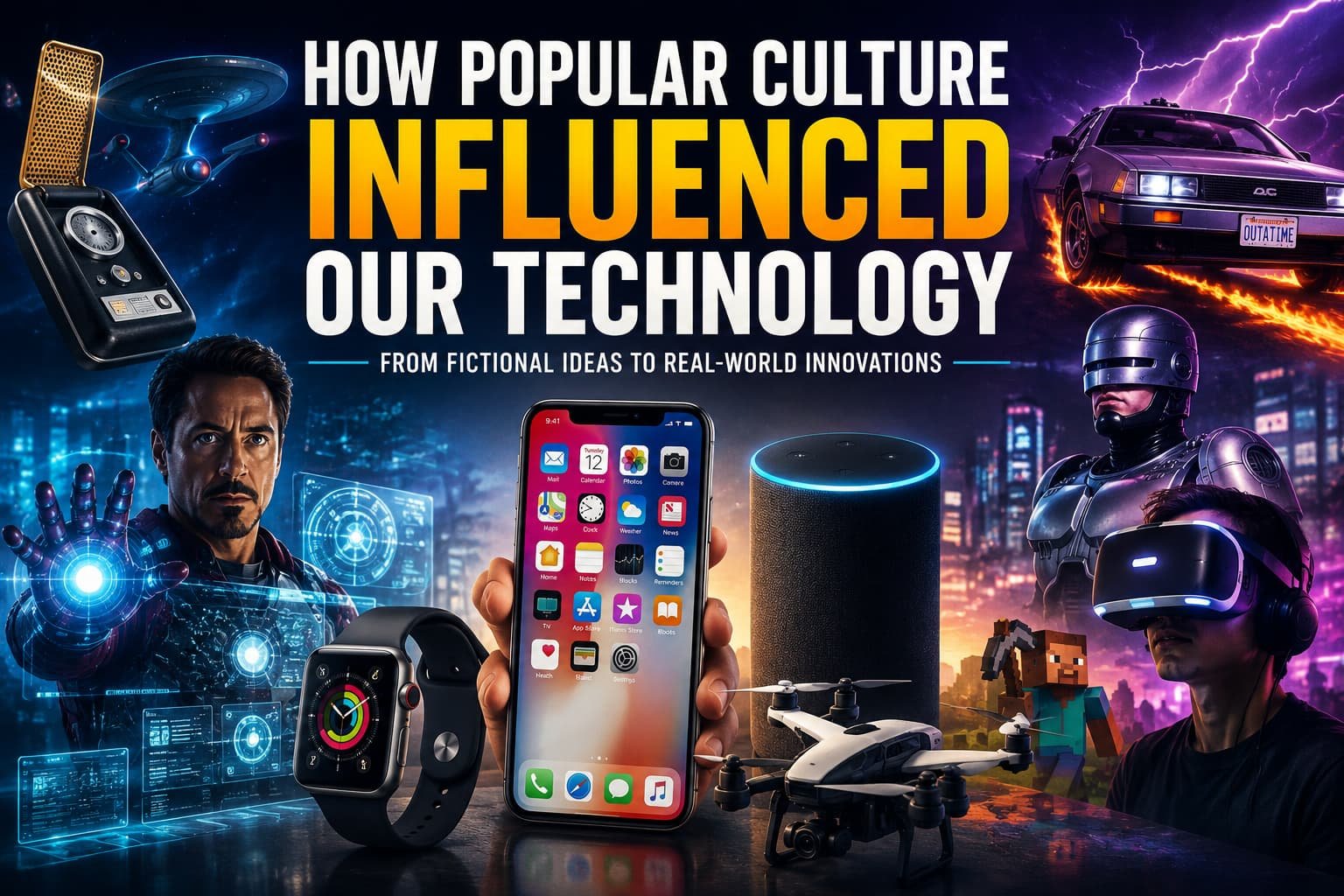
Technology and popular culture have always shared a fascinating relationship. While we often think that technology shapes entertainment, fashion, movies, and media, the reverse is equally true. In many cases, popular culture has inspired the technologies we use every day.
From science fiction films predicting smartphones to TV shows inspiring wearable devices and artificial intelligence, popular culture has played a surprisingly powerful role in shaping innovation. As someone who has spent years researching technology trends and observing how innovation evolves, I’ve noticed that some of today’s most advanced gadgets look remarkably similar to concepts that first appeared in movies, comics, and television decades ago.
In this article, I’ll explore how popular culture influenced our technology, examine real-world examples, discuss what innovators learned from entertainment, and explain why the connection between culture and innovation continues to grow stronger.
The Connection Between Popular Culture and Technology
Popular culture includes movies, television shows, books, video games, comics, music, and social media trends that influence how society thinks and behaves.
Technology companies often pay close attention to cultural trends because they reveal what people dream about, fear, and desire. Engineers, inventors, and entrepreneurs are often fans of science fiction themselves. Many innovators grew up watching futuristic stories that later inspired their careers.
In my experience, some of the most groundbreaking technologies begin as imaginative ideas before becoming practical products. Popular culture gives inventors a vision of what might be possible.
Why Fiction Inspires Innovation
There are several reasons why fictional concepts become real technology:
- They provide a clear vision of future possibilities.
- They inspire young people to pursue careers in science and engineering.
- They create consumer demand before technology exists.
- They encourage researchers to solve difficult problems.
What starts as entertainment can eventually become a roadmap for innovation.
See More: What Is Technology in a Business?
Science Fiction: The Ultimate Technology Influencer
When discussing popular culture’s influence on technology, science fiction deserves special attention.
Many technologies that seem ordinary today were once considered fantasy.
Smartphones and Star Trek Communicators
One of the most famous examples comes from the television series Star Trek.
The communicators used by Captain Kirk and his crew strongly resemble modern flip phones. Engineers at Motorola openly acknowledged that Star Trek influenced the design of early mobile phones.
Today, smartphones have exceeded even those fictional devices. We can make video calls, browse the internet, navigate cities, and access artificial intelligence from our pockets.
I was skeptical at first when people claimed science fiction predicted modern technology, but after comparing old sci-fi devices with today’s gadgets, the similarities are difficult to ignore.
Tablets Before Tablets Existed
Long before tablets entered the market, science fiction movies and television shows frequently featured thin, portable touchscreen devices.
These fictional devices inspired companies to pursue touch-based computing. Eventually, products like the Apple iPad transformed the concept into reality.
Artificial Intelligence in Entertainment
Movies have played a major role in shaping public expectations about artificial intelligence.
Films featuring intelligent computers, robotic assistants, and conversational machines encouraged researchers to develop smarter systems.
While today’s AI isn’t exactly like movie robots, virtual assistants, chatbots, and generative AI tools have clearly been influenced by decades of cultural imagination.
Movies That Inspired Real Technology
Hollywood has contributed significantly to technological innovation.
Minority Report and Gesture Controls
The film Minority Report featured a futuristic interface where users manipulated digital information using hand gestures.
Years later, gesture-control systems became reality through technologies like motion sensors, gaming devices, and touchless interfaces.
Developers frequently reference the movie as inspiration for human-computer interaction design.
Iron Man and Augmented Reality
Tony Stark’s advanced interface demonstrated how augmented reality could enhance engineering and decision-making.
Today, AR technology helps professionals in healthcare, manufacturing, architecture, and education.
What once looked like cinematic fantasy is now a practical business tool.
Back to the Future and Wearable Technology
Back to the Future introduced audiences to futuristic wearables, smart clothing, and advanced gadgets.
Although we don’t yet have fully self-lacing shoes everywhere, wearable technology such as smartwatches, fitness trackers, and smart glasses has become part of everyday life.
Video Games Driving Technological Progress
Video games are another powerful force influencing technology.
Gaming companies often push hardware and software development faster than many other industries.
Virtual Reality Growth
For decades, video games imagined immersive digital worlds.
Today, virtual reality headsets allow users to experience games, training simulations, education programs, and virtual meetings.
Many VR developers admit that their passion began through science fiction stories and gaming experiences.
Better Graphics and Processing Power
The demand for realistic gaming has accelerated innovation in:
- Graphics processing units (GPUs)
- Artificial intelligence
- Cloud computing
- High-speed networking
- Motion tracking
Many technologies now used in business and research were originally developed to improve gaming experiences.
The Metaverse Concept
Long before companies began discussing virtual worlds, video games already featured digital communities where users socialized, worked together, and built virtual identities.
Modern discussions about digital environments owe much to gaming culture.
Social Media’s Influence on Technology Development
Popular culture isn’t limited to movies and games anymore.
Social media trends now influence technology at incredible speed.
User Demand Shapes Innovation
When millions of users adopt new habits, technology companies respond quickly.
Examples include:
- Short-form video creation tools
- AI-powered content generation
- Live streaming technology
- Mobile photography improvements
- Social commerce features
Consumer behavior often dictates where innovation investments go next.
The Rise of Creator Tools
Content creators have become major drivers of technological advancement.
Software companies now build tools specifically for:
- Video editing
- Graphic design
- Audio production
- Podcasting
- AI-assisted content creation
Ten years ago, many of these tools required professional expertise. Today, they are accessible to nearly everyone.
How Comic Books Predicted Modern Gadgets
Comic books may not receive as much attention as films, but they have influenced technology in remarkable ways.
Smart Wearables
Superheroes frequently used wearable gadgets that enhanced communication, navigation, and health monitoring.
Modern smartwatches accomplish many of these functions.
Advanced Transportation
Flying vehicles, autonomous transportation systems, and intelligent navigation appeared in comics long before engineers seriously pursued them.
While fully autonomous transportation is still evolving, significant progress has been made toward concepts once considered impossible.
Real-Life Examples of Culture Becoming Technology
Let’s look at some examples where imagination became reality.
Voice Assistants
Fictional AI companions inspired developers to create voice-controlled assistants.
Today, millions of people interact daily with voice technologies that can answer questions, manage schedules, and control smart homes.
Video Calling
For decades, movies portrayed people communicating through screens.
Today, video conferencing is standard for business, education, and personal communication.
My daily routine includes multiple video meetings, and it’s remarkable to think that this capability once seemed futuristic.
Smart Homes
Automated homes frequently appeared in science fiction stories.
Now consumers can control lighting, security systems, appliances, and entertainment devices using smartphones and voice commands.
What was once considered luxury technology has become increasingly affordable.
Common Concerns About Technology Inspired by Popular Culture
While cultural inspiration drives innovation, it also raises important questions.
Are Expectations Unrealistic?
Sometimes movies portray technology as more advanced than current reality.
Consumers may expect immediate breakthroughs that require decades of research.
Innovation often progresses slower than entertainment suggests.
Can Fiction Create Fear?
Popular culture doesn’t only inspire excitement.
Stories about rogue artificial intelligence, privacy concerns, and technological dependence can influence public perception.
These concerns often spark important conversations about ethics and responsible innovation.
Should Technology Follow Entertainment?
Not every fictional invention should become reality.
Technology developers must balance creativity with safety, privacy, and practical value.
The most successful innovations solve real problems rather than simply copying entertainment concepts.
What Businesses Can Learn from Popular Culture
Companies increasingly monitor cultural trends to identify future opportunities.
Businesses can learn several lessons:
Listen to Consumer Imagination
Popular culture reveals what people want from the future.
Products that align with these desires often gain traction faster.
Innovation Requires Storytelling
Great technology isn’t only functional.
It also tells a compelling story about how life can improve.
Inspiration Can Come From Anywhere
Movies, books, games, and online communities frequently generate ideas that eventually influence major industries.
Some of today’s billion-dollar innovations began as fictional concepts.
The Future: Culture and Technology Will Continue to Merge
The relationship between popular culture and technology is becoming stronger than ever.
Artificial intelligence, virtual reality, mixed reality, robotics, wearable devices, and immersive digital experiences continue to blur the line between fiction and reality.
What I find most fascinating is that today’s entertainment may be inspiring tomorrow’s engineers right now. The futuristic gadget appearing in a movie this year could become a real product within the next decade.
History suggests that innovation rarely happens in isolation. Creative storytellers imagine possibilities, audiences embrace those ideas, and engineers work to make them real.
That’s a cycle that continues to shape our world.
Quick Takeaways
- Popular culture frequently inspires technological innovation.
- Science fiction has predicted many modern technologies.
- Movies, TV shows, comics, and video games influence engineers and entrepreneurs.
- Social media trends now accelerate technology development.
- Artificial intelligence, virtual reality, and wearable technology all have cultural roots.
- Not every fictional technology becomes reality, but many ideas eventually influence real-world innovation.
Frequently Asked Questions
How does popular culture influence technology?
Popular culture influences technology by inspiring inventors, shaping consumer expectations, and creating demand for futuristic ideas. Movies, books, games, and television often introduce concepts that engineers later attempt to develop.
What is the best example of popular culture influencing technology?
One of the most famous examples is the Star Trek communicator, which inspired early mobile phone designs. Other examples include tablets, voice assistants, video calling, and gesture-controlled interfaces.
Can science fiction predict future technology?
Science fiction doesn’t predict the future perfectly, but it often explores possibilities that inspire real-world innovation. Many technologies that exist today first appeared in science fiction stories decades earlier.
Final Thoughts
The story of technology is also the story of imagination. Many of the devices we depend on today were once ideas found only in movies, books, comics, and television shows.
As technology continues to evolve, popular culture will likely remain one of its greatest sources of inspiration. The next revolutionary innovation might already exist—not in a laboratory—but in a screenplay, video game, or graphic novel waiting to inspire the next generation of creators.
What technology from a movie, TV show, or video game would you love to see become reality? Share your thoughts and join the conversation below!