
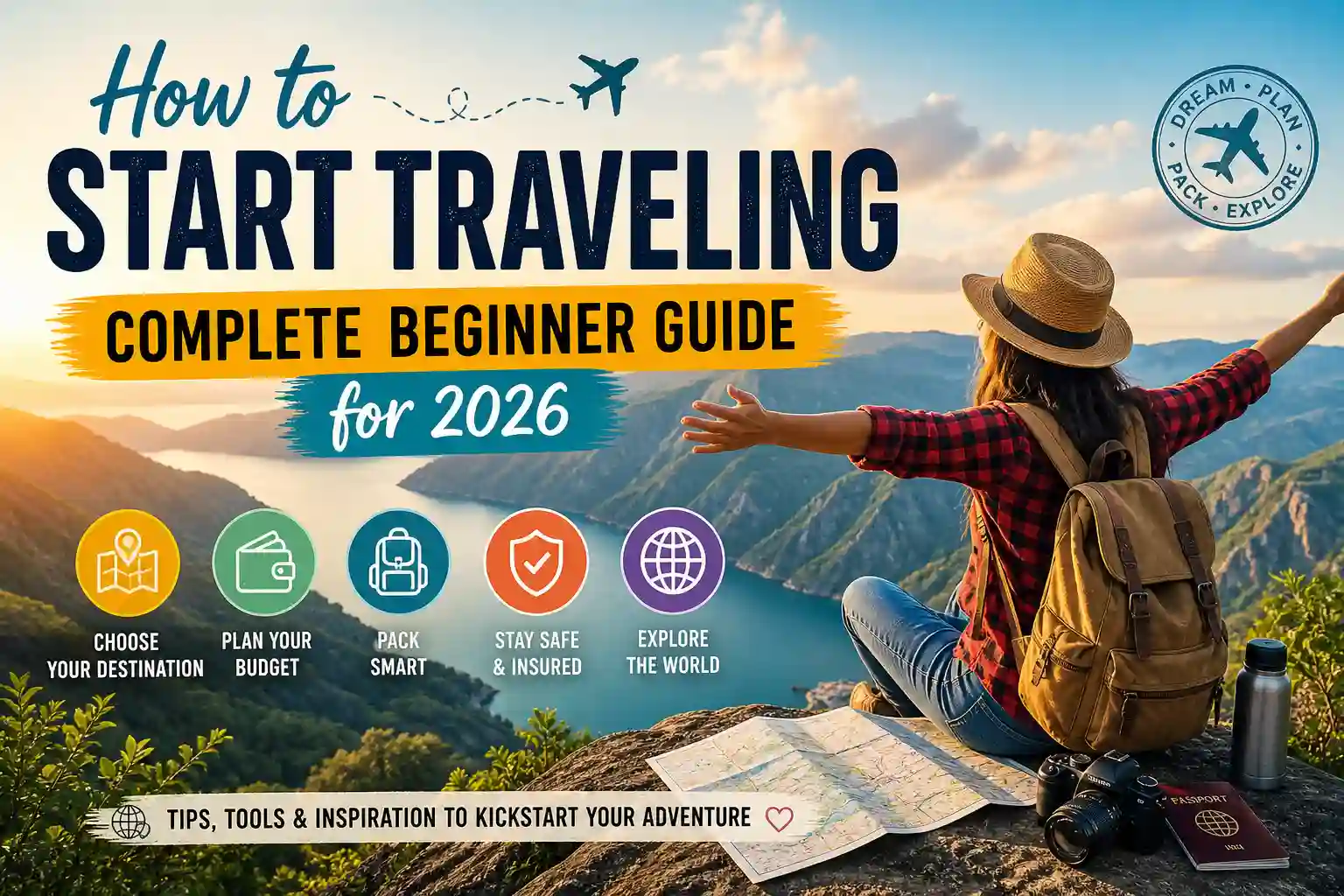
Traveling isn’t just about visiting new places anymore, it’s about how you experience the world. In 2026, travel has evolved into something more personal, more sustainable, and honestly… much easier thanks to technology.
I remember my first trip, I overpacked, over planned, and still felt underprepared. But over time (and many mistakes later), I realized something important: there’s no perfect way to travel, only your way.
This guide will walk you through everything you need to confidently start your journey, using real-world advice, proven strategies, and beginner-friendly steps.
Overview (2026 Travel Blueprint)
Traveling in 2026 is defined by personalized experiences, a focus on sustainability, and leveraging technology to simplify trips. This guide provides a step-by-step approach for beginners to plan their first adventure with confidence.
Phase 1: Planning and Preparation
- Choose destinations that match your travel style (relaxation vs adventure)
- Beginner-friendly destinations include Vietnam, Albania, Mexico, and Morocco
- Set a budget with a 15–20% buffer
- Book flights and accommodation early
- Ensure passport validity (6+ months) and check visa requirements (e.g., ETIAS for Europe)
- Get travel insurance (non-negotiable)
Phase 2: Booking and Organizing
- Use tools like ChatGPT for itinerary planning
- Book through Booking.com
- Use apps like MAPS.ME and Google Translate
- Share your itinerary with someone you trust
Phase 3: Packing Smart
- Travel light (45L backpack recommended)
- Pack essentials: adapter, power bank, first aid kit
- Store documents in cloud tools like Google Drive
Phase 4: During Your Trip
- Stay aware of scams and surroundings
- Learn basic local phrases
- Stay flexible—don’t overplan
- Join group activities to meet people
2026 Travel Trends
- Rise of sustainable and slow travel
- Budget hacks: rewards cards, shoulder season travel
- Increased travel regulations (REAL ID, etc.)
Why You Should Start Traveling
Have you ever imagined stepping out of your routine and experiencing something completely new?
For me, traveling changed how I see everything, from cultures to my own priorities. It’s not just about destinations—it’s about growth, perspective, and unforgettable moments.
Whether it’s tasting unfamiliar food, navigating a new city, or simply watching a sunset somewhere far from home—travel has a way of reshaping you.
Step-by-Step Guide to Start Traveling
Step 1: Choose Your Travel Style
There are hundreds of ways to travel, but beginners usually fall into these categories:
- Backpacking (budget-friendly and flexible)
- Solo travel (independent and empowering)
- Group travel (structured and social)
- Slow travel (immersive and meaningful)
In my early trips, I tried backpacking—and honestly, it taught me more than any guidebook ever could.
Step 2: Pick Your First Destination
A common mistake? Choosing a destination that’s too overwhelming.
Start simple:
- Europe (easy transport and infrastructure)
- Southeast Asia (budget-friendly and traveler-friendly)
- Countries like Italy offer a great mix of culture and accessibility
My biggest concern was safety—but choosing well-traveled destinations solved that instantly.
Step 3: Set a Realistic Budget
Budgeting doesn’t have to be stressful.
Break it down into:
- Flights
- Accommodation
- Food
- Activities
In my 3 weeks of testing budget travel in Europe, I found that planning daily expenses helped me stay stress-free.
💡 Pro tip: Always add a 15–20% buffer.
Step 4: Prepare Essentials
Before you go:
- Check passport validity
- Get travel insurance
- Make copies of documents
I was skeptical at first about insurance—but after seeing how easily plans can change, I never travel without it.
Backpacking for Beginners
Backpacking is hands-down the easiest way to start traveling.
All you really need is:
- A backpack
- Basic essentials
- A willingness to explore
After comparing with my previous overpacked suitcase trips, I realized how freeing it is to travel light.
💡 Ideal backpack size: 40–45L
How to Start Solo Travel
Your first solo trip might feel intimidating—and that’s completely normal.
But here’s the truth: solo travel builds confidence like nothing else.
Practical Tips:
- Share your itinerary
- Learn a few local phrases
- Use offline apps like MAPS.ME
- Join small group tours
What I loved most about solo travel is the freedom—it forces you to rely on yourself, and that’s powerful.
How to Travel Cheap (Smart Strategies)
Travel doesn’t have to be expensive.
Here are proven methods:
Volunteering
Work a few hours daily in exchange for accommodation and meals using:
- Workaway
- Worldpackers
- HelpX
House Sitting
Stay for free while taking care of homes/pets via:
- TrustedHousesitters
- Housecarers
I tried volunteering once on a farm—and it turned into one of the most meaningful travel experiences I’ve ever had.
How to Travel Europe by Train
Train travel is one of the best ways to explore Europe.
Why?
- No airport stress
- City-center arrivals
- Scenic journeys
In my experience, train travel made my trips smoother and more enjoyable compared to flights.
Sustainable Travel for Beginners
Traveling responsibly is no longer optional—it’s necessary.
The travel industry contributes up to 11% of global emissions, but small choices matter.
Simple Tips:
- Choose trains over flights
- Avoid over-tourism
- Support local businesses
Best Travel Gear for Beginners
Your gear can make or break your trip.
When choosing a backpack, focus on durability and sustainability.
Top brands include:
- Osprey
- Patagonia
- TropicFeel
- Deuter
- Jack Wolfskin
Buy once, cry once—it’s worth it.
Common Beginner Mistakes to Avoid
- Overpacking
- Overplanning
- Ignoring travel insurance
- Not budgeting properly
My daily routine now includes packing minimal essentials—and it has completely changed how I travel.
FAQs
Who are the new travel guides for 2026?
Travel guides in 2026 are no longer just books—they’re a mix of technology and real people.
AI tools like ChatGPT help create personalized itineraries
Travel platforms and apps give real-time recommendations
Local guides and content creators share authentic experiences online
👉 In simple terms: your “guide” today is a combination of AI, apps, and local experts.
How to plan a trip for 2026?
Planning a trip is easier than ever if you follow a few steps:
Choose a destination based on your budget and interests
Set a budget (include a 15–20% extra buffer)
Book flights and hotels early using platforms like Booking.com
Get travel insurance and check visa requirements
Download useful apps like MAPS.ME
👉 Keep it simple: plan the basics, but leave room for flexibility.
Which country is best to travel in 2026?
The “best” country depends on your travel style, but beginner-friendly options include:
Vietnam → affordable and culturally rich
Albania → less crowded and budget-friendly Europe
Mexico → great food, beaches, and culture
Morocco → unique landscapes and experiences
If it’s your first trip, choose a place with good tourist infrastructure and safety.
What are the top travel trends for 2026?
Travel in 2026 is changing fast. Here are the biggest trends:
🌱 Sustainable travel (eco-friendly choices)
🧳 Slow travel (spending more time in fewer places)
🤖 AI-powered trip planning
💸 Budget-conscious travel (smart saving strategies)
🌍 Exploring less crowded destinations
👉 Travelers now focus more on meaningful experiences than just ticking destinations off a list.
Who are the top 5 tour operators in the world?
Some of the most trusted global tour operators include:
TUI Group
Expedia Group
Intrepid Travel
G Adventures
Abercrombie & Kent
👉 These companies offer everything from budget trips to luxury experiences worldwide.
What do Kev Dorian and Teng do?
Kev Dorian and Teng are known as travel content creators and influencers.
They create travel guides, videos, and tips
Share personal experiences and itineraries
Help people learn how to travel smarter and cheaper
👉 In short: they inspire and educate travelers through real-life content and advice.
Is 25 or 30 too late to start traveling?
Not at all. Travel has no age limit—it just evolves with you.
How long should my first trip be?
Start with 1–4 weeks. It’s enough to learn without feeling overwhelmed.
Can I get paid to travel?
Yes, through remote work, volunteering, or travel-related jobs.
Conclusion
Starting your travel journey in 2026 might feel overwhelming at first, but once you break it down, it becomes an exciting and achievable goal. From choosing the right destination and setting a realistic budget to exploring options like volunteering, house sitting, or backpacking, every step brings you closer to a life-changing experience.
Looking back, I remember how many doubts I had before my first trip, questions about safety, money, and whether I was “ready.” But the truth is, you become ready by starting. Travel isn’t something you master before you begin, it’s something you learn by doing.
What makes modern travel even more powerful is the combination of smart tools like ChatGPT, accessible platforms like Booking.com, and opportunities through communities such as Workaway or TrustedHousesitters. These resources make it easier than ever to explore the world confidently, even as a complete beginner.
At the same time, the shift toward sustainable and slow travel reminds us that it’s not just about how far we go—but how deeply we experience each place.
So, whether you’re dreaming of wandering through Europe by train, volunteering in a new culture, or simply taking your first solo trip—this is your sign to begin.
👉 Start small. Stay curious. Learn as you go.
Because the moment you take that first step, you’re no longer just dreaming about travel, you’re living it. 🌍✈️