
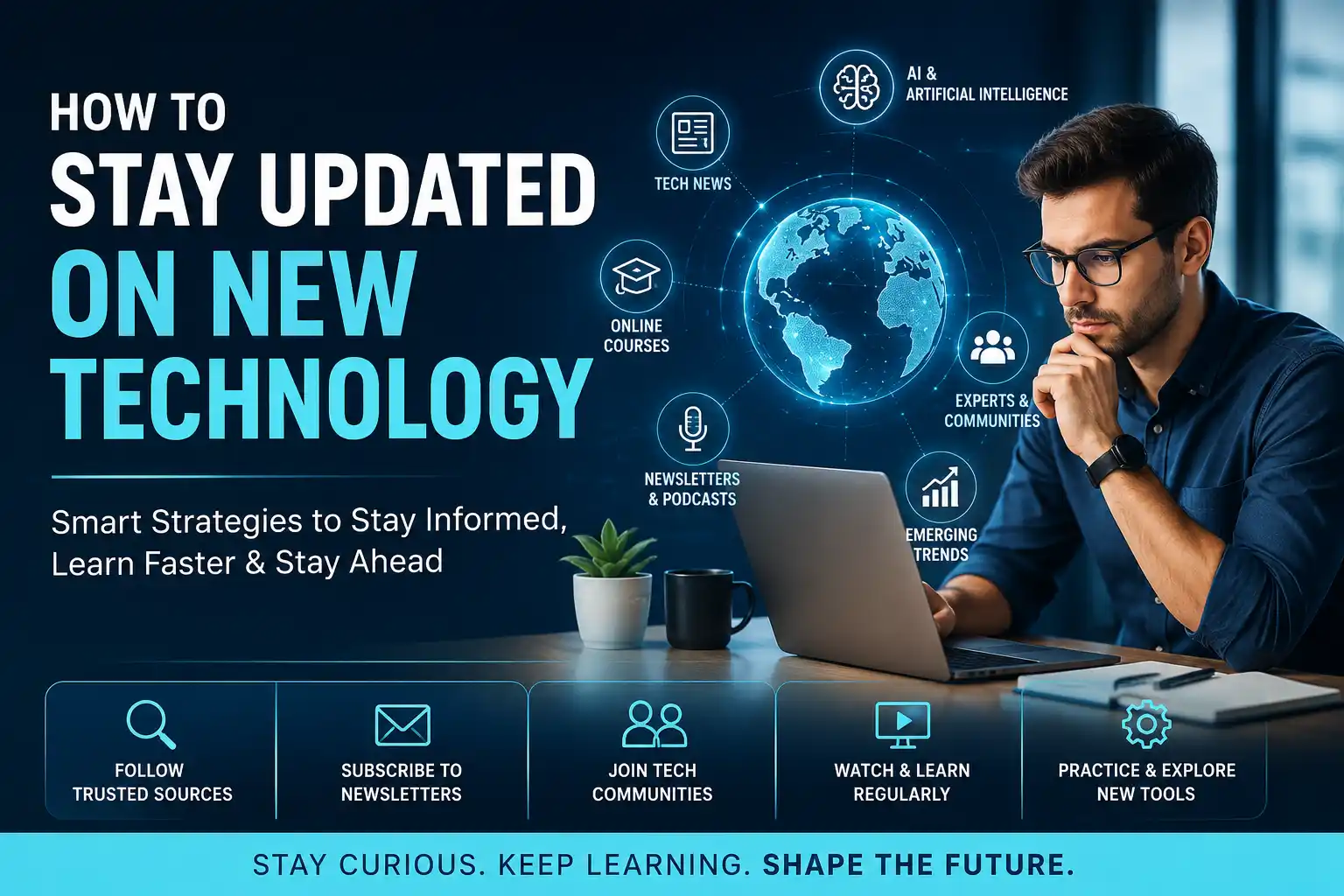
Introduction: The Day I Realized Technology Was Moving Faster Than Me
A few years ago, I remember hearing people talk about artificial intelligence, blockchain, and cloud computing as if everyone already understood them. Meanwhile, I was still trying to figure out whether my smartphone needed another software update.
That moment made me realize something important: technology isn’t slowing down for anyone.
Today, new innovations appear almost daily. From AI tools transforming workplaces to smart home devices becoming more common, technology influences how we work, communicate, shop, learn, and even relax. According to various industry reports, thousands of new apps, software updates, and digital products launch every year, making it harder than ever to stay informed.
The good news? You don’t need to become a tech expert or spend hours reading technical manuals.
In my experience, staying updated on new technology is more about building smart habits than constantly chasing every trend. Over time, I’ve tested dozens of methods, apps, newsletters, and learning platforms. Some worked wonderfully, while others felt like drinking from a firehose.
This guide covers the most practical and effective ways to stay updated on technology without feeling overwhelmed.
Why Staying Updated on Technology Matters
Before diving into strategies, it’s worth understanding why keeping up with technology is important.
Technology impacts nearly every industry. Whether you’re a student, entrepreneur, marketer, teacher, healthcare professional, or freelancer, digital advancements can affect your career opportunities and productivity.
Some major benefits include:
- Better job opportunities
- Increased productivity
- Stronger digital skills
- Improved decision-making
- Greater adaptability in changing industries
- Enhanced cybersecurity awareness
I was skeptical at first about how much technology knowledge could impact everyday life. But after learning automation tools that saved me several hours each week, I quickly changed my mind.
Follow Trusted Technology News Sources
Build a Reliable Information Foundation
One of the easiest ways to stay informed is by following reputable technology news websites.
Instead of relying on random social media posts, focus on trusted sources known for accurate reporting.
Popular technology news platforms include:
- TechCrunch
- Wired
- The Verge
- Ars Technica
- MIT Technology Review
- CNET
- Engadget
The mistake I made initially was trying to follow too many websites. I ended up reading the same news five times from different sources.
Now, I follow just a few trusted outlets and get better information with less effort.
Use News Aggregator Apps
News aggregator apps help organize technology updates into one place.
Some useful options include:
- Google News
- Feedly
- Inoreader
Feedly became one of my favorites because I could customize topics like artificial intelligence, cybersecurity, software development, and consumer electronics.
Instead of visiting ten websites every morning, everything appeared in a single dashboard.
Subscribe to High-Quality Technology Newsletters
Let the News Come to You
One habit that dramatically improved my awareness of technology trends was subscribing to newsletters.
A good newsletter filters noise and delivers only the most important updates.
Some excellent options include:
Morning Brew Tech
Provides quick and easy-to-understand summaries of major tech developments.
TLDR Newsletter
Great for developers, startups, AI enthusiasts, and tech professionals.
Benedict Evans Newsletter
Offers deeper analysis of technology trends and industry shifts.
The Rundown AI
Perfect for staying informed about artificial intelligence developments.
The beauty of newsletters is convenience. Instead of searching for information, it arrives directly in your inbox.
Use Social Media Strategically
Follow Experts Instead of Trends
Social media can either be incredibly useful or a massive distraction.
I’ve experienced both sides.
The key is following industry experts rather than chasing viral content.
Some valuable people to follow include:
- Technology researchers
- Software engineers
- Startup founders
- Cybersecurity specialists
- Product managers
- AI researchers
Platforms like LinkedIn, X (formerly Twitter), YouTube, and Reddit often break technology news before traditional media outlets.
Join Relevant Communities
Technology-focused communities provide insights that news websites sometimes miss.
Popular communities include:
- Reddit technology forums
- LinkedIn groups
- Discord servers
- Slack communities
- Facebook technology groups
I often discover emerging tools weeks before mainstream coverage simply by participating in these communities.
Watch Technology-Focused YouTube Channels
Learn While Being Entertained
Sometimes reading articles can feel exhausting.
That’s where YouTube becomes incredibly valuable.
Some educational technology channels include:
- Marques Brownlee (MKBHD)
- Linus Tech Tips
- Matt Wolfe
- Two Minute Papers
- ColdFusion
- Fireship
These creators simplify complex topics and often provide hands-on demonstrations.
I learned more about AI tools in a few YouTube videos than I did from several lengthy technical articles.
Take Short Online Courses Regularly
Continuous Learning Beats Cramming
One common misconception is that staying updated requires earning another degree.
In reality, short online courses often provide everything you need.
Platforms worth exploring include:
- Coursera
- Udemy
- LinkedIn Learning
- edX
- Skillshare
A simple rule I follow is dedicating just 20–30 minutes a few times per week to learning.
That small investment compounds dramatically over time.
Experiment With New Technology Yourself
Hands-On Experience Creates Real Understanding
Reading about technology is helpful.
Using technology is transformational.
Whenever a new tool gains attention, I try it personally.
For example:
- Testing AI writing tools
- Trying productivity apps
- Exploring automation software
- Using smart home devices
- Experimenting with cloud storage platforms
Real-world experience helps separate marketing hype from genuine value.
Many tools sound revolutionary until you actually use them.
Others quietly become indispensable.
About More Details: How Does Technology Improve Our Lives?
Follow Industry Reports and Research
Look Beyond Daily Headlines
Daily news tells you what’s happening now.
Industry reports help you understand what’s happening next.
Useful sources include:
- Gartner
- McKinsey
- Deloitte
- PwC
- Accenture
- Statista
These organizations publish reports that identify emerging trends, technology adoption rates, and future opportunities.
When I started reading annual technology reports, I became much better at spotting trends before they became mainstream.
Attend Webinars, Conferences, and Virtual Events
Learn Directly From Industry Leaders
Technology events provide direct access to experts and innovators.
Many conferences now offer virtual attendance options.
Popular events include:
- CES
- Web Summit
- Google I/O
- Microsoft Build
- NVIDIA GTC
- SXSW
Even attending a few online sessions annually can provide valuable insights into where technology is heading.
Set Up Google Alerts for Emerging Topics
Automate Your Learning Process
One underrated strategy is creating Google Alerts.
You can receive notifications whenever new content appears about specific topics.
Useful alert topics include:
- Artificial intelligence
- Machine learning
- Cybersecurity
- Quantum computing
- Cloud computing
- Digital marketing technology
- Smart devices
This creates a personalized technology monitoring system that works automatically.
Avoid Information Overload
Focus on What Actually Matters
One lesson I learned the hard way is that you don’t need to know everything.
Trying to follow every trend often leads to burnout.
Instead:
- Choose a few relevant technology categories
- Follow trusted sources
- Schedule dedicated learning time
- Ignore unnecessary hype
Technology should support your goals, not consume all your free time.
Quick Tips for Staying Updated on New Technology
- Read technology news for 10 minutes daily.
- Subscribe to 2–3 quality newsletters.
- Watch one educational tech video weekly.
- Join a technology-focused online community.
- Test new tools yourself whenever possible.
- Follow industry experts on LinkedIn.
- Take short online courses regularly.
- Set Google Alerts for key interests.
Small, consistent actions outperform occasional deep dives.
Frequently Asked Questions
What is the best way to stay updated on new technology?
The best approach combines trusted news websites, newsletters, online communities, and hands-on experimentation. Consistency matters more than spending large amounts of time.
How much time should I spend learning about technology each week?
For most people, 30 minutes to 3 hours per week is enough to stay informed. Even 10–15 minutes daily can make a significant difference over time.
Which technology trends should beginners focus on?
Artificial intelligence, cybersecurity, cloud computing, automation, and digital productivity tools are excellent starting points because they affect many industries.
Is social media a reliable source for technology news?
It can be useful when following credible experts and organizations. However, always verify important information through trusted technology publications.
Conclusion
Learning how to stay updated on new technology doesn’t require becoming a full-time tech enthusiast. In my experience, the most effective strategy is creating a simple system that combines trusted news sources, newsletters, online learning, expert insights, and hands-on experimentation.
The biggest advantage of staying informed is adaptability. Technology will continue evolving whether we pay attention or not. By investing a little time each week, you can make better decisions, discover useful tools, and stay competitive in a rapidly changing world.
The only real downside is the potential for information overload, but that’s easy to manage when you focus on topics relevant to your goals.
What methods do you use to stay updated on technology? Have you discovered a newsletter, app, or resource that’s particularly helpful? Share your experience and join the conversation.