
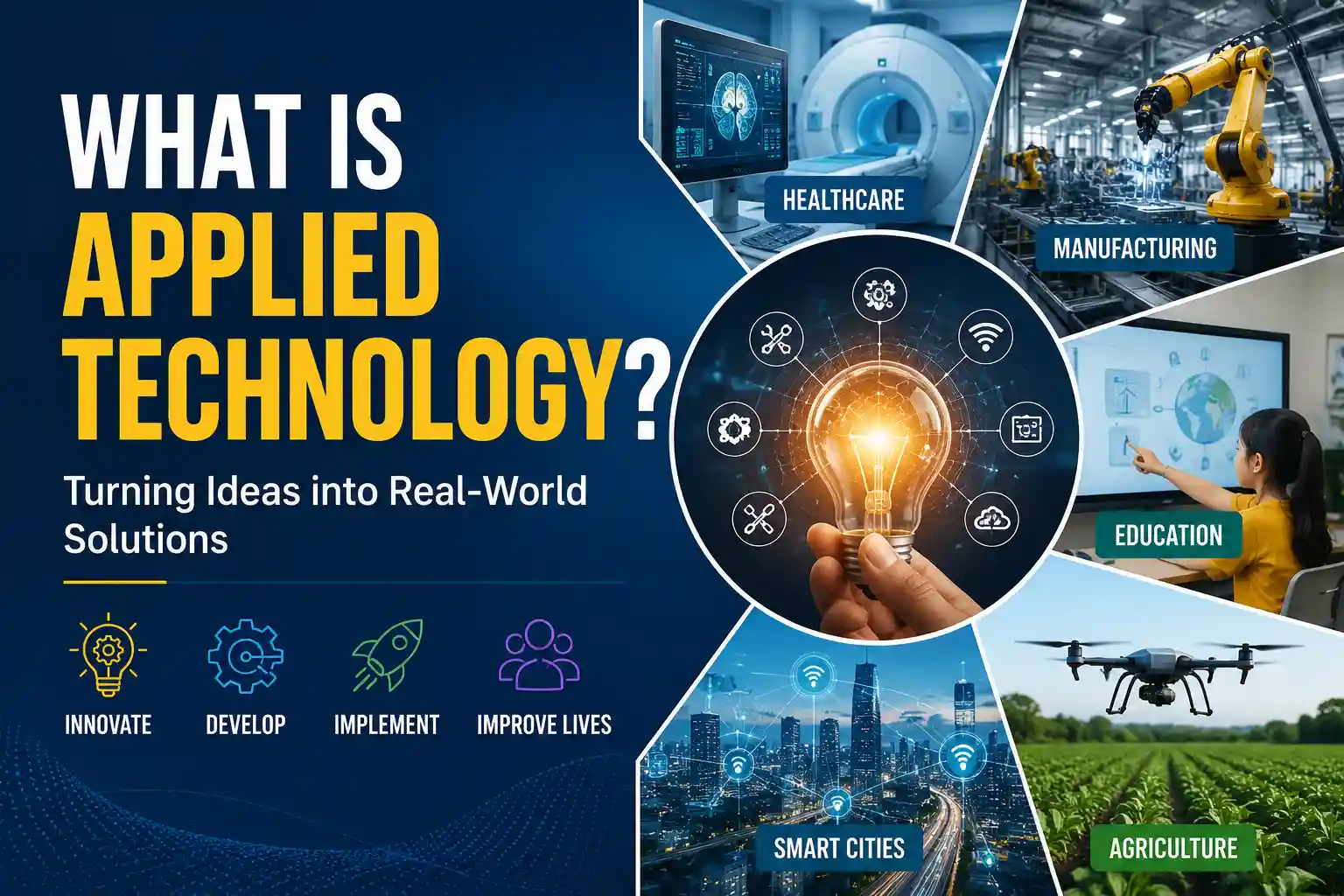
Introduction: The Moment I Realized Technology Was More Than Just Gadgets
A few years ago, I visited a small manufacturing workshop where workers were using automated cutting machines connected to tablets. At first, I assumed it was just another modern setup designed to look impressive. But after talking with the owner, I realized those machines had reduced waste, improved accuracy, and doubled production speed within months.
That was the moment I truly understood what applied technology means.
It’s not just about inventing cool gadgets or developing futuristic robots. Applied technology is about using existing scientific knowledge and tools to solve practical, real-world problems. From smartphones and medical devices to AI software and smart farming systems, applied technology quietly shapes almost every part of our daily lives.
In this article, I’ll explain what applied technology really is, how it works, where it’s used, and why it matters more than ever in today’s digital world. I’ll also share real-world examples, personal insights, and practical applications that make this topic easy to understand, even if you’re not a tech expert.
What Is Applied Technology?
Applied technology refers to the practical use of scientific knowledge, engineering, and technical tools to solve specific real-world problems.
Unlike theoretical technology or pure scientific research, applied technology focuses on results and functionality. The goal is simple: make life easier, faster, safer, or more efficient.
In my experience, the easiest way to understand applied technology is this:
If science discovers something, applied technology finds a useful way to use it.
For example:
- Scientists study electricity
- Engineers design electrical systems
- Applied technology gives us smartphones, refrigerators, and electric vehicles
That practical application is what makes the technology “applied.”
The Difference Between Applied Technology and Pure Science
A lot of people confuse applied technology with science itself, but they are very different.
Pure Science
Pure science focuses on discovering new knowledge and understanding how the world works.
Examples include:
- Physics research
- Chemistry experiments
- Biological studies
Scientists may spend years studying something without immediately creating a product from it.
Applied Technology
Applied technology takes those discoveries and turns them into useful tools, systems, or solutions.
Examples include:
- GPS navigation systems
- Medical imaging devices
- Artificial intelligence software
- Smart home automation
I was skeptical at first, but once I started comparing the two, the distinction became obvious. Science asks “Why does this happen?” while applied technology asks “How can we use this?”
Real-World Examples of Applied Technology
One reason applied technology is so important is because it affects nearly every industry.
Healthcare Technology
Modern healthcare is filled with applied technology.
Examples include:
- MRI and CT scanners
- Telemedicine apps
- Wearable fitness trackers
- Robotic surgery systems
Companies like Apple Inc. and Fitbit helped popularize health-monitoring devices that track heart rate, sleep patterns, and physical activity in real time.
In my experience, wearable health tech completely changed how people think about personal wellness. Instead of waiting for medical problems, users can now monitor their health proactively.
Education Technology
Applied technology has transformed education faster than many people expected.
Popular tools include:
- Smartboards
- Online learning platforms
- AI tutoring systems
- Educational apps
Platforms like Google Classroom and Microsoft Teams became essential during remote learning periods worldwide.
I personally noticed how quickly students adapted to digital learning environments. Even people who struggled with traditional classrooms often became more engaged through interactive technology.
Manufacturing and Automation
Factories today rely heavily on applied technology.
Examples include:
- Industrial robots
- Automated assembly lines
- 3D printing
- AI-powered quality control systems
Brands like Tesla use advanced automation to improve production speed and precision.
One factory manager I spoke with explained that automation reduced repetitive tasks while allowing workers to focus on more skilled responsibilities. That’s one of the biggest misconceptions about technology — it often changes jobs rather than simply replacing them.
Agriculture Technology
Smart farming is another powerful example of applied technology.
Modern farms use:
- GPS-guided tractors
- Drone crop monitoring
- Soil sensors
- Automated irrigation systems
I was surprised to learn how much technology modern agriculture depends on. Farmers now use data analytics to predict weather patterns and optimize crop yields more accurately than ever before.
About More Details: How to Start a Technology Company in 2026
Why Applied Technology Matters Today
Applied technology is no longer optional for businesses or industries. It’s becoming essential for growth, competitiveness, and survival.
Increased Efficiency
Technology helps organizations:
- Save time
- Reduce costs
- Improve productivity
- Minimize human error
For example, AI customer service chatbots can answer thousands of customer questions instantly, reducing wait times dramatically.
Better Communication
Applied technology connects people globally through:
- Video conferencing
- Messaging apps
- Cloud collaboration tools
Apps like Zoom Communications changed how businesses operate remotely.
Improved Safety
Technology improves safety in industries like:
- Construction
- Transportation
- Healthcare
- Aviation
Sensors, monitoring systems, and predictive software help prevent accidents before they happen.
Common Problems With Applied Technology
Even though applied technology offers huge benefits, it also creates challenges.
Privacy Concerns
Many technologies collect user data.
Smart devices, apps, and AI systems often track:
- Locations
- Preferences
- Behavior patterns
In my experience, people rarely realize how much data they share daily until they review app permissions carefully.
Job Displacement Fears
Automation can reduce demand for certain repetitive jobs.
However, it also creates new careers in:
- Software development
- Data analysis
- Cybersecurity
- AI engineering
The key is adaptation and continuous learning.
Overdependence on Technology
One downside I’ve personally noticed is how dependent people become on technology for basic tasks.
Examples include:
- GPS navigation instead of memorizing routes
- Calculators for simple math
- AI tools for writing assistance
Technology should support human skills — not completely replace them.
How Applied Technology Is Changing Everyday Life
Sometimes people think applied technology only exists in laboratories or large corporations. In reality, most people interact with it constantly.
Smart Homes
Devices like smart thermostats and voice assistants automate household tasks.
Popular examples include:
- Amazon Alexa
- Google Nest
- Smart security systems
Transportation
Modern transportation relies heavily on applied technology through:
- Electric vehicles
- Navigation systems
- Ride-sharing apps
- Traffic prediction software
Companies like Uber Technologies revolutionized urban transportation through mobile technology.
Entertainment
Streaming services use algorithms to personalize recommendations.
Platforms such as Netflix and Spotify analyze user behavior to improve content suggestions.
Honestly, I still find it fascinating how accurately recommendation systems predict what people want to watch or listen to next.
Applied Technology vs Information Technology
Many people assume applied technology and information technology are the same thing, but they’re different.
Applied Technology
A broad field involving practical technology solutions across industries.
Examples:
- Robotics
- Medical equipment
- Smart farming
- Manufacturing systems
Information Technology (IT)
Focused specifically on computers, networks, and digital systems.
Examples:
- Cybersecurity
- Cloud computing
- Software management
- Database systems
In simple terms:
- IT is a branch of applied technology
- Applied technology covers much more than computers
Future Trends in Applied Technology
The future of applied technology looks incredibly exciting.
Artificial Intelligence
AI is becoming one of the biggest drivers of technological innovation.
AI applications include:
- Virtual assistants
- Predictive healthcare
- Self-driving vehicles
- AI content generation
Green Technology
Sustainable technology is growing rapidly.
Examples include:
- Solar energy systems
- Electric transportation
- Smart energy grids
Biotechnology
Medical technology continues advancing through:
- Gene editing
- Personalized medicine
- Advanced prosthetics
I believe the next decade will bring even more integration between human life and intelligent technology systems.
Quick Tips for Understanding Applied Technology
Here are a few simple ways I explain applied technology to beginners:
- Think practical solutions, not just inventions
- Look for technology solving everyday problems
- Notice how businesses use automation
- Pay attention to smart devices around you
- Understand that technology evolves constantly
Frequently Asked Questions
What is the simple definition of applied technology?
Applied technology is the practical use of scientific knowledge and tools to solve real-world problems and improve efficiency.
What are examples of applied technology?
Examples include smartphones, medical imaging devices, AI software, GPS systems, industrial robots, and smart farming equipment.
Is applied technology a good career field?
Yes. Applied technology careers are growing rapidly in industries like healthcare, IT, manufacturing, engineering, cybersecurity, and artificial intelligence.
Conclusion: Why Applied Technology Is Everywhere Around Us
The more I researched applied technology, the more I realized it’s not some distant futuristic concept. It’s already deeply woven into everyday life.
From the phones in our pockets to the systems powering hospitals, transportation, and businesses, applied technology helps solve problems faster and more efficiently than ever before.
What makes it truly powerful is its practical purpose. It takes scientific ideas and transforms them into tools people can actually use.
As technology continues evolving, understanding applied technology will become increasingly important — not just for engineers or developers, but for everyone living in a digital world.
And honestly, once you start noticing it, you’ll realize applied technology is everywhere.