
Introduction
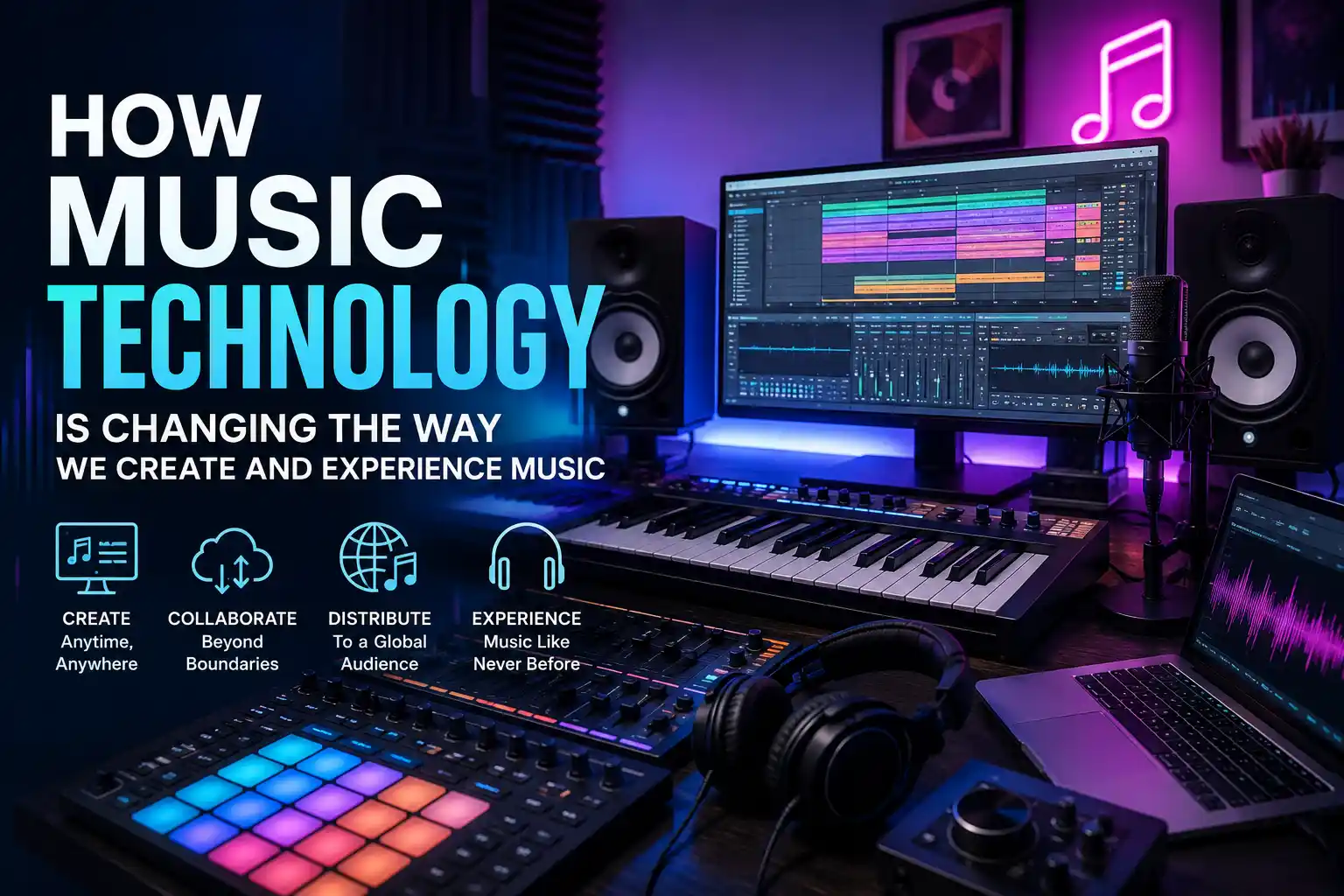
Music has changed dramatically over the last few decades, and in my experience, technology is the biggest reason why. From recording songs in home studios to sharing tracks with millions of listeners online, music technology has completely reshaped the industry. Today, artists no longer need expensive studio setups or major record labels to produce high-quality music. A laptop, a microphone, and the right software can now turn a bedroom into a professional recording space.
Overview:
Music technology refers to any tool, device, or software, such as Digital Audio Workstations (DAWs) like Ableton Live, synthesizers, or microphones used to create, record, perform, and distribute music. It has revolutionized the industry by democratizing production, allowing for home recording, instant global distribution, and new forms of creative expression.
Technology has also changed how audiences consume music. Streaming platforms, social media, and digital distribution services allow listeners to discover songs instantly from anywhere in the world. At the same time, artists can collaborate remotely, experiment with new sounds, and use artificial intelligence to improve production quality.
In this article, I’ll explain how music technology is transforming music creation, performance, distribution, and the listener experience. I’ll also share practical examples, useful tools, and insights that make complex ideas easier to understand.
What Is Music Technology?
Music technology includes every digital or electronic tool used to create, record, edit, perform, or distribute music. These tools help musicians improve sound quality, experiment creatively, and connect with larger audiences.
Some of the most common music technologies include:
- Digital Audio Workstations (DAWs)
- Audio interfaces
- MIDI controllers
- Synthesizers
- Drum machines
- Studio microphones
- Streaming platforms
- Music production apps
- AI-powered mastering software
Popular DAWs such as Ableton Live, FL Studio, and Logic Pro allow producers to compose, record, mix, and master music directly from a computer.
In my experience, these tools have lowered the barrier to entry for beginners. Years ago, producing professional music required expensive studio equipment. Now, even independent artists can create radio-quality tracks from home.
How Technology Changed Music Production
Home Studios Made Music Production Affordable
One of the biggest changes in music production is the rise of home studios. Musicians no longer need to rent costly studio time to produce high-quality tracks.
Today, a simple setup may include:
- A laptop
- Recording software
- Studio headphones
- A USB microphone
- Basic soundproofing
This shift has empowered independent musicians around the world. Artists can now experiment freely without worrying about hourly studio costs.
For example, many viral songs on platforms like Spotify and YouTube were recorded in bedrooms rather than professional studios.
Digital Audio Workstations Simplified Recording
DAWs have completely transformed music creation. These software programs allow artists to:
- Record vocals and instruments
- Edit mistakes
- Add sound effects
- Arrange tracks
- Mix and master songs
In my experience, the biggest advantage of DAWs is flexibility. Producers can test multiple versions of a song without re-recording everything from scratch.
For beginners, software like GarageBand makes music production easier to learn. Advanced producers often use tools like Pro Tools for professional studio work.
The Role of Artificial Intelligence in Music
Artificial intelligence is becoming a major part of music technology. AI tools now help musicians speed up production and improve sound quality.
AI Can Assist With Music Creation
Modern AI software can:
- Generate melodies
- Suggest chord progressions
- Remove background noise
- Improve vocal tuning
- Automate mastering
For example, AI mastering services can analyze a song and optimize it for streaming platforms within minutes.
In my experience, AI works best as a creative assistant rather than a replacement for musicians. Human emotion and storytelling still play the biggest role in great music.
AI Is Expanding Creative Possibilities
Artists are also experimenting with AI-generated sounds and compositions. Some producers combine AI with traditional instruments to create unique musical styles.
This technology is especially useful for:
- Film scoring
- Video game soundtracks
- Experimental electronic music
- Content creators needing royalty-free music
Although some people worry AI could reduce originality, I believe it mainly gives creators more tools to express ideas faster.
Read More About: What Is a Technology Company?
How Technology Changed Live Performances
Digital Equipment Improved Stage Performances
Live music performances have become more immersive thanks to technology. Modern artists use:
- MIDI controllers
- Loop stations
- Digital mixers
- Effects processors
- Lighting synchronization software
These tools allow musicians to manipulate sound in real time during concerts.
Electronic artists especially rely on software such as Ableton Live for live performances because it supports looping and real-time audio control.
Virtual Concerts and Livestreaming
Technology also introduced virtual concerts and livestream performances. During recent years, many artists performed online using platforms like Twitch and YouTube.
This opened new opportunities for musicians to connect with global audiences without traveling.
In my experience, livestreaming also helps smaller artists build loyal communities faster because fans can interact directly during performances.
Streaming Platforms Changed Music Distribution
Music Is More Accessible Than Ever
Streaming services completely transformed how people listen to music. Instead of buying CDs or downloads, listeners now access millions of songs instantly.
Major streaming platforms include:
- Spotify
- Apple Music
- YouTube Music
- SoundCloud
These services use algorithms to recommend songs based on listening habits.
This has helped independent artists gain exposure without traditional record labels.
Social Media Accelerates Music Discovery
Platforms like TikTok have changed how songs become popular. A short viral clip can push unknown artists into global fame within days.
In my experience, social media now plays almost the same role as radio once did. Artists who combine strong music with engaging online content often grow faster.
Remote Collaboration Is Easier Than Ever
Technology removed geographical barriers in music production. Artists from different countries can now collaborate online using cloud-based tools.
Musicians share:
- Audio files
- Project sessions
- Vocal recordings
- Instrument stems
- Mix revisions
This has created more global music styles and cross-cultural collaborations.
For example, producers can work with singers, instrumentalists, and sound engineers from different parts of the world without meeting physically.
Remote collaboration also saves time and production costs.
Music Technology in Gaming and Virtual Reality
Music is becoming more integrated into gaming and immersive digital experiences.
Video Games Use Advanced Audio Technology
Modern games use adaptive soundtracks that change based on player actions. This creates a more emotional and immersive experience.
Music producers working in gaming often use advanced sound design software to create dynamic audio environments.
Virtual Reality Expands Music Experiences
VR concerts and interactive music experiences are becoming more common. Fans can attend digital performances inside virtual environments using VR headsets.
Although still developing, this technology may redefine entertainment in the future.
Benefits of Music Technology
Music technology offers many advantages for both artists and listeners.
Key Benefits Include:
Easier Music Production
Artists can create professional music without expensive studios.
Faster Editing and Recording
Software tools reduce production time significantly.
Global Reach
Streaming and social media allow worldwide exposure.
Creative Freedom
Artists can experiment with unlimited sounds and effects.
Better Learning Opportunities
Online tutorials and apps help beginners learn music production quickly.
In my experience, accessibility is the biggest advantage. More people now have the opportunity to create and share music regardless of budget.
Challenges of Modern Music Technology
Despite the benefits, music technology also brings challenges.
Oversaturation of Content
Because music production is more accessible, millions of songs are uploaded online daily. Standing out has become more difficult.
Dependence on Technology
Some artists rely too heavily on editing tools and pitch correction, which may reduce authenticity in performances.
Lower Streaming Revenue
Streaming platforms provide exposure, but many independent musicians struggle with low payouts per stream.
These challenges show that while technology creates opportunities, artists still need strong creativity, branding, and consistency to succeed.
Practical Tips for Beginners Interested in Music Technology
If you want to explore music technology, here are some practical steps I recommend:
1. Start With a Beginner-Friendly DAW
Use simple software like GarageBand or FL Studio to learn basic production.
2. Learn Basic Audio Mixing
Understanding EQ, compression, and reverb improves sound quality dramatically.
3. Invest Slowly in Equipment
Start small before buying expensive studio gear.
4. Watch Tutorials and Practice Daily
Consistent practice matters more than expensive tools.
5. Share Your Music Online
Platforms like YouTube, SoundCloud, and TikTok help build an audience early.
In my experience, learning music production becomes much easier when you focus on creativity first instead of expensive equipment.
The Future of Music Technology
Music technology will continue evolving rapidly. Some trends likely to shape the future include:
- AI-generated music assistance
- More immersive VR concerts
- Advanced spatial audio
- Blockchain-based music ownership
- Interactive fan experiences
- Smarter recommendation algorithms
As technology improves, musicians will gain even more ways to create unique experiences for audiences worldwide.
Conclusion
Music technology has transformed nearly every part of the music industry, from production and recording to streaming and live performances. Tools like DAWs, AI software, and digital platforms have made music creation more accessible than ever before.
In my experience, the biggest impact of music technology is creative freedom. Artists no longer need massive budgets or major studios to produce professional-quality music. At the same time, listeners benefit from instant access to global music libraries and personalized recommendations.
While challenges like oversaturation and low streaming revenue still exist, technology continues opening doors for independent musicians and creators worldwide..