
Introduction: Understanding the Digital Backbone of Today’s World
When I first started exploring how modern companies work, one term kept showing up everywhere: technology business. At first, it sounded overly technical, but the more I studied it, the clearer it became that almost everything around us today is connected to it.
From mobile apps we use daily to cloud storage, online banking, and even smart home devices, technology businesses are behind most of it.
In simple terms, a technology business is not just about computers or software. It is about using innovation to solve real-world problems, improve efficiency, and create new ways of living and working.
In my experience researching this topic, I’ve learned that understanding technology businesses is essential for anyone who wants to understand the modern economy.
Overview
A technology business is an organization that develops, produces, or uses advanced technologies such as software, hardware, and digital platforms to create value. These businesses focus heavily on innovation and research, often investing in continuous improvement and development. Many of them disrupt traditional industries by offering smarter, faster, and more scalable solutions powered by technology.
Unlike traditional businesses, they don’t just sell physical products, they often create digital ecosystems, tools, and platforms that can grow rapidly and serve millions of users worldwide.
What Is a Technology Business? (Simple Explanation)
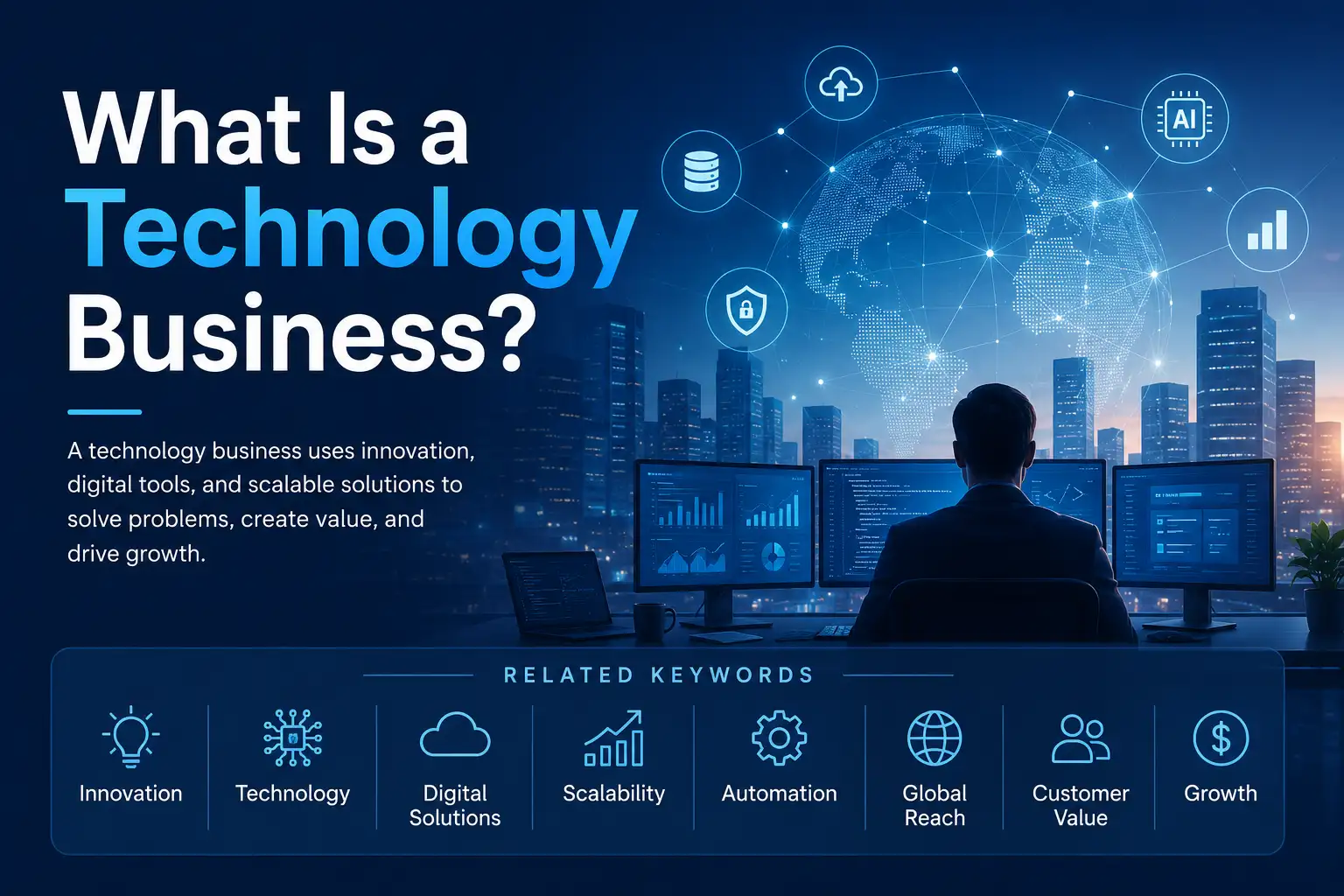
A technology business is any company that uses technology as its core foundation to operate, grow, and deliver value.
This can include:
- Software companies (apps, platforms, tools)
- Hardware manufacturers (devices, electronics)
- IT service providers (cloud, cybersecurity, consulting)
- Digital platforms (e-commerce, streaming, social media)
- AI and data companies (machine learning, analytics)
What makes them different is not just what they sell, but how they think and operate—they rely on innovation, automation, and digital solutions.
Core Characteristics of a Technology Business
Through my research, I found that most successful technology businesses share some common traits. These include:
1. Strong Focus on Innovation
Technology companies constantly improve their products. They don’t settle for “good enough.” Instead, they invest heavily in research and development (R&D).
2. Digital-First Approach
Most operations are built around digital systems. Even physical products often depend on software or smart connectivity.
3. Scalability
One of the biggest strengths is the ability to grow quickly. A single app or platform can serve millions of users without needing a proportional increase in cost.
4. Data-Driven Decision Making
These businesses rely on data analytics to understand user behavior, improve products, and make strategic decisions.
5. Continuous Disruption
Technology businesses often replace older systems. For example:
- Taxi apps replacing traditional taxis
- Streaming services replacing DVDs
- Cloud storage replacing physical drives
Types of Technology Businesses
To make things clearer, let’s break down the main types of technology businesses:
1. Software Companies
These companies build applications, operating systems, or platforms.
Examples include:
- Mobile apps
- Web tools
- Enterprise software
2. Hardware Companies
These businesses design and manufacture physical tech products like:
- Smartphones
- Computers
- Smart devices
3. Internet-Based Platforms
These include companies that connect users online:
- Social media platforms
- E-commerce websites
- Streaming services
4. IT Services and Consulting
These companies help others use technology effectively:
- Cloud computing
- Cybersecurity services
- System integration
5. Emerging Tech Companies
These focus on cutting-edge fields like:
- Artificial Intelligence (AI)
- Blockchain
- Robotics
- Virtual Reality (VR)
Read More About: What Is a Technology Company? Simple Clear Guide
How a Technology Business Works (Step-by-Step)
In my experience studying business models, technology companies usually follow a structured flow:
Step 1: Identifying a Problem
Every tech business starts with a real-world problem. For example, slow communication or lack of access to information.
Step 2: Building a Digital Solution
They create software, apps, or systems to solve that problem efficiently.
Step 3: Launching a Product
The product is released to users, often in a digital format that can be updated easily.
Step 4: Collecting User Feedback
User data and feedback help improve the product continuously.
Step 5: Scaling the Business
Once successful, the product expands globally with minimal physical limitations.
Real-World Examples of Technology Businesses
To understand better, here are some well-known examples:
- Search engines and cloud services like Google
- Social media platforms like Facebook and Instagram
- E-commerce giants like Amazon
- Streaming platforms like Netflix
- Smartphone companies like Apple and Samsung
Each of these companies started with a simple idea but grew into global ecosystems powered by technology.
Why Technology Businesses Are So Important
Technology businesses are not just about profit—they shape how society works.
Here’s why they matter:
1. They Improve Efficiency
Tasks that once took hours can now be done in seconds.
2. They Create Global Connectivity
People can communicate and work across countries instantly.
3. They Drive Economic Growth
Tech companies generate millions of jobs and opportunities.
4. They Transform Industries
From healthcare to education, every industry is being reshaped.
5. They Encourage Innovation
Competition pushes companies to constantly improve.
Challenges Technology Businesses Face
While studying this area, I also noticed that tech businesses face unique challenges:
- Rapid technological change
- High competition
- Cybersecurity risks
- Privacy concerns
- Constant need for innovation
These challenges mean that even successful companies must adapt quickly or risk becoming outdated.
Skills Needed to Start or Work in a Technology Business
If you’re interested in this field, here are some useful skills:
Technical Skills:
- Programming basics
- Data analysis
- Understanding software tools
Business Skills:
- Problem-solving
- Strategic thinking
- Marketing and user understanding
Soft Skills:
- Communication
- Creativity
- Adaptability
In my view, you don’t need to be an expert in everything, but a combination of curiosity and learning mindset goes a long way.
Future of Technology Businesses
Looking ahead, I believe technology businesses will continue to grow even faster.
Some future trends include:
- Artificial intelligence integration in every industry
- Automation replacing repetitive tasks
- Smarter devices connected through the Internet of Things (IoT)
- Increased focus on cybersecurity and privacy
- Expansion of remote and digital work ecosystems
The future is clearly digital-first, and businesses that adapt will thrive.
Key Takeaways
Here’s what I’ve learned and want to highlight:
- A technology business uses innovation and digital tools to create value.
- It is driven by software, hardware, and digital platforms.
- These businesses focus heavily on growth, scalability, and innovation.
- They are transforming every major industry in the world.
- Understanding them is essential in today’s economy.
Conclusion: Why This Matters More Than Ever
In conclusion, a technology business is more than just a company that uses computers or software, it is a driving force behind modern life.
From how we communicate to how we shop, learn, and work, technology businesses are deeply embedded in everything we do.
In my experience, once you understand how these businesses operate, you start seeing the world differently. You realize that innovation is not just happening in big tech companies—it’s shaping every part of our daily lives.