
A few years ago, I visited a local clinic with a family member for a routine checkup. What surprised me wasn’t the treatment itself, it was how quickly the doctor accessed years of medical history, prescriptions, lab reports, and even previous X-rays within seconds. No paper files. No searching through folders. Everything appeared instantly on a computer screen.
That experience made me realize how much modern healthcare now depends on technology behind the scenes. This is where Health Information Technology comes in.
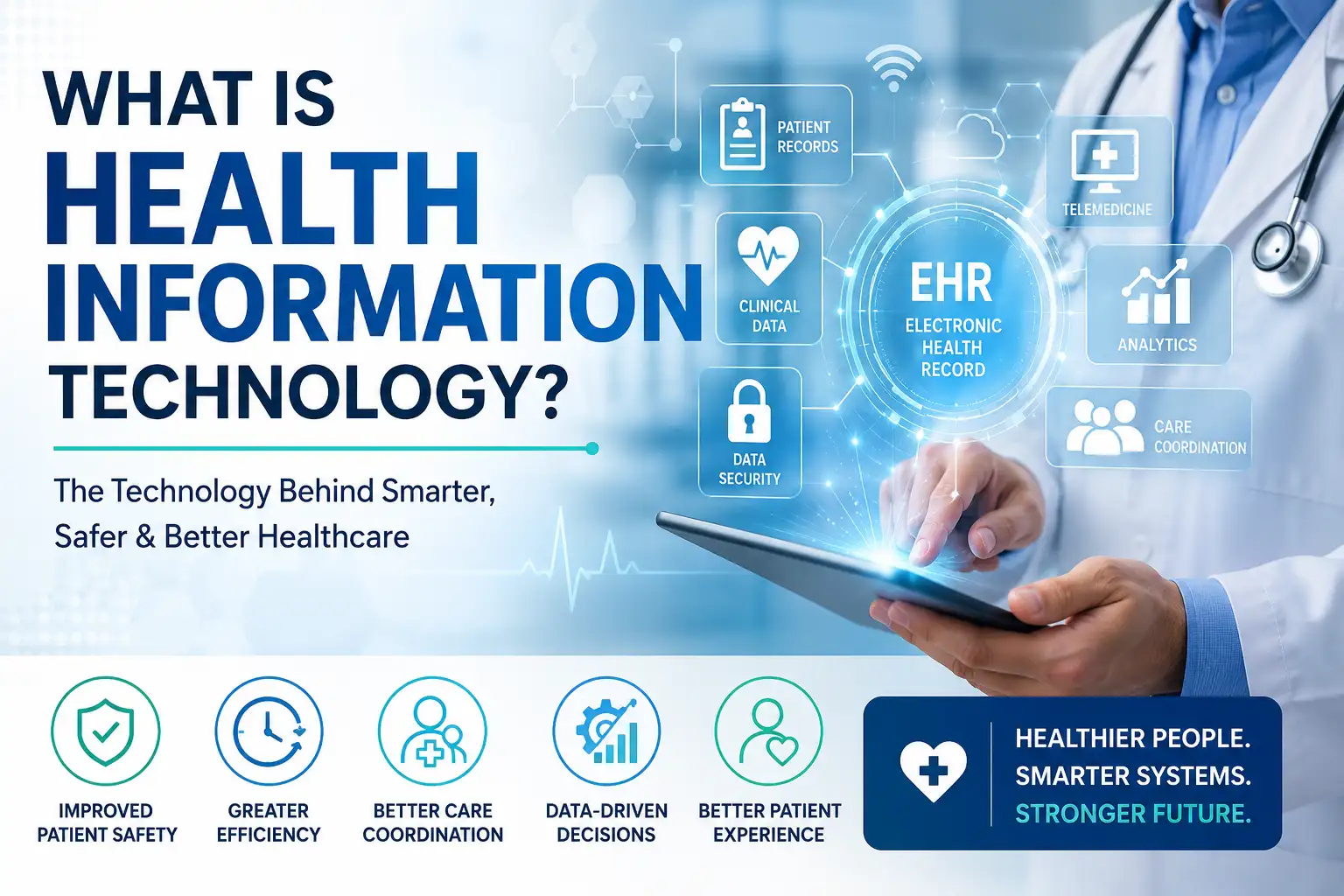
Health Information Technology (HIT) refers to the use of computer systems, software, networks, and digital tools to manage, store, exchange, and analyze patient health information. Its main goal is to improve healthcare quality, reduce medical errors, increase efficiency, and make patient care more connected and secure.
Today, hospitals, clinics, insurance providers, pharmacies, and even wearable health devices rely heavily on HIT systems to deliver faster and safer healthcare services.
In this guide, I’ll explain how health information technology works, why it matters, the tools involved, career opportunities, and the future of digital healthcare in simple, human language.
Why Health Information Technology Matters
Healthcare generates massive amounts of data every single day. Without digital systems, managing patient records manually would create delays, errors, and communication gaps.
Health IT helps healthcare providers:
- Access patient records instantly
- Improve treatment accuracy
- Reduce paperwork
- Prevent medication errors
- Share information securely between departments
- Monitor patients remotely
- Analyze healthcare trends using AI and analytics
In my experience researching healthcare systems, one of the biggest advantages of HIT is better coordination. A patient no longer has to carry physical reports from one specialist to another because digital systems make information accessible across departments and facilities.
This creates faster diagnoses, improved treatment plans, and safer patient outcomes.Core Components of Health Information Technology
Modern healthcare technology includes multiple interconnected systems working together.
Electronic Health Records (EHRs)
One of the most important components is the Electronic Health Record.
EHRs are digital versions of patient charts that contain:
- Medical history
- Diagnoses
- Medications
- Lab results
- Allergies
- Treatment plans
Unlike paper files, EHR systems allow authorized healthcare providers to access information instantly.
Popular EHR platforms include:
- Epic Systems
- Cerner
- Meditech
These systems also help healthcare organizations comply with Health Insurance Portability and Accountability Act regulations for patient data protection.
Electronic Medical Records (EMRs)
Electronic Medical Records are similar to EHRs but are often limited to a single healthcare provider’s office.
For example, a family clinic may use EMRs internally to track patient visits, prescriptions, and medical histories.
Personal Health Records (PHRs)
PHRs allow patients to manage and track their own health data digitally.
Many hospitals now offer secure patient portals where users can:
- Book appointments
- Download reports
- View prescriptions
- Communicate with doctors
This gives patients more control over their healthcare journey.
Clinical Decision Support Systems (CDS)
Clinical decision support tools help doctors make better decisions by analyzing medical data in real time.
For example:
- Drug interaction alerts
- Diagnostic recommendations
- Treatment reminders
These systems reduce human error and improve patient safety.
Health Information Exchange (HIE)
Health Information Exchange systems allow hospitals, pharmacies, and doctors to share patient information securely.
This is especially important during emergencies when quick access to medical history can save lives.
Read More About: What Is Automotive Technology? Complete Beginner Guide
Examples of Health Information Technology in Real Life
Many people use health IT daily without realizing it.
Telemedicine Platforms
Telemedicine Systems became extremely popular after the pandemic.
Apps like:
- Zoom for Healthcare
- Teladoc
- Amwell
allow patients to consult doctors remotely through video calls.
I personally noticed how telehealth made healthcare more accessible for people living in rural areas or those unable to travel frequently.
Remote Patient Monitoring
Remote Patient Monitoring Systems use connected devices to track patient health from home.
Examples include:
- Smart blood pressure monitors
- Glucose trackers
- Heart rate wearables
These systems send real-time data directly to healthcare providers.
E-Prescribing Software
Doctors can now send prescriptions electronically to pharmacies instead of writing them manually.
This improves:
- Prescription accuracy
- Processing speed
- Patient convenience
Digital Imaging Systems
Hospitals use advanced digital imaging systems for:
- MRI scans
- CT scans
- X-rays
These images can be stored and shared instantly across healthcare networks.
Health Information Technology vs Health Information Management
People often confuse HIT with Health Information Management, but they are different fields.
Health Information Technology (HIT)
Focuses on:
- Building systems
- Managing healthcare software
- Maintaining digital infrastructure
- Cybersecurity
- System integration
Health Information Management (HIM)
Focuses on:
- Managing patient records
- Data accuracy
- Compliance
- Medical coding
- Information governance
In simple words:
- HIT builds the systems
- HIM manages the information inside them
Both fields work closely together in modern healthcare environments.
Benefits of Health Information Technology
Improved Patient Safety
Digital records reduce risks caused by:
- Illegible handwriting
- Lost files
- Prescription mistakes
Clinical alerts also help doctors avoid dangerous drug interactions.
Faster Healthcare Services
Healthcare staff spend less time on paperwork and more time helping patients.
For example, digital scheduling systems speed up:
- Appointment booking
- Billing
- Insurance verification
Better Care Coordination
Different healthcare providers can access the same patient information securely, improving collaboration between specialists.
Stronger Data Analytics
Health Informatics systems use large healthcare datasets to:
- Predict patient risks
- Improve treatment plans
- Identify disease trends
Hospitals increasingly use AI-powered analytics for better decision-making.
Privacy and Security Challenges in Health IT
While digital healthcare systems improve efficiency, they also create cybersecurity risks.
Healthcare organizations store highly sensitive data, including:
- Medical histories
- Insurance information
- Personal identification data
Because of this, cybersecurity is a major priority.
Healthcare IT professionals use:
- Firewalls
- Encryption
- Multi-factor authentication
- Network monitoring
to protect patient information from unauthorized access.
Compliance with HIPAA regulations is essential for healthcare organizations handling patient data.
Skills Needed for a Career in Health Information Technology
One thing I noticed while researching this industry is that HIT combines both technical and interpersonal skills.
Technical Skills
Medical Coding
Professionals often work with coding systems like:
- ICD-10
- HCPCS
- DRG Codes
EHR Software Knowledge
Many healthcare IT specialists work directly with EHR systems and databases.
Knowledge of:
- SQL
- Python
can be valuable for data analysis and system management.
Cybersecurity
Because patient privacy is critical, HIT professionals must understand:
- Data security
- Access controls
- Threat detection
Soft Skills
Successful HIT professionals also need:
- Communication skills
- Problem-solving ability
- Team collaboration
- Attention to detail
- Adaptability
Healthcare environments move fast, so organization and flexibility are essential.
Career Opportunities in Health Information Technology
Healthcare technology is one of the fastest-growing sectors today.
Common career roles include:
- Health information technician
- Clinical IT analyst
- Medical records coordinator
- Health informatics specialist
- Practice manager
- Healthcare systems analyst
According to the U.S. Bureau of Labor Statistics, healthcare technology jobs are expected to grow steadily over the next decade.
This demand is being driven by:
- Digital healthcare adoption
- AI integration
- Telehealth expansion
- Growing cybersecurity needs
Future Trends in Health Information Technology
The future of HIT looks incredibly advanced.
Emerging technologies include:
- Artificial intelligence
- Machine learning
- Blockchain security
- Predictive analytics
- Smart wearable devices
AI-powered systems are already helping hospitals:
- Predict patient risks
- Improve diagnostics
- Automate administrative tasks
Wearable health technology is also becoming more sophisticated, allowing doctors to monitor patients remotely in real time.
Common Challenges in Health IT
Despite its benefits, HIT still faces several challenges.
System Integration Problems
Different healthcare systems sometimes struggle to communicate with each other effectively.
This issue is called interoperability.
Cybersecurity Threats
Healthcare databases are major targets for hackers because medical information is highly valuable.
High Implementation Costs
Advanced healthcare software systems can be expensive for smaller clinics and hospitals.
However, many organizations consider the long-term efficiency benefits worth the investment.
Quick Tips for Understanding Health IT Faster
- Focus first on EHR systems because they are the foundation of modern HIT
- Learn basic medical terminology
- Understand HIPAA privacy rules
- Explore healthcare analytics trends
- Stay updated on AI in healthcare
FAQs About Health Information Technology
What is the main purpose of health information technology?
The main purpose of HIT is to improve healthcare quality by managing patient information digitally, reducing medical errors, increasing efficiency, and improving communication between healthcare providers.
Is health information technology a good career?
Yes. Health information technology is a growing career field with strong demand for professionals skilled in healthcare systems, cybersecurity, analytics, and digital patient management.
What is the difference between EHR and EMR?
EHRs are designed to share patient information across multiple healthcare organizations, while EMRs are usually limited to one healthcare provider or clinic.
Conclusion
Health Information Technology has completely transformed how modern healthcare works. From digital patient records and telemedicine to AI-powered diagnostics and remote monitoring, HIT improves healthcare delivery in ways that were impossible just a decade ago.
After researching this field deeply, one thing became clear to me: healthcare is no longer only about doctors and hospitals, it’s also about smart systems, secure data, and connected technology working together to improve patient outcomes.