
Introduction:
In my experience, technology has completely reshaped how we move, work, and live. It’s made life easier, but also more sedentary. Think about it: we can order food, work from home, and entertain ourselves without ever leaving the couch.
At the same time, I’ve also seen how technology can motivate people to move more, through fitness apps, smartwatches, and even virtual workouts. So the real question isn’t whether technology affects our activity levels, it’s how we manage its impact.
Overview:
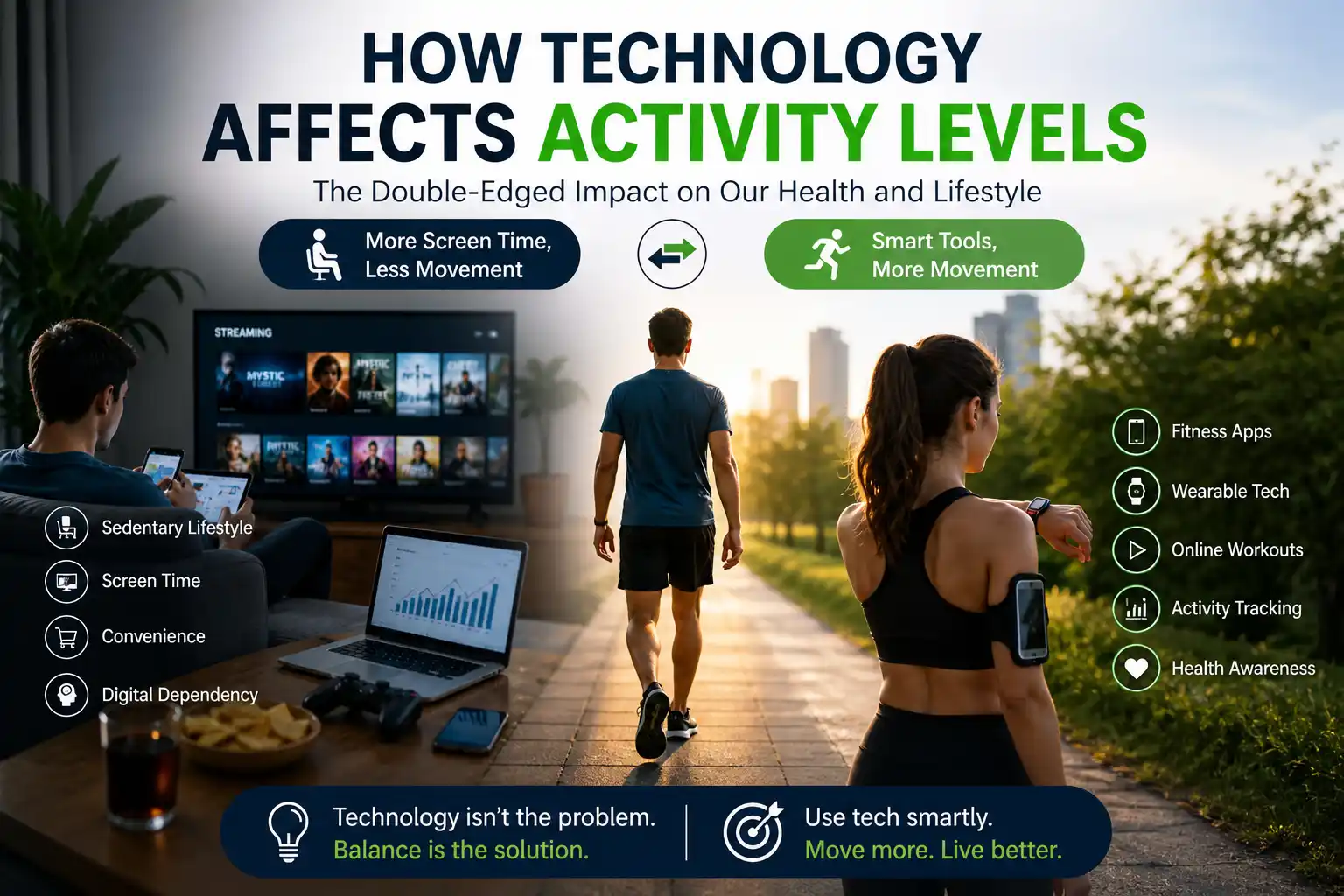
Technology has fundamentally altered human activity levels by creating a dual impact: increasing sedentary behavior through digital entertainment and remote work, while simultaneously facilitating physical activity via wearable tech and apps.
It has shifted lifestyles toward greater convenience, reducing daily incidental physical exertion while offering tools for targeted fitness tracking.
Negative Impacts (Increased Sedentary Lifestyle)
- Prolonged Screen Time: Streaming, social media, and gaming often replace outdoor or physical activities.
- Remote Work and Desk Jobs: Working from home or sitting at desks reduces daily movement, affecting metabolism and posture.
- Convenience Culture: Online shopping, food delivery, and digital services remove the need for physical errands.
- Tech Addiction: Excessive smartphone use leads to inactivity and long sedentary hours.
Positive Impacts (Increased Active Opportunities)
- Fitness Trackers & Apps: Devices like smartwatches and step trackers encourage daily movement goals.
- Virtual Exercise Platforms: Online workouts and interactive fitness programs make exercise accessible.
- Virtual Reality Workouts: Gamified fitness makes exercise feel like entertainment.
Synonyms for the Impact of Technology on Activity
- Sedentary behaviors (technology-induced)
- Physical inactivity
- Digital dependency
- Active technology adoption
- Tech-facilitated fitness
Key Consequences
- Health Implications: Increased risk of weight gain, heart issues, and posture-related pain.
- Behavioral Change: Technology can both reduce and promote activity, balance is key.
How Technology Reduced Everyday Movement
1. The Rise of Sedentary Lifestyles
One of the biggest changes I’ve noticed is how little we need to move anymore.
Before technology dominated daily life, people naturally stayed active through routine tasks, walking to shops, doing manual work, or even socializing outdoors.
Now, many of these activities are replaced by screens.
Common examples include:
- Watching streaming services for hours
- Scrolling social media instead of going outside
- Playing video games instead of sports
This shift has quietly reduced daily calorie burn and physical engagement.
2. Work Has Become Less Physical
In my experience, modern work culture plays a huge role in inactivity.
- Office jobs require long hours of sitting
- Remote work eliminates commuting
- Digital tools reduce the need for physical tasks
Even simple movements, like walking to meetings, have been replaced by video calls.
The result?
Less movement, more fatigue, and often unexplained body pain.
3. Convenience Has Replaced Effort
Technology has made life incredibly convenient, but at a cost.
Think about how many daily activities no longer require movement:
- Ordering groceries online
- Using ride-hailing instead of walking
- Paying bills digitally
While this saves time, it also removes natural opportunities for physical activity.
Read More About: What Is Computer Simulation Technology
The Positive Side: How Technology Encourages Movement
Not all effects are negative. In fact, I’ve personally seen how technology can motivate people to stay active.
1. Fitness Apps and Wearables
Devices like smartwatches and fitness apps have changed how we track health.
Why they work:
- Set daily step goals
- Track calories and workouts
- Send reminders to move
In my experience, even a simple step counter can push someone to walk more than they normally would.
2. Online Workouts and Accessibility
Technology has made fitness more accessible than ever.
You no longer need a gym membership to stay fit.
Popular options include:
- YouTube workout videos
- Live fitness classes
- Home workout apps
This is especially helpful for beginners who feel uncomfortable in traditional gyms.
3. Gamification and Virtual Reality
One of the most interesting trends I’ve seen is fitness becoming fun.
- VR workouts turn exercise into games
- Fitness challenges create competition
- Apps reward consistency
This removes the “boring” factor from exercise and keeps people engaged.
Health Effects of Technology Reduced Activity
Let’s be honest, reduced activity doesn’t just affect fitness. It impacts overall health.
Common Health Issues Linked to Inactivity
- Weight gain and obesity
- Back and neck pain
- Poor posture
- Low energy levels
- Increased risk of heart disease
In my experience, many people don’t realize these issues are linked to inactivity until symptoms appear.
Behavioral Changes: The Real Challenge
Technology hasn’t just changed our habits, it’s changed our mindset.
We now prefer:
- Convenience over effort
- Comfort over movement
- Digital interaction over physical activity
But here’s the truth:
Technology itself isn’t the problem, how we use it is.
Read More About: What Technology Innovations Happened in California?
How to Stay Active in a Technology-Driven World
This is where things get practical. Based on what I’ve seen and tested, small changes can make a big difference.
1. Follow the “Move Every Hour” Rule
Set a reminder to stand or walk every hour.
Even 2–3 minutes of movement can:
- Improve circulation
- Reduce stiffness
- Boost focus
2. Turn Technology Into a Fitness Tool
Instead of avoiding technology, use it smartly:
- Install a step tracker
- Join a fitness challenge
- Follow guided workout apps
3. Create a Daily Activity Routine
Consistency matters more than intensity.
Simple routine idea:
- Morning: 10–15 minute walk
- Afternoon: Stretch break
- Evening: Light workout or walk
4. Limit Passive Screen Time
Not all screen time is equal.
Try to reduce:
- Endless scrolling
- Binge-watching sessions
Replace it with:
- Active hobbies
- Walking while listening to podcasts
5. Make Movement Part of Your Lifestyle
The best approach isn’t “working out” it’s living actively.
Examples:
- Take stairs instead of elevators
- Walk during phone calls
- Do household chores actively
Real-Life Insight: What I’ve Learned
From my experience, the biggest mistake people make is thinking they need a perfect routine.
You don’t.
What matters is:
- Moving more than yesterday
- Being consistent
- Using technology wisely
Even small actions, like walking an extra 1,000 steps, add up over time.
Conclusion:
Technology has changed our activity levels in powerful ways, both positive and negative.
It has made life easier but also more sedentary. At the same time, it offers tools that can help us stay active and healthy.
The key takeaway is simple:
Technology should support your movement, not replace it.
If you can strike that balance, you’ll not only stay active but also make technology work for your health, not against it.
Final Thought
You don’t need to disconnect from technology to stay active, you just need to use it smarter.
Start small, stay consistent, and let your daily habits shape a healthier, more active lifestyle.
FAQs
How has technology affected people’s activity levels?
Technology has reduced physical activity by increasing screen time, remote work, and convenience (like online shopping). At the same time, it also encourages movement through fitness apps, wearables, and online workouts. The impact depends on how it’s used.
How does technology affect your daily activities?
Technology simplifies daily tasks like communication, shopping, and work, saving time and effort. However, it can also increase sedentary behavior, reduce face-to-face interaction, and create dependency on digital devices.
How has technology affected people?
Technology has improved convenience, productivity, and access to information. But it has also led to reduced physical activity, shorter attention spans, and increased reliance on digital tools for everyday tasks.
What are 5 negative impacts of technology?
- Increased sedentary lifestyle
- Eye strain and poor posture
- Reduced social interaction
- Digital addiction
- Sleep disturbances due to screen exposure
What are 5 risks of technology?
- Data privacy and security issues
- Cyberbullying and online harassment
- Overdependence on devices
- Mental health challenges (anxiety, stress)
- Reduced physical activity and related health risks
What are 10 examples of technology?
- Smartphones
- Laptops and computers
- Smartwatches (fitness trackers)
- Internet and Wi-Fi
- Social media platforms
- Online banking systems
- E-commerce websites
- Virtual reality (VR) devices
- Artificial intelligence (AI) tools
- Streaming services