
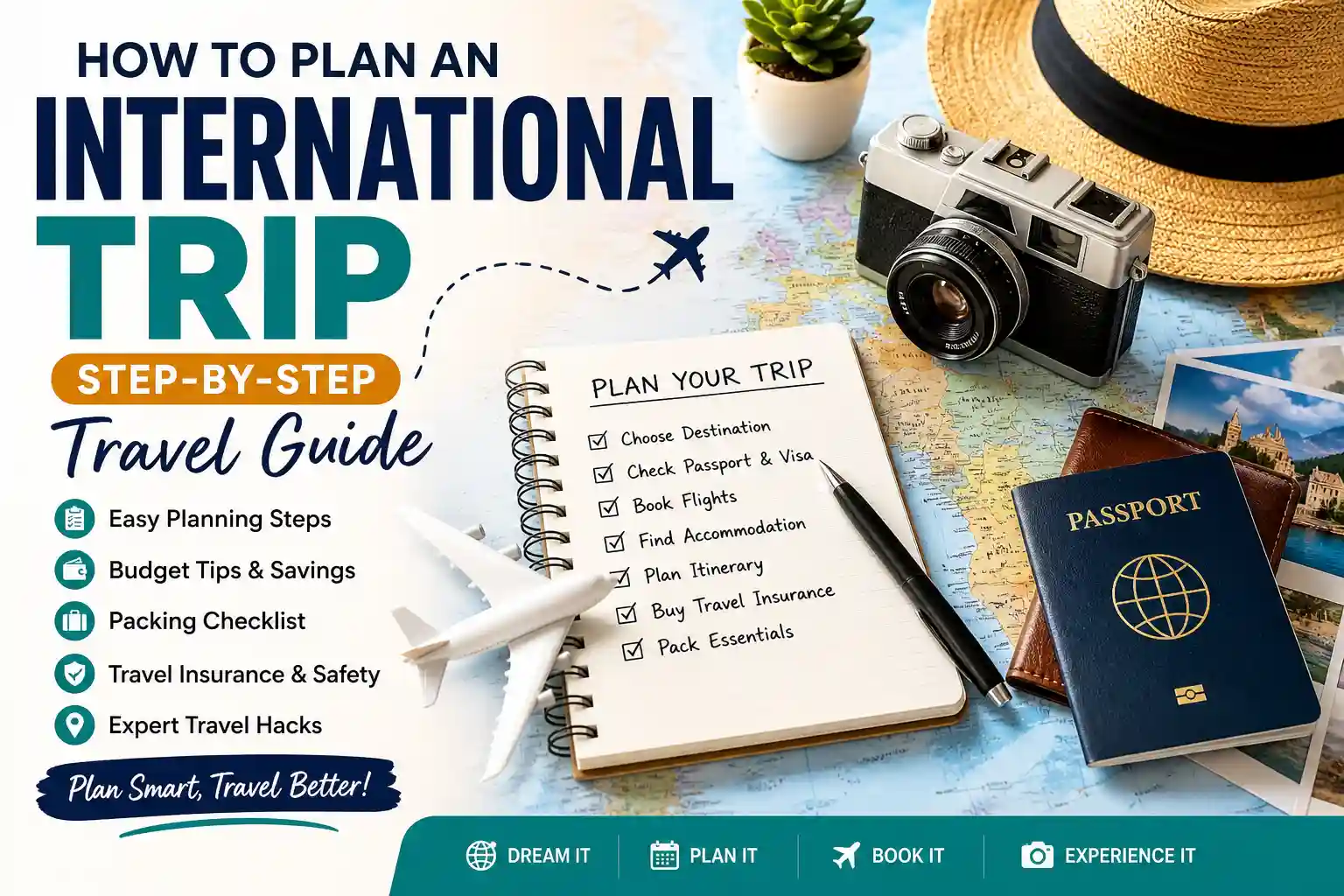
Introduction: The Moment I Realized I Wasn’t Ready
I still remember standing at the airport check-in counter, feeling oddly confident—until the agent asked for my travel documents. My passport? Good. My visa? Uh… not exactly.
That moment taught me something most first-time travelers learn the hard way: planning an international trip isn’t just about booking flights, it’s about managing dozens of moving parts.
From travel insurance and budgeting to vaccinations and currency exchange, even small mistakes can turn into expensive problems.
So in this guide, I’m breaking everything down into a clear, step-by-step system—based on real experience, industry insights, and smarter tools—to help you plan your trip abroad with confidence.
Overview (Quick Snapshot)
Planning an international trip involves securing a passport with at least six months validity, checking visa requirements, and purchasing travel insurance. Key steps include booking flights early, planning a flexible itinerary, researching local etiquette, and arranging currency. Prepare by arranging medications, packing light, and keeping digital/printed copies of essential documents.
Phase 1: Planning & Booking
- Check passport & visa requirements
- Set a budget and book flights early
- Book accommodations
- Purchase travel insurance
- Plan your itinerary
Phase 2: Pre-Departure Preparation
- Check vaccinations and medications
- Organize documents
- Inform your bank
- Pack smart
- Arrange connectivity (SIM/data plan)
Phase 3: Airport & Journey
- Arrive early (3+ hours)
- Keep documents accessible
- Stay comfortable
Phase 4: Arrival & Exploring
- Complete immigration procedures
- Arrange local transport
- Learn basic cultural etiquette
Step 1: Decide If You Need a Travel Agent
In my experience, travel agents are underrated—especially for complex trips.
Ask yourself:
- Is your trip multi-country or group-based?
- Do you have time to research 30+ websites?
- Are you trying to save money or time?
According to industry data, travelers often spend 30+ hours planning trips and visit dozens of booking platforms.
👉 Personally, I prefer planning myself—but for a multi-city Europe trip, a travel agent saved me from missing a key train booking.
Step 2: Choose the Right Destination
Choosing a travel destination isn’t just about Instagram appeal.
Consider:
- Budget (e.g., Southeast Asia vs Europe)
- Safety (check travel advisories)
- Weather and peak season
- Activities (beaches, mountains, cultural sites)
I once picked a “cheap” destination during monsoon season… let’s just say sightseeing turned into indoor coffee tasting.
Step 3: Build a Realistic Travel Budget
A solid travel budget answers two key questions:
- Where can you afford to go?
- How much do you need to save?
Include:
- Flights (often the biggest cost)
- Accommodation (hotels, hostels, Airbnb)
- Meals
- Transportation
- Activities & shopping
- Hidden costs (visa fees, insurance, currency exchange)
Pro Tip:
Always overestimate by 15–20%. Unexpected costs will happen.
Apps like Trail Wallet or TrabeePocket can help track expenses, but honestly, even a simple spreadsheet works.
Step 4: Set Travel Dates Strategically
Timing can make or break your budget.
Key insights:
- Peak season = better weather, higher prices
- Off-season = cheaper, fewer crowds, but weather risks
Flights are often cheapest when booked 2–6 months in advance.
👉 I once saved nearly 40% just by shifting my departure by two days.
Step 5: Get Your Travel Documents Ready
This is where most people slip up.
Essential documents:
- Passport (valid for 6+ months)
- Visa (depends on destination)
- International Driver’s Permit (IDP) (if driving abroad)
Some countries have strict entry and exit requirements, so always double-check.
👉 I was surprised to learn some countries deny entry if your passport expires within 3 months.
Step 6: Health, Vaccinations & Travel Insurance
Health isn’t something to gamble with.
Key steps:
- Check vaccination requirements
- Visit your doctor early
- Purchase travel health insurance
Organizations like the CDC recommend preparing at least a month in advance.
Why insurance matters:
- Medical emergencies abroad are expensive
- Covers cancellations, delays, evacuations
👉 A friend of mine paid thousands for hospital care overseas—insurance would’ve covered it.
Step 7: Choose the Right Accommodation
Your stay shapes your experience.
Options:
- Hotels / Resorts → comfort + amenities
- Airbnb / rentals → flexibility + group travel
- Hostels → budget + social experience
Personally, I mix it up—hostels for city trips, rentals for longer stays.
Step 8: Plan Transportation
Before arrival:
- Book flights early
- Compare airlines and routes
After arrival:
- Public transport (cheapest)
- Car rentals (flexible)
- Walking (best for cities)
👉 In many cities, public transport is more efficient than taxis.
Step 9: Research Your Destination
This is the fun part.
Build a travel bucket list:
- Attractions
- Local food
- Experiences
Understand:
- Culture (tipping, dress codes)
- Language basics
- Local etiquette
Apps like translation tools can help bridge language gaps.
Step 10: Handle Last-Minute Logistics
Before leaving, double-check:
Essentials:
- Phone plan (avoid roaming charges)
- Notify your bank
- Check ATM and credit card fees
- Arrange currency
👉 I once had my card blocked abroad—lesson learned: always inform your bank.
Step 11: Pack Smart (Not Heavy)
Packing is an art.
Essentials:
- Passport copies
- Medications
- Universal adapter
- Emergency cash
Rule I follow:
If you think you need it—pack half.
Quick Tips for Stress-Free Travel
- Keep digital + printed copies of documents
- Use Wi-Fi over roaming
- Stay flexible—plans change
- Always have backup cash
FAQs
What is the 3-3-3 rule for flights?
The 3-3-3 rule is a simple guideline to make your flight experience smoother:
Arrive 3 hours early for international flights
Carry liquids in 3.4 oz (100 ml) containers
Place them in 1 quart-sized transparent bag
👉 In my experience, following this rule avoids last-minute stress at airport security—especially when you’re rushing.
How to board an international flight step by step?
Here’s a simple step-by-step process:
Arrive at the airport early (3 hours before)
Check-in (online or at the counter)
Drop off your luggage
Go through security screening
Complete immigration (passport control)
Find your boarding gate
Wait for your boarding group to be called
Board the plane and find your seat
👉 Tip: Always keep your passport, boarding pass, and visa documents easily accessible.
What are the 5 essential travel tips?
Here are 5 must-follow travel tips:
Plan early – flights and hotels get expensive
Keep copies of important documents
Set a realistic travel budget
Respect local culture and laws
Stay flexible – things don’t always go as planned
👉 Honestly, flexibility is the one that saved me the most trouble during delays.
What are the 7 steps of a flight?
The 7 basic stages of a flight are:
Check-in
Security screening
Boarding
Taxiing (moving on runway)
Takeoff
Cruising (in-air travel)
Landing and arrival
👉 Knowing these steps helps first-time travelers feel more confident and less anxious.
What are the 5 biggest packing mistakes to avoid?
Avoid these common packing mistakes:
Overpacking (you won’t use half of it)
Forgetting important documents
Ignoring airline baggage rules
Packing liquids incorrectly
Not carrying essentials in hand luggage
👉 I once packed all essentials in checked luggage—it got delayed. Never again.
What are the 10 essential travel items?
Here are 10 must-have travel essentials:
Passport
Visa (if required)
Travel insurance documents
Credit/debit cards
Emergency cash
Phone + charger
Universal travel adapter
Medications
Copies of travel documents
Comfortable clothing
What are 10 items in an emergency kit?
A basic travel emergency kit should include:
First-aid kit
Prescription medications
Pain relievers
Bandages
Hand sanitizer
Face masks
Emergency contact list
Flashlight or small torch
Power bank
Copies of important documents
👉 It might seem excessive—but even a small kit can be a lifesaver in a foreign country.
How far in advance should I plan an international trip?
Ideally, 3–6 months in advance. This gives enough time for booking flights, visas, and accommodations.
Do I really need travel insurance?
Yes. It protects you from unexpected costs like medical emergencies, trip cancellations, and delays.
What is the most important document for international travel?
Your passport—and it must usually be valid for at least six months beyond your travel date.
How can I save money on international travel?
Book flights early
Travel during off-season
Use public transportation
Track expenses with budget apps
Conclusion: Plan Smart, Travel Better
Planning an international trip might feel overwhelming—but once you break it into steps, it becomes manageable (and even exciting).
Key Takeaways:
✔ Start early and stay organized
✔ Focus on budget, documents, and safety
✔ Use tools and apps to simplify planning
✔ Stay flexible and enjoy the journey
In my experience, the best trips aren’t the ones that go perfectly—they’re the ones where you’re prepared enough to handle anything.