
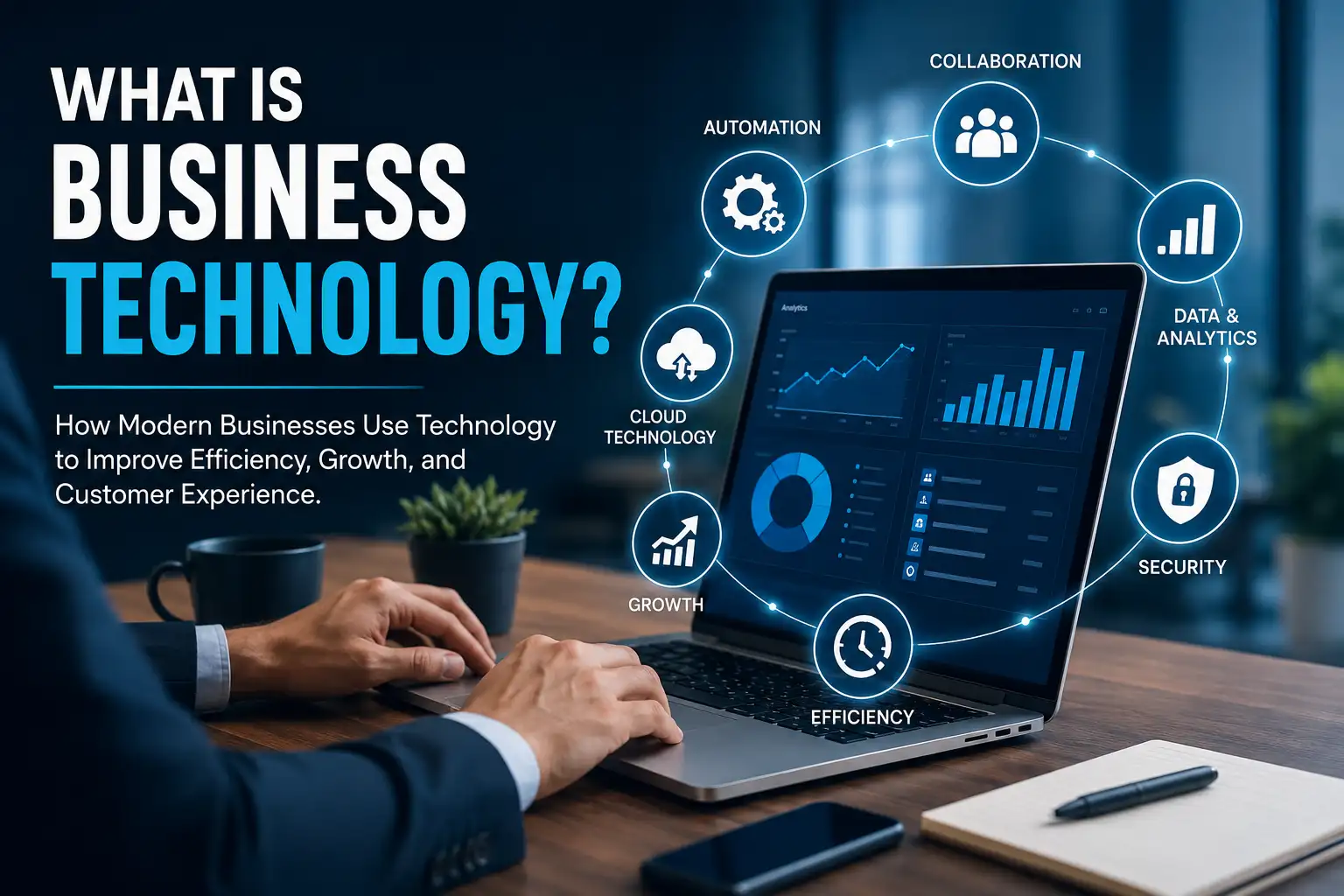
A few years ago, I used to think business technology simply meant computers in an office or employees sending emails. But after researching how modern companies operate, I realized business technology is much bigger than that. Today, it influences almost every part of a business, from communication and marketing to customer service, finance, and security.
In simple words, business technology refers to the digital tools, software, hardware, and systems businesses use to improve operations, increase productivity, and achieve their goals more efficiently.
Whether it’s a small online store using social media tools or a multinational company managing thousands of employees through cloud software, technology has become the backbone of modern business.
What I personally find interesting is how technology has shifted from being just a support system to becoming a major competitive advantage. Companies that use technology effectively often grow faster, serve customers better, and make smarter decisions.
In this guide, I’ll explain business technology in simple English, break down its major components, share real-world examples, and show why it matters more than ever in today’s digital economy.
Overview
Business technology refers to the digital tools, software, hardware, and infrastructure that companies use to optimize operations, automate tasks, and achieve their organizational goals. It bridges the gap between traditional IT and business strategy, transforming technology from a basic support function into a core competitive asset.
To understand its role in the modern market, business technology is typically divided into several key elements.
Core Elements of Business Technology
Productivity & Collaboration
These are tools employees use to create, communicate, and manage daily work. Examples include:
- Email platforms
- Document editors
- Virtual meeting software
- Team messaging apps
- Project management tools
These solutions help teams stay connected and organized, especially in remote or hybrid work environments.
Operational & Management Systems
These systems handle major business operations. Common examples include:
- Customer Relationship Management (CRM) software
- Enterprise Resource Planning (ERP) systems
- Payroll management software
- Inventory tracking systems
- Human resource management tools
Businesses rely on these systems to streamline workflows and improve efficiency.
Data & Analytics
Modern companies collect huge amounts of information. Data and analytics systems help businesses:
- Track performance
- Understand customer behavior
- Predict trends
- Improve decision-making
- Measure marketing results
In my experience, companies that understand their data usually make smarter long-term decisions.
Infrastructure & Security
This includes the technical foundation that keeps a business running safely and smoothly, such as:
- Cloud servers
- Wi-Fi networks
- Cybersecurity software
- Data backup systems
- Business networks
Without strong infrastructure and security, even the best businesses can face downtime or data risks.
Why Business Technology Matters
Automation
Technology reduces repetitive manual tasks. Instead of spending hours on paperwork or calculations, businesses can automate processes and focus on strategy and growth.
Efficiency
Business technology speeds up operations like inventory management, communication, scheduling, and payroll processing.
Global Reach
Modern technology allows companies to work remotely, collaborate internationally, and reach customers worldwide through websites, digital marketing, and eCommerce platforms.
The Evolution of Business Technology
Business technology has changed dramatically over the years.
In the past, companies mostly relied on paper records, landline phones, and manual calculations. Today, cloud computing, artificial intelligence, and automation tools allow businesses to work faster and smarter than ever before.
I remember speaking with a small business owner who said moving from spreadsheets to cloud accounting software completely changed how they managed finances. Tasks that once took days could now be completed in hours.
That’s the power of modern business technology — it saves time while improving accuracy.
About More Details: What Is Applied Technology? A Simple Guide to How Technology Solves Real-Life Problems
Main Types of Business Technology
Understanding the different types of business technology can make the topic much easier.
1. Communication Technology
Communication tools help employees and customers stay connected.
Examples include:
- Video conferencing software
- Email systems
- Messaging platforms
- VoIP phone systems
These tools became especially important after remote work became more common globally.
2. Marketing Technology
Marketing technology helps businesses promote products and reach audiences online.
Popular examples include:
- Social media management tools
- SEO software
- Email marketing platforms
- Advertising dashboards
- Analytics software
In my experience, businesses that use marketing technology effectively can compete even with larger companies.
3. Financial Technology
Financial systems help manage money, accounting, payments, and budgeting.
Examples include:
- Accounting software
- Online payment systems
- Expense tracking apps
- Payroll management platforms
These tools reduce errors and simplify financial reporting.
4. Customer Service Technology
Businesses now use technology to improve customer support.
Examples include:
- Live chat systems
- Helpdesk software
- AI chatbots
- Customer support ticket systems
Customers today expect fast responses, and technology helps businesses meet those expectations.
5. Cloud Technology
Cloud computing allows businesses to store files and run applications online instead of relying only on physical hardware.
Benefits include:
- Remote access
- Lower costs
- Better collaboration
- Automatic backups
- Scalability
Cloud systems have become one of the biggest drivers of digital transformation.
How Business Technology Improves Productivity
One thing I’ve consistently noticed while researching businesses is that technology often removes unnecessary work.
For example:
- Automated invoices save accounting time
- Scheduling tools reduce meeting confusion
- CRM systems organize customer information automatically
- AI tools help generate reports faster
Instead of focusing on repetitive tasks, employees can focus on creative work and problem-solving.
This shift improves both productivity and employee satisfaction.
Real-World Examples of Business Technology
Sometimes the easiest way to understand business technology is through examples.
Retail Stores
Retail businesses use:
- Inventory management systems
- Barcode scanners
- Online shopping platforms
- Customer loyalty apps
These tools improve both operations and customer experience.
Healthcare Companies
Hospitals and clinics use:
- Electronic medical records
- Appointment scheduling software
- Telemedicine platforms
- Medical billing systems
Technology helps healthcare organizations improve accuracy and patient care.
Restaurants
Modern restaurants rely on:
- Online ordering apps
- Digital payment systems
- Reservation platforms
- Delivery management software
Even small restaurants now depend heavily on digital tools.
Remote Teams
Companies with remote employees often use:
- Video meeting software
- Cloud storage systems
- Collaboration platforms
- Task management tools
Without technology, remote work would be extremely difficult.
The Role of Artificial Intelligence in Business Technology
Artificial intelligence is becoming one of the most important areas of business technology.
AI can help businesses:
- Analyze large amounts of data
- Improve customer support
- Predict buying behavior
- Automate repetitive tasks
- Personalize marketing campaigns
At first, I thought AI was mostly useful for giant tech companies. But now even small businesses use AI-powered tools for content creation, customer service, and analytics.
This trend will likely continue growing in the coming years.
Common Challenges Businesses Face With Technology
Although business technology offers huge advantages, it also comes with challenges.
Cybersecurity Risks
Businesses must protect sensitive data from hackers and cyberattacks.
High Initial Costs
Some systems require significant setup investments.
Employee Training
New software often requires staff training and adjustment periods.
Rapid Technology Changes
Technology evolves quickly, making it difficult for businesses to stay updated.
In my experience, companies that plan carefully and invest in training usually adapt more successfully.
Tips for Businesses Using Technology Effectively
Here are a few practical lessons I’ve learned while researching this topic.
Start With Clear Goals
Don’t buy software just because it’s popular. Focus on solving real business problems.
Train Employees Properly
Even great technology fails if employees don’t understand how to use it.
Prioritize Security
Strong passwords, software updates, and cybersecurity tools are essential.
Use Cloud-Based Systems
Cloud tools often offer flexibility, backups, and easier collaboration.
Analyze Performance Regularly
Use analytics tools to measure what’s working and what needs improvement.
Future Trends in Business Technology
Business technology continues evolving rapidly.
Some major trends include:
- Artificial intelligence automation
- Remote work technology
- Cloud computing expansion
- Cybersecurity improvements
- Data-driven decision making
- Internet of Things (IoT) devices
- Low-code and no-code platforms
Businesses that adapt early often gain a competitive edge.
Final Thoughts
Business technology is no longer optional — it’s a core part of how modern businesses operate and grow.
From communication tools and cloud systems to AI and analytics, technology helps companies work smarter, serve customers better, and remain competitive in a fast-changing world.
In my experience, the businesses that succeed are usually the ones willing to learn, adapt, and invest in the right tools instead of resisting change.
The good news is that business technology isn’t only for giant corporations anymore. Small businesses, freelancers, startups, and even local shops can now access powerful digital tools that were once expensive and complicated.