
Ordering river rock is one of those jobs where a small math mistake turns into a big weekend problem. Order half a ton too little and your project stalls with bare fabric showing while the supplier is closed until Monday. Order two tons too much and you are left with a gray mountain on your driveway that nobody wants to move twice. This river rock calculator removes the guesswork by turning your bed measurements into cubic yards, tons, and an estimated cost in seconds. It comes pre-set to river rock at 105 pounds per cubic foot, the standard density for common 1-3 inch tumbled stone, so most homeowners can enter their dimensions and get an order-ready number immediately.
The calculator below works for garden beds, borders, dry creek beds, and ring beds around trees. Enter your length, width, and depth, and it shows area, volume in cubic feet and cubic yards, weight in tons, and a bag count if you plan to buy bagged stone. A 10 percent overage is built in, because stone settles and no bed is a perfect rectangle. If your project also needs crushed stone for a base layer, run the numbers on our gravel calculator after you finish here.
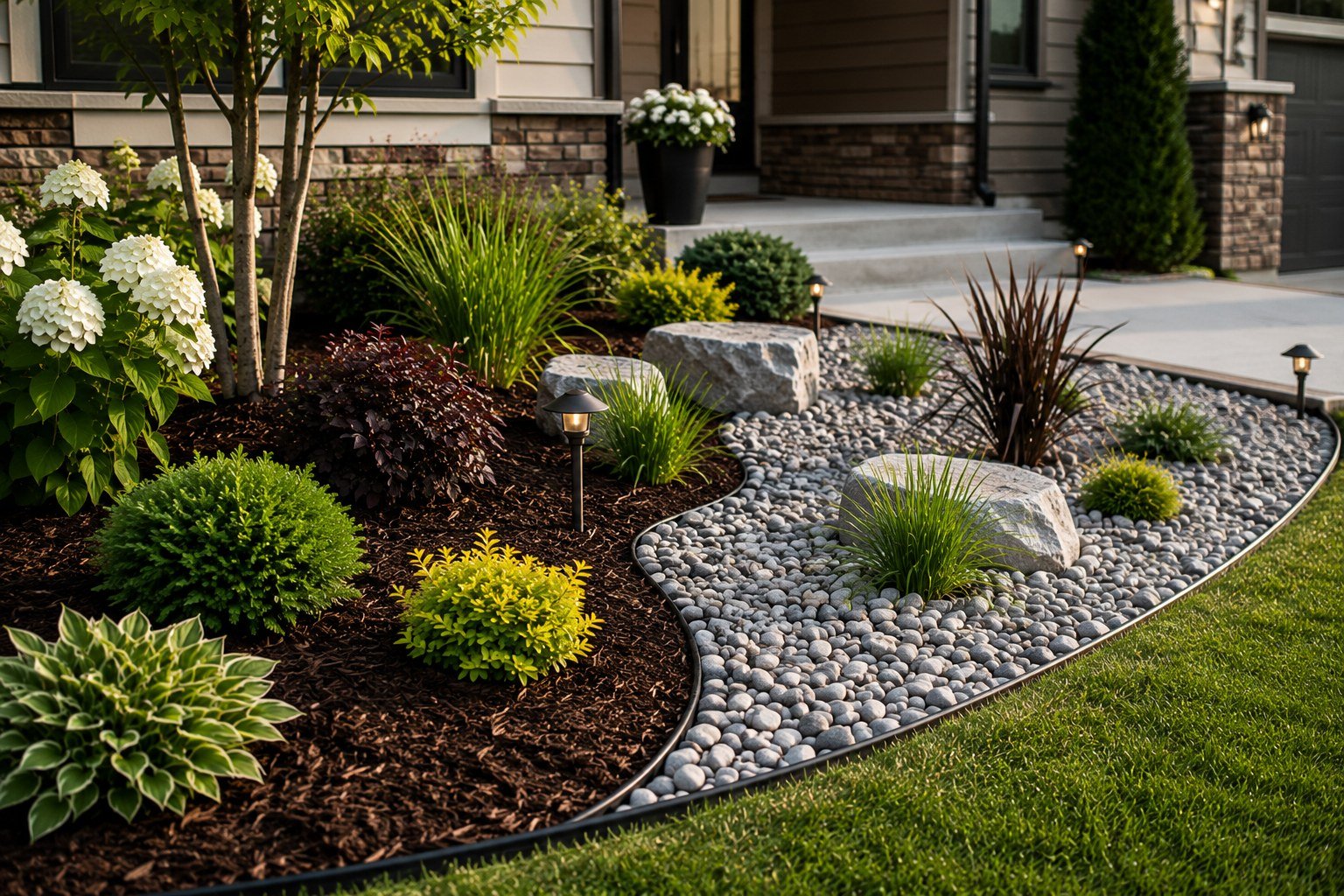
Gravel Calculator
Work out how much gravel you need — in cubic yards, tons and bags — for a driveway, path, patio or drainage project.
1. Area & depth
2. Material
3. Prices (optional)
You need
Formula: Volume = Area × Depth · Weight = Volume (cu ft) × Density · 1 cu yd = 27 cu ft · 1 short ton = 2,000 lb.
How far does one cubic yard go?
| Depth | Area covered per cubic yard |
|---|---|
| 1 in | 324 sq ft |
| 2 in | 162 sq ft |
| 3 in | 108 sq ft |
| 4 in | 81 sq ft |
| 5 in | 64.8 sq ft |
| 6 in | 54 sq ft |
Rule of thumb: area covered per cubic yard = 324 ÷ depth in inches.
How the River Rock Calculator Works
This river rock estimator follows the same formula every landscape supplier uses, so the number it gives you matches what the yard will quote. First it multiplies your length by your width to get the area in square feet. Then it converts your depth from inches to feet and multiplies area by depth to get cubic feet of stone. Dividing by 27 converts cubic feet to cubic yards, which is how bulk river rock is priced. Finally it multiplies the cubic feet by 105 pounds per cubic foot and divides by 2,000 to give you tons, then adds 10 percent for settling and spillage.
The only input that changes the answer much is depth, so choosing it correctly matters more than measuring to the inch. Decorative beds need 2 to 3 inches of stone, dry creek beds need 3 to 4 inches or more, and large cobble over 3 inches lays in a single layer rather than at a measured depth. The worked example below walks through a common project, a ring bed around a tree, so you can see exactly how each step works.
Worked Example: A Ring Bed Around a Tree
Imagine you want a ring of 1-3 inch river rock around a tree, with the outer edge 6 feet from the trunk and a 2.5-foot bare circle kept clear at the center. The area is the outer circle minus the inner circle: 3.14 times 36 minus 3.14 times 6.25, which is 113 minus 19.6, or about 93.5 square feet. At a 3-inch depth, which is 0.25 feet, the volume is 93.5 times 0.25, or about 23.4 cubic feet.
Dividing 23.4 by 27 gives 0.87 cubic yards, which is the number you would quote if your supplier sells by the yard. For tons, multiply 23.4 cubic feet by the river rock density of 105 pounds per cubic foot to get about 2,457 pounds, then divide by 2,000 to get 1.23 tons. Adding the 10 percent overage brings the order to roughly 1.35 tons, so you would order 1.5 tons to round up to the nearest half ton the yard can load.
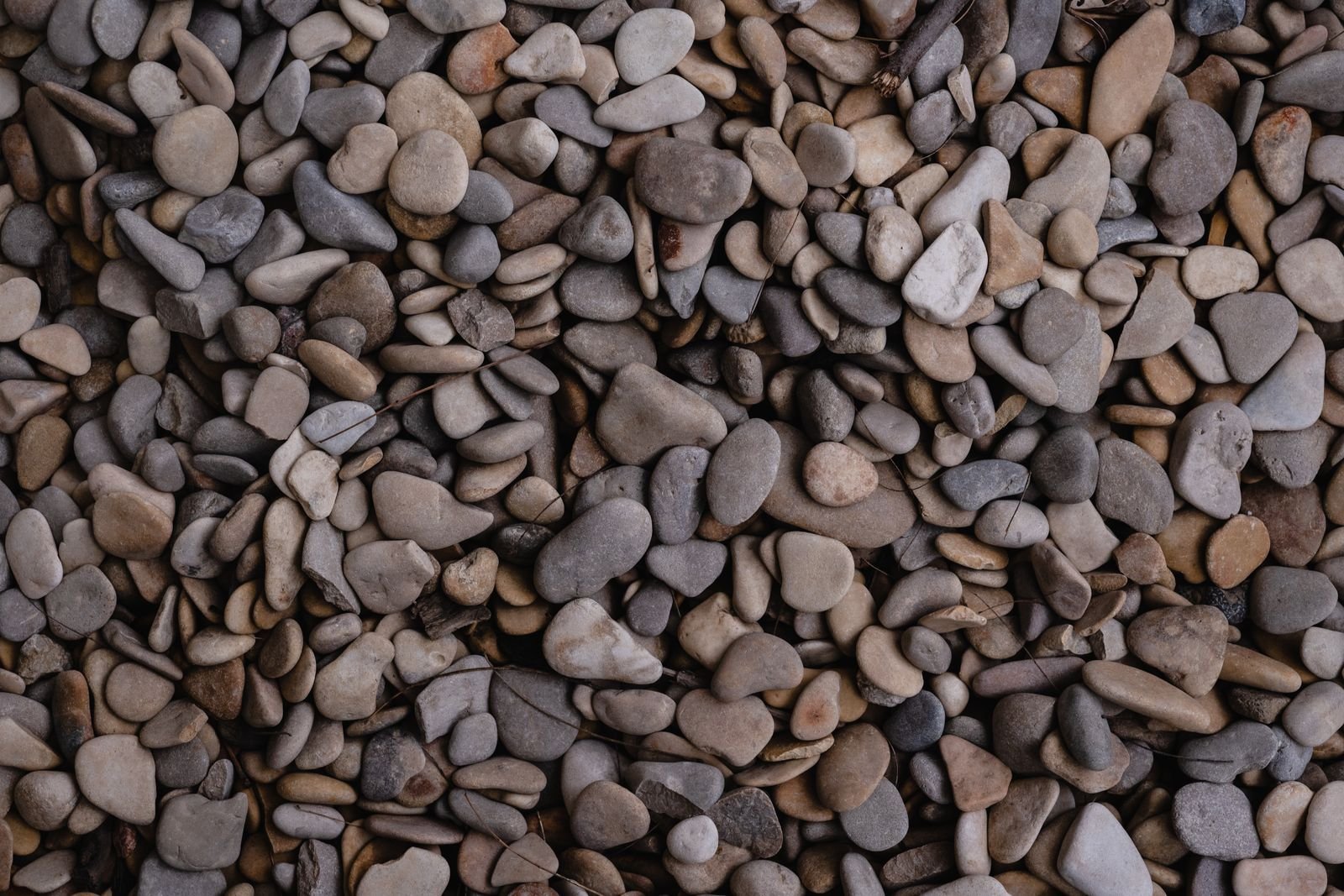
River Rock Sizes: 1-3 In and 3-6 In
River rock is rounded, smooth, tumbled stone, and the size you choose decides both the look and the math. The 1-3 inch size is the default for most landscaping: it is heavy enough to stay put on a slight slope, big enough that leaves blow off easily, and small enough to spread at a measured depth. The 3-6 inch size, often sold as cobble, is a statement stone used for dry creek beds, drainage channels, erosion control, and accent work around retaining walls.
| Stone Size | Typical Depth | Best Uses |
|---|---|---|
| 1-3 in (medium river rock) | 2-3 in layer | Garden beds, borders, tree rings, pond edges, decorative ground cover |
| 3-6 in (large cobble) | Single layer | Dry creek beds, drainage channels, erosion control, retaining wall accents |
One pricing quirk matters for the larger size. Many suppliers calculate rock up to 3 inches by the cubic yard but sell 3-6 inch cobble by the ton, because the stones lay in a single layer and depth math no longer applies. As a rule of thumb, 3-6 inch river rock covers roughly 50 square feet per ton in a single layer. Always confirm which unit your supplier uses for the size you picked before you order.
Coverage Per Ton by Depth
One ton of 1-3 inch river rock weighs 2,000 pounds, which at 105 pounds per cubic foot is about 19 cubic feet of stone. How far that ton stretches depends entirely on depth, and the table below gives you the coverage per ton at each common depth. These figures assume the standard density of 1.3 to 1.4 tons per cubic yard, so they match what the calculator produces for medium river rock.
| Depth | Area One Ton Covers |
|---|---|
| 1 in | ~228 sq ft |
| 2 in | ~114 sq ft |
| 3 in | ~76 sq ft |
| 4 in | ~57 sq ft |
| 6 in | ~38 sq ft |
Coverage shrinks fast as depth grows, which is why depth is the input most people get wrong. A bed planned at 2 inches but installed at 3 inches needs 50 percent more stone, so measure your finished depth honestly and round up. Larger cobble covers less area per ton than these numbers suggest, because the gaps between big stones waste space, so use the single-layer rule from the sizes section for 3-6 inch rock.
Dry Creek Beds
Dry creek beds are one of the best uses for river rock, and they need more stone than a flat bed of the same footprint. Plan for 3 to 4 inches of rock depth over the whole channel, and dig the channel itself 9 to 12 inches deep with the width roughly twice the depth so it reads as a natural streambed. A natural look comes from mixing sizes: 1-2 inch stone at the bottom, 2-4 inch river rock as the main fill, and 4-8 inch accent boulders along the edges and at bends.
Line the excavated channel with non-woven landscape fabric before any stone goes in, overlapping seams by at least 12 inches and pinning the edges. The fabric stops weeds from pushing up through the rock and keeps soil from working into the stone over time, which is the failure that forces most creek beds to be rebuilt within a few years. Place your largest stones at bends and on slopes where water moves fastest, because that is where washouts start, and keep the bed clear of leaves after storms so water keeps flowing.
Ring and Island Bed Shapes
Ring beds around trees and island beds in the middle of a lawn need slightly different math than rectangles, but the calculator logic is the same. For a ring, calculate the area of the outer circle and subtract the area of the inner bare circle, using 3.14 times the radius squared for each. For an island bed with an oval or freeform shape, multiply length by width and then multiply by 0.8 to approximate the curved area, which gets you within a few percent of the true number.
The worked example above shows a full ring calculation, and the same subtraction idea works for any bed with a planting hole in the middle. Island beds also tend to be deeper at the center than at the edges, so use the average depth across the bed rather than the deepest point. If the bed has an irregular wavy edge, break it into two or three overlapping rectangles or circles, calculate each, and add them together.
River Rock Around Retaining Walls
River rock earns its place around retaining walls in two ways: as drainage stone and as a finished look. A band of 3-6 inch cobble along the base of a wall hides the footing, slows runoff, and keeps soil from splashing onto the wall face during heavy rain. Behind the wall, the same large stone works as a drainage layer that lets water escape instead of building pressure against the structure.
Because cobble lays in a single layer, order it by the ton using the coverage rule of about 50 square feet per ton for 3-6 inch stone. A 40-foot wall with a 2-foot-wide cobble band is 80 square feet, which needs about 1.6 tons before the 10 percent overage. Keep the stone band at least a few inches below the top of the wall so soil and mulch from beds above do not wash down into it.
Why River Rock Is Wrong for Walkways and Driveways
River rock looks tempting for paths, but its smooth round shape is exactly what makes it a poor walking surface. The stones roll underfoot, which feels unstable and can twist an ankle, and every step kicks stones out of the path onto the lawn. On a driveway the problem is worse: tires push the round stones aside, creating ruts and bare spots that need constant raking.
If you need a walkable surface, choose a stone with angular edges that lock together instead. Pea gravel is the comfortable choice for garden paths, and you can size it with our pea gravel calculator. For anything that carries vehicles, crushed stone is the right material, and our gravel driveway calculator will size the base and surface layers correctly.
Bulk vs Bagged: Which Way to Buy
Whether you use a river stone calculator or do the math by hand, the answer comes in tons or yards, and then you decide between bulk delivery and bags. Bulk river rock from a landscape yard costs roughly $45 to $130 per ton for standard stone, while the same stone in 0.5-cubic-foot bags from a home center costs two to three times more per ton. For anything over about half a ton, which is roughly 20 bags, bulk delivery wins even after the delivery fee.
Bags still make sense for small accents, top-ups, and projects where a dump truck cannot reach the bed. One 50-pound bag holds about 0.5 cubic feet, so our worked example of 23.4 cubic feet would need about 47 bags. If you go the bagged route, buy 10 percent extra just as you would with bulk, because bags tear and spillage is unavoidable.
What River Rock Costs: Price Per Yard Plus Delivery
River rock is priced per yard or per ton depending on the supplier, and the two units convert at about 1.3 to 1.4 tons per cubic yard for standard 1-3 inch stone. Expect bulk material to run $45 to $130 per ton or $50 to $160 per cubic yard for common natural stone in the United States, with polished stone, Mexican beach pebbles, and large cobble costing more. Delivery typically adds $50 to $200 depending on distance, and most yards have a minimum load of a few tons, so small orders can carry a surcharge.
A realistic budget example helps. Our 1.5-ton ring bed at $80 per ton is $120 in stone plus about $75 for delivery, or roughly $195 before fabric and edging. Professional installation, if you hire it out, generally adds $25 to $100 per ton on top of material and delivery. Always get the delivered price in writing, and confirm whether the quote is per ton or per yard before comparing suppliers.
Measuring Tips for an Accurate Order
Measure the bed twice, because every ordering mistake starts with a bad measurement. For rectangles, measure length and width at the widest points; for curves, break the shape into rectangles or circles and add them up. Decide your finished depth before you calculate, since a 2-inch plan installed at 3 inches needs half again as much stone.
Account for the ground itself: soft or uneven soil needs a slightly deeper layer, and beds on a slope lose stone downhill over time. Finally, confirm the density figure with your supplier, because their published weight per yard for a specific product beats any generic average. Their number is the one the truck scale will use.
Common Ordering Mistakes
The most expensive mistake is forgetting to convert depth from inches to feet before multiplying, which inflates the order by a factor of 12. The second is using one generic density for every stone size, when small washed rock can run 1.2 tons per yard and large cobble up to 1.5. The third is skipping the 10 percent overage, which turns a one-delivery project into two deliveries with two delivery fees. The fourth is mixing up units: ordering cubic yards from a supplier who loads and bills by the ton, or vice versa, which is especially common with 3-6 inch cobble. Walk through the calculator once with your real numbers and check each of these before you call the yard.
Frequently Asked Questions
How many tons of river rock are in a cubic yard?
For common 1-3 inch river rock, one cubic yard weighs about 1.3 to 1.4 tons, which is roughly 2,600 to 2,800 pounds. Smaller washed stone runs a little lighter at about 1.2 tons per yard, while large 3-6 inch cobble runs heavier at up to 1.5 tons per yard. This is why the calculator asks for your stone size: the same volume of bigger stone weighs more. When in doubt, use your supplier’s published weight for their exact product.
How deep should river rock be?
For decorative garden beds and borders, 2 to 3 inches of 1-3 inch river rock gives full coverage and suppresses weeds. Dry creek beds and drainage areas need 3 to 4 inches or more so water flows through stone instead of over soil. Large 3-6 inch cobble is not measured by depth at all; it lays in a single layer. Going thinner than these minimums leaves fabric showing within a season.
What size river rock is best for a dry creek bed?
Use a mix of three sizes for a natural look and stable bed: 1-2 inch stone at the bottom, 2-4 inch river rock as the main fill, and 4-8 inch accent boulders along the edges and at bends. Using only one size is the most common visual mistake, because real creek beds sort stone by size naturally. The larger stones also anchor the bed at bends where water moves fastest. Plan 3 to 4 inches of overall rock depth over landscape fabric.
Do I need landscape fabric under river rock?
Yes, and skipping it is the shortcut most people regret. A non-woven geotextile fabric stops weeds from growing up through the stone and keeps the rock from sinking into soft soil. Overlap seams by at least 12 inches and pin the fabric down before spreading stone. Without fabric, most rock beds develop weed problems within two to three seasons. Fabric does not replace edging, so install a hard edge to keep stone from migrating onto the lawn.
Can I use river rock for a walkway or driveway?
It is not recommended, because rounded stone rolls underfoot and shifts every time you step on it. Walkways made of river rock feel unstable and scatter stone onto surrounding areas. Driveways are worse, since tires displace the stones and create ruts. Choose pea gravel for comfortable garden paths or crushed stone for driveways, since angular stone locks together. Our pea gravel calculator and gravel driveway calculator will size either project.
Is river rock better than mulch?
River rock wins on permanence: it never decomposes, needs no yearly top-up, drains well, and will not blow away in wind. Mulch wins on cost and soil health, since it is cheaper up front and feeds the soil as it breaks down. Rock is the better pick for drainage areas, dry creek beds, and spots where plants struggle. Mulch suits planting beds where you want to enrich the soil. Many yards use both, with rock in problem areas and mulch around plantings.
How many bags of river rock do I need for 100 square feet?
At 3 inches deep, 100 square feet needs 25 cubic feet of stone, and a standard 0.5-cubic-foot bag means 50 bags before the 10 percent overage. With the overage, plan on 55 bags. At 2 inches deep the same area needs about 33 bags plus overage. Bags cost two to three times more per ton than bulk stone, so anything past 20 bags is usually cheaper delivered in bulk.
How much does river rock cost?
Bulk river rock typically costs $45 to $130 per ton or $50 to $160 per cubic yard for standard natural stone, with specialty colors and large cobble costing more. Delivery adds $50 to $200 depending on distance and load size. A small 1.5-ton project usually lands between $150 and $300 delivered. Always confirm whether your supplier quotes per ton or per yard, since the two are different measurements.