Types of Gravel: 10 Types Compared for Driveways, Paths, and Drainage
Pick the wrong gravel and the project fails in slow motion. A driveway built on rounded stone ruts under the first car, a French drain filled with dusty stone clogs within a season, and a garden path surfaced with sharp crushed rock punishes every bare foot that crosses it. The stone itself is rarely expensive, but fixing a wrong choice means digging the whole surface out and starting again. This guide covers every gravel type a homeowner or small contractor will meet, what each one is actually for, and how to choose without guessing.
Gravel is not one product, and the word hides at least ten distinct materials that behave differently under weight, water, and weather. Some lock together into a surface hard enough to drive on, while others stay loose and drain freely, and a few exist purely to look beautiful. The sections below take each type in turn, with its size, shape, best uses, and the mistakes people make with it. Read the comparison table first for the quick answer, then read the sections for the types you are actually considering.
Types of Gravel at a Glance
The table below is the whole guide in miniature, with one row per type. Size and shape decide most of the behaviour, so those two columns matter more than the price column. A type that locks under compaction belongs under vehicles, a type that stays loose belongs in beds and paths, and a type that drains freely belongs in trenches. If a row surprises you, read its full section before ordering, because the table simplifies and the section explains the exceptions.
| Type | Size | Shape | Best for | Cost band |
|---|---|---|---|---|
| Pea gravel | 3/8 in | Rounded | Paths, patios, beds | Mid |
| River rock | 1 to 3 in, up to 6 in | Rounded, smooth | Decorative beds, dry creeks | Mid to high |
| Creek rock | 1 to 6 in | Rounded | Dry creek beds, water features | Mid to high |
| Bank run gravel | Mixed, up to 3 in | Mixed rounded and angular | Cheap base, fill | Low |
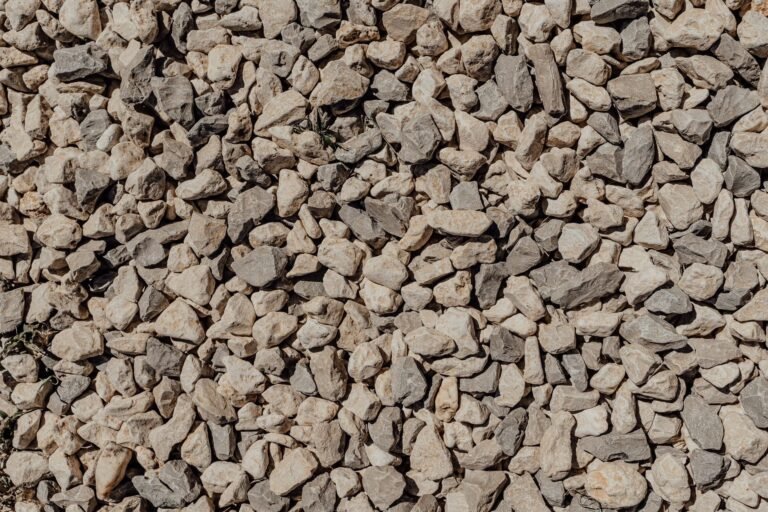
| Crushed stone | Graded, e.g. #57 | Angular | Driveways, drainage, bases | Low to mid |
| Crusher run (#411) | 3/4 in down to fines | Angular with dust | Driveway base, compacted surfaces | Low |
| Quarry process (QP) | 3/4 in down to fines | Angular with dust | Base, road building | Low |
| Decomposed granite | Fines to 3/8 in | Angular fines | Paths, patios, xeriscaping | Mid |
| Marble chips | 3/8 to 3/4 in | Angular, bright | Decorative beds, borders | High |
| Recycled crushed concrete | Graded, 3/4 in typical | Angular | Cheap driveways, bases | Lowest |
Pea Gravel
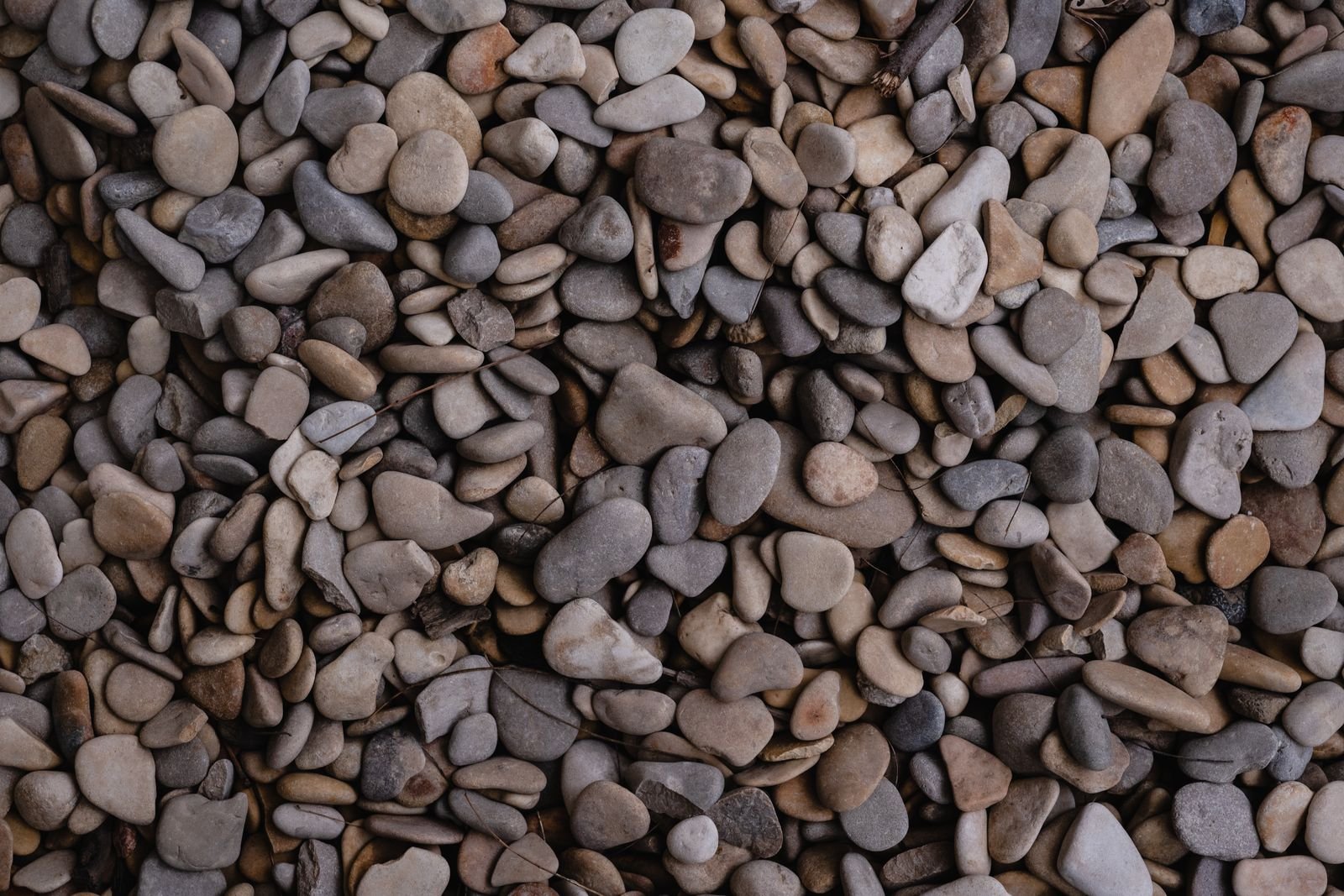
Pea gravel is small, rounded stone about 3/8 inch across, named for its resemblance to dried peas. It comes from riverbeds and gravel pits, where water has tumbled it smooth over thousands of years, and it is usually sold washed and sorted by size. Its rounded shape makes it comfortable underfoot and pleasant to look at, which is why it dominates garden paths, patios, and decorative beds. The same rounded shape is also its weakness, because the stones roll instead of locking, so pea gravel never firms up under vehicle weight no matter how much you compact it.
Use pea gravel where comfort and appearance matter more than load bearing, and keep it out of driveways except as a thin top dressing over a compacted base. A depth of 2 to 3 inches suits paths and patios, and landscape fabric underneath stops it sinking into soil and slows weeds. Pea gravel migrates, so edging is not optional, and it washes away on slopes, where a heavier angular stone holds its place. For quantities, our pea gravel calculator works out yards and tons for any path or bed size.
River Rock
River rock is smooth, rounded stone from 1 to 3 inches across, with larger cobbles running 3 to 6 inches for statement beds and water features. Like pea gravel, it is shaped by water, but its larger size gives it a bolder look and a different set of uses. River rock suits decorative beds, borders, dry creek beds, and the edges of ponds, where its smooth finish and natural colour range look deliberate rather than industrial. It drains freely through the gaps between stones, which makes it useful around downspouts and in drainage swales as well.
River rock is not a driveway or path surface, because large rounded stones roll underfoot and under tires, and a surface of loose cobbles is genuinely uncomfortable to walk on. Large cobbles also lay in a single layer rather than a deep bed, so coverage math differs: a ton of 3 to 6 inch river rock covers only about 50 square feet as a single layer. Buy river rock by the ton for large stone and by the yard for small stone, and confirm which unit your supplier uses before ordering. Our river rock calculator handles both the bed math and the single layer cobble math.
Creek Rock
Creek rock is the close cousin of river rock, and the two names overlap so much that suppliers sometimes use them interchangeably. The difference, where it exists, is that creek rock is marketed for dry creek beds and water features, with mixed sizes from 1 to 6 inches that mimic a natural stream bed. A convincing dry creek bed uses three sizes together: small stone for the base, mid-size stone for the fill, and large accent boulders at the bends and edges. One size alone looks artificial, which is the most common mistake in creek bed design.
A dry creek bed is also a drainage structure, not just decoration, and it should be built like one. Dig the channel 9 to 12 inches deep, line it with landscape fabric to stop soil working up through the stone, and anchor the bends with larger stones, because water and foot traffic both push loose rock downhill. Creek rock costs more per ton than crushed stone, and it is sold by weight for large sizes, so get the coverage math right before ordering. For a full dry creek guide with depths and layering, the river rock page on this site covers the same construction in detail.
Bank Run Gravel
Bank run gravel, also called bank gravel or river run, is gravel exactly as it comes out of the pit, unsorted and unwashed. It contains everything from sand and small pebbles up to stones several inches across, and its composition varies from pit to pit, which is both its charm and its risk. Because it skips the crushing and screening steps, it is one of the cheapest aggregates available, and it is widely used as fill, as a base under roads, and as a cheap driveway base where appearance does not matter. Its mixed sizes actually compact reasonably well, because the small particles fill the gaps between the large ones.
The risk with bank run gravel is inconsistency, since one load can be mostly sand and the next mostly large stone, and neither is what you wanted. Never buy bank run for a finished surface you will look at every day, because it looks unfinished and weeds through it freely. Always ask the supplier what the current pit run contains, and inspect a load before it is spread, because a rejected load costs a phone call while a spread load costs a removal. For a driveway base that will be covered by a finished top layer, bank run over fabric is a legitimate way to save money.
Crushed Stone
Crushed stone is quarried rock that is mechanically crushed and screened into graded sizes, and it is the workhorse of the whole gravel world. Crushing leaves sharp, angular edges, and those edges interlock under compaction into a stable, load-bearing surface that rounded stone can never match. Crushed limestone and crushed granite are the two most common source rocks, with limestone dominating the Midwest and Southeast and granite common in the Northeast and West. The source rock changes the colour and slightly changes the density, but the angular behaviour is the same regardless of quarry.
The size code on the ticket matters more than the rock name, and the common codes are worth learning. Number 57 stone runs 1/2 to 1 inch and suits drainage, French drains, and driveway top layers, while #3 stone runs 1 to 2 inches and suits deep base courses. Number 8 stone at 3/8 inch suits thin top dressings and pipe bedding, and #10 screenings, also called stone dust, are the fines left over from crushing. Our gravel sizes guide decodes every code in full, and our crushed stone calculator works out quantities for any of them.
Crusher Run (#411)
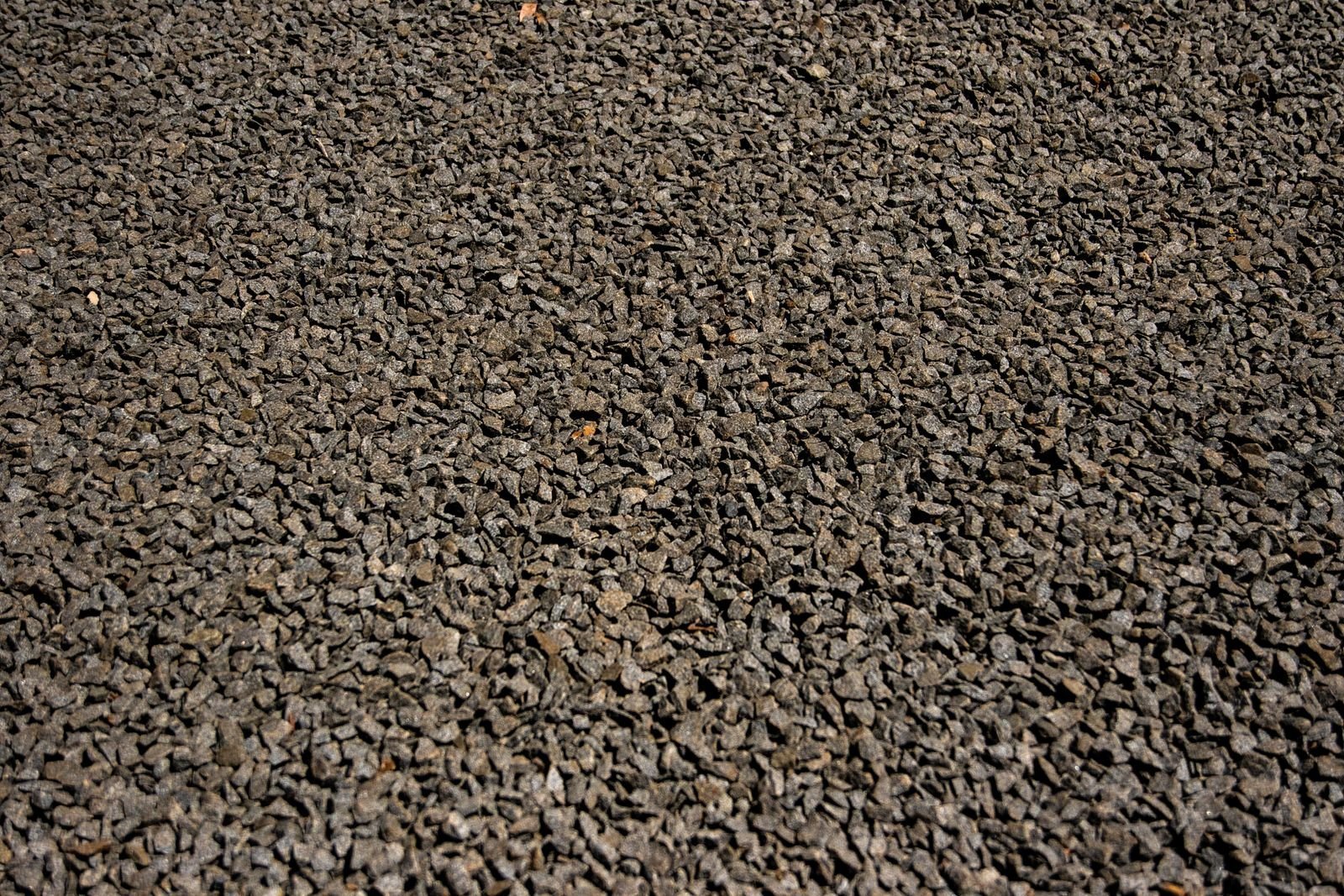
Crusher run, sold as #411 stone in many regions, is crushed stone blended from about 3/4 inch all the way down to fine dust and screenings. The fines are the point, because they fill the voids between the larger pieces and bind the layer into a dense, almost pavement-like surface when compacted. That makes crusher run the default choice for driveway bases, parking areas, and foundations under asphalt and pavers, where a hard, stable layer matters more than drainage. It does not drain well, and that is a feature for a base, because the fines shed water off the compacted surface instead of letting it soak into the subgrade.
Crusher run compacts aggressively, shrinking roughly 15 to 25 percent from loose volume to finished compacted depth, so order extra material for any base layer. Spread it in lifts no thicker than 4 inches and compact each lift, rather than dumping the full depth at once, because a thick uncompacted layer never firms up properly. Never use crusher run in a French drain, where its dust clogs the system, and never use it as a finished decorative surface, where its dusty grey finish looks industrial. For a layered driveway, crusher run belongs underneath and clean #57 stone belongs on top.
Quarry Process (QP)
Quarry process, usually shortened to QP, is essentially the same product as crusher run under a different regional name. The blend is the same idea: crushed stone from 3/4 inch down to dust, designed to compact into a hard base. The name QP is most common in the Northeast, where quarries sell it as the standard driveway and road base, while the same blend is called crusher run in the Southeast and 21A or road base elsewhere. The lesson is to buy by gradation, not by name, and to ask the supplier for the size range on the ticket rather than trusting a regional label.
QP has the same strengths and the same limits as crusher run, and the same installation rules apply. It compacts hard, it sheds water rather than draining it, and it needs a 15 to 25 percent compaction allowance in the order. Where QP differs in practice is availability, since some regions stock it everywhere and others rarely use the name at all. If your local yard does not list QP, ask for crusher run or dense-graded aggregate, and you will almost certainly be offered the same blend under that name. Confirm the gradation matches, and the product will perform identically.
Decomposed Granite
Decomposed granite, usually called DG, is granite that has weathered naturally into a mix of fine particles and small angular fragments up to 3/8 inch. It is not crushed in a quarry in the usual sense, but dug from weathered granite deposits, mostly in the western United States, where it is a staple of xeriscaping and desert landscaping. When compacted with a stabilizer or simply wetted and rolled, DG forms a firm, smooth, natural looking surface that suits garden paths, patios, and accessible walkways. It is more stable underfoot than pea gravel, which makes it the better choice for wheelchairs, strollers, and bare feet on a firm path.
Decomposed granite has real limits, and they are worth knowing before you commit a whole yard to it. It erodes on slopes and washes away in heavy rain unless it is stabilized, and it tracks indoors as fine dust on shoes and paws. Unstabilized DG needs regular raking and topping up, while stabilized DG, mixed with a resin binder, holds up far better but costs more and is harder to repair. DG is also regional, so eastern suppliers may not stock it, and a local crushed granite fines product may be the nearest equivalent. If you cannot find true DG, ask for granite screenings and test a small area first.
Marble Chips
Marble chips are small, angular pieces of marble, usually 3/8 to 3/4 inch, sold for decorative beds, borders, and accent areas. Their bright white and pale grey colours reflect light and heat, which makes planting beds look crisp and can actually cool the soil surface compared with dark stone. Marble chips suit formal beds, the edges of patios, and any spot where the stone is meant to be seen rather than walked or driven on. They are also popular around light coloured houses, where their brightness ties the landscaping to the building.
Marble chips are a decorative product with decorative prices, and they carry decorative maintenance as well. White stone shows dirt, leaves, and algae quickly, so beds need occasional rinsing and leaf removal to stay bright. Marble is softer than granite or limestone, so it breaks down faster under foot traffic, and it should never be used for driveways or paths that see regular use. Chips also migrate like any loose stone, so edging matters, and a layer of landscape fabric underneath stops them sinking into the soil. Buy marble chips for beds you will admire, not surfaces you will use hard.
Recycled Crushed Concrete
Recycled crushed concrete is old concrete that has been broken up, crushed, and screened into graded aggregate, and it is the cheapest driveway material in many regions. The crushing process leaves angular pieces with a grey, slightly dusty finish, and the material compacts well, much like crusher run, because it contains fines. For a budget driveway base or a full budget driveway, recycled concrete performs surprisingly well, and it carries a genuine environmental case, since it keeps demolition waste out of landfill and avoids fresh quarrying. Some municipalities even specify it for road base and fill work.
The trade-offs are appearance and consistency, and both are real. Recycled concrete looks grey and industrial, so it suits utility areas and budget driveways rather than front gardens. Quality varies with the source concrete, and loads can contain the odd piece of rebar, brick, or asphalt, so inspect before spreading and buy from a reputable recycler. It also generates more dust than virgin stone, which matters near patios and entrances. For a working driveway on a tight budget, though, recycled crushed concrete is hard to beat, and it deserves a place in any honest comparison of gravel types.
The Size Code Decoder
The numbers on a gravel ticket are a code, and learning it stops most ordering mistakes at the counter. The code comes from aggregate grading standards, and the same number means roughly the same size range at almost any US supplier. Number 57 stone is 1/2 to 1 inch, #67 is similar but with fewer large pieces, #8 is 3/8 inch, and #10 is screenings or stone dust. Larger codes mean larger stone: #3 runs 1 to 2 inches, and #1 runs 2 to 4 inches for deep base and riprap work. Number 411 is not a size but a blend, 3/4 inch down to fines, which is why it behaves so differently from clean #57.
Regional names complicate the picture, because the same blend hides under many labels. Crusher run, quarry process, QP, dense-graded aggregate, 21A, 610 limestone, and road base can all describe the same 3/4 inch down to dust blend, depending on where you buy it. The safe habit is to ask for the gradation sheet, which lists the exact size range, rather than trusting a name. Two products with different names can be the identical blend, and two products with the same name can differ, so the gradation sheet is the only reliable document.
Choosing Gravel by Project
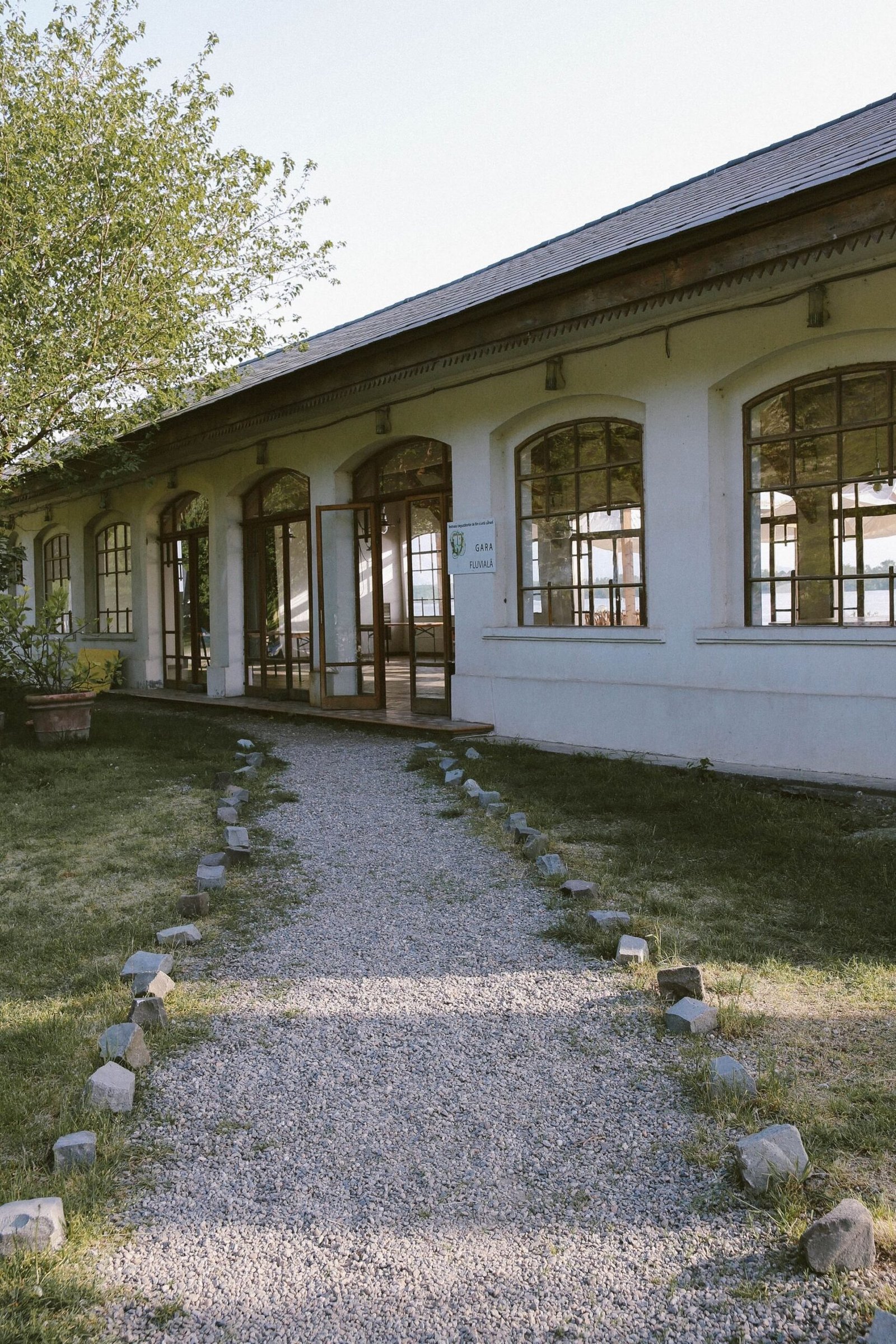
The fastest way to choose is to start from the project, not from the stone. A driveway needs a base that compacts and a top that drains, so the proven build is a crusher run or QP base topped with clean #57 stone, with geotextile fabric underneath on soft ground. A garden path needs comfort and stability, so pea gravel or decomposed granite at 2 to 3 inches, held by edging, is the right call. A French drain needs clean, washed stone that cannot clog, so washed #57 is mandatory and crusher run is forbidden. A decorative bed needs beauty first, so river rock, creek rock, or marble chips, depending on the look you want, all work well.
Drainage and load are the two questions that decide every other choice, and they pull in opposite directions. Angular crushed stone compacts and carries weight but drains slowly when fines are present, while rounded stone drains freely but never firms up. That tension is why layered builds exist: each layer does the job the other cannot, and no single stone does everything. If you are choosing between two types and cannot decide, buy a small sample of each, spread them in a test patch, and walk and drive on them for a week. A test patch costs almost nothing and answers the question better than any guide.
How Much Gravel You Need, and What It Costs
Quantity and cost follow from the same math as our gravel calculator, and the gravel types above differ mainly in density. The formula is length times width times depth in feet, divided by 27 for cubic yards, then multiplied by density and divided by 2,000 for tons. Crusher run and QP sit near 135 pounds per cubic foot, general gravel and #57 near 105, pea gravel near 96, and bank run near 130, so the same volume weighs very different amounts depending on the stone. Always calculate each layer separately with its own density, and add a 10 percent waste buffer, or 15 to 25 percent for a compacted base.
Prices vary by region, but the ranking is stable almost everywhere. Recycled crushed concrete and bank run gravel are the cheapest, typically 20 to 40 dollars per ton, followed by crusher run and QP at roughly 25 to 50 dollars. Clean crushed stone and pea gravel sit in the middle, river rock and creek rock higher, and marble chips and decorative stone highest, often double the price of plain crushed stone. Delivery usually adds 50 to 150 dollars per load, and small orders carry surcharges, so a cheap stone with a small load can cost more delivered than a pricier stone ordered in bulk. Our guide to how much gravel you need works through the full quantity and budget math with worked examples.
Installation Basics That Apply to Every Type
Preparation decides the result more than the stone does, and the same four steps apply to every type on this page. First, excavate to the full depth of the finished surface, not just the top layer, because stone spread onto topsoil sinks and mixes with mud. Second, lay landscape fabric over the excavated ground, overlapping seams by a foot, to separate stone from soil and slow weeds. Third, spread the stone in layers, compacting each lift, rather than dumping the full depth at once, because a thick uncompacted layer never firms up. Fourth, install edging before the final layer, so the finished surface has something to hold it in place.
Two details separate good work from work that fails early, and both are cheap. Crown the surface slightly, so water runs off to the sides instead of ponding in the middle, and keep the finished surface above the surrounding ground, so runoff does not wash soil onto it. On slopes, use angular stone with fines, because rounded stone migrates downhill with every rain, and add a ditch or a curb at the top to intercept runoff. These details cost an hour at installation and save years of regrading, which is why contractors treat them as non-negotiable.
Maintenance, Problems, and Fixes
Gravel surfaces need little maintenance, but they need some, and the schedule is simple enough to remember. Rake the surface level each spring, top up thin spots with the same stone, and pull weeds before they seed, since a weed left to seed becomes ten weeds next year. Re-grade driveways every few years, or whenever ruts appear, because ruts hold water and water deepens ruts in a cycle that only gets worse. Snow removal needs care on loose stone, since a plow blade set too low scrapes the surface away, so raise the blade or use a blower on decorative areas.
The common problems all have known fixes, and recognising them early saves money. Stone migrating onto the lawn means the edging has failed or was never installed, and the fix is edging, not more stone. Dust on a crusher run surface is normal in dry weather, and a light watering settles it, while dust in a French drain means the wrong stone was used and the drain needs rebuilding. Weeds through the surface usually mean the fabric was skipped or torn, and the fix is to lift the stone, repair the fabric, and respread. If a driveway needs topping up every year, the base or the drainage is at fault, not the quantity, and fixing those will save more stone than any amount of top-up ever will.
Frequently Asked Questions
What are the most common types of gravel?
Pea gravel, crushed stone, river rock, and crusher run are the four types sold almost everywhere in the United States, and they cover most residential projects between them. Pea gravel suits paths and beds, crushed stone suits driveways and drainage, river rock suits decorative beds, and crusher run suits compacted bases. The other types on this page, from creek rock to recycled concrete, are either regional or specialised, and they are worth knowing about when the common four do not fit your project.
What size gravel is best for a driveway?
Crushed stone in the 3/8 to 3/4 inch range, specifically clean #57 stone for the top layer over a crusher run or QP base, is the proven driveway combination. The base layer should be 4 to 6 inches of compacted crusher run, and the top layer 2 to 3 inches of clean #57, which drains well and looks tidy. Pea gravel and river rock are not driveway surfaces, because rounded stone rolls under tires and never firms up, no matter how much you compact it.
What is the difference between pea gravel and crushed stone?
Pea gravel is small, rounded, water-worn stone that stays loose and comfortable underfoot, while crushed stone is mechanically crushed rock with sharp, angular edges that interlock under compaction. That shape difference decides the application: crushed stone carries weight and forms stable surfaces, while pea gravel suits paths, patios, and beds where comfort matters more than load bearing. Crushed stone drains well when clean, but crusher run, which contains fines, compacts hard and drains poorly, so the exact product matters as much as the family.
What type of gravel is best for drainage and French drains?
Clean, washed #57 stone is the standard for French drains and drainage trenches, because its open gaps let water flow freely to the pipe. The stone must be washed, since dust and fines clog the gaps and defeat the whole system, which is why crusher run and unwashed stone are forbidden in drains. For major drainage swales, larger clean stone such as #3, at 1 to 2 inches, moves even more water, but it is overkill for a typical residential French drain.
What is the cheapest type of gravel?
Recycled crushed concrete and bank run gravel are usually the cheapest, often 20 to 40 dollars per ton, followed by crusher run and quarry process at roughly 25 to 50 dollars per ton. Crushed stone sits in the middle, pea gravel slightly higher, and decorative stone such as marble chips costs the most. Delivery fees and minimum loads change the delivered price significantly, so compare delivered quotes for the same quantity rather than material prices alone.
Is pea gravel good for a driveway?
No, not as the main surface, because rounded pea gravel rolls under tires, ruts quickly, and migrates out of the driving line. Pea gravel works only as a thin top dressing over a properly compacted crusher run base, and even then it needs strong edging and regular raking to stay in place. For a driveway that must carry cars, use crushed stone #57 over a crusher run base instead, and save pea gravel for paths and beds where it belongs.
What is crusher run, and how is it different from #57 stone?
Crusher run is crushed stone blended from 3/4 inch down to fine dust, while #57 stone is clean crushed stone graded 1/2 to 1 inch with the dust washed out. The fines in crusher run bind it into a hard, dense layer when compacted, which makes it ideal for bases, while clean #57 drains freely through its open gaps, which makes it ideal for top layers and drains. Use crusher run underneath and #57 on top, never the reverse, or you lose the drainage benefit of the top layer.
How deep should gravel be for a driveway, a path, and a patio?
A driveway needs 4 inches of compacted base as a minimum, and a full layered build runs 8 to 12 inches across base and top courses. Garden paths and patios need only 2 to 3 inches of decorative stone, or 3 to 4 inches where foot traffic is heavy, and playgrounds need 9 to 12 inches loose, which compresses to about 6 inches. Always measure the finished compacted depth, not the loose pile, because compaction shrinks the layer by 10 to 25 percent.
Do I need landscape fabric under gravel?
Yes for driveways, paths, and patios, where the fabric separates stone from soil, stops the stone sinking into mud, and slows weeds. Use a woven fabric under driveways, where strength matters, and overlap the seams by at least a foot, since a gap in the fabric becomes a weed and a sinkhole in the same spot. Fabric is less critical in a French drain, where the stone wraps a perforated pipe, but it still helps to line the trench and keep soil out of the stone.
How do I stop gravel washing away or rutting on a slope?
Use angular stone with fines, such as crusher run, because rounded stone migrates downhill with every rain, and crown the surface so water runs off to the sides. Add a ditch or curb at the top of the slope to intercept runoff before it reaches the gravel, and install strong edging on the downhill side to catch what does move. Re-grade after heavy storms, and accept that a steep slope will always need more maintenance than flat ground, whatever stone you choose.