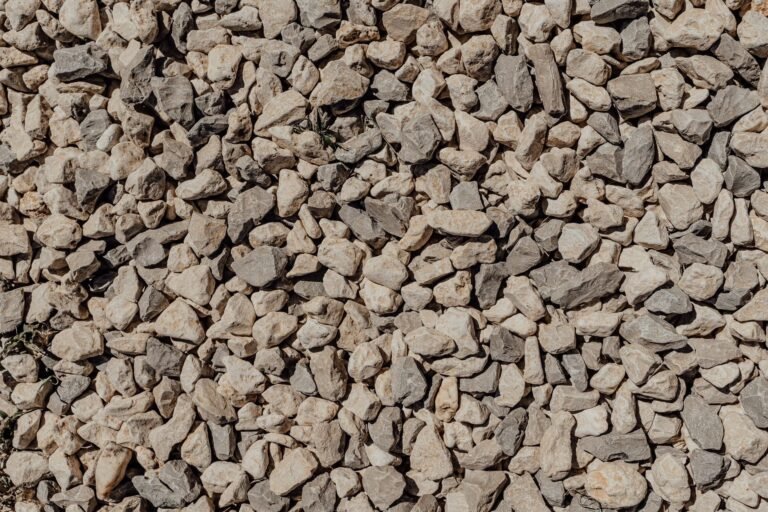

Gravel Driveway
A gravel driveway looks simple until it starts failing, and then it fails in the same few ways every time. The surface ruts under the tires, stone migrates onto the lawn, weeds push through within a season, and puddles sit where the crown should have shed them. None of those problems come from gravel itself, because a properly built gravel driveway lasts for decades with modest maintenance. They come from building a driveway out of a single layer of the wrong stone, on unprepared ground, with no drainage plan, which is exactly what this guide helps you avoid.
This is the hub guide for the whole driveway cluster on this site, covering what a gravel driveway is, which stone belongs in each layer, how deep each layer should be, what it costs, and how to keep it in shape. The build below is the proven three-layer system used by contractors across the United States, adapted for a homeowner who wants to understand every step before ordering. Read the layers section first if you are about to order, then read the cost and maintenance sections before you commit to a budget.

What a Gravel Driveway Is
A gravel driveway is a loose-stone surface built in layers over prepared ground, and the layers are what make it work. The bottom layer carries the weight of vehicles, the middle layer spreads that weight and locks the structure together, and the top layer gives a drivable, drainable finish. A driveway built from a single layer of stone, however thick, cannot do all three jobs at once, which is why single-layer drives rut, sink, and wash out. The layered system is not a contractor upsell, because it is the difference between a driveway that lasts ten years and one that needs rebuilding next spring.
Gravel driveways suit a wide range of homes, from rural properties where a long drive would make paving unaffordable, to suburban homes where a permeable surface helps with drainage. They cost far less than asphalt or concrete, they can be repaired by topping up rather than resurfacing, and they drain naturally instead of sending runoff into the street. They also need more maintenance than a paved surface, and they are not the right choice for every situation, which the honest comparison section below covers. Knowing both sides before you build is what keeps a gravel driveway from becoming a regret.
The Three-Layer System
The proven build for a new gravel driveway is three layers, coarsest at the bottom and finest on top, totalling 8 to 12 inches of finished depth. The base layer is 4 inches of #3 stone, at 1 to 2 inches, which bridges soft ground and carries the load without sinking. The middle layer is 4 inches of 57 stone, at about 3/4 inch, which locks into the base and spreads vehicle weight across it. The top layer is 2 to 4 inches of crusher run or #411 stone, a blend from 3/4 inch down to dust, which binds into a firm surface you can drive and plow.
Each layer is spread and compacted separately, and that separate compaction is non-negotiable. A plate compactor run over each lift, rather than over the full depth at once, is what turns loose stone into a stable structure, because a thick uncompacted layer never firms up properly. The base layer needs the most compaction, since everything else sits on it, and the top layer needs a light watering after compaction, which helps the stone dust bind the crusher run together. Skipping compaction on any layer saves an hour at installation and costs years of regrading later, which is why contractors treat it as the step that cannot be skipped.
Resurfacing an existing driveway is a different job, and it needs only the top course, not the full three layers. If the existing base is still sound, with no deep ruts or soft spots, a fresh top layer of 2 to 4 inches of crusher run or 57 stone restores the surface. If the base has failed, with ruts that return after every top-up, then topping up is wasted money, and the driveway needs to be excavated and rebuilt from the base. The test is simple: if a top-up lasts a year or more, the base is sound, and if it sinks within months, the base is the problem.
Driveway Gravel Types Compared
Driveway gravel is not one product, and the stone you choose for each layer matters more than the stone you choose for the driveway as a whole. Whether you search for driveway gravel, gravel for driveway, or driveway stone, the answer is the same layered system, because no single stone does the work of three layers. Crushed stone driveway builds use angular stone throughout, because angular edges interlock under compaction into a stable surface that rounded stone can never match. Crusher run and quarry process, the same blend under different regional names, belong in the base and top layers, where their fines bind the surface together. Clean 57 stone belongs in the middle and top layers, where its open gaps drain water and its uniform size gives a tidy finish.
Pea gravel driveway surfaces are the classic mistake, and they deserve a clear warning rather than a polite hedge. Pea gravel is smooth, cheap, and lovely in a photograph, but rounded stone cannot interlock, so it rolls out from under the tires. The result is ruts in the wheel tracks, a ridge down the middle, stone in the lawn, and a drive that needs topping up every year. Pea gravel belongs in paths and beds, not under cars, and the only exception is a thin dressing over a properly compacted crusher run base, held by strong edging and raked regularly.
River rock and decorative stone are also wrong for a driveway surface, for the same reason pea gravel is wrong, only worse. Large rounded stones roll underfoot and under tires, and a surface of loose cobbles is genuinely uncomfortable to walk on, let alone drive on. Save river rock for beds, borders, and dry creek beds, where its smooth finish and natural colour range look deliberate rather than industrial. For a driveway, the rule is simple: angular stone carries weight, rounded stone decorates, and mixing those jobs up is how driveways fail.
Sizing, Depth, and Drainage
A standard driveway size for a single car is 12 feet wide, and a typical two-car driveway runs 12 by 50 feet, or 600 square feet, which is the size used for the cost examples below. Wider drives, turning areas, and parking pads all add area, and each added square foot adds stone, so measure the real shape rather than guessing from the house frontage. Irregular shapes should be split into rectangles and added together, because a single length-times-width guess on an L-shaped drive can be wrong by a third. Our gravel driveway calculator works out the layers separately for any shape you measure.
Total depth for a new driveway built on soil is 8 to 12 inches across the three layers, and that depth is finished compacted depth, not loose pile depth. Compaction shrinks a layer by 15 to 25 percent, so a layer that measures 4 inches loose may finish at 3 inches compacted, which is why ordering must allow for compaction. A driveway built on firm, well-drained ground can sit at the shallow end of the range, while a driveway on soft or clay ground needs the deep end, plus geotextile fabric underneath. Building shallow on soft ground is the most expensive saving in this guide, because the driveway will sink and need rebuilding.
Drainage is designed into a gravel driveway, not added after it, and it comes down to two features: crown and slope. Crown means the centre of the driveway sits about an inch higher than the edges, so water runs off to the sides instead of ponding in the middle. Slope means the whole driveway falls gently away from the house, at least 2 percent, so water never runs toward the building. A driveway that ponds water will develop potholes, because standing water softens the base and deepens every rut, and a driveway that slopes toward the house will send that water into the foundation.
Geotextile Fabric, Edging, and Preparation
Geotextile fabric is genuinely worth it on soft or clay ground, and it is the cheapest insurance in the whole build. The fabric sits over the prepared subgrade, under the base stone, and it stops the base stone pumping down into the soil, which is the usual reason a drive needs rebuilding. Without fabric, heavy stone slowly sinks into soft soil, the surface thins, and the driveway needs topping up every year until someone finally excavates and rebuilds it. On firm, gravelly ground, fabric is less critical, but it still separates stone from soil and slows weeds, so most contractors use it regardless.
Preparation starts with stripping the topsoil, because organic soil compresses and holds water, and a base built on it will always move. Excavate to the full depth of the finished surface, not just the top layer, and use the stripped soil elsewhere rather than burying it under the driveway. Compact the exposed subgrade with a plate compactor before laying fabric, because a soft spot left in the subgrade becomes a soft spot in the finished driveway. Mark the layout with stakes and string first, and check the slope with a level, because correcting the slope after stone is spread means moving the stone twice.
Edging is what keeps a gravel driveway from migrating onto the lawn, the path, and the road, and it should be installed before the final layer goes down. Timber, steel, stone, or concrete edging all work, provided the edging sits high enough to hold the finished surface and is anchored so vehicle weight cannot push it out. Without edging, every rain and every tyre pushes stone outward, and the driveway slowly widens while the driving line thins. Edging also makes maintenance easier, because raking against a fixed edge is faster than raking stone back from the lawn every spring.
How Much Gravel a Driveway Needs
Quantity follows from the same math as our gravel calculator, and the layers must be calculated separately, because each layer uses a different stone and a different density. The formula for each layer is length times width times depth in feet, divided by 27 for cubic yards, then multiplied by density and divided by 2,000 for tons. A 12 by 50 foot driveway built properly at 10 inches total depth needs about 25 tons across its layers, while resurfacing the same drive at 3 inches needs about 6.5 tons. Those numbers use the site density set, with crusher run at 135 pounds per cubic foot and general gravel at 105, so a different stone changes the tonnage for the same volume.
Delivery changes the math too, because gravel is sold by the ton and delivered by the truckload, with a typical dump truck carrying 10 to 15 tons. A 25-ton driveway therefore needs two truckloads, and the base and top layers arrive as separate loads, because they are different products. Small orders carry surcharges, and a second delivery for a short load can cost more than the stone itself, so order the full quantity, with a 10 percent waste buffer, in the first place. Always confirm whether the supplier prices by the ton or by the yard, because one yard weighs roughly 1.4 tons, and confusing the two units is an easy way to order far too little.
Gravel Driveway Cost
Cost varies by region, but the ranking is stable almost everywhere, and the examples below use typical United States pricing. Material for a standard 12 by 50 foot driveway runs roughly 25 to 50 dollars per ton for crusher run and clean crushed stone, so the stone alone for a full build lands near 625 to 1,250 dollars. Delivery usually adds 50 to 150 dollars per load, and two loads for a full build add 100 to 300 dollars, which brings the delivered material cost to roughly 725 to 1,550 dollars. DIY installation adds only compactor hire, while professional installation can double or triple the total, depending on excavation and local labour rates.
Resurfacing costs far less, because it needs only the top layer, and a 6.5-ton top-up at the same per-ton rates runs roughly 160 to 325 dollars for stone, plus one delivery fee. That is why resurfacing is the right maintenance strategy for a sound base, and why rebuilding a failed base is so much more expensive than maintaining a good one. Recycled crushed concrete offers a genuine saving for the base layer, at 30 to 50 percent less than quarried stone, because the base is never seen, and the saving does not affect the finished surface. Keep quarried stone for the top layer, where appearance and performance matter, and save money where it cannot be seen.
Comparing quotes means comparing delivered prices for the same quantity and gradation, not material prices alone. A cheap per-ton price with a high delivery fee, or a quote priced by the yard when you compared by the ton, can easily be the more expensive order. Get the gradation sheet with every quote, confirm the tonnage for each layer separately, and ask whether spreading and compaction are included, because most delivery quotes exclude them. A quote that looks cheap because it omits a layer or a delivery is not a bargain, because the missing stone will be ordered later at a second delivery fee.
Gravel Driveway vs Paving
A gravel driveway beats paving on cost, drainage, and repairability, and paving beats gravel on maintenance and cleanliness, so the right choice depends on what you value. Gravel costs a fraction of asphalt or concrete to install, it drains naturally instead of sending runoff into drains, and a damaged section is repaired by topping up rather than cutting out and replacing a slab. Paving, by contrast, gives a smooth, clean surface that never migrates, never needs raking, and never tracks stone into the house. If you hate maintenance and can afford paving, paving is the honest recommendation, and this guide does not pretend otherwise.
Gravel also suits situations where paving does not, and those situations are more common than paving companies admit. Long rural drives, where paving would cost tens of thousands of dollars, are the obvious case, as are properties where a permeable surface helps with drainage regulations. Gravel suits homes where the driveway is used lightly, where the owner does not mind seasonal raking, and where the rustic look suits the house. It suits poorly where vehicles turn sharply on the surface, where snow plowing is frequent, or where accessibility matters, because loose stone is hard for wheelchairs, strollers, and wheeled bins.
Snow and ice deserve a specific note, because they decide the choice for many northern homeowners. A gravel driveway can be plowed, but the plow blade must be set high enough to clear the stone rather than scraping it away, and a blower is gentler on the surface than a blade. Ice melts faster on gravel than on paving in some conditions, because the dark stone absorbs sun, but ice also forms in ruts where water ponds, which is another reason the crown matters. If you plow with a contractor, tell them the surface is gravel and agree on a blade height before winter, because a contractor who plows it like asphalt will strip the top layer in a single pass.
Maintenance, Problems, and Fixes
Gravel driveway maintenance is simple, seasonal, and far cheaper than the rebuild it prevents. Rake the surface level each spring, top up thin spots with the same stone, and pull weeds before they seed, since a weed left to seed becomes ten weeds next year. Re-grade the driveway every few years, or whenever ruts appear, because ruts hold water and water deepens ruts in a cycle that only gets worse. The annual time cost is a few hours, and the annual material cost is a top-up load every few years, which is the real price of choosing gravel over paving.
The common problems all have known fixes, and recognising them early saves money. Stone migrating onto the lawn means the edging has failed or was never installed, and the fix is edging, not more stone. Dust on a crusher run surface is normal in dry weather, and a light watering settles it, while dust in a French drain means the wrong stone was used and the drain needs rebuilding. Weeds through the surface usually mean the fabric was skipped or torn, or that dust and leaves have built up between the stones into a growing medium, and the fix is to lift the stone, repair the fabric, and respread. If a driveway needs topping up every year, the base or the drainage is at fault, not the quantity, and fixing those will save more stone than any amount of top-up ever will.
Mud is the problem that tells you the build has failed, not just the surface, because mud means water is reaching the subgrade. The usual causes are insufficient depth, missing fabric on soft ground, or a slope that sends water into the driveway rather than off it. Adding more stone on top of mud only buries the problem for a season, because the new stone sinks into the same soft ground. The fix is to excavate to firm ground, lay fabric, rebuild the base, and correct the drainage, which is expensive, but it is the only fix that lasts. That is why the preparation steps in this guide matter more than the stone choice, because preparation is what keeps water out of the subgrade.

Frequently Asked Questions
How much gravel do I need for a driveway?
A standard 12 by 50 foot driveway built at 10 inches total depth needs about 25 tons across its layers, while resurfacing the same drive at 3 inches needs about 6.5 tons. Calculate each layer separately, because the base, middle, and top layers use different stones at different densities, and add a 10 percent waste buffer. Our gravel driveway calculator works out yards and tons for any driveway size, layer by layer.
What is the best gravel for a driveway?
Crushed stone is the best driveway gravel, with a three-layer build of #3 base, 57 stone middle, and crusher run top giving the most durable result. Angular stone locks together under compaction, while rounded stone such as pea gravel or river rock rolls under tires and never firms up. For the top layer alone, clean 57 stone or crusher run are both proven choices, with crusher run binding harder and 57 stone draining better.
How deep should a gravel driveway be?
A new gravel driveway should be 8 to 12 inches deep in total, measured as finished compacted depth, not loose pile depth. The base layer is 4 inches, the middle layer is 4 inches, and the top layer is 2 to 4 inches, with the deep end of the range for soft or clay ground. Resurfacing an existing driveway with a sound base needs only 2 to 4 inches of top layer, because the base underneath is already doing its job.
Is a gravel driveway cheaper than asphalt or concrete?
Yes, by a wide margin, because a full gravel build for a standard driveway typically costs under 2,000 dollars in delivered material, while asphalt or concrete for the same drive runs many thousands. The trade-off is maintenance, because gravel needs seasonal raking and periodic top-ups, while paving needs little maintenance until it cracks. Over twenty years, the gap narrows, but gravel remains cheaper, especially for long drives where paving costs scale with every foot.
Do I need landscape fabric under a gravel driveway?
Yes on soft or clay ground, where geotextile fabric stops the base stone sinking into the soil and is the cheapest insurance in the whole build. On firm, well-drained ground, fabric is less critical, but it still separates stone from soil and slows weeds, so most contractors use it regardless. Use a woven fabric under driveways, where strength matters, and overlap the seams by at least a foot, since a gap in the fabric becomes a weed and a sinkhole in the same spot.
How do I stop gravel migrating onto the lawn and road?
Install edging before the final layer, high enough to hold the finished surface and anchored so vehicle weight cannot push it out. Timber, steel, stone, or concrete edging all work, and the choice is mostly about appearance and budget rather than performance. Rake stone back from the edges regularly, and keep the finished surface slightly above the surrounding ground, so runoff does not wash soil onto the driveway or stone onto the lawn.
Why does my gravel driveway get ruts and potholes?
Ruts form where vehicles repeatedly travel the same line on a surface that was never compacted properly, or where the base has failed underneath. Potholes follow, because ruts hold water, water softens the base, and the soft base deepens the rut in a cycle that only gets worse. The fix is to rake stone from the sides back into the low areas, compact the surface, and top up with the same stone, but if ruts return within months, the base or drainage needs rebuilding, not another top-up.
How do I control weeds on a gravel driveway?
Start with landscape fabric under the stone, pull weeds before they seed, and clear leaves and dust from the surface regularly, because that debris becomes the growing medium weeds root in. A pre-emergent weed treatment in spring helps on large drives, and targeted spot treatment handles weeds that do appear, but no treatment replaces raking and clearing. Weeds that grow from seed on top of the stone, rather than through it, are a maintenance problem, not a fabric failure, and regular clearing breaks the cycle.
Can you plow snow on a gravel driveway?
Yes, provided the plow blade is set high enough to clear the stone rather than scraping it away, and a snow blower is gentler on the surface than a blade. Tell any plowing contractor that the surface is gravel and agree on a blade height before winter, because a contractor who plows it like asphalt will strip the top layer in a single pass. After winter, rake the surface level and top up any thin spots, because plowing always moves some stone even with a raised blade.
What is a pebble driveway, and is it the same as a gravel driveway?
A pebble driveway is a driveway surfaced with small rounded pebbles, and it is a type of gravel driveway, but a poor one for vehicle traffic. Rounded pebbles roll under tires just like pea gravel, so a pebble driveway ruts and migrates unless it is only a thin dressing over a compacted base. For a driveway that must carry cars, use angular crushed stone instead, and save pebbles and driveway rock for decorative borders and beds beside the driving surface. A rock driveway built from rounded stone has the same weakness, because rounded stone rolls, while angular stone locks.