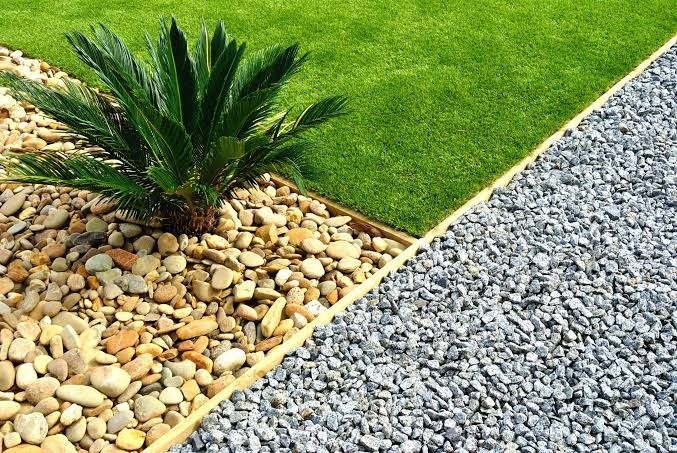
Running out of pea gravel halfway through a patio leaves you with a half-finished project and a second delivery fee, while ordering too much leaves a pile of expensive stone sitting in your driveway for months. This pea gravel calculator takes the guesswork out of calculating pea gravel by giving you exact cubic yards, tons and bag counts for your specific area and depth. Whether you are building a walkway, refreshing a patio or digging a French drain, you will know exactly how much pea gravel you need for your project before you call the supplier. The math accounts for the real density of pea gravel and the waste that happens during spreading, so the number you get is the number you can order with confidence.
Pea gravel weighs 96 pounds per cubic foot, which works out to 1.30 tons per cubic yard, and that density is what the calculator uses for every result. Most bagged pea gravel comes in 0.5 cubic foot bags, and it takes 54 of those bags to equal one cubic yard, so the tool shows you both bulk and bagged quantities side by side. For small projects like a 10 by 10 patio, bags from the home center might make sense, but for anything larger, bulk delivery is almost always cheaper per ton. The calculator helps you see the bulk versus bagged crossover point so you can choose the most economical option for your project size.
Gravel Calculator
Work out how much gravel you need — in cubic yards, tons and bags — for a driveway, path, patio or drainage project.
1. Area & depth
2. Material
3. Prices (optional)
You need
Formula: Volume = Area × Depth · Weight = Volume (cu ft) × Density · 1 cu yd = 27 cu ft · 1 short ton = 2,000 lb.
How far does one cubic yard go?
| Depth | Area covered per cubic yard |
|---|---|
| 1 in | 324 sq ft |
| 2 in | 162 sq ft |
| 3 in | 108 sq ft |
| 4 in | 81 sq ft |
| 5 in | 64.8 sq ft |
| 6 in | 54 sq ft |
Rule of thumb: area covered per cubic yard = 324 ÷ depth in inches.
How to Use This Pea Gravel Calculator
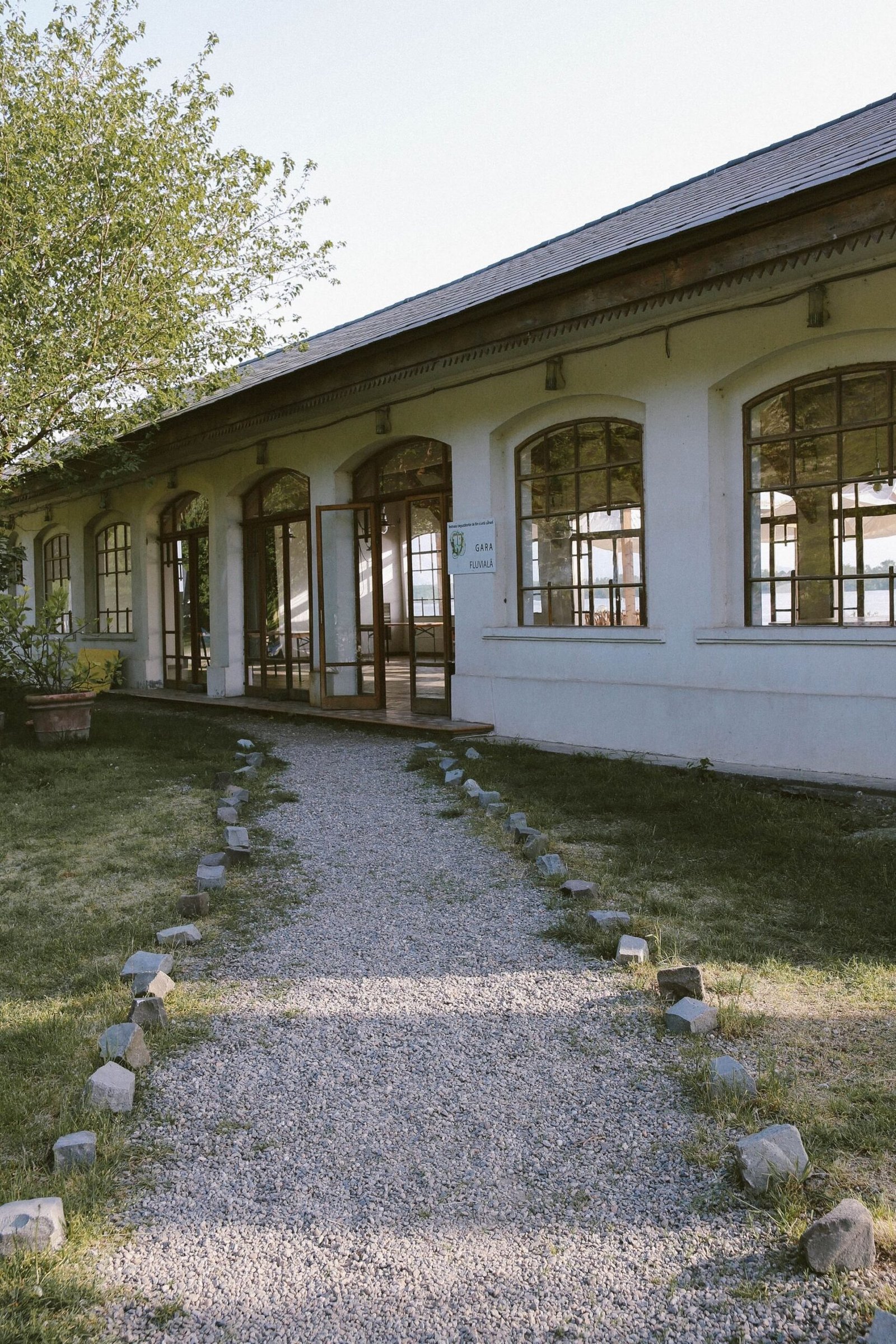
Enter your area shape and dimensions, then set the depth for your project. The calculator defaults to pea gravel at 96 pounds per cubic foot, so you do not need to change the material unless you are pricing a different stone. Results update live as you type, showing cubic yards, tons, pounds and the number of 0.5 cubic foot bags you would need. Use the waste buttons to add a buffer for spillage and uneven ground.
The tool also handles circles and triangles, which is handy for round patios or triangular garden beds where a simple length times width does not work. If you already know your square footage from a landscape plan, choose “I know my area” and enter it directly. The coverage table below the results shows how far one cubic yard goes at different depths, which helps you sanity-check the numbers. For pricing, enter your supplier’s per-ton or per-yard rate to see an estimated project cost.
Calculating Pea Gravel by Hand
To calculate pea gravel by hand, multiply your length by width in feet to get square feet, then multiply by depth in feet (inches divided by 12). Divide the cubic feet by 27 to get cubic yards, which is how bulk suppliers sell it. Multiply cubic yards by 1.30 to get short tons, since pea gravel weighs 1.30 tons per cubic yard at 96 pounds per cubic foot.
For a 10 by 10 foot patio at 2 inches deep: 10 x 10 x (2/12) = 16.67 cubic feet, divided by 27 = 0.62 cubic yards. Multiply 0.62 by 1.30 to get 0.80 tons. If you are buying bags, divide 16.67 cubic feet by 0.5 to get 34 bags (rounded up). Always add 10 percent for waste, because you will spill some during spreading and the ground is never perfectly level.
Pea Gravel Density: 96 Pounds per Cubic Foot
Pea gravel is a 3/8 inch rounded stone, and its density of 96 pounds per cubic foot reflects the air space between the smooth, uniform pebbles. That works out to 2,592 pounds per cubic yard, or 1.30 short tons. This is lighter than crushed stone because round pebbles do not pack as tightly as angular fragments. Every number on this page and in the calculator uses this 96 lb/ft3 master figure.
Density matters because suppliers sell by the ton but you plan by volume, and the conversion depends entirely on the stone type. If you used a generic 105 lb/ft3 figure, you would overestimate the weight by almost 10 percent and might overpay for delivery. The rounded shape that makes pea gravel comfortable underfoot also means it never locks together, which is why it migrates and why it is a poor choice for driveways. For paths and patios, though, that same smoothness is the appeal.
Coverage: One Yard Covers 162 Square Feet at 2 Inches
One cubic yard of pea gravel covers 162 square feet at 2 inches deep, which is the standard depth for walkways and patios. The math is simple: one cubic yard is 324 square feet at 1 inch, so divide 324 by your depth in inches. At 3 inches, a yard covers 108 square feet; at 4 inches, it covers 81 square feet. This pea gravel calculator square feet relationship is built into the coverage table in the tool above.
Use the coverage figure to do quick estimates before you measure precisely. A 200 square foot patio at 2 inches needs about 1.25 yards (200 / 162), which you would round up to 1.5 yards with waste. For French drains, where you are filling a trench, calculate the trench volume in cubic feet and divide by 27 rather than using the coverage table. The table assumes a flat area, so irregular shapes need the calculator’s area modes.
How Many Bags of Pea Gravel Do You Need?
Standard bags hold 0.5 cubic feet, and there are 54 bags in a cubic yard (27 / 0.5). To find your bag count, take your cubic feet from the hand calculation and divide by 0.5, rounding up because you cannot buy half a bag. The calculator does this automatically and shows bags alongside the bulk yards and tons. For the 10 by 10 patio example, 16.67 cubic feet needs 34 bags.
The bulk versus bagged crossover usually lands around 1 to 2 cubic yards, depending on local prices. Bags cost more per ton because you are paying for packaging and retail markup, but they make sense for small projects where delivery fees would dominate. Once you need more than about 100 bags (roughly 2 yards), bulk delivery from a landscape supplier is almost always cheaper. Compare the per-ton price: if bags work out to $80 per ton and bulk is $45 per ton delivered, the savings on a 2-ton order pay for the delivery fee several times over.
Depth Guide: Walkways, Patios, Playgrounds and French Drains
Walkways need 2 to 3 inches of pea gravel over a compacted base, which gives a comfortable walking surface that stays put under foot traffic. Patios do well at 2 to 3 inches too, though areas under furniture benefit from the deeper end of the range so chairs do not sink. Playgrounds are different: safety guidelines recommend 9 to 12 inches of loose-fill material like pea gravel under play equipment for fall protection. That depth needs periodic topping up as the material compacts and scatters.
French drains use pea gravel as the drainage medium around a perforated pipe, typically filling a 12-inch-wide trench 12 to 18 inches deep. The 3/8 inch rounded stone lets water flow through freely while filtering out soil, which is exactly what a French drain needs. Do not use pea gravel for a driveway, because the round stones never compact and tires push them into permanent ruts. Driveways need angular crushed stone in three compacted layers, which uses a different calculation entirely. See the FAQ below for why pea gravel fails on driveways.
Landscape Fabric and Edging: Stop Pea Gravel Migration
Pea gravel migration is the number one complaint from homeowners, because the smooth stones wander onto lawns, into flower beds and across sidewalks. Landscape fabric underneath helps in two ways: it stops weeds from growing up through the stone, and it keeps the pea gravel from sinking into the soil, which makes future cleanup or removal far easier. Use a woven geotextile fabric rather than thin plastic, because water needs to drain through. Overlap the seams by 6 inches so soil does not pump up between the sheets.
Edging is what actually stops the sideways migration, and deep-cut steel or aluminum edging works better than shallow plastic strips. Set the edging so it sits about 1/2 inch above the finished gravel surface to contain the stones without becoming a trip hazard. For patios, the edging also gives you a clean screed line to level the gravel against. Without edging, expect to rake stray stones back into place every few weeks, especially along walkways where foot traffic kicks them outward.
Waste and Compaction Allowance
Pea gravel does not compact like crushed stone, but you still need a waste allowance of 10 percent for spillage, uneven subgrade and the extra stone that settles into low spots. The calculator’s +10% button adds this automatically, and most people find it prevents a second trip to the supplier. If your base is rough or you are spreading by wheelbarrow over a long distance, consider 15 percent. It is cheaper to have half a bag left over than to reorder a full yard for a small shortfall.
Unlike angular stone, pea gravel stays loose, so the “compaction” part of the allowance is really about the stones nesting into the base and into each other during the first few weeks. You will notice the surface drops slightly after rain as the pebbles settle. Topping up after the first season is normal and far easier if you ordered with the allowance. For an accurate project estimate that includes these real-world factors, our main gravel calculator handles the same math with additional material options.
Frequently Asked Questions
How much pea gravel do I need for a 10×10 patio?
A 10 by 10 foot patio at 2 inches deep needs 0.62 cubic yards, which is 0.80 tons or 34 bags of 0.5 cubic feet. Add 10 percent for waste to get 0.68 yards, just under 0.9 tons. Most suppliers have a 1-yard minimum for bulk delivery, so you would order 1 yard. If you are buying bags, get 38 to account for the waste buffer.
How many bags of pea gravel are in a cubic yard?
There are 54 bags in a cubic yard when bags are 0.5 cubic feet (27 / 0.5 = 54). This assumes the bags are filled to their stated volume, which is standard for retail pea gravel. For a full yard, buying bulk is usually cheaper than 54 individual bags. Use the bag count for small projects and the yard count when comparing bulk prices.
What should I put down before pea gravel?
Lay a woven landscape fabric over the prepared soil to block weeds and keep the stones from sinking into the ground. On soft soil, add 2 to 3 inches of compacted crusher run or road base first to create a stable foundation, then the fabric, then the pea gravel. For walkways, compact the soil with a hand tamper before the fabric goes down. Edging should be installed before the gravel so you can screed the surface level with the top of the edging.
How deep should pea gravel be for a walkway?
Aim for 2 to 3 inches of pea gravel for a walkway, over landscape fabric and a firm base. Two inches is enough for light foot traffic, while 3 inches feels more luxurious underfoot and hides the fabric better. Deeper than 3 inches gets difficult to walk on because feet sink into the loose stones. Refresh the surface every year or two as stones migrate and the depth thins out.
Can I use pea gravel for a driveway?
No, pea gravel is a poor driveway material because the 3/8 inch rounded stones never lock together under tires. Vehicles push the loose pebbles into ruts that return no matter how often you rake them smooth. Driveways need angular crushed stone in layers that compact, which is a completely different calculation. Use our gravel driveway calculator to estimate the three-layer section a driveway actually requires.
Does pea gravel need edging?
Yes, edging is essential because pea gravel migrates more than any other common landscape stone. Without a physical barrier, foot traffic and rain scatter the smooth pebbles onto adjacent lawn and pavement. Deep steel or aluminum edging set slightly above the gravel surface contains it best. Budget for edging in every pea gravel project, or plan on regular raking to pull wanderers back into place.
How much does a cubic yard of pea gravel weigh?
A cubic yard of pea gravel weighs 1.30 short tons, or 2,592 pounds, based on the master density of 96 pounds per cubic foot. That is lighter than crushed stone, which runs about 1.42 tons per yard, because round pebbles pack less densely. Keep the weight in mind for delivery: a full dump truck load of 10 yards is about 13 tons. Confirm your driveway or street can handle the truck’s weight before scheduling delivery.
Is it cheaper to buy pea gravel in bulk or bags?
Bulk is cheaper per ton once you need about 1 to 2 cubic yards or more, because bags carry packaging and retail markup. Below that threshold, bags can win because bulk delivery fees (often $50 to $100) outweigh the per-ton savings on a tiny order. Compare by converting both to a per-ton price: divide the bulk delivered price by 1.30 tons per yard, and multiply the bag price by 54 bags per yard then divide by 1.30. The calculator’s bag count makes this comparison straightforward.