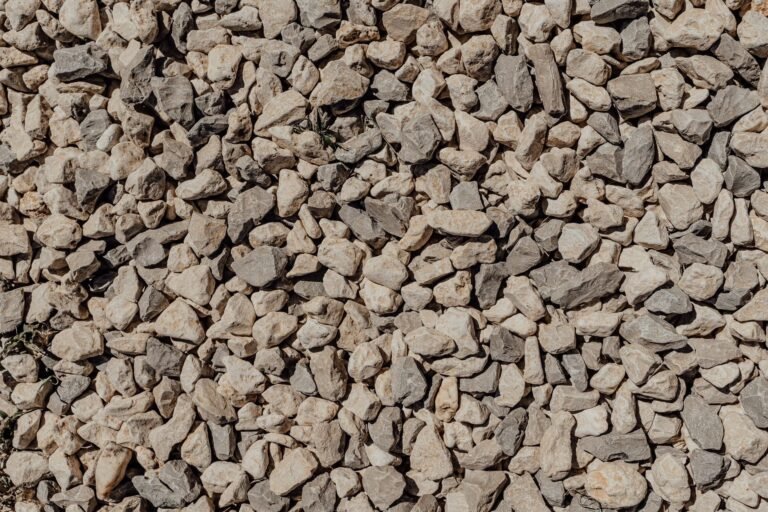

Best Gravel for Driveway: The Stone That Stays Put Under Your Tires
Your driveway should not turn into ruts every time it rains, and it should not scatter stone across your lawn every time you reverse out of it. The wrong gravel does exactly that, because small round stones roll, sink, and wash away under tires no matter how neatly you rake them. The right gravel locks together, drains water downward, and spreads the weight of your car across a firm base instead of letting it punch into soft soil. This guide gives you that answer in plain terms, with the exact stone sizes for each layer, so you can order with confidence and stop paying for the same repair twice.
If you only remember one sentence from this page, remember this: the best gravel for driveway use is not a single product, it is a system of angular crushed stone laid in layers over a compacted base. A strong base layer carries the load, a middle layer spreads it, and a top layer gives you grip and drainage without rolling underfoot. Skipping any layer is the most common reason a new driveway fails within a year, and adding a thicker top layer never fixes a weak base. Spend your money underground first, and the surface will largely take care of itself.
The Quick Answer: What Is the Best Gravel for a Driveway?
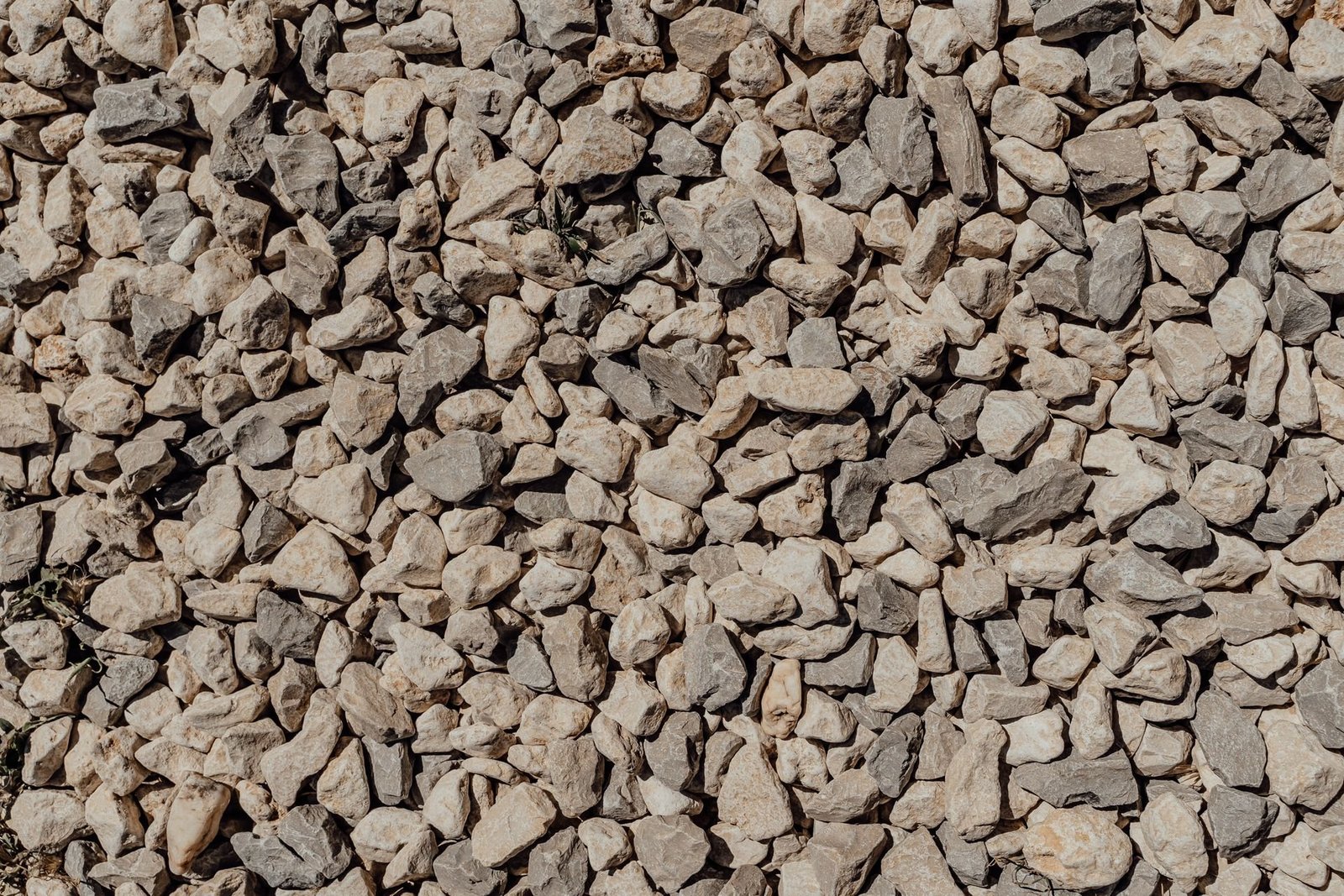
For most homes, the best driveway gravel is a three-layer system with crusher run or large crushed stone at the bottom, #57 stone in the middle and on top, and a firm crown that sheds water to the sides. This combination gives you angular interlock, which means the sharp edges of crushed stone wedge against each other instead of rolling like marbles. It also drains well, because water can pass through the gaps between stones instead of pooling on the surface and softening the ground below. If your ground is muddy or soft, add geotextile fabric under the base layer to stop stone from sinking into the soil.
If you want the single best stone for driveway surfaces, choose #57 stone, which is a clean crushed stone of about three quarters of an inch. It is large enough to resist washing away, small enough to drive on comfortably, and angular enough to lock in place under regular car traffic. For the base layer, crusher run is the better pick, because it contains a mix of crushed stone and fine particles that compact into a dense, almost pavement-like platform. Together, these two materials answer the question of what gravel is best for a driveway for most houses, most soils, and most budgets.
Why Shape Matters More Than Color
Angular stone is the whole secret of a stable driveway, and it is the reason crushed stone beats river rock and pea gravel for traffic areas. When angular stones are compacted, their flat faces and sharp corners grip each other, and that grip is what engineers call angular interlock. Rounded stones have no corners to grip with, so every tire pass pushes them sideways, and every rainstorm carries a few more toward the edges. Color, by contrast, changes nothing about performance, so pick a color you like only after you have picked the right shape and size.
This is also why the best rock for driveway traffic is almost always crushed rather than natural and rounded. Crushed granite, crushed limestone, and crushed basalt all work well, provided the pieces are angular and the size suits the layer they sit in. The quarry process matters here too, because stone that is crushed and screened to a consistent size compacts more evenly than unsorted pit run. Ask your supplier whether the stone is crushed and screened, and avoid any load that looks like a random mix of dust, boulders, and rounded pebbles.
The Three-Layer System, Explained Layer by Layer
The three-layer system is the standard build for a driveway that lasts, and each layer has a different job that no other layer can do for it. The bottom layer is the foundation, and it uses the largest stone to bridge soft spots and spread vehicle weight over a wide area. The middle layer is the transition, and it stops the smaller top stone from disappearing into the gaps of the large base stone. The top layer is the driving surface, and it must balance grip, comfort, drainage, and looks in a thin band of stone you actually see and drive on.
Total depth for a normal residential driveway should be about 8 to 12 inches of stone once compacted, with heavier vehicles and softer soils pushing you toward the deeper end. Building in thinner lifts and compacting each one is far more important than the exact total, because loose stone that was never compacted will settle in ruts no matter how thick it looks on delivery day. If you are working out how many yards and tons each layer needs, run your length, width, and depth through a gravel calculator before you order, since guessing usually means either a second delivery fee or a pile of surplus stone on your lawn.
The Base Layer: Crusher Run and #3/#4 Base Stone
Crusher run is the best base layer for most driveways, and it earns that title because it is not one size of stone but a graded mix. It contains crushed stone from about three quarters of an inch down to fine dust, and those fines fill the gaps between larger pieces when the layer is compacted. The result is a dense, stable platform that resists rutting, sheds water downward, and gives the layers above something solid to sit on. It is also the material sold in many regions as quarry process, often shortened to QP, so if your local yard lists QP instead of crusher run, you are usually looking at the same idea.
Where the ground is very soft, or where heavy trucks will use the drive, start with #3/#4 base stone beneath the crusher run. These are large crushed stones of roughly 1 to 2 inches, and their size lets them bridge soft soil and create drainage channels that smaller stone cannot. Lay them first, compact them firmly, and then add crusher run on top to fill and level the surface before the middle layer goes down. This extra step costs more on delivery day, but it is far cheaper than digging out a failed driveway and starting again.
The Top Layer: #57 Stone for Grip, Drainage, and Comfort
#57 stone is the best gravel for driveways as a top layer, because its size sits in the sweet spot between stability and comfort. At about three quarters of an inch, it is too large to wash away easily, too angular to roll under tires, and small enough that driving over it feels firm rather than rough. It is also a clean stone, which means it has few fines, so water drains through it freely instead of sitting on the surface and turning the top layer to mud. That drainage is a genuine advantage in wet climates and in freeze and thaw regions, where trapped water expands and heaves a sealed surface.
The one weakness of #57 stone is that it does not bind into a hard crust the way crusher run does, so it needs a compacted base beneath it and edging at the sides. Without those two supports, even the best stone for driveway use will migrate outward over time, especially at turning points and on slopes. Keep the top layer to about 2 to 3 inches thick, rake it level, and compact it lightly rather than crushing it to dust. A thin, well-supported top layer will outperform a thick, unsupported one every time.
#411 Stone: The All Rounder Worth Knowing
#411 stone is a graded crushed limestone mix that contains stone down to fine dust, similar to crusher run, and it is popular where limestone quarries dominate local supply. It compacts into a firm, smooth surface that many homeowners love, because it feels more finished than clean #57 stone and holds its shape well under cars. It also works as a middle layer or as a top layer on lighter traffic drives, where its fines help it bind together instead of scattering. If your supplier recommends #411 stone for your area, take that seriously, because local stone usually costs less to deliver and performs well in local soils.
The trade-off with #411 stone is drainage, since its fine content slows water movement compared with clean #57 stone. On flat ground with poor natural drainage, that can mean a surface that stays damp longer after rain, so a crown and drainage plan matters even more with this material. On well-drained ground or gentle slopes, #411 stone is an excellent choice and often the best value in limestone regions. Think of it as the comfort option: smoother and firmer underfoot, but less free-draining than a clean top stone.
Quarry Process Stone and How to Order It Without Confusion
Quarry process stone, often written as QP, is a crushed and graded aggregate that mixes several stone sizes with dust, and it is designed to compact tightly. It is the same family as crusher run, and the name difference usually comes down to region and quarry rather than a different engineering idea. When you order it, ask for the size range, the rock type, and whether it is washed or unwashed, because those three answers tell you how it will compact and drain. A yard that can answer clearly is usually a yard you can trust with a large delivery.
Ordering by color or by a vague name like driveway gravel is where most mistakes happen, so always order by the size code and layer. Tell the supplier which layer each load is for, how many tons you need, and where the truck should place it, and confirm the price per ton including delivery before the truck rolls. If two suppliers quote different names for what sounds like the same stone, ask both for the size range and fines content, and pick the one whose answer matches the layer you are building. For a full breakdown of sizes, layers, and quantities, our gravel driveway guide walks through the same system step by step.
The Best Gravel for Driveway That Does Not Move
If your main complaint is stone that migrates, the best gravel for driveway that doesn’t move is angular crushed stone with a compacted crusher run base, solid edging, and a crown that keeps water moving. Movement has four causes, and stone choice alone fixes only one of them, so check all four before blaming the product. Rounded stone rolls, a missing base lets stone sink, missing edging lets stone spread sideways, and flat or sunken grading lets water carry stone downhill. Fix the base, the edging, and the grading, and even a standard #57 stone top will stay where you put it.
For slopes, add two more defenses that cost little and save much frustration over the years. First, keep the slope gentle where you can, and use angular stone rather than any rounded product, since gravity punishes round stone hardest. Second, consider gravel stabilization grids on steeper sections, because the grid cells hold stone in place while still letting water drain through. A grid is not required on flat ground, but on a slope it is often the difference between raking stone back uphill every month and forgetting about the driveway entirely.
Choosing by Situation: Traffic, Soil, Slope, and Budget
Heavy traffic changes the answer, because delivery trucks, RVs, and work vehicles punish a light build far faster than a family car does. For heavy use, deepen the base layer, use #3/#4 base stone under crusher run, and keep #57 stone or #411 stone as the top layer only. The extra base depth spreads each axle load over more stone, which is what prevents the twin ruts that appear exactly where tires always travel. Skimping on base depth to save one load of stone is a false economy, because ruts invite water, and water invites more ruts.
Muddy or clay ground needs a different priority, and that priority is separation and drainage before anything else. Lay geotextile fabric over the compacted subgrade, then build your base on top of it, so stone cannot sink into mud and mud cannot pump up into stone. Add a crown and drainage plan at the same time, with water directed away from the house and off the driveway edges rather than allowed to pond in the middle. A muddy driveway is rarely a stone problem alone, and it is almost always a drainage and base problem wearing a stone disguise.
Budget buyers often ask for the best chippings for driveway use at the lowest price, and the honest answer is that the cheapest stone per ton is rarely the cheapest driveway over ten years. Recycled crushed concrete can be a genuine bargain in many areas, because it compacts well and costs less than virgin stone, provided it is clean and properly sized. Pea gravel looks cheap per ton too, but it needs constant raking, edging, and topping up, so its lifetime cost often overtakes crushed stone within a few seasons. Spend on the base, choose crushed stone for the surface, and save money by ordering the right quantity once instead of paying for repeat top-ups.
Pea Gravel: Pretty, Comfortable, and Wrong for Traffic
Pea gravel is not for traffic, and that warning deserves to be blunt, because pea gravel driveways photograph beautifully and fail predictably. Its small, smooth, rounded pebbles feel lovely under bare feet and look charming beside a cottage, but they cannot interlock, so tires push them aside and create ruts on the first wet week. They also wash away in heavy rain, get tracked into the house and the car, and make snow clearing and wheelchair use far harder than a firm crushed surface. Homeowners who love the look can still use pea gravel as a thin decorative top coat over a compacted crushed base, but only with strong edging and a promise to rake it often.
The same warning applies to river rock as a driving surface, even in larger sizes, because smooth and rounded stone behaves the same way under load. River rock belongs in garden beds, drainage channels, and decorative borders, where its color and shape are assets and no tire ever tests its grip. If a supplier suggests river rock or pea gravel as the best rock driveway material for daily car use, that advice should make you pause and ask about angular crushed alternatives. For paths and patios, pea gravel is a fine choice, and our gravel driveway calculator can still help you size those lighter projects accurately.
Crown and Drainage: The Invisible Half of the Job
Crown and drainage decide whether your driveway survives its first winter, yet they are invisible in a delivery quote and easy to skip. A crown is a gentle high point down the center of the driveway, usually about 2 percent fall to each side, so rain runs off sideways instead of ponding in tire tracks. Without a crown, water sits, softens the base, and turns small dips into potholes that grow with every storm. Build the crown into the base layers, not just the top dressing, because a thin top layer cannot hold a shape the base does not share.
Drainage also means thinking about where the water goes after it leaves the driveway surface. Direct it away from the house, away from the garage threshold, and toward lawn, swale, or drain rather than toward a neighbor or a low corner. On clay soil, add edge drains or a shallow ditch where water naturally collects, and never let downspouts discharge directly onto the gravel surface. A driveway that drains well can last decades with simple raking and occasional top-ups, while a driveway that ponds will fail no matter how expensive the stone was.
Cost, Maintenance, and How Long Each Choice Lasts
Crushed stone driveways usually cost less than concrete or asphalt to install, but the real comparison is lifetime cost, not delivery day cost. A well-built crushed stone driveway with a proper base can last 15 to 25 years of structural life, with only surface top-ups every few years and raking a few times a year. A poorly built one, with thin stone over bare soil, can need major repair within two years, which wipes out any saving from the cheaper install. When you compare quotes, compare base depth, layer materials, fabric, edging, and drainage, not just the price per ton.
Maintenance is simple if the build is right, and it follows a short routine that any homeowner can manage. Rake the surface level a few times a year, fill low spots before they become ruts, keep edges clear of grass and soil, and top up the surface layer when it thins below about 2 inches. Pull weeds early, because roots loosen stone and trap moisture, and clear leaves in autumn so they do not rot into the surface and block drainage. A half hour of raking after a storm is worth far more than a full rebuild after a neglected season.
What Competitors Miss: Order the System, Not a Pile
Most buying guides list stone types and stop there, which leaves the reader with a pile of names and no build order. This page takes the opposite approach, because a driveway is a structure with layers that depend on each other, and the order matters as much as the material. Start with soil and drainage, then fabric where needed, then base stone, then crusher run, then the middle layer, then the top stone. Confirm each layer is compacted before the next load arrives, and keep delivery trucks off finished layers wherever possible.
That system thinking also answers the search for the best gravel for driveways in different regions, because local names change but the physics does not. In the United States, ask for crusher run, #57 stone, and #411 stone by those codes, and in the United Kingdom, ask for MOT Type 1 as the base equivalent and 20 millimeter angular gravel as the surface. The codes differ, but the job of each layer is identical, and a supplier who understands layers will understand your project instantly. Bring this page to the yard, point to the layer you are ordering, and you will avoid the most common and most expensive misunderstanding in the whole job.
Frequently Asked Questions
What is the best gravel for a driveway?
The best gravel for a driveway is a three-layer system of angular crushed stone, with crusher run or #3/#4 stone as the base and #57 stone as the top layer. This system locks together under tires, drains water downward, and spreads vehicle weight so the surface does not rut quickly. A single stone type laid thinly over bare soil cannot match that performance, no matter how attractive it looks on delivery day. If your soil is soft or muddy, add geotextile fabric under the base to keep stone and soil separated.
What gravel is best for a driveway on a slope?
Angular crushed stone is the best choice for a slope, because its sharp edges interlock and resist the downhill pull of gravity, rain, and braking. Avoid pea gravel and river rock on slopes entirely, since rounded stone rolls downhill and leaves bare patches at the top and piles at the bottom. Add strong edging on both sides, keep the crown working so water leaves sideways, and consider stabilization grids on steeper sections. A slope is the one place where cutting corners on base depth and edging will show up fastest.
How deep should gravel be for a driveway?
A normal residential driveway needs about 8 to 12 inches of compacted stone in total, split across the base, middle, and top layers. Heavy vehicles, soft clay, and poor drainage all push you toward the deeper end of that range, while a light-use drive on firm, well-drained soil can work near the shallower end. Building in lifts of about 4 inches and compacting each lift matters more than hitting an exact total depth on paper. If you are unsure, go deeper in the base rather than thicker in the top layer.
Can I use pea gravel for a driveway?
You can use pea gravel for a light-use driveway, but you should expect more raking, more topping up, and more migration than with crushed stone. Pea gravel works best as a decorative top coat over a compacted crushed base, with strong edging on all sides to contain it. It is a poor choice for slopes, heavy vehicles, and homes where snow clearing or wheelchair access matters. For daily car traffic, #57 stone or #411 stone will cost less in time and frustration over the life of the driveway.
What is the best stone for driveway use in muddy ground?
The best stone for driveway use in muddy ground is a deep base of #3/#4 stone and crusher run over geotextile fabric, finished with #57 stone on top. The fabric stops stone from sinking into mud, the large base stone bridges soft spots, and the crusher run compacts into a firm platform that carries the top layer. Drainage matters just as much as stone here, so crown the surface and move water away from the drive. Without fabric and drainage, even the best stone will slowly disappear into the mud.
Is crusher run or #57 stone better for a driveway?
Crusher run is better as a base layer, and #57 stone is better as a top layer, so the real answer is to use both in their proper places. Crusher run compacts into a dense, bound platform because its fines fill the gaps between stones, while #57 stone drains freely and gives a firm, comfortable driving surface. Using only crusher run on top can feel dusty and can hold water longer, while using only #57 stone without a base will rut and sink. Together, they cover each other’s weaknesses and make the strongest ordinary driveway build.
How do I stop gravel from moving and spreading?
Stop gravel movement by fixing all four causes at once: use angular crushed stone, build a compacted base, install solid edging, and shape a crown that drains water sideways. Rounded stone will keep rolling no matter how often you rake it, so replace the surface material if migration never stops. Check turning areas and slope sections first, since those are where tires push stone hardest and gravity helps it along. Stabilization grids are a strong extra step for slopes and turning circles that suffer constant displacement.
How often should I top up a gravel driveway?
Most well-built gravel driveways need a surface top-up every 2 to 3 years, with raking and low-spot filling a few times a year in between. High-traffic areas, turning points, and slope sections wear faster, so check those spots each spring and after heavy storms. Top up when the surface layer thins below about 2 inches or when base stone starts showing through. Regular small top-ups are far cheaper than waiting until ruts expose the base and force a major repair.
Final Recommendation: The Build to Ask For
Ask your supplier for this build, in this order, and you will have the best driveway gravel system most homes need. Start with compacted soil and geotextile fabric where the ground is soft, then lay #3/#4 base stone where heavy loads or soft soil demand it. Add crusher run as the main base layer, compact it in lifts, and finish with 2 to 3 inches of #57 stone or #411 stone as the driving surface. Shape a crown into every layer, install edging before the top layer goes down, and direct water away from the house.
That build is not the most exotic option, and it is not the cheapest pile of stone a yard can sell you, but it is the one that survives rain, frost, and daily traffic with the least fuss. It also makes future maintenance simple, because topping up a sound structure is a morning job rather than a rebuild. If your situation is unusual, such as a very steep slope, very heavy vehicles, or extremely soft ground, deepen the base and add grids or drains before you change the surface stone. The surface is the part you see, but the base is the part that decides how long you enjoy it.