
Crushed Stone vs Gravel: Which Is Better for Your Project?
You stand in the stone yard looking at two piles that seem almost identical, yet one will lock into a driveway that lasts for years and the other will wander into your lawn every time it rains. The difference between crushed stone vs gravel is not a marketing label, it is a physical difference in how each stone was formed, and that difference decides whether your surface stays put or shifts. Pick the wrong one and you pay twice, once for the material and again for the regrading, top ups, and edging needed to fix a surface that was never suited to the job. This guide compares crushed stone and gravel head to head on formation, shape, compaction, drainage, cost, and maintenance, so you can choose with confidence for driveways, paths, drainage, and garden beds.
The short answer is that crushed stone wins wherever stability matters, while natural gravel wins wherever looks and drainage matter most. Crushed stone is mechanically broken rock with angular edges that interlock under compaction, so it forms a firm, load bearing surface for driveways, bases, and foundations. Gravel is naturally rounded stone shaped by water over thousands of years, so it drains freely, looks softer and more natural, and feels comfortable underfoot, but it rolls and migrates under traffic. Many projects use both, with crushed stone as the structural base and gravel as the decorative top layer, and that combination often beats either material used alone.
What Is Crushed Stone?
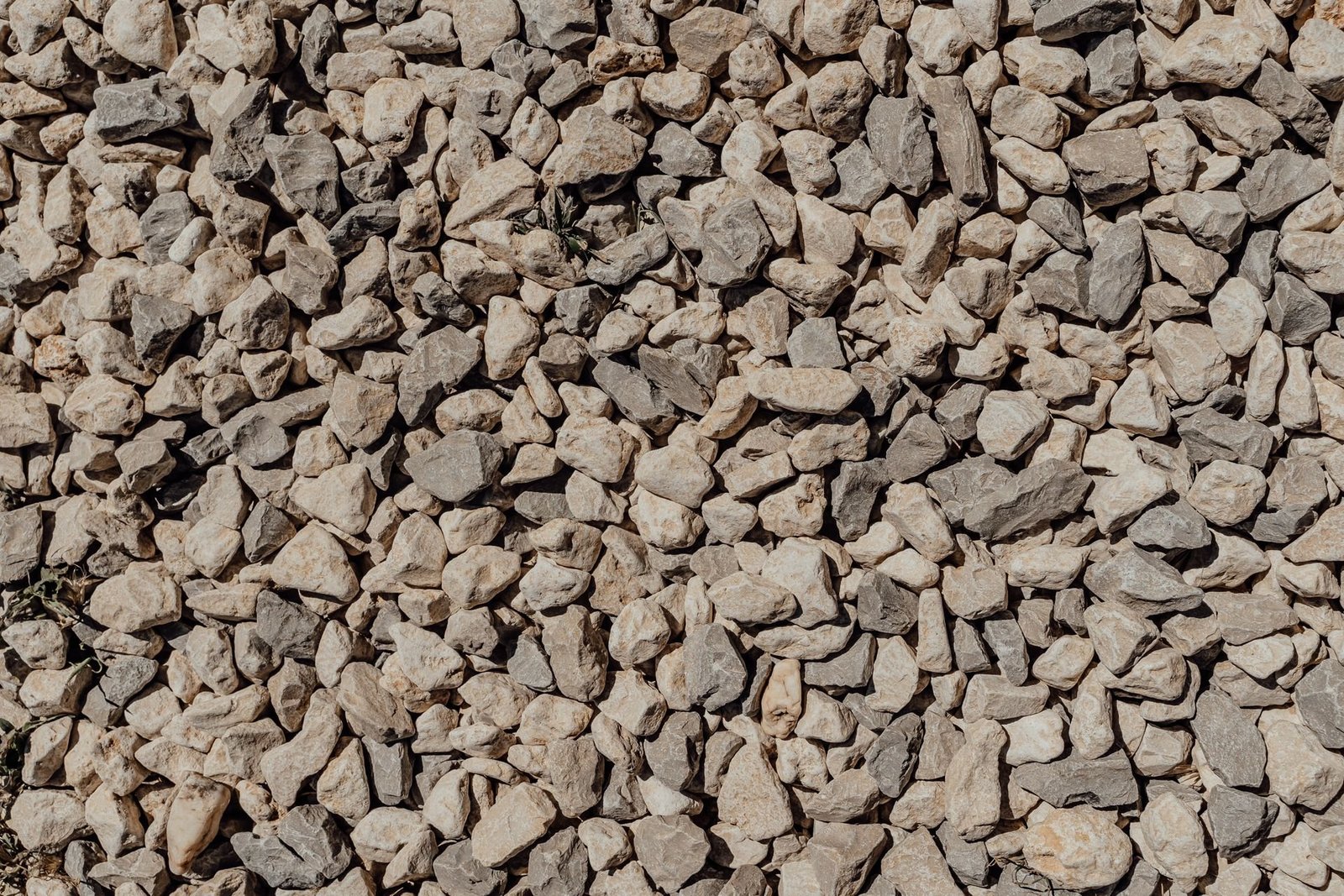
Crushed stone is made by feeding large quarried rock through industrial crushers that break it into smaller, angular pieces, which are then screened into precise size grades. Common parent rocks are limestone, granite, and trap rock, and each brings its own colour and hardness, with limestone the most widely used for driveways and bases. The crushing process also produces stone dust and fine particles, and in products like crusher run those fines are deliberately kept in the mix. Size grades follow the ASTM system, so #57 stone, #67 stone, #8 stone, and #411 crusher run each describe a known range of particle sizes rather than a random pile of rubble.
The defining feature of crushed stone is its angular shape, because flat faces and sharp edges catch against neighbouring pieces and lock together when compacted. That interlocking is what lets a properly compacted crushed stone driveway approach the firmness of a paved surface without any cement, and it is why crushed stone resists rutting under car tyres and heavy loads. The trade off is appearance and comfort, since crushed stone looks more industrial, feels rough under bare feet, and usually comes in a narrower range of colours, mostly greys and whites. For a full breakdown of the grades, see our gravel sizes guide, which explains what each numbered stone is actually used for.
What Is Natural Gravel?
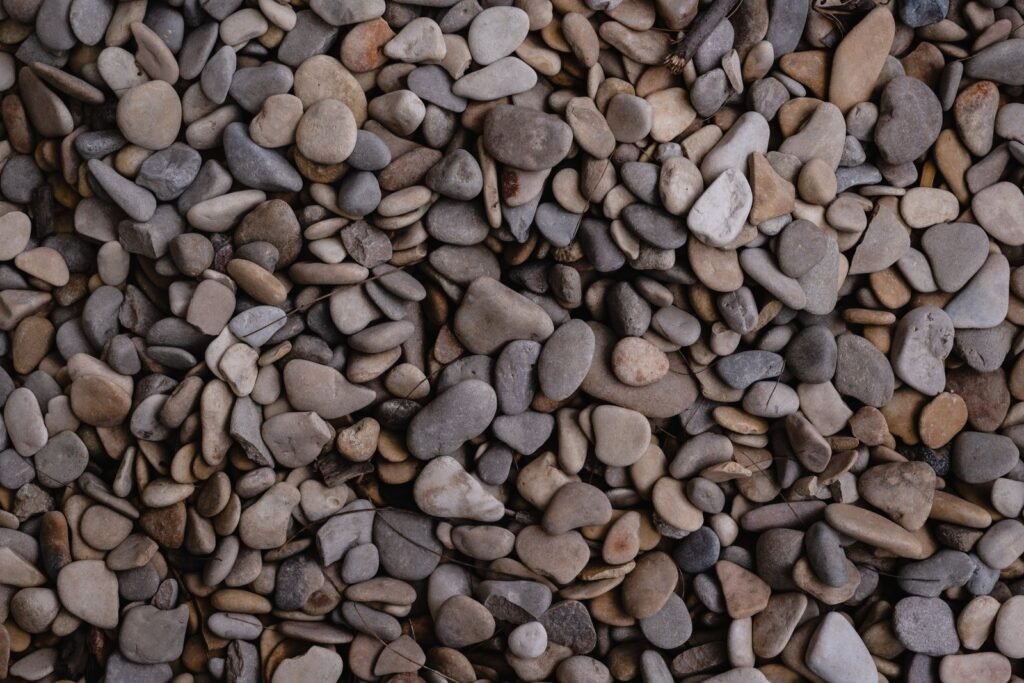
Natural gravel forms when weathering and water erosion break rock down over thousands of years and tumble the fragments smooth in riverbeds, streams, and glacial deposits. The result is rounded or semi rounded stone with a smooth surface, and the colour variety is far wider than crushed stone because gravel can come from many different parent rocks in a single deposit. Common types include pea gravel at about 3/8 inch, river rock from 1 to 3 inches and larger, creek rock, bank run gravel, and decorative stones like marble chips. Because nature did the shaping, gravel sizes are less uniform than crushed stone grades, and a single load can contain a broader mix of shapes and colours.
That rounded shape is both the charm and the weakness of gravel, because smooth stones roll past each other instead of locking together. On a garden path or in a flower bed that movement is harmless and even pleasant, since the surface stays soft, drains well, and looks natural against planting. Under car tyres or heavy foot traffic, however, the same movement becomes migration, ruts, and thin spots that need regular raking and topping up. Gravel is also kinder to bare feet, paws, and bare skin than crushed stone, which is one reason it dominates playgrounds, patios, and decorative beds even where crushed stone would be structurally stronger.
Crushed Stone vs Gravel at a Glance
The table below sums up the comparison, and the sections after it explain each row in practical terms for real projects. Use it as a quick reference when you are standing in the stone yard, and read on for the detail behind any row that matters for your job.
| Feature | Crushed Stone | Natural Gravel |
|---|---|---|
| Formation | Mechanically crushed in a quarry | Naturally eroded and water tumbled |
| Shape | Angular, sharp edges | Rounded, smooth surfaces |
| Interlocking and compaction | Superior, locks together tightly | Low, stones roll and shift |
| Drainage and void space | Good, best with washed or clean grades | Excellent, larger voids between rounded stones |
| Size consistency | Precise ASTM grades | Varies by source and deposit |
| Cost | Higher per ton due to processing | Usually lower, less processing |
| Maintenance | Minimal after proper compaction | Regular raking, releveling, and top ups |
| Best uses | Driveways, bases, foundations, roads | Landscaping, paths, beds, drainage features |
| Appearance | Uniform, neutral greys and whites | Varied colours, natural look |
| Comfort underfoot | Rough, hard on bare feet | Smooth, comfortable to walk on |
Formation: How Each Material Is Made
Formation is the root cause of every other difference in this guide, so it is worth understanding before you compare prices. Crushed stone starts as solid rock blasted from a quarry face, then passes through jaw crushers, cone crushers, and screens that sort it into exact size bands. That controlled process is why a load of #57 stone from one quarry closely matches a load from another, and why engineers can specify crushed stone for concrete, asphalt, and structural fill with confidence. The energy and machinery involved also explain the price, because crushing, screening, and handling all add cost before the stone ever reaches your driveway.
Gravel, by contrast, is a product of geology rather than manufacturing, formed as rivers and glaciers wear rock down and polish the fragments over immense timescales. Bank run gravel is dug straight from a natural deposit with minimal processing, while washed gravel has been rinsed to remove silt and clay, but neither has been deliberately shaped by a machine. That natural origin gives gravel its colour range and its soft look, but it also means quality varies more from load to load and from region to region. A deposit rich in hard granite pebbles will outperform a deposit of soft sandstone gravel, so ask your supplier what rock your gravel actually comes from.
Shape, Interlocking, and Compaction
If you remember one section of this guide, make it this one, because shape decides whether a surface stays where you put it. Angular crushed stone pieces wedge against each other, and when you compact them in thin layers with a plate compactor, the fines fill the remaining gaps and the layer sets into a dense, stable slab. That mechanical interlock distributes weight across the surface, resists rutting, and holds its shape through freeze and thaw cycles far better than loose stone. This is why crushed stone is the standard choice for driveway bases, paver bases, road base, and any surface that must carry vehicles or structures.
Rounded gravel behaves like a tray of marbles, which is a vivid but accurate image for what happens under load. Each stone can roll over its neighbours, so tyres push gravel aside into ridges, foot traffic spreads it beyond edging, and rain washes smaller pieces downhill. Stabilisation grids, strong edging, and a compacted crushed stone base underneath can tame this movement, but they add cost and still will not make gravel perform like crushed stone under traffic. For a walkway or a decorative bed, that movement hardly matters, and the soft, natural feel of gravel is actually an advantage, so the right question is never which material is better in general, but which material is better for this specific surface.
Drainage: Where Gravel Fights Back
Drainage is the one performance contest where natural gravel often beats crushed stone, and it matters for French drains, dry creek beds, and any area where water must move freely. Rounded stones leave larger void spaces between pieces, and those voids act as channels that let water flow through quickly instead of pooling on the surface. Clean, washed gravel is especially effective here, because silt and clay have been removed and cannot clog the gaps over time. This is why French drain builders specify washed #57 stone or clean river rock around perforated pipe, and why pea gravel works well in drainage trenches even though it fails as a driveway surface.
Crushed stone drains well too, but with an important qualification, because unwashed crushed stone contains stone dust and fines that fill the voids and slow water movement. For drainage work, specify washed or clean crushed stone grades, and avoid crusher run, since its fines are designed to lock together and seal the layer, which is the opposite of what a drain needs. The same fines that make crusher run a superb driveway base make it a poor French drain fill, so matching the grade to the job matters more than choosing a brand name. Our French drain material choices are covered in more depth in the drainage section of our types of gravel guide.

Crushed Stone vs Gravel for Driveways
For driveways, the verdict is clear, and it is the reason most driveway specialists reach for crushed stone before anything else. A three layer crushed stone driveway, with large #3 stone at the base, #57 stone in the middle, and crusher run or #411 on top, compacts into a surface that handles daily traffic, resists ruts, and needs only occasional top dressing. Gravel driveways built from rounded stone alone tend to develop ruts, migrate into the lawn, and wash out in heavy rain, and they need frequent regrading to stay usable. Pea gravel is the worst driveway choice of all, because its small, smooth pebbles sink, scatter, and make walking, pushing strollers, and rolling wheelchairs genuinely difficult.
That does not mean gravel has no place in a driveway at all, because many attractive driveways use crushed stone for structure and a thin decorative gravel layer on top. The crushed layers carry the load, while the top dressing provides colour and texture, and because the top layer is thin and contained by edging, its movement is manageable. If you take this route, keep the decorative layer shallow, use strong edging, and accept that it will need periodic raking and replenishment. For the full build sequence, costs, and layer depths, see our guides to the gravel driveway and best gravel for driveway, which walk through the three layer system step by step.
Cost Comparison: Purchase Price vs Lifetime Cost
Crushed stone usually costs more per ton up front, because quarrying, crushing, and screening add processing cost that natural gravel does not carry. Typical published ranges put crushed stone around 30 to 45 dollars per ton and pea gravel around 25 to 35 dollars per ton, though local availability moves both figures considerably. Decorative gravels like river rock and marble chips can cost far more than either, so a simple crushed versus natural price comparison only holds for basic, locally available materials. Delivery fees are similar for both, and the per ton delivery cost falls sharply on full 10 to 15 ton loads, so ordering your full quantity at once usually saves more than haggling over a few dollars per ton.
Lifetime cost tells a different story from purchase price, and it is where crushed stone usually wins for high traffic surfaces. A properly built crushed stone driveway can serve 8 to 12 years or more with minimal maintenance, while a rounded gravel driveway in the same traffic may need regrading and top ups every few years, and those repeat purchases erase the initial saving. For a garden bed or a path, the calculation reverses, because gravel needs little structural work, looks better for longer, and its occasional top up is cheap and quick. Before you decide on price alone, check current local figures in our gravel prices guide and add a realistic maintenance allowance for each material over five years.
Weight also affects cost when you buy by the ton, because denser crushed stone gives you fewer cubic yards per ton than lighter gravel. A ton of standard gravel is about 0.71 cubic yards, and our guide on how much does a yard of gravel weigh shows the conversion for each material type. If you are comparing a per ton quote with a per yard quote, convert both to the same unit first, or the cheaper looking quote may simply be the heavier stone. This single check prevents more ordering disputes than any other step in the buying process.
Maintenance, Durability, and Looks
Maintenance is where the two materials diverge most visibly after the first year, and it is worth weighing honestly before you choose. Crushed stone, once compacted with proper edging and drainage, needs little more than occasional top dressing every few years to replace fines lost to traffic and weather. Its dense surface also suppresses weeds better than loose gravel, because tightly packed stone blocks light and leaves little growing space. The main enemies of a crushed stone surface are poor drainage and neglected edging, both of which let water and traffic undo the compaction that gives the material its strength.
Gravel needs regular attention, because rounded stones migrate, thin spots appear, and weeds find the gaps between loose pieces more easily. Plan on raking paths and beds back into shape through the season, topping up thin areas once or twice a year, and using landscape fabric underneath to slow weed growth while preserving drainage. What gravel gives back for that effort is appearance, with a wider palette of colours, a softer natural texture, and a surface that suits cottage gardens, water features, and rustic paths far better than industrial looking crushed stone. If you value looks over longevity in a low traffic area, gravel is the honest winner, and its maintenance is light work rather than heavy repair.
Which Should You Choose? A Simple Decision Guide
Choose crushed stone when the surface must carry weight, stay level, or support a structure, and choose gravel when the surface is decorative, drained, or walked on barefoot. That single rule resolves most real projects without a spreadsheet, and the checklist below applies it to the jobs homeowners ask about most. When a project mixes both needs, use crushed stone underneath and gravel on top, which is how professional landscapers get structural performance and natural looks from the same footprint.
- Choose crushed stone for: driveway bases and surfaces with regular vehicle traffic
- foundation preparation and structural fill
- base layers beneath pavers, patios, and hardscaping
- road construction and heavy load areas
- any surface where rutting or shifting would be a failure
- Choose gravel for: decorative landscaping, flower beds, and garden borders
- walking paths and garden trails where comfort matters
- French drains, dry creek beds, and drainage features
- water features and ornamental groundcover
- areas where rounded texture and varied colour are the point
There are also materials that blur the line, and knowing about them stops confusion at the stone yard. Crushed gravel is natural gravel that has been mechanically crushed, so it has some angular faces and better interlock than untouched gravel, though it is less uniform than true crushed stone. Recycled crushed concrete is another hybrid, offering angular, interlocking pieces at a lower price and with a smaller environmental footprint, and it works well for bases and driveways where appearance is secondary. If a supplier offers you crushed gravel or recycled concrete, ask how it was processed and what sizes it contains, because those two answers tell you more than the product name.
People search this comparison in several word orders, including gravel vs crushed stone, pea gravel vs crushed stone, crushed gravel vs crushed stone, and crushed stone vs pea gravel, but they all need the same practical answer. The core of that answer is the cost difference over the life of the surface, not just the price on the delivery ticket, and the driveway vs decorative use test resolves most cases on its own. Crushing stone in a quarry is what creates angular faces, while plants that crush stones for decorative use still produce a rougher product than water worn gravel, and the rounded smooth shape of natural gravel is what makes it comfortable yet mobile. Maintenance and releveling is therefore the recurring cost of gravel, while crushed stone trades a higher purchase price for a surface that mostly looks after itself.
Frequently Asked Questions
Is crushed stone the same as gravel?
No, crushed stone and gravel are different materials, even though the terms are often used loosely at stone yards. Crushed stone is mechanically broken rock with angular edges and precise size grades, while gravel is naturally rounded stone shaped by water erosion. They overlap in size and in some uses, but their shape, compaction, and performance are genuinely different.
Is crushed stone or gravel better for a driveway?
Crushed stone is better for a driveway, because its angular pieces interlock and compact into a stable surface that resists ruts and migration under vehicles. Natural gravel shifts under tyres, washes out in rain, and needs frequent regrading, and pea gravel is the poorest driveway choice of all. A thin decorative gravel layer over a crushed stone base can work, but the structure underneath should be crushed stone.
Is gravel or crushed stone better for drainage?
Natural gravel is usually better for drainage, because its rounded stones leave larger voids that let water flow freely through the layer. Clean, washed gravel is the best choice for French drains and drainage trenches, since silt has been removed and cannot clog the gaps. Crushed stone also drains well when specified as a washed, clean grade, but crusher run should be avoided for drains because its fines seal the layer.
Is crushed stone more expensive than gravel?
Crushed stone usually costs more per ton than basic natural gravel, because crushing and screening add processing cost. The gap is modest for common materials, roughly 30 to 45 dollars per ton for crushed stone against 25 to 35 dollars per ton for pea gravel, though local supply changes both figures. Over the lifetime of a driveway, crushed stone often costs less overall, because it needs far less regrading and topping up than gravel.
Can you mix crushed stone and gravel?
Yes, mixing the two is a standard professional technique, with crushed stone as the compacted structural base and gravel as the decorative surface layer. The crushed base carries the load and holds its shape, while the gravel top provides colour, texture, and comfortable footing. Keep the gravel layer shallow and contained with edging, and expect to rake and top it up periodically.
What is crushed gravel, and how is it different?
Crushed gravel is natural gravel that has been run through a crusher, so it gains some angular faces and interlocks better than untouched rounded gravel. It sits between the two materials in this guide, offering better stability than gravel but less uniformity than true crushed stone. It is a useful compromise for paths and light driveways, but for heavy traffic, fully graded crushed stone is still the stronger choice.
Does crushed stone need to be compacted?
Yes, crushed stone should be compacted in thin layers with a plate compactor to achieve the interlocking strength it is known for. Without compaction, even angular stone stays loose and will shift under load almost as readily as gravel. For decorative top layers where a loose look is wanted, compaction can be skipped, but any structural layer must be compacted to perform.
Which lasts longer, crushed stone or gravel?
Crushed stone lasts longer in high traffic and structural uses, with a properly built driveway serving 8 to 12 years or more with minimal work. Gravel lasts well in low traffic decorative uses, where its movement does not matter, but it needs regular top ups and releveling to keep looking its best. Lifespan depends less on the stone itself than on matching the stone to the traffic and drainage of the site.
Is pea gravel a type of crushed stone?
No, pea gravel is a natural gravel, not a crushed stone, because its small, smooth, rounded pebbles were shaped by water rather than by a crusher. That rounded shape is why pea gravel feels comfortable underfoot and drains well, and also why it shifts so easily and fails as a driveway surface. If you want the look of pea gravel with more stability, use it as a thin top layer over a compacted crushed stone base.
The Bottom Line
Crushed stone vs gravel is not a contest with one winner, it is a choice between stability and softness, and the right answer depends on what the surface must do. Choose crushed stone for driveways, bases, and anything that carries weight, choose gravel for beds, paths, and drains where looks and water flow matter most, and combine them when a project needs both. If you only remember one test, press the question of traffic: if cars or heavy loads will cross it, build it from crushed stone, and if eyes and feet are its main users, gravel will serve you beautifully. Check the weight and cost conversions in our companion guides before you order, and you will buy the right stone, in the right quantity, the first time.