Gravel Driveway Cost: What You Will Actually Pay in 2026
A gravel driveway is one of the most affordable ways to build a durable, good-looking entrance to a home, but the final bill depends on much more than the price of the stone. Size, depth, stone type, site preparation, delivery distance, and labor can move a quote by thousands of dollars. This guide explains what you will actually pay in 2026, with worked examples, so you can compare quotes fairly and avoid paying twice for the same work. Before you order, use the free gravel calculator to estimate how many tons or cubic yards your driveway will need.
The Short Answer: What a Gravel Driveway Costs in 2026
For a standard residential driveway, most homeowners pay between $1,200 and $4,500 for materials and a straightforward installation, while a full new build with excavation, a proper base, edging, and drainage can run $4,000 to $12,000 or more. A simple top-up of an existing driveway is usually the cheapest job, often $400 to $1,500. The range is wide because no two driveways share the same size, ground conditions, or stone.
Gravel Driveway Cost by Size
Size is the single biggest cost driver. A longer or wider driveway needs more stone, more base material, and more labor. The table below uses typical 4-inch depths and mid-range crushed stone prices; your quote will vary with local stone prices and delivery distance.
| Driveway size | Approximate stone needed | Typical total cost |
|---|---|---|
| 10 x 20 ft (single-car, short) | 2-3 tons | $600-$1,800 |
| 12 x 50 ft (standard) | 7-9 tons | $1,500-$4,500 |
| 20 x 50 ft (two-car) | 12-15 tons | $2,500-$7,000 |
| 20 x 100 ft (long drive) | 24-30 tons | $5,000-$12,000 |
Cost by Stone Type
Crushed stone locks together and stays put under tires, which is why it is the usual choice for a driving surface. Rounded pea gravel and river rock look attractive but shift more easily, so they are better for paths and decorative areas than for a main driveway. See our guide to the best gravel for driveway surfaces before you choose a stone on price alone.
| Stone type | Typical material price per ton | Best for |
|---|---|---|
| Crushed stone / crusher run | $35-$65 | Driveways, base and top layers |
| #57 stone | $40-$70 | Drainage and driveway top layer |
| Pea gravel | $45-$85 | Paths and decorative areas |
| River rock | $60-$120 | Landscaping and drainage features |
What a Standard 12 x 50 ft Driveway Costs
A 12 x 50 ft driveway covers 600 square feet. At a 4-inch depth, that is about 7.4 cubic yards, or roughly 10 tons of crushed stone, allowing for compaction. A realistic budget looks like this: stone delivered, $700-$1,100; a compacted base layer if the ground needs it, $600-$1,500; grading and labor, $800-$2,000; and edging or drainage work, $0-$900. In total, expect $2,100-$5,500 for a well-built standard driveway, with simple top-ups at the low end and full new builds at the high end.
What Drives Quotes Up
Excavation is the most common surprise. Removing old concrete, tree roots, or soft soil, hauling spoil away, and bringing in a sub-base can add $1,000 or more. Poor drainage, a steep slope, limited truck access, and long delivery distances also raise the price. Always ask whether a quote includes excavation, base material, compaction, edging, delivery, and cleanup, and get each item priced separately so quotes can be compared line by line.
How to Avoid Paying Twice
The cheapest driveway is rarely the cheapest over five years. A thin layer of stone over unprepared soil will rut, wash out, and need topping up every year. Paying once for proper grading, a compacted base, and the right depth usually costs less than repeated repairs. For a full walkthrough of the build itself, read our gravel driveway guide, and measure carefully with the gravel calculator before you order so you do not pay for a second delivery.
Frequently Asked Questions
How much does a gravel driveway cost per square foot?
Installed costs typically fall between $1.50 and $4.50 per square foot, depending on stone type, depth, and site preparation. Materials alone are usually $0.50 to $1.50 per square foot.
How much gravel do I need for a 12 x 50 ft driveway?
At 4 inches deep, a 12 x 50 ft driveway needs about 7.4 cubic yards, or roughly 10 tons. Always add 5 to 10 percent extra for compaction and uneven ground, and confirm the figure with a gravel calculator.
Is a gravel driveway cheaper than concrete or asphalt?
Yes, in most cases. Gravel is usually far cheaper to install than concrete or asphalt, although it needs periodic topping up and grading to stay smooth.
How deep should gravel be for a driveway?
Plan for 4 to 6 inches of compacted surface stone over a 4 to 8 inch base on new builds. Thin layers rut quickly, so depth is not the place to save money.
How much does a dump truck load of gravel cost?
A standard dump truck load of 10-15 tons typically costs 400 to 1,200 dollars delivered, depending on the stone type, quantity and distance from the quarry. Larger tri-axle loads of 20 tons or more cost more in total but less per ton, which is why full loads are the best value. Confirm the load size in tons, not just in yards, before you agree a price.
Do I need a permit for a gravel driveway?
Most residential gravel driveways do not need a permit, but rules vary by municipality, especially for new driveways, widening work or driveways near roads and drainage ditches. Some areas regulate stormwater runoff or require a culvert where a driveway crosses a ditch, so a quick check with the local authority is worth it. Your contractor should also flag any local requirement before work starts.
What is the cheapest gravel for a driveway that still lasts?
Crusher run is usually the cheapest driveway stone that still performs, because its fines lock together into a firm, compacted surface at 20 to 35 dollars per ton. Clean #57 stone costs a little more and works well as a middle layer, but it stays loose as a top surface on its own. Avoid pea gravel and river rock for the main driving surface, since both roll under tires and need constant raking back into place.
How do I compare gravel driveway quotes fairly?
Ask every contractor for the same breakdown: stone type and tonnage, depth of each layer, delivery fee, geotextile fabric, excavation and grading, compaction method, drainage work and edging. Convert every quote to a delivered price per ton and a total installed cost per square foot, then compare those two figures side by side. A quote that omits a layer or a service is not a bargain, it is a future repair bill.
Can I save money by buying gravel in bags?
No, bagged gravel costs roughly 200 to 400 dollars per cubic yard against 25 to 60 dollars for bulk stone, which makes bags four to eight times more expensive for the same volume. Bags make sense only for tiny repairs under half a cubic yard, where a delivery fee would cost more than the stone. For any driveway job, bulk delivery in full truckloads is the only sensible way to buy.
How often does a gravel driveway need maintenance?
Most gravel driveways need regrading every year or two and top-up stone every few years, with annual maintenance typically costing 200 to 400 dollars for a standard driveway. Sloped, busy or poorly drained driveways need attention more often, while flat, well-crowned drives with good edging last longer between visits. Good drainage and compaction at build time are what stretch the interval.
Comparing Driveway Gravel Cost Quotes
When you search for driveway gravel prices, you will meet several overlapping phrases for the same job, and it helps to know they all point to one total. The cost to put in gravel driveway work, the cost to install gravel driveway labor, and the driveway gravel cost for materials are three parts of one bill, not three separate bills. A gravel driveway cost calculator is useful for the stone quantity, but it rarely includes excavation, delivery or compaction, so treat its result as a material estimate only. The cost of gravel driveway projects is therefore best compared as a delivered material total plus a separate installed labor total, with every item listed in writing.
Price per Ton, Price per Cubic Yard and Cost per Square Foot Installed
Suppliers quote stone in different units, and converting between them is the skill that stops a cheap-looking quote from surprising you. The price per ton is the simplest unit for comparing quarries, while the price per cubic yard suits suppliers who sell by volume, and one cubic yard of crushed stone weighs roughly 1.3 to 1.5 tons depending on the material and moisture. The cost per square foot installed is the only figure that includes labor, grading and compaction, so it is the right unit for comparing contractor quotes against each other. Always ask a supplier whether the quoted price includes delivery, because a 30 dollar per ton stone with a 150 dollar delivery fee can cost more than a 40 dollar per ton stone delivered free nearby.
Delivery Fee and Dump Truck Loads
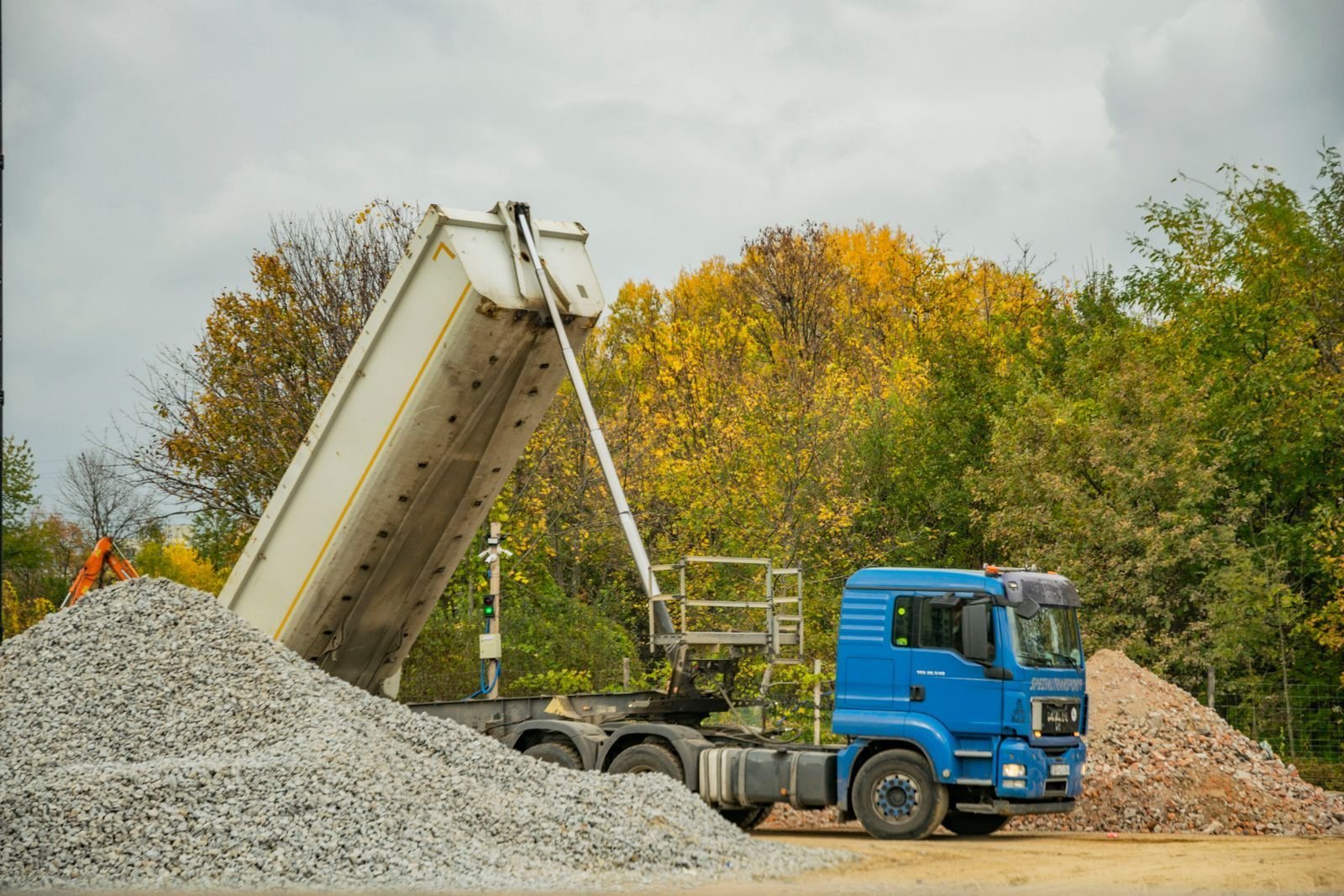
A delivery fee of 50 to 150 dollars per trip is normal for local delivery, and longer hauls or restricted access can push it higher. A dump truck load of 10-15 tons is the usual full load, and ordering a full load is almost always cheaper per ton than several small deliveries that each carry their own fee. Ask the supplier for a delivered price per load rather than a stone-only price, and confirm where the truck will dump, because moving a pile of stone by wheelbarrow across a yard is slow and exhausting work. Minimum orders also matter, since some yards require a full truckload while others will deliver as little as one ton for a higher per-ton price.
Labor and Site Prep: Where the Real Money Goes
Labor and site prep explain why two quotes for the same driveway can differ by more than the stone costs, because preparation is skilled work with heavy equipment. Clearing vegetation, excavating topsoil, grading a crown for drainage and compacting each layer in thin lifts can add 1 to 3 dollars per square foot on a new driveway. Geotextile fabric is a modest line item that pays for itself on soft or wet soil, because it stops the base stone from sinking into mud and disappearing within a season. Drainage work such as a culvert or swale can add 200 to 800 dollars where a driveway crosses a ditch or a low spot, and skipping it usually costs more later in washouts and regrading.
DIY vs Hiring a Professional
Doing the work yourself can save 35 to 50 percent of a professional price, but only on the right kind of job. Spreading delivered stone over a short, flat driveway with a sound existing base is realistic DIY work with a wheelbarrow, rakes and a rented plate compactor. Building a new driveway from bare ground is different work, because excavation, crown grading, layered compaction and drainage mistakes show up as ruts and washouts within a season or two. Equipment rental for a plate compactor and a skid steer can add 300 to 800 dollars to a DIY budget, and a long or sloped driveway usually repays a grading contractor within the first year.
Maintenance Costs: Regrading and Top-Ups
A gravel driveway is not a one-time purchase, and its yearly upkeep should be part of the cost comparison against asphalt or concrete. Budget for regrading every year or two, plus top-up stone every few years as stone migrates into the lawn, gets carried off by tires and wears down under traffic. Annual maintenance typically runs 200 to 400 dollars for a standard driveway when you rake ruts, restore the crown and add a ton or two of surface stone. Weeds along the edges, dust in dry weather and stone tracked into the house are smaller annoyances that edging and a good surface mix reduce but never fully remove.
How to Save Money Without Building a Weak Driveway
You can cut gravel driveway cost without cutting the layers that make the driveway last, provided you spend where it matters and save where it does not. Buy bulk stone in full truckloads, use crusher run for the working layers, and save decorative stone for visible borders where it will actually be seen. Get quotes from at least three suppliers, ask each for a delivered price per ton, and order in the off season when demand and prices are often lower. Do the spreading and raking yourself on a top-up job, but do not skip compaction, because uncompacted stone is the most expensive saving you can make.
Use these figures as a starting point, then compare itemized local quotes. A clear quote that lists stone, delivery, base work, labor, and drainage is much easier to trust than a single lump-sum number.