
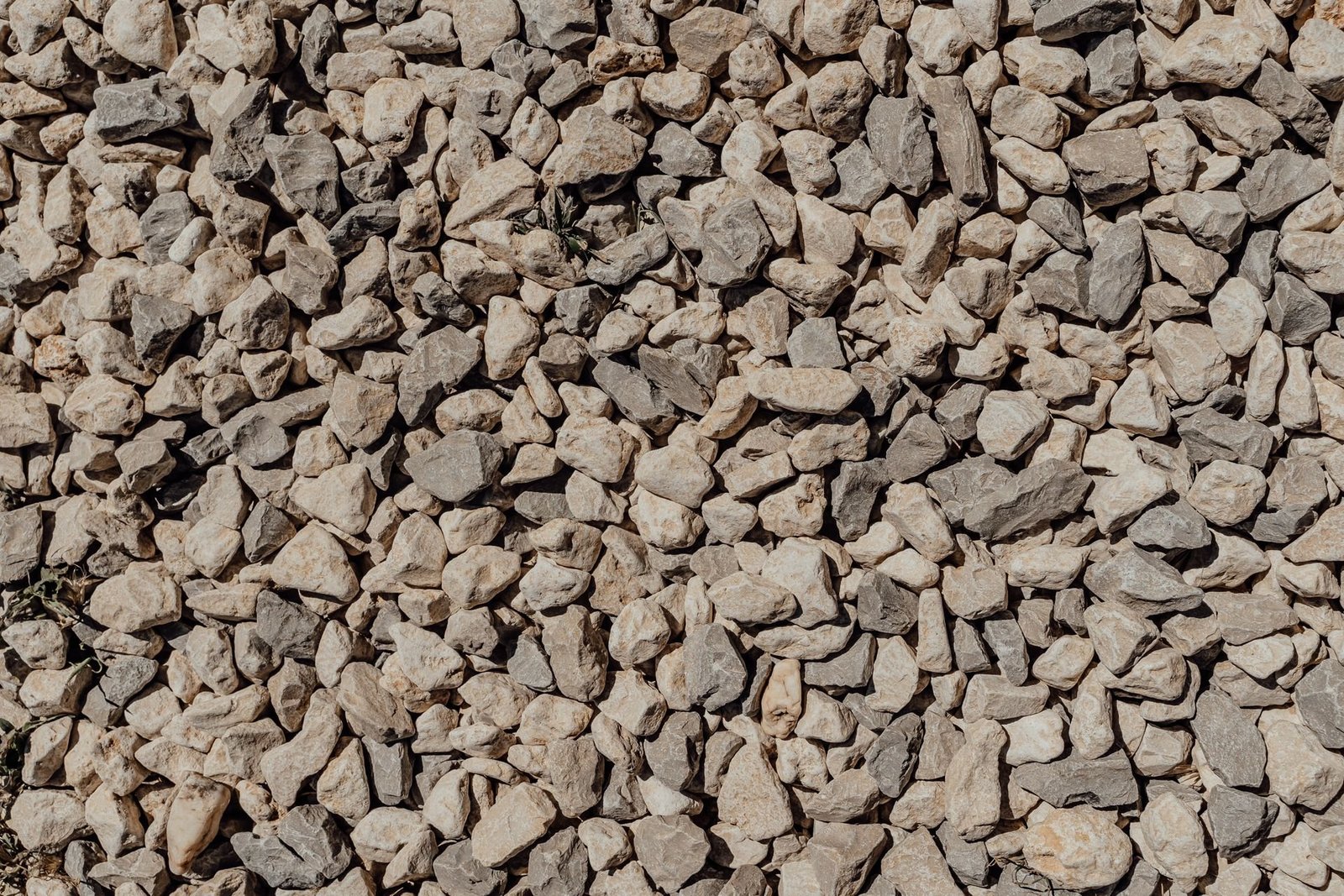
Gravel Sizes
Order the wrong size and the project fails before it starts. A driveway surfaced with stone too small ruts under the first car, a French drain filled with dusty stone clogs within a season, and a garden path built from stone too large punishes every foot that crosses it. The stone itself is rarely the expensive part, but fixing a wrong size means digging the whole surface out and starting again. This gravel size chart guide decodes every common size, explains what the numbers on the ticket actually mean, and shows which size belongs in each project.
Gravel sizes are not random, and the numbers on a supplier ticket follow national grading standards that any yard in the United States should be able to explain. The same number means roughly the same size range wherever you buy it, which is why learning the code once saves you on every future order. The sections below give you the full chart first, then explain each grade in turn, then match sizes to driveways, paths, drains, and bases. Read the chart for the quick answer, then read the sections for the sizes you are actually considering.
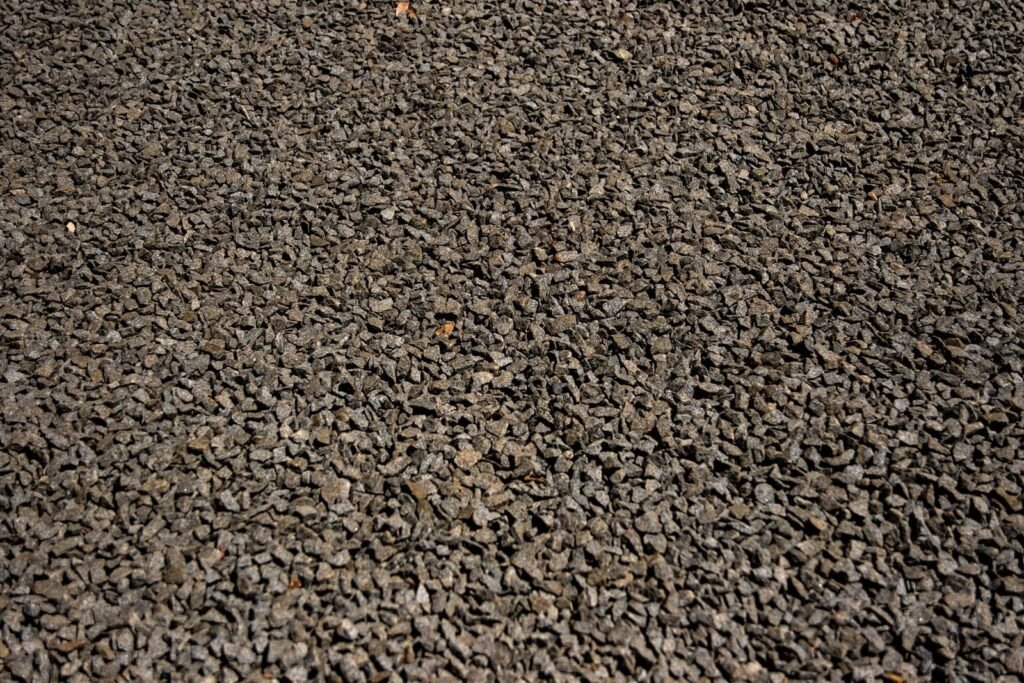
Gravel Size Chart at a Glance
The table below is the whole guide in miniature, with one row per grade. Size and shape decide most of the behaviour, so those two columns matter more than any brand name on the ticket. Clean stone drains freely because the dust has been washed out, while stone with fines compacts hard because the dust binds the layer together. If a row surprises you, read its full section before ordering, because the table simplifies and the section explains the exceptions.
| Grade | Size range | Shape and type | Best for |
|---|---|---|---|
| #1 stone | 2 to 4 in | Angular crushed | Deep base, heavy drainage, riprap work |
| #3 stone | 1/2 to 2 in | Angular crushed | Driveway base, French drains, large pipe bedding |
| #4 stone | 1 to 1 1/2 in | Angular crushed | Base layers, railroad ballast, large pipe bedding |
| #5 stone | 3/4 to 1 in | Angular crushed | Driveway base, general construction, pipe bedding |
| 57 stone | 1/2 to 1 in, sold as 3/4 in gravel | Angular crushed, clean | Driveway top layer, French drains, concrete aggregate |
| #67 stone | 1/4 to 3/4 in | Angular crushed, clean | Drainage, pipe bedding, concrete mixes |
| #8 stone | 3/8 to 1/2 in | Angular crushed | Paths, paver joints, light drainage |
| 3/8 pea gravel | 1/4 to 3/8 in | Rounded, smooth | Garden paths, patios, decorative beds, playgrounds |
| #10 screenings | Dust to 3/8 in | Fines, stone dust | Paver base, pathway stabilisation, concrete mixes |
| #411 crusher run | 3/4 in down to fines | Angular with dust | Compacted driveway base, road base, parking areas |
| Riprap | 6 in and larger | Large angular rock | Erosion control, drainage swales, shoreline work |
How Gravel Size Numbers Work
The numbering system comes from ASTM D448 and AASHTO M43, the two standards that define aggregate gradations in the United States. Both standards sort stone by sieve size, which means a stone earns its number by passing through one screen and being caught by the next. That is why a grade is always a range, never a single exact diameter, and why two loads of the same grade can look slightly different while still meeting the same specification. When a supplier cannot tell you which standard their gradation follows, treat that as a warning sign and ask for the gradation sheet.
The numbers confuse people because lower numbers do not always mean smaller stone, and the system was built for engineers rather than homeowners. Number 57 stone, for example, is smaller than #3 stone, and #67 stone is smaller than #57 stone, because the numbers describe sieve combinations rather than a simple ranking. The practical habit is to ignore the arithmetic of the numbers and learn the size range for the handful of grades you will actually buy. Most residential projects need only #3, 57 gravel, #8, pea gravel, #411, and screenings, so memorising those six covers almost every order.
Clean stone and stone with fines is the second distinction that matters as much as size. Clean gravel has the dust and small particles washed out, so water flows freely through the gaps between stones, which makes it the right choice for French drains and drainage trenches. Stone with fines, such as crusher run and #411, contains dust all the way down to powder, and that dust fills the gaps and binds the layer into a hard surface when compacted. Buying clean stone when you needed compaction, or fines when you needed drainage, is the single most common ordering mistake, and it has nothing to do with the size number alone.
Large Sizes: #1 Stone and #3 Stone
Number 1 stone runs 2 to 4 inches and is the largest grade a homeowner will normally meet, short of riprap. It is too coarse to drive or walk on comfortably, and that is the point, because its job is to sit deep in a structure where its size gives it strength. Use #1 stone for deep base courses under heavy loads, for large drainage structures where water must move fast, and for erosion control where smaller stone would wash away. It is rarely a finished surface, and any supplier who suggests it as one is selling you the wrong product.
Number 3 stone, often written as 3 stone or 1 to 2 inch stone, is the workhorse of the large grades. Its 1/2 to 2 inch range bridges soft ground, carries heavy loads, and still leaves large gaps for water to pass through. That combination makes it the standard base layer under driveways and roads, and the standard stone for large French drains and heavy drainage. A 57 stone layer over a #3 base is the classic driveway build, because the base carries the weight while the top layer gives a drivable surface.
Medium Sizes: #4 Stone, #5 Stone, and 57 Stone
Number 4 stone runs 1 to 1 1/2 inches and sits between the coarse base grades and the familiar driveway grades. It suits base layers where #3 would be overkill, railroad ballast, and bedding around large drainage pipes, where its size resists shifting under load. Homeowners meet #4 stone less often than #57 stone, but it is worth knowing about when a contractor specifies it, because substituting a smaller stone without asking changes the drainage and load behaviour of the layer. Always confirm the substitution with the person who designed the build, not just the yard.
Number 5 stone runs 3/4 to 1 inch and is the grade many contractors reach for when they want a driveway base that compacts better than #3 but drains better than screenings. It balances stability with workability, because its stones are large enough to lock together but small enough to spread and level without heavy equipment. Number 5 gravel is also a common general construction aggregate, used for pipe bedding and paver installations where a medium, clean stone is required. If your yard does not stock #5, 57 stone is usually the nearest substitute, but check the gradation sheet first, because the two grades are close, not identical.
57 stone is the most versatile gravel size in the United States, and it deserves its reputation. Sold as 3/4 in gravel, it is technically graded 1/2 to 1 inch, with most pieces near 3/4 inch, and it is washed clean so water flows freely through it. That makes 57 gravel the standard top layer for driveways, the standard stone for French drains, and a common concrete aggregate, all from the same pile. The related search terms crushed stone 57 and stone 57 all point to this same grade, so when a guide or a supplier uses any of those names, they mean this clean, angular, 3/4 inch stone.
Small Sizes: #67 Stone, #8 Stone, and Pea Gravel
Number 67 stone runs 1/4 to 3/4 inch and is the smaller cousin of #57 stone, with fewer large pieces and a tighter, more uniform look. It suits drainage around pipes, pipe bedding in tight trenches, and concrete mixes where a smaller aggregate gives a smoother finish. For driveways, #67 can work as a top layer where a finer surface is wanted, but it migrates more easily than #57, so it needs good edging and a firm base underneath. The choice between #57 and #67 is often a matter of local availability, so ask what your yard stocks and compare the gradation sheets.
Number 8 stone runs 3/8 to 1/2 inch and is the smallest crushed grade most homeowners will buy. Its small, angular pieces feel comfortable underfoot while still locking together better than rounded stone, which makes it ideal for garden paths, paver joints, and light drainage. Number 8 stone is also used in concrete mixes and around foundations, where a small aggregate fills tight spaces. It is too small for a driveway top layer on its own, because it migrates under tires, but it works well as a thin dressing over a compacted base.
Pea gravel, sold as 3 8 pea gravel, is rounded stone about 3/8 inch across, shaped smooth by water in riverbeds and gravel pits. Its rounded shape makes it comfortable underfoot and pleasant to look at, which is why it dominates garden paths, patios, and decorative beds. The same rounded shape is its weakness, because the stones roll instead of locking, so pea gravel never firms up under vehicle weight no matter how much you compact it. Keep pea gravel out of driveways except as a thin dressing over a compacted base, and use crushed stone 3/4 for any surface that must carry cars.
Fines, Blends, and Riprap
Number 10 screenings, also called stone dust, are the fines left over from crushing, running from dust up to 3/8 inch. Screenings are not a surface on their own, but they are essential underneath one, because they level a base, fill gaps under pavers, and bind a path into a firm finish. A path built from screenings alone turns dusty in dry weather and muddy in wet weather, so screenings belong as a base or a binder, not as the wearing surface. The related term 4 minus describes a similar idea in some regions: stone graded 4 inches down to dust, a blend rather than a single size, used for road base where compaction matters more than drainage.
Number 411 crusher run is a blend, not a single size, running from 3/4 inch all the way down to fine dust. The fines are the point, because they fill the voids between the larger pieces and bind the layer into a dense, almost pavement-like surface when compacted. That makes #411 the default choice for driveway bases, parking areas, and foundations under asphalt and pavers, where a hard, stable layer matters more than drainage. It does not drain well, and that is a feature for a base, because the fines shed water off the compacted surface instead of letting it soak into the subgrade.
Riprap is the largest category on this page, with stones 6 inches and larger, used where water or gravity would move anything smaller. It lines drainage swales, protects shorelines and culvert outlets, and holds slopes that would otherwise erode in the first heavy rain. Riprap is sold by weight and placed by machine, not spread by hand, so it is a contractor product rather than a homeowner one. If a drainage problem on your property needs riprap, the underlying water problem is larger than a gravel order, and a drainage contractor should design the fix.
Choosing the Right Size by Project
The fastest way to choose is to start from the project, not from the stone, because each project asks a different question of its gravel. A driveway needs a base that compacts and a top that drains, so the proven build is a #3 or crusher run base topped with clean 57 stone, with geotextile fabric underneath on soft ground. A garden path needs comfort and stability, so pea gravel or #8 stone at 2 to 3 inches, held by edging, is the right call. A French drain needs clean, washed stone that cannot clog, so washed #57 is mandatory and crusher run is forbidden, because its dust defeats the whole system.
Concrete and construction work asks yet another question, because the aggregate becomes part of a structural mix rather than a loose surface. Number 57 and #67 stone are the common concrete aggregates, chosen because their size and angular shape give concrete its strength without making it unworkable. Pipe bedding uses #5 or #57 stone, because the stone must support the pipe evenly without sharp points that could damage it. Paver bases use screenings for levelling and #411 or crusher run for the structural layer, a combination that gives both a flat finish and a firm foundation.
Drainage and load pull in opposite directions, and that tension decides most size choices. Larger stone drains faster because the gaps between stones are bigger, but it compacts poorly and feels rough underfoot. Smaller stone compacts into a smoother surface but drains slowly, especially when fines are present, and it migrates more easily. That is why layered builds exist: each layer does the job the other cannot, and no single size does everything. If you are choosing between two sizes and cannot decide, buy a small sample of each, spread them in a test patch, and walk and drive on them for a week.
Ordering, Coverage, and Regional Names
Before you order, ask the supplier for the gradation sheet, which lists the exact size range for the product on the ticket. Two products with different names can be the identical blend, and two products with the same name can differ, so the gradation sheet is the only reliable document. Regional names complicate the picture further, because crusher run, quarry process, QP, dense-graded aggregate, 21A, 610 limestone, and road base can all describe the same 3/4 inch down to dust blend, depending on where you buy it. Buy by gradation, not by name, and confirm the size range in writing before the truck leaves the yard.
Coverage follows from the same math as our gravel calculator, and size changes the result less than depth and density do. The formula is length times width times depth in feet, divided by 27 for cubic yards, then multiplied by density and divided by 2,000 for tons. One cubic yard of gravel covers about 100 square feet at 3 inches deep, or about 80 square feet at 4 inches deep, regardless of whether the stone is #57 or #8. Always calculate each layer separately with its own density, and add a 10 percent waste buffer, or 15 to 25 percent for a compacted base layer, because compaction shrinks the layer.
The common ordering mistakes are all avoidable, and they all come from skipping one check. Ordering by name instead of gradation is the first, because regional names hide real differences. Ordering clean stone for a base that needed fines, or fines for a drain that needed clean stone, is the second, and it ruins the layer it was meant to build. Ordering a single size for a whole driveway, instead of a layered build, is the third, because no single size compacts and drains at the same time. Ordering without a waste buffer is the fourth, because a short load means a second delivery fee that wipes out any saving on the stone itself.

Frequently Asked Questions
What size gravel is best for a driveway?
Crushed stone in the 3/4 inch range, specifically clean 57 stone for the top layer over a crusher run or #3 base, is the proven driveway combination. The base layer should be 4 to 6 inches of compacted crusher run or #3 stone, and the top layer 2 to 3 inches of clean #57, which drains well and looks tidy. Pea gravel and river rock are not driveway surfaces, because rounded stone rolls under tires and never firms up, no matter how much you compact it.
What is 57 gravel, and what size is it?
57 gravel, also called 57 stone or stone 57, is clean crushed stone graded 1/2 to 1 inch, with most pieces near 3/4 inch. It is washed so the dust is removed, which lets water flow freely through it, and its angular edges lock together under compaction. That combination makes it the most versatile gravel size in the country, used for driveway top layers, French drains, and concrete aggregate alike.
What is the difference between #57 and #67 stone?
Number 57 stone runs 1/2 to 1 inch, while #67 stone runs 1/4 to 3/4 inch, so #67 is the smaller, more uniform cousin. Both are clean, angular crushed stone, and both drain well, but #57 stays in place better under vehicle traffic, while #67 gives a finer finish for pipe bedding and concrete work. For a driveway top layer, #57 is usually the better choice, while #67 suits drainage and construction uses where a smaller stone is wanted.
What size gravel is best for a French drain?
Clean, washed 57 stone is the standard for French drains, because its open gaps let water flow freely to the pipe without clogging. The stone must be washed, since dust and fines fill the gaps and defeat the whole system, which is why crusher run and unwashed stone are forbidden in drains. For major drainage swales, larger clean stone such as #3, at 1 to 2 inches, moves even more water, but it is overkill for a typical residential French drain.
What is the best size gravel for a driveway that does not move?
The size alone does not stop movement, because the build matters as much as the stone, and a layered build with a compacted base is what holds a driveway together. For the top layer, clean 57 stone over a compacted crusher run base is the combination that moves least under normal car traffic. Good edging matters too, because even the best stone migrates without something to hold the edge, and regular raking keeps the surface level between top-ups.
What size gravel is best for garden paths?
Pea gravel at 3/8 inch, or #8 crushed stone at 3/8 to 1/2 inch, suits garden paths, because both are comfortable underfoot and look natural in a garden. Pea gravel is softer and more decorative, while #8 stone locks together better and stays in place on slopes. A depth of 2 to 3 inches suits most paths, with landscape fabric underneath to stop the stone sinking into soil, and edging to stop it migrating onto the lawn.
What does 3/4 gravel mean, and is it the same as #57?
Shoppers who type 3 4 gravel usually mean 3/4 gravel, which is the common name for 57 stone, graded 1/2 to 1 inch with most pieces near 3/4 inch. The fraction describes the nominal size, not an exact measurement of every stone, because the grade is a sieve range, not a single diameter. If a supplier lists 3/4 gravel and 57 stone as separate products, compare their gradation sheets, because they are usually the same grade under two names.
How do I read a gravel size chart at a supplier?
Start with the size range column, not the product name, because regional names hide real differences between yards. Check whether the stone is clean or contains fines, since that decides drainage versus compaction, and confirm the range matches the grade you asked for. Ask for the gradation sheet in writing, and if the yard cannot provide one, consider that a reason to buy elsewhere, because a reputable supplier always can.
What is 4 minus gravel?
The term 4 minus describes stone graded 4 inches down to dust, a blend rather than a single size, used for road base and heavy base work. Like crusher run, it compacts hard because the fines fill the gaps between the larger pieces, and like crusher run, it drains poorly for the same reason. Use 4 minus for bases and structural layers, never for French drains or decorative surfaces, where clean stone is required.
How much gravel do I need for a driveway or path?
Use the formula length times width times depth in feet, divided by 27 for cubic yards, then multiply by density and divide by 2,000 for tons. A standard 12 by 50 foot driveway at 10 inches total depth needs roughly 25 tons across its layers, while a garden path needs only a few tons at 2 to 3 inches. Our gravel calculator works out yards and tons for any size, and our guide to how much gravel you need works through the full math with worked examples.