
Ordering the wrong stone is expensive. Ordering the wrong amount of the right stone is even more expensive, because running short means paying a full second delivery fee for a half ton top up. This crushed stone calculator removes both risks.
Enter the length, width, and depth of your area and it returns the volume in cubic yards, the weight in tons, and a sensible order quantity that already includes a 10% waste allowance. The tool below comes pre-set to crushed stone #57 at 105 lb/ft³, the most common driveway and drainage stone in the US. Change the material or the allowance any time and the result updates instantly.
This page also explains what crushed stone is, how the sizes differ, and which stone goes where. Read it once and you will never over-order or under-order again. Every section below ties back to the numbers the calculator produces, so the guidance and the math always agree.
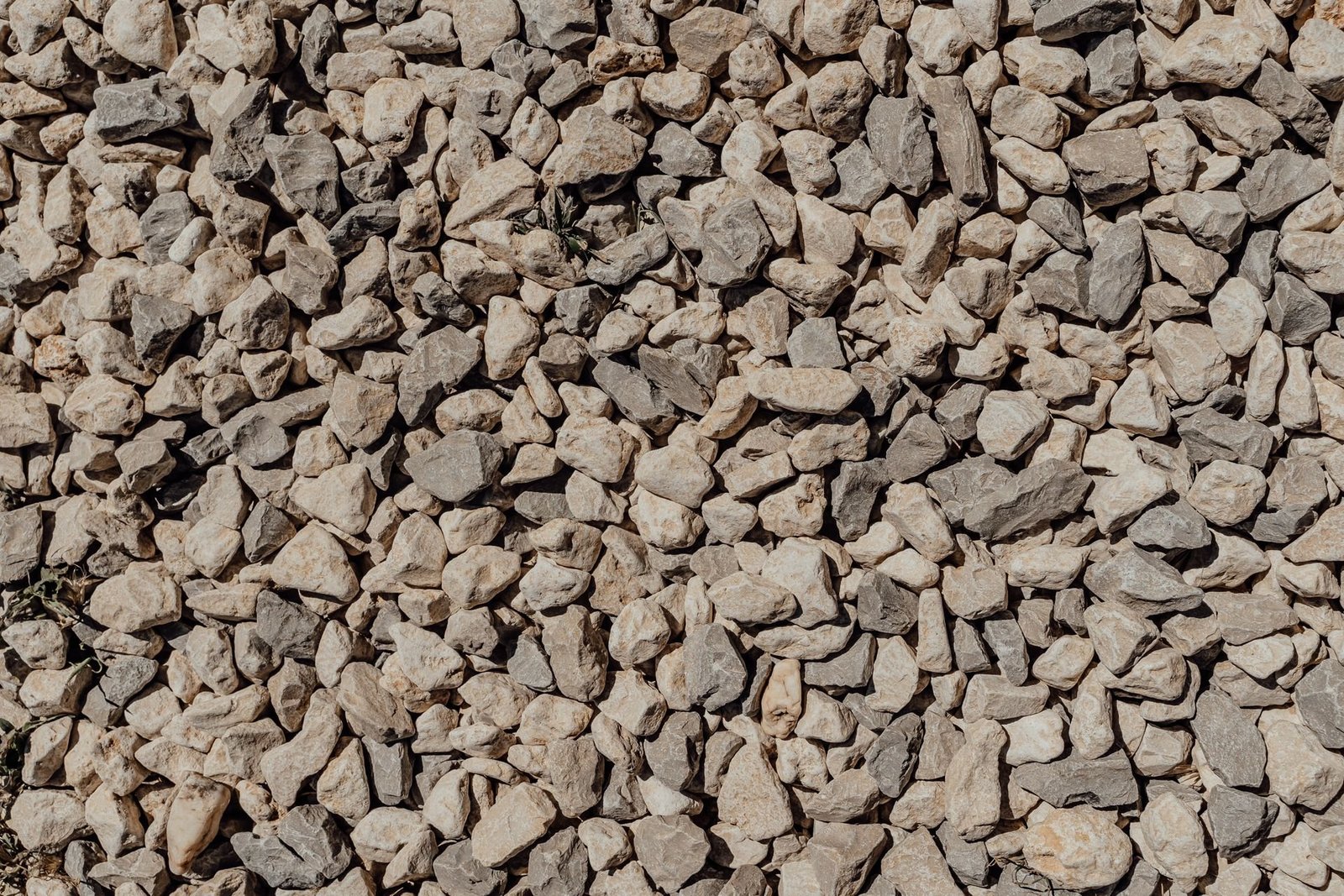
Gravel Calculator
Work out how much gravel you need — in cubic yards, tons and bags — for a driveway, path, patio or drainage project.
1. Area & depth
2. Material
3. Prices (optional)
You need
Formula: Volume = Area × Depth · Weight = Volume (cu ft) × Density · 1 cu yd = 27 cu ft · 1 short ton = 2,000 lb.
How far does one cubic yard go?
| Depth | Area covered per cubic yard |
|---|---|
| 1 in | 324 sq ft |
| 2 in | 162 sq ft |
| 3 in | 108 sq ft |
| 4 in | 81 sq ft |
| 5 in | 64.8 sq ft |
| 6 in | 54 sq ft |
Rule of thumb: area covered per cubic yard = 324 ÷ depth in inches.
How This Crushed Stone Calculator Works
The calculator runs the same three-step math that quarries and landscape suppliers use, applied with the real density of the stone you pick. First it converts your depth from inches to feet and multiplies length by width by depth to get cubic feet. Then it divides by 27 to get cubic yards, the unit most bulk material is planned in. Finally it multiplies by the stone density to get tons, the unit most suppliers sell and deliver in.
Here is the full math on a realistic job so you can check the tool against your own sums. Say you are resurfacing a 12 by 40 foot driveway with 4 inches of crushed stone #57, which the tool pre-selects at 105 lb per cubic foot. Step one: 12 times 40 times (4 divided by 12) gives 160 cubic feet.
Step two: 160 divided by 27 gives 5.93 cubic yards. Step three: 160 times 105 gives 16,800 pounds, and 16,800 divided by 2,000 gives 8.4 tons. That 8.4 tons is the raw material with no margin for error.
Adding the default 10% waste allowance brings the order to 8.4 times 1.10, or about 9.2 tons. Order 9.2 tons and you finish the job with a small cushion instead of a second delivery fee. For most driveways 10% is enough, and you can raise it for compacted base layers.
Whether you call it a crushed rock calculator or a crushed stone estimator, the physics is identical and the order of operations never changes. Volume always comes first, then the conversion to tons using the density of the exact stone you are buying. The one mistake this calculator refuses to let you make is treating tons and cubic yards as the same thing, because they are not. One cubic yard of crushed stone weighs roughly 1.4 tons, so ordering "5 tons" when your math said "5 yards" leaves you about 30% short before you spread a single shovel.
What Crushed Stone Actually Is
Crushed stone is natural rock that a quarry blasts, crushes, and screens into graded sizes. The source rock depends on what the local quarry digs: limestone and dolomite dominate in the Midwest and Southeast, granite is common in the Northeast and West, and trap rock feeds many metropolitan markets. Each source crushes a little differently, which is why density and price vary from yard to yard.
The defining trait of crushed stone is its shape. Mechanical crushing leaves sharp, angular locking edges instead of the smooth rounded surface that river water gives natural gravel. Those edges interlock when the stone is compacted, which is why a crushed stone driveway stays put under tires while rounded gravel migrates and ruts. If your project needs stone that locks into a stable surface, crushed is the right family to buy from.
#57 Stone Explained
The #57 designation comes from the aggregate industry size classification, and it refers to crushed stone graded between 1/2 inch and 1 inch in size. It is washed clean at the quarry, which means the dust and fine particles are screened out and the stone drains freely through the gaps between pieces. That combination of angular interlock and open drainage makes it one of the most versatile sizes sold.
Typical uses for #57 stone include the top layer of a gravel driveway, French drains and drainage trenches, the base course under concrete slabs and patios, and general landscaping where water needs to move through the stone. Contractors like it because one product covers so many jobs, and suppliers stock it everywhere. If your entire order is this one size, you can run this page as a 57 stone calculator by entering your area and depth and confirming the density reads 105 lb per cubic foot.
Crusher Run and Dense-Graded Aggregate
Crusher run, also sold as dense-graded aggregate or DGA, is the opposite of clean #57 stone. It is a blend of crushed stone ranging from about 3/4 inch all the way down to fine dust and screenings. The fines act as a binder, filling the voids between the larger pieces so the layer tightens into a dense, almost pavement-like surface when compacted.
That is why crusher run is the default choice for the base layer of a driveway or parking area, and for the foundation under asphalt and pavers. It does not drain well, and that is the point: the fines shed water off the compacted surface instead of letting it soak through to the subgrade. Its compaction behaviour is the most aggressive of any common stone, shrinking roughly 15 to 25% from loose volume to finished compacted depth, which is why the waste allowance for a base layer should be set higher than for a top dressing.
Common Crushed Stone Sizes and What They Are For
Size gradations are standardized, so the same number means the same size range at almost any US supplier. The table below covers the sizes a homeowner or small contractor will meet most often. Knowing the code lets you order with confidence instead of accepting whatever the yard happens to load.
| Size | Gradation | Best for |
|---|---|---|
| #3 stone | 1 to 2 in | Deep first base course over soft or muddy subgrade |
| #57 stone | 1/2 to 1 in | Drainage, French drains, driveway top layer, slab base |
| #411 stone | 3/4 in down to fines | Compacted driveway base, self-compacting without clean gaps |
| #8 stone | 3/8 in | Thin top dressing, walkways, pipe bedding |
| Crusher run / DGA | 3/4 in down to dust | Base layer under driveways, asphalt, and pavers |
Regional names differ even when the stone does not. What your quarry calls crusher run might be labeled 21A, 610 limestone, QP (quarry process), or road base on the ticket, and #411 is sometimes just "driveway mix." When in doubt, ask the supplier for the gradation sheet rather than trusting a name. Two products with different names can be the identical blend.
Angular Stone vs Rounded Stone
Angular crushed stone and naturally rounded stone behave like different materials because of their edges. The flat faces and sharp corners of crushed stone wedge together under a compactor, forming a load-bearing surface that resists shifting. Rounded stone like pea gravel or river rock rolls instead of locking, which is why it never firms up under vehicle weight no matter how much you compact it.
That difference decides the application. Driveway surfaces, base layers, and anything that must support weight should be crushed and angular. Rounded stone is better where comfort and appearance matter, such as garden paths, patios, and decorative beds, because it stays loose and pleasant underfoot. For patios and walkways where a softer, rounded surface is the goal, our pea gravel calculator handles the rounded alternative with its own density.
Base Layer vs Top Layer: Where Each Stone Goes
A durable driveway is a sandwich, not a single ingredient. The base layer carries the load, so it wants dense-graded material with fines: crusher run or #411, spread in lifts and compacted hard. The top layer takes the wear and weather, so it wants clean angular stone like #57 that drains and looks tidy. Each layer does the job the other cannot.
Skipping the base is the most common reason a gravel driveway fails early. Stone spread straight onto topsoil or soft clay sinks, mixes with mud, and needs topping up every season. A proper base layer under asphalt or pavers works the same way, spreading the slab load so it cannot punch through. If you are comparing crushed stone with other materials for the whole project, run the numbers through our gravel calculator first.
Driveway and Road Surfacing Depths
Depth is the input that changes your total the most, and it is the one people guess most often. A residential driveway needs 4 inches of compacted base as the absolute minimum for passenger cars on firm soil. Regular vehicle traffic, delivery trucks, or clay subgrade push that to 6 inches of base plus a 2 to 3 inch clean top layer. A full new build over soft ground is typically 8 to 12 inches across two or three layers with geotextile fabric under the first one.
For driveway and road surfacing, the proven recipe is 4 inches of compacted crusher run topped with 2 to 3 inches of clean #57 stone. The base gives you structure and the top gives you drainage and a neat finish. If you are planning the whole driveway build with layer-by-layer tonnage, our gravel driveway calculator walks through base plus surface in one pass.
Using Crushed Stone as Concrete Aggregate
Clean crushed stone is also the standard aggregate that goes under and around concrete work. A 4 inch compacted layer of #57 stone under a patio or walkway slab spreads the concrete load evenly and breaks the capillary path that draws groundwater up into the slab. Under a driveway slab or garage floor, 6 inches is the usual specification, sometimes with geotextile fabric over clay soil.
The stone must be clean for this job, meaning no fines and no clay coating. Fines clog the gaps between pieces, trap moisture, and defeat the whole purpose of the drainage layer. That is one application where crusher run is the wrong choice despite its excellent compaction: its dust content holds water exactly where a slab needs it dry. Ask the supplier for washed #57 and confirm it on the ticket.
Coverage Per Ton at a Glance
One ton of crushed stone #57 at 105 lb per cubic foot contains 19.05 cubic feet of stone, because 2,000 divided by 105 equals 19.05. That volume covers less area than most first-time buyers expect, which is why a quick lookup table is worth keeping. The figures below assume loose volume before any compaction allowance.
| Depth | One ton covers (approx) |
|---|---|
| 1 inch | 229 sq ft |
| 2 inches | 114 sq ft |
| 3 inches | 76 sq ft |
| 4 inches | 57 sq ft |
| 6 inches | 38 sq ft |
The shortcut worth memorizing is that one ton covers roughly 100 square feet at 2 inches deep, or roughly 50 square feet at 4 inches deep. Suppliers quote the 100 square foot figure constantly because it is conservative and easy to do in your head. Use the calculator above for the exact number, and use this table to sanity check any quote you receive.
Buying Crushed Stone: Delivery, Pickup, and Price
Most bulk suppliers sell crushed stone by the ton, with typical US prices running from about $25 to $75 per ton depending on the stone type, region, and haul distance. Crusher run and limestone sit at the cheaper end; granite and decorative sizes cost more. These are material prices only, so confirm whether the quote includes tax before you compare yards.
Delivery is usually charged separately, commonly $50 to $150 per load depending on distance, and most yards run a minimum load of several tons. Ordering bulk delivery is almost always cheaper per ton than buying 50 lb bags from a home improvement store, and bags only make sense for patch repairs under about a ton. One practical tip: wet stone weighs more, so a ton bought by weight after heavy rain contains less actual stone than a dry ton. Ask for the scale ticket and, if you buy by the ton, prefer a dry stockpile.
Measuring Your Area Without Mistakes
Accurate measurement beats a generous guess, because the calculator can only be as good as the numbers you feed it. For a rectangle, multiply length by width in feet. For a circle, use 3.14 times the radius times the radius, with the radius being half the diameter. For an L shape or any irregular area, split it into rectangles, calculate each one, and add the results together.
Measure the depth in five or six spots, not one, because real ground is never as flat as it looks and low spots swallow extra stone. Add two feet of width to a driveway measurement since the edges of a loose surface always spread beyond the tire tracks. If you are topping up an existing surface rather than building new, measure only the gap between the current surface and your target grade, not the full structural depth. That single adjustment often cuts an order in half.
Ordering Mistakes That Cost Real Money
The single most expensive error is confusing tons with cubic yards. A cubic yard of crushed stone weighs about 1.4 tons, so 10 yards is 14 tons, and ordering "10 tons" when you needed 10 yards leaves you 30% short on delivery day. Always confirm which unit the quote and the calculator are using before you call the yard.
The second most common error is typing inches as feet, which throws the whole calculation off by a factor of twelve. Four inches is 0.333 feet, not 4, and the calculator above expects depth in inches precisely to avoid that trap. The third error is using one density for every stone: crusher run is about 20% heavier per yard than washed #57, so on a 25 ton order that difference is five tons of stone. Match the density to the material on the ticket.
Crushed Stone Densities You Can Trust
Loose dry crushed stone densities run from about 1.35 to 1.7 tons per cubic yard across the common products. Clean #57 stone at 105 lb per cubic foot works out to about 1.42 tons per yard, which is why this page pre-selects 105 lb/ft3. Crusher run and dense-graded aggregate sit higher, near 1.5 to 1.7 tons per yard, because the fines fill the air gaps that clean stone leaves open. Pea gravel and river rock sit lower, near 1.3 to 1.35.
Treat these as planning figures, not gospel. Moisture, quarry source, and gradation all move the real number a few percent either way. When your supplier publishes their own density, always prefer it over any calculator default. For the same reason, the waste allowance exists: it absorbs the gap between textbook math and a real stockpile on a real truck.
Frequently Asked Questions
How many tons of crushed stone do I need for a driveway?
It depends on the size and depth, but a typical 12 by 40 foot driveway at 4 inches deep needs about 8.4 tons of crushed stone #57 before waste. Adding the standard 10% allowance brings the order to about 9.2 tons. If you are building the full layered driveway with a 4 inch crusher run base plus a 2 to 3 inch #57 top, expect roughly 20 to 28 tons total for the same footprint. Run your exact dimensions through the calculator above rather than guessing.
How many tons are in a cubic yard of crushed stone?
About 1.35 to 1.5 tons for most clean crushed stone, with limestone commonly quoted at 1.5 tons per yard. Clean #57 stone at 105 lb per cubic foot converts to about 1.42 tons per cubic yard. Crusher run and dense-graded aggregate are heavier, roughly 1.5 to 1.7 tons per yard, because the fines fill the voids. Always confirm the density with your supplier, since it changes with source rock and moisture.
What is #57 stone used for?
Number 57 is crushed stone graded between 1/2 inch and 1 inch, washed clean of dust and fines. Its main uses are the top layer of gravel driveways, French drains and drainage trenches, the base course under concrete slabs and patios, and landscaping beds where water must pass through. The angular pieces interlock for stability while the open gaps drain freely. It is one of the most widely stocked aggregate sizes in the US.
Should I use #57 stone or crusher run for my driveway?
Use both, in layers: crusher run for the base and #57 for the top. Crusher run contains fines that compact into a hard, stable layer, which is exactly what a base needs to carry vehicle weight. Clean #57 stone drains well and looks tidier, but it never locks as tight, so it works best as the surface layer. The classic build is 4 inches of compacted crusher run topped with 2 to 3 inches of #57. Never put #57 underneath and crusher run on top, or you lose the drainage benefit.
How deep should crushed stone be for a driveway?
Four inches of compacted crushed stone is the minimum for a residential driveway carrying passenger cars on firm soil. Six inches handles regular vehicle traffic, delivery trucks, and clay subgrade much better. A full new driveway build over soft ground usually runs 8 to 12 inches across two or three layers, with a compacted base and a clean top dressing. Always measure the finished compacted depth, not the loose pile the truck dumps.
How much area does one ton of crushed stone cover?
One ton of crushed stone #57 covers about 57 square feet at 4 inches deep, about 76 square feet at 3 inches, and about 114 square feet at 2 inches. The easy rule of thumb is one ton per 100 square feet at 2 inches deep. Those figures assume loose volume at 105 lb per cubic foot, so add your waste allowance on top. See the coverage table above for the full depth grid.
How much does crushed stone cost per ton?
Common crushed stone like limestone or crusher run typically costs $25 to $75 per US ton, with granite and specialty sizes running higher. Prices vary significantly by region, quarry distance, and order size. Delivery is usually billed separately at $50 to $150 per load, and many yards offer free delivery within a radius on larger orders. Call two or three local quarries for competing quotes before ordering.
Is crushed stone the same as gravel?
Not exactly. Crushed stone is quarried rock that is mechanically crushed to a specific size, which gives it angular edges that lock together when compacted. Natural gravel is rounded by water, so it drains well but compacts poorly and shifts under load. For bases and driveways the angular crushed product is the better choice; for drainage trenches and loose decorative paths, rounded gravel has its place. This calculator covers crushed stone, but the math works for any aggregate if you set the right density.
Do I really need to add extra stone for waste and compaction?
Yes, and skipping it is the most common reason orders come up short. Clean #57 stone needs about 10% extra for spillage, uneven subgrade, and edge losses. Compacted base layers like crusher run need 15 to 25% extra because compaction physically shrinks the layer. A second delivery of a half ton costs nearly as much in delivery fees as the first full load, so the allowance is cheap insurance. The calculator above adds 10% by default and lets you raise it for compacted work.