How Much Does a Yard of Gravel Weigh?
You order one yard of gravel, the truck arrives, and the pile looks far smaller than you pictured, yet it weighs more than a small car. That surprise is the reason so many do it yourself projects go wrong at the delivery stage, because gravel is sold by volume but hauled, priced, and loaded by weight. If you guess the weight, you can overload a pickup, under-order for a driveway, or pay for a second delivery that costs more than the extra stone would have. This guide gives you the real numbers, shows you how to convert between yards and tons for your own project, and explains why the same yard can weigh several hundred pounds more or less depending on the stone and the weather.
A cubic yard of gravel typically weighs between 2,400 and 3,000 pounds, which is 1.2 to 1.5 short tons, and 2,800 pounds (1.4 tons) is the planning average most suppliers and calculators use. That range is not sloppy estimating, it reflects genuine differences in rock type, particle size, moisture, and how tightly the stones are packed. A yard of light, dry pea gravel sits near the bottom of the range, while a yard of wet, well compacted crusher run can push past the top of it. Once you know which end of the range your material sits at, every other calculation in this guide becomes simple arithmetic.
What Is a Cubic Yard, Exactly?
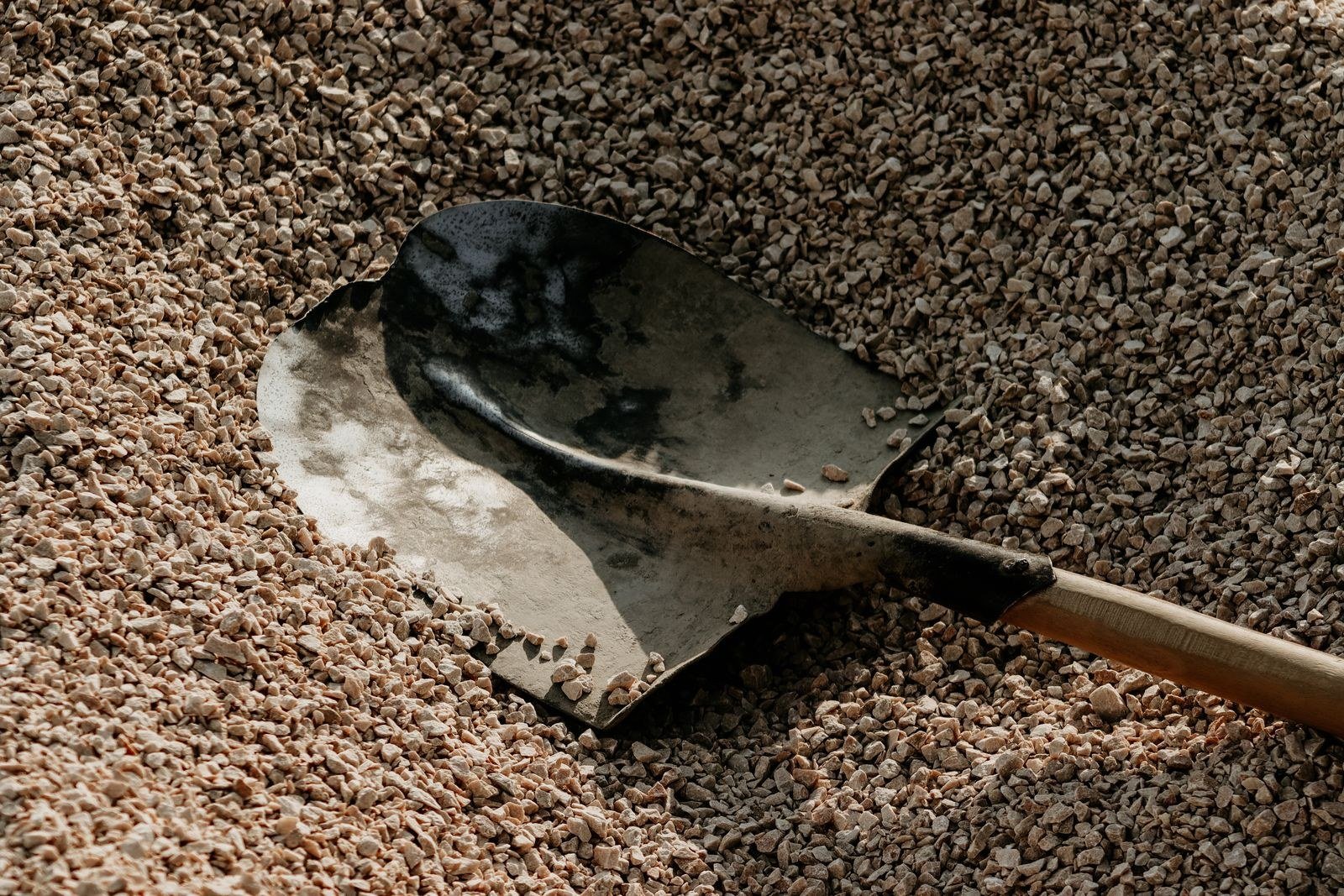
A cubic yard is a cube measuring three feet long, three feet wide, and three feet deep, and it holds 27 cubic feet of material. Suppliers sell bulk gravel by the cubic yard because it is a volume measure, and a loader bucket or a truck bed is far easier to fill to a volume than to weigh on site. The confusion starts because a yard is not a weight, so two yards of different materials can weigh very different amounts even though they fill the same space. Think of it like two identical boxes, one filled with foam balls and one filled with marbles, because the boxes match in size but not in weight.
The conversion between volume and weight runs through bulk density, which is the weight of one cubic foot of the loose material including the air gaps between the stones. Most common gravels have a bulk density of 90 to 110 pounds per cubic foot, and multiplying that density by 27 cubic feet gives the familiar 2,400 to 3,000 pound range per yard. Solid rock itself is much denser, around 160 pounds per cubic foot, but a pile of gravel is typically 30 to 40 percent air, and that void space is what brings the bulk figure down. This is also why the weight of gravel depends so much on particle shape, since angular stones nest together and leave smaller voids than rounded stones that stack loosely.
How Much Does a Yard of Gravel Weigh by Type?
No single number covers every gravel, so use the table below as your starting point and confirm the exact figure with your supplier before you order by the ton. The figures are for loose, dry material, and wet or compacted loads will weigh more, as explained later in this guide. If you only remember one row, remember the average row, because 2,800 pounds per yard will keep most residential estimates within a few hundred pounds of reality.
| Gravel type | Typical weight per cubic yard | Weight in short tons | Bulk density |
|---|---|---|---|
| Standard gravel / crushed stone | 2,835 lbs | 1.42 tons | 105 lb per cubic foot |
| Pea gravel | 2,600 lbs | 1.30 tons | 96 lb per cubic foot |
| 3/4 inch crushed stone (#57 stone) | 2,835 lbs | 1.42 tons | 105 lb per cubic foot |
| Crusher run | 3,000 to 3,400 lbs | 1.50 to 1.70 tons | up to 135 lb per cubic foot compacted |
| River rock | 2,700 to 2,835 lbs | 1.35 to 1.42 tons | 105 lb per cubic foot |
| Bank run gravel | 3,000 lbs | 1.50 tons | 130 lb per cubic foot |
| Decomposed granite | 2,700 lbs | 1.35 tons | 125 lb per cubic foot loose to compacted range |
| Lava rock | 1,500 lbs | 0.75 tons | about 55 lb per cubic foot |
Pea gravel weight deserves a special note because it surprises people in both directions at once. A yard of pea gravel weighs about 2,600 pounds, slightly less than crushed stone, because its smooth, rounded pebbles leave larger air pockets between pieces. That same rounded shape is also why pea gravel shifts underfoot and is a poor choice for driveways, even though it is comfortable on garden paths and playgrounds. When pea gravel settles or is walked in over time, those air pockets shrink and a settled yard can approach 2,900 pounds, so do not treat the loose figure as a fixed constant.
The weight of 3/4 inch crushed stone, usually sold as #57 stone, is the number driveway builders quote most often, and it sits at about 2,835 pounds per yard when dry and loose. Its angular pieces lock together and its mix of sizes packs tighter than rounded gravel, so a compacted yard of #57 stone can reach 3,000 pounds. Crusher run goes further still, because it contains stone dust and fine particles that fill the gaps between larger stones, and a compacted yard can weigh 3,400 pounds or more. If your project uses crusher run as a base layer, budget for the heavy end of every estimate in this guide rather than the average.
Why the Same Yard Can Weigh More or Less
Three factors move a yard of gravel around inside, and sometimes beyond, the standard range, and understanding them stops most ordering mistakes. Moisture content is the first factor, because stone is porous and a pile that looks dry on the surface can hold a surprising amount of water inside. A yard of gravel soaked by rain can gain several hundred pounds over its dry weight, which is why a load weighed wet can cost you money if you are paying by the ton, and why a wet load can overload a truck that would have carried the same volume dry. If you buy by weight, ask your supplier whether the price is based on dry or wet material, and try to schedule delivery after a dry spell when you have the choice.
Compaction and void ratio is the second factor, and it explains why a yard measured loose in a loader bucket weighs less than a yard compacted into a driveway base. Loose gravel contains more air, settled gravel contains less air, and compacted gravel contains the least air of all, so more actual stone fits into the same measured volume. Rounded stones like river rock and pea gravel start with larger voids, so they gain more weight when they settle than angular crushed stone does, which already packs tightly when loose. This is also why you should add a waste and compaction allowance when ordering, typically 10 percent for landscaping and 15 to 25 percent for compacted base layers, because the volume you measure on paper is the finished, compacted volume, not the loose volume delivered.
Rock type is the third factor, and it comes down to the parent stone the gravel was made from. Granite based gravel is generally denser than sandstone based gravel, so a yard of crushed granite can outweigh a yard of crushed sandstone by a few hundred pounds even when both are dry and loose. Limestone sits in the middle of the range and is the most common driveway stone in many regions, which is why the 2,800 pound average works so well as a default. Particle size matters too, because a well graded mix of large and small stones packs tighter than a single uniform size, and that tighter packing raises the weight per yard.
How to Calculate Gravel Weight for Your Project
Start with volume, then convert to weight, and the whole job takes four short steps that you can do on a phone calculator. First, measure the length and width of your area in feet and the depth in inches, then convert the depth to feet by dividing by 12, so 3 inches becomes 0.25 feet. Second, multiply length by width by depth in feet to get cubic feet, then divide by 27 to get cubic yards, because there are 27 cubic feet in a cubic yard. Third, multiply your cubic yards by 1.10 for a standard 10 percent waste allowance, or by 1.15 to 1.25 for a compacted base layer, so you order enough loose material to finish the job. Fourth, multiply the adjusted cubic yards by the weight per yard for your gravel type, and divide by 2,000 to turn pounds into short tons.
A worked example makes the method concrete, so take a 10 foot by 10 foot patio with a 3 inch layer of pea gravel. The volume is 10 times 10 times 0.25, which is 25 cubic feet, and 25 divided by 27 gives 0.93 cubic yards. Adding 10 percent for waste brings that to about 1.02 cubic yards, and at 2,600 pounds per yard of pea gravel the order weighs about 2,650 pounds, or 1.33 tons. A bigger example shows why driveways need delivery trucks, because a standard 12 foot by 50 foot driveway at 4 inches deep is 200 cubic feet, or 7.41 cubic yards. At 2,835 pounds per yard of crushed stone that is about 21,000 pounds, or 10.5 tons, before any compaction allowance, which is far beyond any pickup truck and squarely in dump truck territory.
If you would rather skip the arithmetic, our gravel calculator runs the same volume, density, and waste math for your exact dimensions and material. It is especially handy for irregular shapes and multi layer driveways, where adding up each layer by hand invites rounding errors. Either way, keep your own calculation as a cross check, because comparing your figure with the supplier quote is the fastest way to catch a mix up between yards and tons before the truck is loaded.
How Many Cubic Yards in a Ton of Gravel?
This is the question that causes the most confusion at the ordering desk, because the answer depends on the material and people often treat a yard and a ton as if they were the same thing. They are not, because a yard measures volume and a ton measures weight, and one yard of gravel weighs roughly 1.3 to 1.5 tons depending on the stone. The table below converts in both directions using the 2,800 pound planning average, and you can adjust it up or down for lighter or heavier materials. When someone asks how many yards in a ton of gravel, the honest answer is about 0.71 cubic yards, which is roughly three quarters of a yard, and when they ask how many tons is in a yard, the answer is about 1.4 tons.
| You have | You get (at 2,800 lbs per yard) |
|---|---|
| 1 ton of gravel | 0.71 cubic yards (about 19 cubic feet) |
| 1 cubic yard of gravel | 1.40 tons |
| 2 tons of gravel | 1.43 cubic yards |
| 5 tons of gravel | 3.57 cubic yards |
| 10 tons of gravel | 7.14 cubic yards |
| 1 cubic yard of pea gravel (2,600 lbs) | 1.30 tons |
| 1 cubic yard of crusher run (3,200 lbs) | 1.60 tons |
The related questions all reduce to the same division, so they are worth answering directly for anyone searching in different words. How many cubic yards in a ton of rock is the same calculation, and for typical crushed rock at 2,835 pounds per yard the answer is 0.71 cubic yards per ton. If you are asking 1 ton how many cubic yards, or how many yards are in a ton, or how many yards is a ton, the answer stays near 0.71 cubic yards for standard gravel, a little more for light lava rock and a little less for dense crusher run. If you are asking how many tons in a yard of gravel, divide the weight per yard by 2,000, so a 2,600 pound yard of pea gravel is 1.3 tons and a 3,200 pound yard of crusher run is 1.6 tons. Always confirm which ton your supplier means, because a US short ton is 2,000 pounds while a metric tonne is 2,204 pounds, and mixing them up throws every conversion off by 10 percent.
Gravel coverage follows from the same math, and it answers the practical version of the question, which is how much ground a given weight actually covers. One ton of standard gravel is about 19 cubic feet of material, and at 2 inches deep that covers roughly 114 square feet, at 3 inches deep about 76 square feet, and at 4 inches deep about 57 square feet. This gravel coverage shrinks as depth grows, which is why a driveway at 4 inches needs roughly twice the tonnage of a garden path at 2 inches for the same area. If you are still unsure how much material your whole project needs, read our guide on how much gravel do i need before you order, because it walks through area, depth, and waste allowances layer by layer.
Can Your Truck Carry a Yard of Gravel?
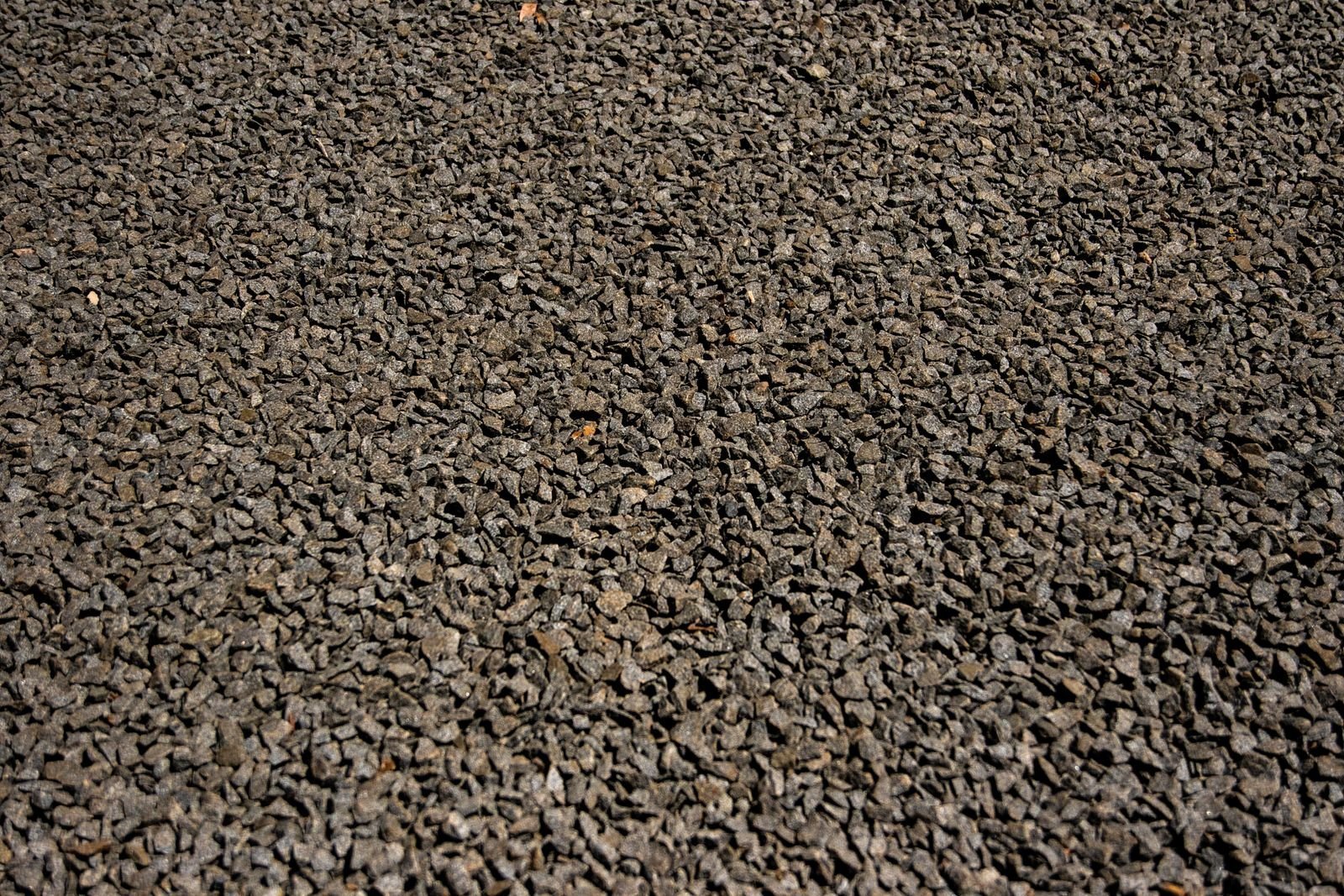
A yard of gravel fits in a full size pickup bed by volume, but weight is the limit that matters, and it catches many first time buyers out. The payload rating on the door jamb sticker is the maximum combined weight of passengers, cargo, and gear, not just the load in the bed, and many modern half ton pickups are rated between 1,500 and 2,400 pounds depending on the exact configuration. A single yard at 2,800 pounds already exceeds most of those ratings, and a bed filled to its full 2.5 cubic yard volume would weigh close to 7,000 pounds, which is roughly three times the rating. The old names half ton, three quarter ton, and one ton are legacy labels, not literal payload limits, so never use the badge on the tailgate as your loading guide.
The safe approach is to check your specific truck’s door jamb sticker, subtract the weight of passengers and gear, and load only what remains, which for many half ton trucks means half a yard to three quarters of a yard of gravel. A half yard of gravel weighs about 1,400 pounds and moves in roughly 5 to 7 heavy wheelbarrow loads, while a full yard takes 9 to 14 wheelbarrow loads depending on the barrow size. If your project needs more than a yard, supplier delivery is almost always cheaper and safer than multiple overloaded pickup trips, because delivery trucks are built for 10 to 15 ton loads and the per ton delivery cost falls as the load grows. Overloading also wears suspension, tires, and brakes, lengthens stopping distances, and can leave you liable if something goes wrong on the road.
Ordering by the Yard vs by the Ton
Suppliers typically sell gravel either by the cubic yard or by the ton, and knowing which unit a quote uses is the single most useful check you can make before paying. Ordering by volume suits most do it yourself projects, because you measure your space, calculate cubic yards, and order that volume plus a waste allowance. Ordering by weight suits larger commercial jobs and lets you compare prices per ton across suppliers, but it requires you to convert your volume into tons using the right density for your material. If one supplier quotes per yard and another quotes per ton, convert both to the same unit with the table above before you decide which is cheaper, because a low per ton price on heavy crusher run can still cost more per yard than a higher per ton price on lighter pea gravel.
Watch for moisture when you buy by weight, because wet gravel weighs more without giving you more stone, and a scale ticket on a rainy day can overstate the dry material you actually received. Ask the supplier for the dry weight of their material, check the scale ticket against your own volume calculation, and treat a delivered load that comes in noticeably lighter than expected as a prompt to ask questions, not as a bargain. Prices also vary by material and region, so compare current figures in our gravel prices guide alongside the weight math here. A quote that looks cheap per ton but arrives wet, short, or in the wrong grade is not a saving at all.
Frequently Asked Questions
How much does a yard of gravel weigh exactly?
There is no single exact weight, because a cubic yard of gravel weighs 2,400 to 3,000 pounds depending on the material, moisture, and compaction. The planning average of 2,800 pounds, or 1.4 short tons, is accurate enough for most residential estimates. For an exact figure, ask your supplier for the bulk density of the specific product they will deliver.
How much does 1 cubic foot of gravel weigh?
One cubic foot of common gravel weighs about 100 to 105 pounds, which follows directly from the yard figure, since 2,800 pounds divided by 27 cubic feet is about 104 pounds. Lighter materials like lava rock weigh far less per cubic foot, while dense crusher run weighs more. Use 105 pounds per cubic foot as your default for standard gravel and crushed stone.
How many tons is a cubic yard of gravel?
A cubic yard of gravel is about 1.4 tons, using the 2,800 pound planning average and a 2,000 pound short ton. Pea gravel runs closer to 1.3 tons per yard, while dense crusher run can reach 1.6 tons per yard. Divide your material’s pounds per yard by 2,000 whenever you need the exact conversion.
How many cubic yards are in a ton of gravel?
One ton of standard gravel is about 0.71 cubic yards, or roughly 19 cubic feet of material. That figure rises for light materials and falls for dense ones, so a ton of lava rock is close to 1.3 cubic yards while a ton of crusher run is only about 0.63 cubic yards. Always base the conversion on your material’s density, not on a generic rule of thumb.
Which is heavier, pea gravel or 3/4 inch gravel?
Their averages are close, with pea gravel at about 2,600 pounds per yard and 3/4 inch crushed stone at about 2,835 pounds per yard. Crushed stone edges ahead once compacted, because its angular shape and fine particles pack tighter and leave less air space than rounded pea gravel. For ordering purposes the difference is small, but for driveways the performance difference is large, since crushed stone locks together and pea gravel shifts.
Can I put a yard of gravel in my pickup truck?
A yard fits by volume in most full size pickup beds, but at 2,800 pounds it exceeds the payload rating of many half ton trucks. Check the payload figure on your door jamb sticker, subtract passengers and gear, and load only what remains, which is often half a yard to three quarters of a yard. For a full yard or more, supplier delivery is the safer and usually cheaper option.
How much area does a ton of gravel cover?
One ton of standard gravel covers about 114 square feet at 2 inches deep, 76 square feet at 3 inches deep, and 57 square feet at 4 inches deep. Coverage falls as depth rises, so double check your planned depth before you convert tonnage into area. Adding a 10 percent waste allowance to the area calculation keeps small measuring errors from leaving you short.
Does wet gravel weigh more than dry gravel?
Yes, wet gravel weighs noticeably more than dry gravel, because porous stone absorbs water and the water adds weight without adding stone. The increase varies with rock type and how long the pile has been rained on, but several hundred pounds per yard is common after heavy rain. If you buy by weight, confirm whether the price reflects wet or dry material before the truck is loaded.
How much does a yard of gravel cost to deliver?
Delivery cost depends on load size, distance, and your region, and it is usually charged per load or per ton on top of the material price. Small loads under a few tons carry the highest delivery cost per ton, while a full 10 to 15 ton dump truck load spreads that fee across much more material. See our gravel prices guide for current per ton and per yard ranges, and order your full quantity in one delivery whenever the site can take it.
The Bottom Line
A yard of gravel weighs 2,400 to 3,000 pounds, with 2,800 pounds as the number to plan around, and the rest is detail that only improves the estimate. Measure your area, convert cubic feet to cubic yards by dividing by 27, add your waste allowance, and multiply by your material’s weight per yard to get tons. Check that figure against the supplier quote and your truck’s payload rating before anyone loads anything, because those two checks catch nearly every expensive mistake in this guide. Order a little extra rather than a little short, since a second delivery almost always costs more than the spare stone would have.